
The trajectory of human civilization has been inextricably linked to its technological advancements, particularly in the realm of weaponry. From the crude tools of early hominids to the sophisticated instruments of modern warfare, the development and deployment of certain armaments have consistently reshaped societal structures, redefined power dynamics, and altered the course of empires. Examining these transformative weapons provides a window into the ingenuity, brutality, and evolving strategic thinking of past societies.
The earliest weapons were extensions of the human body, enhancing innate capabilities for hunting and defense. However, specific innovations moved beyond simple augmentation, fostering a more organized and impactful approach to conflict.
The Spear
The spear, in its various iterations, stands as a foundational weapon. Its significance lies in its introduction of a standoff capability, allowing a hunter or warrior to engage a target from a safe distance.
- Early Development: Primitive spears, dating back hundreds of thousands of years, typically consisted of sharpened sticks. The subsequent innovation of hafting, attaching a stone or bone point to a shaft, dramatically increased its penetrating power and durability.
- Tactical Advantages: The spear allowed for more effective hunting of large game, providing a crucial food source. In combat, it could be used for thrusting or throwing, making it a versatile tool for both individual combatants and organized groups. The development of specialized throwing spears (javelins) further extended this range.
- Impact on Society: The spear’s effectiveness contributed to the development of early hunting parties and cooperative strategies, which in turn fostered social cohesion and rudimentary military organization. Its prevalence across diverse cultures underscores its universal utility and impact.
The Bow and Arrow
The bow and arrow represented a significant leap in projectile weaponry, dramatically increasing range, accuracy, and rate of fire compared to the spear.
- Technological Breakthrough: The bow leverages elastic potential energy, storing power through the bending of its limbs. This stored energy is then rapidly transferred to an arrow, propelling it with considerable force. Early bows were simple staves, but over millennia, designs evolved to include composite bows made from wood, horn, and sinew, offering greater power and efficiency.
- Strategic Implications: The bow allowed warriors to engage enemies from a distance with a volley of projectiles, disrupting formations and inflicting casualties before close-quarters combat. This introduced a new dimension to warfare, favoring disciplined archery units.
- Cultural and Economic Significance: The bow and arrow revolutionized hunting, enabling the targeting of faster and more elusive prey. In many cultures, mastery of the bow was a highly valued skill, integral to warrior identity and survival. Its use in battle often led to changes in armor development, as societies sought to counter its penetrating power.
In exploring the fascinating world of ancient weaponry, one can gain deeper insights into how these tools shaped civilizations and altered the course of history. A related article that delves into this topic is “15 Ancient Weapons That Broke History,” which highlights the significance of various weapons and their impact on warfare and society. For more information, you can read the article here: 15 Ancient Weapons That Broke History. This resource provides an engaging overview of the innovations and strategies that defined ancient combat and influenced the development of modern weaponry.
The Age of Bronze and Iron
The mastery of metallurgy ushered in a new era of weapon development, leading to stronger, more durable, and more specialized armaments. These metals allowed for innovations that were previously impossible with stone or wood.
The Chariot
The chariot was not merely a weapon; it was a mobile platform of destruction, combining speed, maneuverability, and firepower. Its introduction fundamentally altered battlefield tactics.
- Engineering and Design: Early chariots, likely developed in Mesopotamia, were relatively rudimentary. Over time, designs improved, becoming lighter and more maneuverable, often featuring spoke wheels and carefully balanced frames. They were typically pulled by two or four horses.
- Military Doctrine: Chariots were primarily used in two ways: as mobile archery platforms, allowing archers to loose arrows on the move, and as shock units, breaking enemy formations through sheer momentum and the psychological impact of charging horses.
- Impact on Empires: The effective deployment of chariots was a hallmark of powerful Bronze Age empires such as the Hittites, Egyptians, and Assyrians. Control of chariot technology and its associated infrastructure (horse breeding, training, maintenance) was a significant determinant of military dominance and imperial expansion. The Battle of Kadesh (circa 1274 BCE) is a prime example of a major conflict heavily influenced by chariot warfare.
The Iron Sword
While bronze swords were formidable, the advent of iron weaponry marked a significant progression, offering greater abundance, durability, and the potential for sharper edges.
- Metallurgical Advances: Iron smelting required higher temperatures than bronze casting, and early iron was often brittle. However, as techniques improved – particularly with the development of steel through carbonization – iron and steel swords became vastly superior.
- Evolution of Design: From short, stabbing gladii to longer, cutting broadswords, iron swords evolved to suit various combat styles and cultural preferences. Their ability to retain a sharp edge and withstand repeated blows made them a preferred hand-to-hand weapon.
- Democratization of Warfare: Unlike bronze, whose constituent metals (copper and tin) were often scarce, iron ore was more widely available. This allowed for the outfitting of larger armies, as weapons became more accessible. The Iron Age often coincided with an increase in the scale and intensity of warfare, as more common soldiers could be equipped with effective weaponry.
Siege Engines and Projectile Dominance
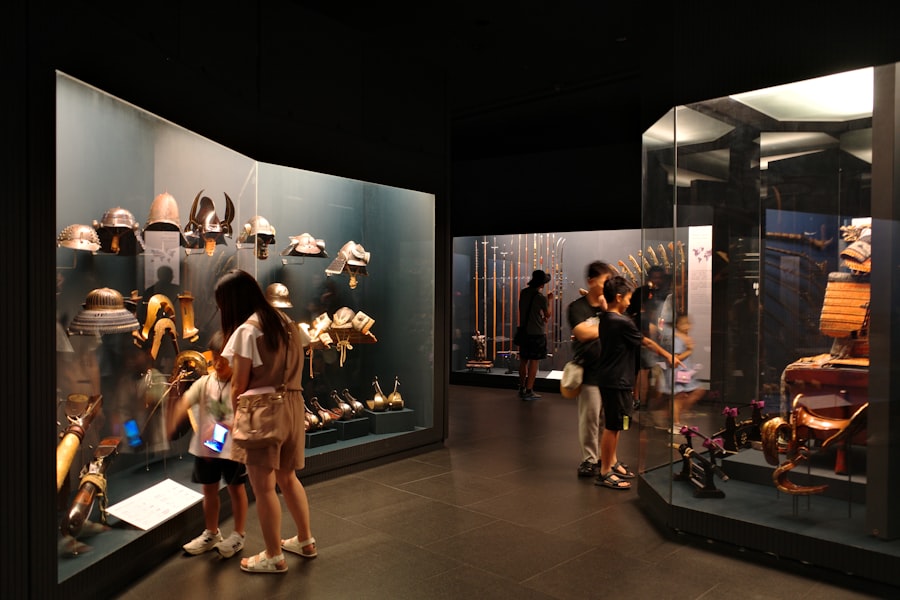
As societies built larger and more formidable fortifications, the need for specialized weapons to overcome these defenses became paramount. Siege engines represented a shift towards industrial-scale destruction.
The Catapult and Trebuchet
These machines revolutionized siege warfare, allowing attackers to hurl massive projectiles with devastating force, breaching walls and demoralizing defenders.
- Principle of Operation: Catapults utilized torsion (twisted ropes) or tension (bent limbs) to store and release energy, projecting stones or other objects. The trebuchet, a later innovation, employed a counterweight system, offering even greater throwing power and accuracy.
- Tactical Application: These engines could lob stones, burning projectiles, or even diseased carcasses over enemy walls, causing structural damage, fires, and psychological terror. Their range allowed attackers to operate relatively safely outside the immediate defensive perimeter.
- Influence on Fortification: The development of powerful siege engines directly led to changes in defensive architecture, prompting the construction of thicker, taller walls, and more complex fortifications designed to resist sustained bombardment. The back-and-forth innovation between offensive and defensive technologies characterized medieval warfare.
Greek Fire
Greek Fire stands as an early example of a chemical weapon, a closely guarded secret that afforded the Byzantine Empire a significant naval advantage for centuries.
- Composition and Application: The precise formula for Greek Fire remains unknown, though it likely involved petroleum, quicklime, sulfur, and resin. It was launched from bronze siphon tubes under pressure, igniting upon contact with the enemy, and famously, could burn on water.
- Naval Supremacy: Its primary use was in naval engagements, where it could set enemy ships ablaze even at a distance, causing immense chaos and preventing boarding actions. This weapon was instrumental in several key Byzantine victories, notably the defense of Constantinople against Arab sieges.
- Strategic Impact: The psychological effect of Greek Fire was immense; its ability to burn on water and its terrifying efficacy demoralized enemies. The secrecy surrounding its composition also provided a strategic advantage, as adversaries could not replicate or easily counter it. It highlights an early understanding of chemical warfare and its potential to secure strategic superiority.
The Gunpowder Revolution
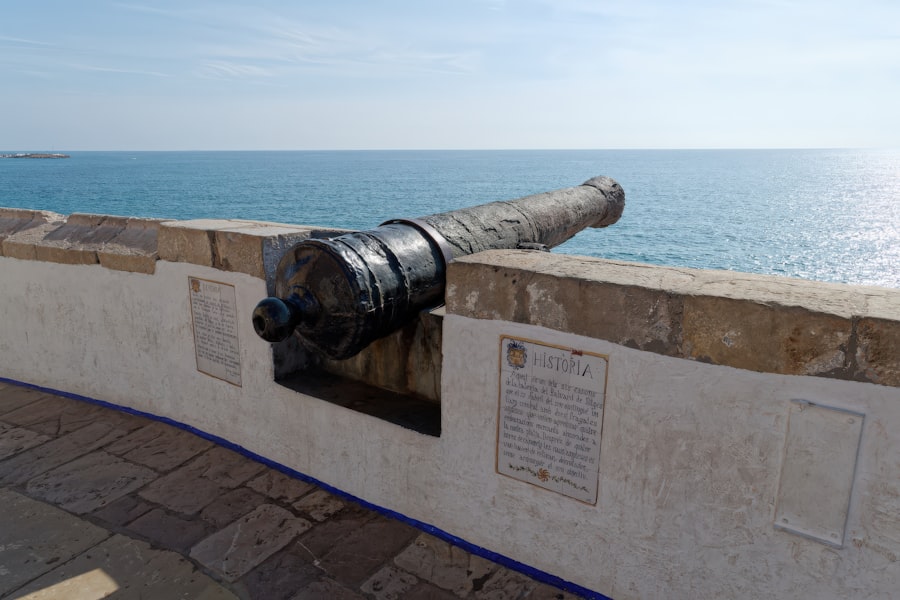
The introduction of gunpowder fundamentally transformed warfare, rendering many older weapon systems obsolete and ushering in an era of long-range, destructive combat.
Gunpowder
The invention of gunpowder in China marked a turning point, not only in weaponry but in materials science. Its explosive properties opened up entirely new possibilities.
- Origin and Composition: Discovered by Chinese alchemists in the 9th century, gunpowder is a mixture of saltpeter (potassium nitrate), charcoal, and sulfur. The precise ratio varies, but saltpeter is the oxidizer, charcoal the fuel, and sulfur acts as a stabilizer and lowers the ignition temperature.
- Early Uses: Initially used for fireworks and incendiary devices, gunpowder’s military potential was soon realized with the development of “fire lances” and simple bombs. Its application in cannons and firearms would come later.
- Wider Implications: The discovery of gunpowder had far-reaching consequences beyond just weaponry. It spurred advancements in chemistry, metallurgy, and engineering, leading to new industrial processes and ultimately contributing to the scientific revolution.
The Cannon
The cannon was the first truly effective gunpowder weapon, capable of breaching stone walls and devastating formations from a distance, fundamentally altering siege tactics and battlefield dynamics.
- Technological Evolution: Early cannons were simple bronze or iron tubes, but their designs progressively improved, leading to more robust barrels, better carriages, and more effective ammunition. From rudimentary “bombards” to sophisticated field artillery, cannons became increasingly formidable.
- Siege Warfare Redefined: Cannons rendered traditional medieval castles and walled cities vulnerable. Their ability to deliver powerful, concentrated blows to fortifications meant that static defenses had to evolve dramatically or risk rapid capitulation.
- Battlefield Impact: In open battle, cannons could decimate tightly packed infantry and cavalry formations. The psychological effect of their thunderous roar and destructive power was also significant, often demoralizing enemy troops. The rise of artillery power prompted changes in marching formations, battlefield maneuvers, and the development of field fortifications.
The Hand Cannon / Arquebus
The hand cannon, and its subsequent development into the arquebus, brought gunpowder technology directly into the hands of the individual soldier.
- Individual Firepower: The hand cannon was essentially a miniaturized cannon, fired by a single soldier. While initially cumbersome and inaccurate, it offered an individual soldier the ability to inflict damage at a distance with significant penetrating power.
- Tactical Innovations: The arquebus, an improvement on the hand cannon with a matchlock mechanism for ignition, increased reliability and usability. Massed ranks of arquebusiers could unleash devastating volleys, creating a lethal “killing zone” that even heavily armored knights struggled to penetrate. This led to the decline of plate armor and the rise of infantry-focused armies.
- Social and Political Transformation: The relative ease of training an arquebusier compared to a skilled archer or knight had profound social implications. It democratized warfare, reducing the dominance of the aristocratic warrior class and empowering larger, less specialized armies often drawn from commoners. This contributed to the rise of centralized nation-states with standing armies.
The study of ancient weaponry reveals fascinating insights into the civilizations that wielded them, and one intriguing article explores the impact of these tools on historical events. For those interested in how specific weapons shaped battles and empires, you can delve into the details in this related article that highlights 15 ancient weapons that broke history. Understanding these weapons not only sheds light on military strategies but also on the cultural significance they held in their respective societies.
The Modern Era of Warfare
| Weapon Name | Origin | Period | Material | Notable Feature | Historical Impact |
|---|---|---|---|---|---|
| Khanda | India | Ancient | Steel | Double-edged straight sword | Symbol of power and valor in Indian warfare |
| Gladius | Rome | 1st Century BC | Iron | Short stabbing sword | Key to Roman infantry dominance |
| Katana | Japan | Feudal Era | Folded steel | Curved single-edged blade | Iconic samurai weapon with superior sharpness |
| Chakram | India | Ancient | Steel | Throwing circular blade | Used for ranged attacks and precision |
| Scimitar | Middle East | Medieval | Steel | Curved sword with a sharp edge | Favored by cavalry for slashing attacks |
| Longbow | England | Medieval | Yew wood | Powerful ranged weapon | Decisive in battles like Agincourt |
| War Hammer | Europe | Medieval | Iron and wood | Blunt force weapon to pierce armor | Effective against armored knights |
| Jian | China | Ancient | Bronze/Steel | Double-edged straight sword | Known as the “Gentleman of Weapons” |
| Ballista | Ancient Greece/Rome | Classical Era | Wood and metal | Large missile weapon | Used in sieges to launch projectiles |
| Spartan Hoplite Spear | Greece | Classical Era | Wood and bronze | Long thrusting spear | Central to phalanx formation |
| Atlatl | Prehistoric Americas | Prehistoric | Wood and bone | Spear-thrower for increased range | Enhanced hunting and warfare capabilities |
| Macuahuitl | Aztec Empire | Pre-Columbian | Wood and obsidian | Sword-like club with obsidian blades | Deadly cutting weapon in Mesoamerica |
| Falx | Dacia | Ancient | Iron | Curved single-edged weapon | Effective against Roman armor |
| Trident | Ancient Rome/Greece | Classical Era | Iron/Steel | Three-pronged spear | Used by gladiators and fishermen |
| Throwing Axe (Francisca) | Franks | Early Medieval | Iron and wood | Small axe designed for throwing | Used to disrupt enemy formations |
The industrial revolution and further scientific advancements brought about weapons of unprecedented complexity, range, and destructive capability.
The Rifle with Rifling
The introduction of rifling to firearm barrels dramatically improved accuracy and range, making the individual soldier far more lethal.
- Principle of Rifling: Rifling consists of helical grooves cut into the bore of a firearm barrel. These grooves impart a spin to the projectile, stabilizing it in flight through gyroscopic action, much like a thrown football.
- Precision and Range: The earliest smoothbore muskets were notoriously inaccurate beyond short distances. Rifling transformed firearms from close-range area-effect weapons into precision instruments, allowing marksmen to engage targets at hundreds of yards with significantly greater reliability.
- Evolution of Tactics: The increased accuracy and range of rifles led to a shift away from massed infantry volleys towards more spread-out formations. Skirmishers and sharpshooters became increasingly important, capable of picking off officers and disrupting enemy lines from a distance. This change was notably observed during the American Civil War.
The Machine Gun
The machine gun represented a quantum leap in sustained rates of fire, capable of delivering hundreds of rounds per minute and profoundly altering the nature of defensive warfare.
- Mechanization of Firepower: Early machine guns, like the Gatling gun, were manually cranked, but later designs, such as the Maxim gun, utilized recoil or gas operation to automate the firing cycle, allowing continuous discharge as long as ammunition was fed.
- Defensive Dominance: The machine gun made frontal assaults incredibly costly, creating impassable “no-man’s-lands” and forcing armies into trench warfare during World War I. A single machine gun position could hold off entire companies of attacking infantry.
- Societal Impact and Industrialization: The development and mass production of machine guns showcased the power of industrialization applied to warfare. Its devastating effectiveness led to immense casualties in early 20th-century conflicts, forcing military strategists to rethink offensive tactics and leading to the development of new technologies to overcome entrenched defenses.
The Tank
The tank was developed as a direct response to the stalemate of trench warfare, offering a means to traverse difficult terrain, cross enemy lines, and provide mobile firepower.
- Technological Synthesis: The tank brought together disparate technologies: internal combustion engines for power, tracks for all-terrain mobility, armored plating for protection, and machine guns or cannons for offensive capability.
- Breaking the Stalemate: Early tanks were mechanically unreliable but demonstrated their potential to break through fortified lines and demoralize defenders who had no effective means to counter them. They offered both protection and continuous forward momentum.
- Redefining Land Warfare: The tank transformed land warfare from static trench lines to dynamic maneuver battles. It became the backbone of armored formations, eventually leading to concepts like “blitzkrieg” that emphasized speed, shock, and coordinated combined arms operations. Its introduction marked the beginning of modern combined-arms warfare, where different specialties (infantry, artillery, armor, air support) worked in concert.
The Aircraft Carrier
The aircraft carrier revolutionized naval warfare, shifting the battle from direct ship-to-ship engagements to long-range aerial combat, emphasizing air superiority and projection of power far from land bases.
- Platform for Power Projection: The aircraft carrier is essentially a mobile airbase, capable of launching and recovering numerous aircraft. This allows a navy to project air power over vast distances, striking targets hundreds or even thousands of miles from the carrier itself.
- Naval Doctrine Shift: Prior to carriers, battleships were the queens of the sea, engaging in direct cannon duels. Carriers rendered battleships largely obsolete, as carrier-borne aircraft could attack enemy fleets from beyond visual range, making long-range air power the decisive factor in naval engagements.
- Global Reach and Diplomacy: Aircraft carriers became instruments of global power projection, allowing nations to exert influence, conduct diplomatic missions, and respond to crises anywhere in the world. Their presence often signals political intent and military capability, making them central to modern geopolitics.
The Atomic Bomb
The atomic bomb represents the pinnacle of destructive power, a weapon capable of annihilating entire cities and ushering in an era of mutually assured destruction, fundamentally changing international relations.
- Scientific Breakthrough: The development of the atomic bomb stemmed from breakthroughs in nuclear physics, particularly the understanding of nuclear fission and the ability to harness its immense energy release.
- Instant Devastation: The bombs dropped on Hiroshima and Nagasaki demonstrated the unprecedented destructive power of this new weapon, causing immense casualties, widespread destruction, and long-term environmental consequences. The flash, heat, and blast wave were unlike anything seen before.
- Strategic Deterrence and the Cold War: The atomic bomb transformed warfare from a means of territorial conquest to a existential threat. It ushered in the concept of nuclear deterrence, where the threat of retaliation with nuclear weapons prevented large-scale conflicts between nuclear-armed states. This created a paradoxical stability during the Cold War, where direct conventional conflict between superpowers was avoided due to the fear of nuclear escalation. The atomic bomb redefined the very concept of victory and defeat, making total war potentially suicidal for all belligerents. Its existence continues to shape global security policies and international treaties.
Cyber Warfare Tools
In the 21st century, the battlefield has expanded beyond the physical realm into the digital domain. Cyber warfare tools represent a new frontier in conflict, challenging traditional notions of defense and attack.
- Digital Infiltration and Disruption: Cyber tools, ranging from sophisticated viruses and malware to denial-of-service attacks, can infiltrate and disrupt critical infrastructure, steal sensitive information, and cripple enemy operations without a single physical shot being fired.
- Asymmetric Warfare: Cyber warfare offers significant advantages to less powerful actors, enabling them to strike at the vulnerabilities of technologically advanced adversaries. It democratizes the ability to project power in new and insidious ways.
- Blurred Lines: The anonymous and often deniable nature of cyber attacks blurs the lines between espionage, terrorism, and conventional warfare. Attribution is complex, and the consequences can range from economic disruption to physical damage, as evidenced by attacks on power grids and industrial control systems. Cyber warfare forces nations to rethink national security in an increasingly interconnected world, where digital infrastructure is a vital, yet vulnerable, strategic asset.
These fifteen weapons, while diverse in their form and function, share a common thread: they each marked a significant inflection point in history. They compelled societies to adapt, innovate, and, at times, to reconsider the very nature of conflict. Understanding their development and impact provides a crucial lens through which to view the evolution of human civilization itself.
FAQs
What are some examples of ancient weapons that had a significant impact on history?
Some ancient weapons that broke history include the Roman gladius, the Greek hoplite spear, the Chinese crossbow, the Japanese katana, and the Assyrian composite bow. These weapons were pivotal in shaping military tactics and outcomes in their respective eras.
How did ancient weapons influence the development of warfare?
Ancient weapons influenced warfare by introducing new technologies and combat techniques. For example, the invention of the crossbow allowed for greater range and power, while the design of the gladius enabled effective close combat. These innovations often led to changes in army formations and battle strategies.
What materials were commonly used to make ancient weapons?
Ancient weapons were typically made from materials such as bronze, iron, steel, wood, and bone. The transition from bronze to iron and later steel marked significant advancements in weapon durability and effectiveness.
Why are some ancient weapons considered revolutionary?
Some ancient weapons are considered revolutionary because they introduced new capabilities that changed the course of battles and wars. For instance, the composite bow allowed archers to shoot with greater power and accuracy, while the katana’s design provided superior cutting ability and speed.
Are any ancient weapons still in use or influential today?
While ancient weapons are no longer used in modern combat, their designs and principles continue to influence contemporary weaponry and martial arts. For example, the katana remains a symbol of craftsmanship and is studied in martial arts, and the concept of the crossbow has evolved into modern projectile weapons.