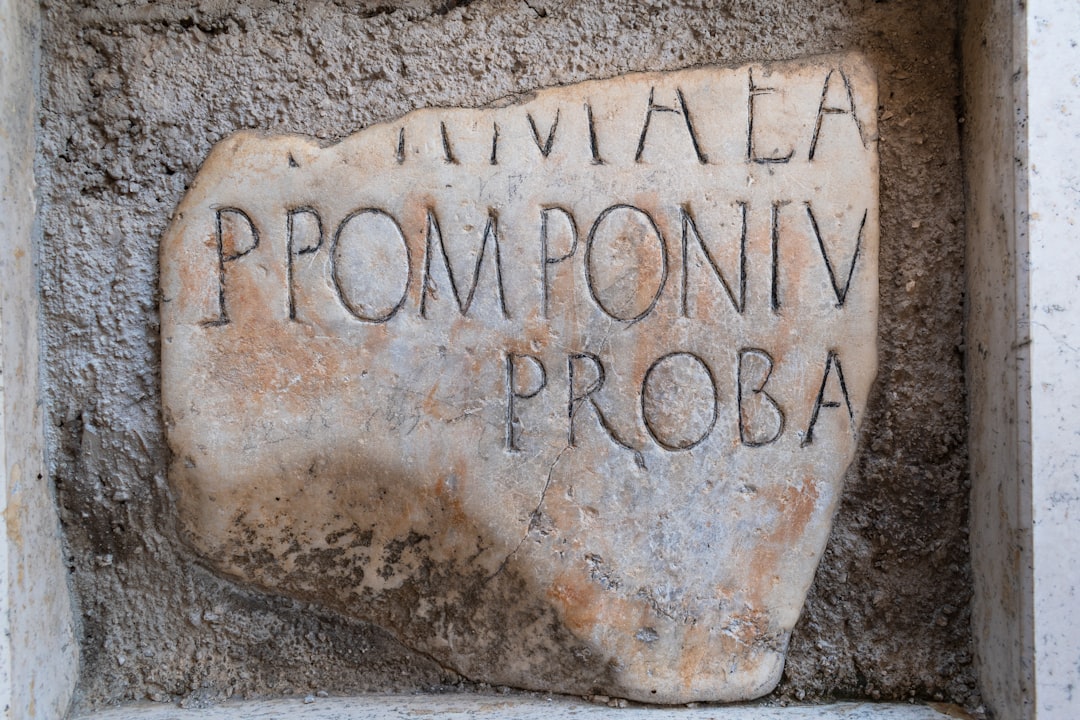
Ancient artifacts serve as tangible links to the past, offering glimpses into the lives, beliefs, and technologies of civilizations long gone. These remnants of history, ranging from tools and pottery to monumental structures, provide invaluable insights into human development and cultural evolution. Each artifact carries with it a story, a narrative that transcends time and connects modern society with its ancestors.
The allure of ancient artifacts lies in their ability to provoke questions that often remain unanswered. What were the intentions behind their creation?
How did they function in their respective societies? And what secrets do they hold that could reshape our understanding of history? As researchers and enthusiasts delve deeper into the past, they uncover remarkable discoveries that challenge established narratives and invite further exploration.
This article will explore several enigmatic artifacts that continue to captivate scholars and the public alike, each representing a unique puzzle in the grand tapestry of human history.
Key Takeaways
- Ancient artifacts continue to mystify and intrigue researchers and historians around the world.
- The Antikythera Mechanism is a complex ancient device that has puzzled scientists with its advanced technology.
- The Baghdad Battery raises questions about ancient knowledge of electricity and power sources.
- The Voynich Manuscript remains an enigma, with its unknown language and mysterious illustrations.
- The Nazca Lines are massive geoglyphs in Peru that continue to baffle experts with their purpose and creation.
The Antikythera Mechanism: A Mysterious Ancient Computer
Discovered in 1901 among the wreckage of a sunken ship off the coast of Antikythera, Greece, the Antikythera Mechanism is often hailed as the world’s first analog computer. This intricate device, composed of a complex system of gears and dials, was designed to predict astronomical positions and eclipses for calendrical and astrological purposes. Its sophistication is astonishing, revealing a level of technological advancement that was previously thought to be unattainable for ancient civilizations.
The mechanism’s existence raises profound questions about the capabilities of ancient Greek science and engineering. The Antikythera Mechanism’s design reflects a deep understanding of celestial mechanics, showcasing the ingenuity of its creators. Researchers have spent decades attempting to fully decipher its functions, employing modern imaging techniques to analyze its corroded components.
The findings suggest that this device was not merely a scientific instrument but also a reflection of the philosophical and cultural values of its time. The implications of such a sophisticated artifact challenge the notion of linear technological progression, suggesting that ancient societies may have possessed knowledge that was lost or forgotten over time.
The Baghdad Battery: A Controversial Ancient Power Source
The Baghdad Battery, also known as the Parthian Battery, is an intriguing artifact that has sparked debate among historians and archaeologists regarding its purpose. Discovered in Iraq in the 1930s, this clay jar contains a copper cylinder and an iron rod, leading some to speculate that it may have been used as a primitive galvanic cell capable of producing electric current. If true, this would imply that ancient civilizations had access to electrical technology long before it was officially recognized in modern history.
Critics argue that the Baghdad Battery’s intended use remains uncertain, suggesting alternative explanations such as its role in religious rituals or as a storage vessel for scrolls. However, proponents of the electrical theory point to historical accounts of electroplating and other applications of electricity in ancient cultures. The ongoing debate surrounding the Baghdad Battery highlights the complexities of interpreting ancient artifacts and the challenges faced by researchers in reconstructing historical narratives based on limited evidence.
The Voynich Manuscript: An Untranslatable Medieval Text
| Aspect | Data/Metric |
|---|---|
| Origin | Unknown, possibly Italy |
| Language | Unidentified, possibly a cipher or code |
| Contents | Illustrations of plants, astronomical diagrams, and unknown text |
| Age | Carbon-dated to early 15th century |
| Author | Unknown, possibly written by multiple authors |
| Current Location | Beinecke Rare Book & Manuscript Library at Yale University |
The Voynich Manuscript is perhaps one of the most enigmatic texts in existence, captivating cryptographers, linguists, and historians alike since its discovery in the early 20th century. This illustrated codex, written in an unknown script and language, contains detailed drawings of plants, astronomical diagrams, and mysterious figures engaged in various activities. Despite numerous attempts to decode its contents, the manuscript remains an unsolved puzzle, leading some to speculate about its origins and purpose.
Theories regarding the Voynich Manuscript abound, ranging from it being an elaborate hoax to a genuine work of alchemical knowledge or herbal medicine. Its unique illustrations suggest a deep understanding of botany and astronomy, yet the absence of any recognizable language has thwarted efforts at translation. The manuscript’s allure lies not only in its cryptic text but also in the questions it raises about knowledge preservation and communication across cultures and time periods.
As researchers continue to explore its mysteries, the Voynich Manuscript stands as a testament to humanity’s enduring quest for understanding.
The Nazca Lines: Mysterious Geoglyphs in Peru
The Nazca Lines are a series of enormous geoglyphs etched into the arid landscape of southern Peru, depicting various animals, plants, and geometric shapes. Spanning over 1,000 square kilometers, these ancient designs have puzzled archaeologists since their discovery in the 1920s. The sheer scale and precision of the lines suggest a sophisticated understanding of geometry and landscape manipulation by the Nazca civilization, which thrived between 200 BCE and 600 CE.
Various theories have emerged regarding the purpose of the Nazca Lines, ranging from astronomical calendars to religious or ritualistic significance. Some researchers propose that these geoglyphs were created as offerings to deities or as part of agricultural practices tied to water sources. Others suggest that they served as navigational aids for travelers or as markers for ceremonial pathways.
Regardless of their intended purpose, the Nazca Lines remain an enduring mystery that continues to inspire exploration and debate among scholars and enthusiasts alike.
The Shroud of Turin: A Controversial Relic of Jesus Christ

The Shroud of Turin is one of the most famous religious artifacts in history, believed by many to be the burial cloth of Jesus Christ. This linen cloth bears a faint image of a man who appears to have suffered crucifixion wounds, leading to widespread speculation about its authenticity and origins. While some view it as a miraculous relic, others argue that it is a medieval forgery created for religious purposes.
Scientific investigations into the Shroud have yielded mixed results, with radiocarbon dating suggesting a 14th-century origin while other studies indicate potential anomalies that could point to an earlier date. The ongoing debate surrounding its authenticity raises profound questions about faith, science, and historical evidence. Regardless of its origins, the Shroud of Turin continues to evoke deep emotional responses from believers and skeptics alike, serving as a powerful symbol of spirituality and mystery.
The Stone Spheres of Costa Rica: Enigmatic Pre-Columbian Artifacts
Scattered throughout the Diquís Delta region of Costa Rica, the stone spheres are remarkable artifacts attributed to pre-Columbian cultures. Ranging in size from small marbles to massive boulders weighing several tons, these perfectly round stones have intrigued archaeologists since their discovery in the 1930s. Their precise craftsmanship suggests advanced stoneworking techniques employed by ancient societies whose purposes remain largely speculative.
Theories regarding the significance of these spheres vary widely; some suggest they served as markers for territorial boundaries or symbols of power among elite classes.
Despite extensive research efforts, much about their creation and use remains elusive.
The stone spheres stand as a testament to human creativity and craftsmanship while simultaneously embodying the mysteries that continue to surround ancient civilizations.
The Piri Reis Map: An Ancient Map that Challenges History
The Piri Reis Map is a striking artifact that has captured the imagination of historians and cartographers since its discovery in 1929. Created by Ottoman admiral Piri Reis in 1513, this world map features detailed depictions of parts of Europe, Africa, and South America. What makes this map particularly intriguing is its inclusion of features not commonly known during that era, including accurate representations of coastlines and even Antarctica—despite it being covered by ice at the time.
The existence of such an advanced map raises questions about historical navigation and cartography during the Age of Exploration. Some theorists suggest that Piri Reis may have had access to lost ancient maps or knowledge from earlier civilizations that possessed advanced geographical understanding. This possibility challenges conventional narratives about exploration and knowledge dissemination during this period.
As researchers continue to analyze the Piri Reis Map’s origins and implications, it remains a fascinating artifact that invites further inquiry into humanity’s navigational history.
The Crystal Skulls: Mysterious Pre-Columbian Artifacts
Crystal skulls are enigmatic artifacts often associated with ancient Mesoamerican cultures, particularly the Maya and Aztec civilizations. These intricately carved skulls are made from clear quartz crystal and vary in size; some are small enough to fit in one’s hand while others are life-sized. Their origins are shrouded in mystery, with claims suggesting they possess mystical properties or hold significant cultural importance.
While some crystal skulls have been proven to be modern forgeries or products of 19th-century craftsmanship, others remain unverified regarding their age and authenticity. The allure surrounding these artifacts has led to numerous theories about their purpose—ranging from ceremonial objects to tools for healing or divination practices. Despite extensive research efforts, much about crystal skulls remains speculative, contributing to their status as symbols of mystery within ancient cultures.
The Sacsayhuaman Walls: Inexplicable Inca Stonework
The Sacsayhuaman walls are an architectural marvel located near Cusco, Peru, showcasing the incredible stoneworking skills of the Inca civilization. Constructed using massive limestone blocks fitted together with remarkable precision without any mortar, these walls have stood for centuries against earthquakes and natural erosion. The sheer scale and complexity of Sacsayhuaman raise questions about Inca engineering techniques and their societal organization.
Scholars continue to debate how such large stones were transported and assembled with such accuracy given the technological limitations of the time. Some theories suggest advanced knowledge of levers or ramps while others propose labor-intensive methods involving large workforces. Regardless of how they were built, Sacsayhuaman remains an enduring symbol of Inca ingenuity and resilience—a testament to their ability to create monumental structures that continue to inspire awe today.
The Unanswered Mysteries of Ancient Artifacts
Ancient artifacts serve as windows into humanity’s past, revealing stories that transcend time yet often remain shrouded in mystery. From sophisticated devices like the Antikythera Mechanism to enigmatic texts like the Voynich Manuscript, each artifact invites exploration and inquiry into our shared history. As researchers continue to investigate these remnants through modern technology and interdisciplinary approaches, new insights emerge while old questions linger.
The allure surrounding these artifacts lies not only in their historical significance but also in their ability to challenge established narratives about human development and cultural exchange. They remind us that despite our advancements in knowledge and technology, there are still mysteries waiting to be unraveled—puzzles that connect us with our ancestors across millennia. As long as curiosity persists within humanity’s collective consciousness, ancient artifacts will continue to inspire wonderment and exploration into the depths of our shared heritage.
In exploring the fascinating world of ancient artifacts, one might find interest in the article “50 Impossible Ancient Artifacts” which delves into the mysteries and wonders of historical relics that defy conventional understanding. For those intrigued by such enigmatic discoveries, a related article can be found on Real Lore and Order’s website. This piece further examines the context and stories behind these artifacts, offering a deeper insight into their origins and significance. To read more about these captivating topics, visit the article on Real Lore and Order by clicking here.
WATCH THIS! 👀 History Is Hiding 50 Impossible Inventions
FAQs
What are some examples of the “impossible” ancient artifacts mentioned in the article?
Some examples of the “impossible” ancient artifacts mentioned in the article include the Antikythera Mechanism, the Baghdad Battery, the Piri Reis Map, and the Stone Spheres of Costa Rica.
What makes these ancient artifacts “impossible”?
These ancient artifacts are considered “impossible” because they challenge our understanding of ancient civilizations and their technological capabilities. Some of these artifacts exhibit advanced knowledge of mathematics, astronomy, and engineering that seem beyond the capabilities of the time period in which they were created.
How have these artifacts sparked debate and controversy among historians and archaeologists?
These artifacts have sparked debate and controversy among historians and archaeologists because they raise questions about the timeline of human technological development and the possibility of lost civilizations. Some experts argue that these artifacts are evidence of advanced ancient civilizations that have been lost to history, while others believe there are alternative explanations for their existence.
What are some theories about the origins of these “impossible” ancient artifacts?
Some theories about the origins of these “impossible” ancient artifacts include the idea that they were created by advanced ancient civilizations that have since been lost or forgotten. Others suggest that these artifacts may have been influenced by extraterrestrial beings or advanced knowledge passed down through generations.
What is the significance of studying these “impossible” ancient artifacts?
Studying these “impossible” ancient artifacts is significant because it challenges our understanding of history and human technological development. It encourages us to question our assumptions about the capabilities of ancient civilizations and to consider alternative explanations for the existence of these artifacts. Additionally, studying these artifacts can provide valuable insights into ancient cultures and their achievements.