
Delving into the annals of history, one might mistakenly believe that the concept of automated machines and robots is a recent invention, born solely from the crucible of the Industrial Revolution and the subsequent digital age. However, a closer examination of archaeological findings, ancient texts, and forgotten engineering marvels reveals a compelling narrative of early ingenuity, a testament to humanity’s enduring fascination with self-operating mechanisms. This exploration seeks to uncover the evidence of ancient automation and robotics, piecing together fragments of a past that dared to dream of machines that could mimic life or perform tasks with an intelligence beyond mere manual labor. The pursuit of such knowledge is akin to assembling a vast and intricate puzzle, where each unearthed artifact and translated inscription offers a vital clue to understanding the minds of our ancient predecessors.
The word “robot” itself originates from the Czech word “robota,” meaning forced labor. It conjures images of metallic figures, yet the ancient world’s attempts at automation were often more subtle, more integrated into daily life, or simply more ephemeral in their construction. These were not always humanoid machines, but rather ingenious devices designed to perform specific functions, often by harnessing natural forces or employing sophisticated mechanical principles.
Hydro-Powered Automatons of Alexandria
The Hellenistic period, particularly in Alexandria, stands out as a fertile ground for mechanical innovation. The Library of Alexandria was not just a repository of knowledge but also a hub for scientific inquiry, and among its resident scholars were individuals who pushed the boundaries of what was technologically possible.
The Automata of Hero of Alexandria
Hero of Alexandria, a brilliant mathematician and engineer who lived in the 1st century CE, is perhaps the most prominent figure associated with ancient automation. His writings, preserved in works like Pneumatica and Automata, describe a plethora of devices that demonstrated remarkable mechanical understanding. These were not mere curiosities but functional, albeit complex, mechanisms.
Ancient Theatrical Performances and Automated Figures
Hero’s Automata details the construction of figures that could move autonomously, opening doors, pouring wine, and even acting out scenes. These mechanical actors, often powered by falling weights, pulleys, and water flows, were used to enhance theatrical performances, adding an element of surprise and wonder to ancient entertainment. Imagine the astonishment of an audience witnessing a temple door swing open seemingly on its own, or a statue gracefully raising a libation cup. This was not magic; it was sophisticated engineering.
The Vending Machine: A Glimpse of Customer Service Automation
One of Hero’s most fascinating inventions, described in Pneumatica, is a type of vending machine. This device, powered by the weight of a coin, dispensed a fixed amount of holy water. A coin dropped into a slot would fall onto a lever, which would then open a valve, allowing water to flow out. This seemingly simple mechanism represents a foundational concept in automated dispensing and a precursor to modern coin-operated machines. It demonstrates an understanding of cause and effect, and the application of mechanical leverage to achieve a desired outcome.
Automated Temple Doors and Water Organs
Hero also documented designs for automated temple doors that would open when a fire was lit on an altar. The heat would expand the air in a sealed container, which would then push water into a bucket, triggering a pulley system that opened the doors. Similarly, his descriptions of pneumatic organs, using compressed air to produce music, showcase an understanding of fluid dynamics and acoustic principles. These were not just static structures but dynamic systems designed with intent.
Early Technological Seeds in Greece and Athens
While Alexandria often takes center stage, the roots of Greek mechanical thought extend further back, laying the groundwork for these later achievements.
The “Mechanical Birds” of Archytas of Tarentum
Archytas of Tarentum, a Pythagorean philosopher, mathematician, and statesman of the 5th century BCE, is credited with creating a mechanical pigeon powered by steam or compressed air. This “flying pigeon” was said to have been capable of flight, demonstrating an early understanding of aerodynamics and propulsion. Though little direct evidence survives, accounts suggest a sophisticated understanding of mechanics applied to animate forms.
The Antikythera Mechanism: A Celestial Computer
Discovered in a shipwreck off the coast of the Greek island of Antikythera in 1901, the Antikythera Mechanism is a truly astounding artifact. Dating back to the 2nd century BCE, this complex device, composed of interlocking bronze gears, is widely regarded as the world’s first analog computer. Its intricate workings allowed it to predict astronomical positions and eclipses decades in advance.
Unraveling the Gears: A Glimpse of Ancient Computation
The rediscovery and ongoing study of the Antikythera Mechanism have been akin to finding a Rosetta Stone for ancient mechanical computation. Its gears, carefully calibrated, map the movements of the sun, moon, and planets, and even account for the irregularities of their orbits. The precision required to construct such a device speaks volumes about the mathematical and engineering prowess of its creators. It underscores a deep understanding of cyclical patterns and the desire to model them mechanically.
Beyond Astronomy: Potential Educational and Navigational Applications
While its astronomical functions are well-established, some researchers speculate that the Antikythera Mechanism may have also served other purposes, perhaps as an educational tool to teach astronomy or even as a navigational aid. Its intricate display of celestial movements could have provided sailors with celestial information crucial for long voyages. The mechanism is a testament to the fact that ancient minds were not solely concerned with the practical, but also with abstract understanding and predictive modeling.
Recent discoveries in ancient civilizations have shed light on the early concepts of automation and robotics, revealing that these ideas were not as modern as previously thought. An intriguing article titled “Ancient Automation: The Ingenious Mechanisms of the Past” explores various artifacts and texts that suggest the existence of automated devices in ancient Greece and China. For more insights into this fascinating topic, you can read the full article here: Ancient Automation: The Ingenious Mechanisms of the Past.
Automation in the East: China’s Ingenious Inventions
The narrative of ancient automation is not confined to the Mediterranean world; further east, China also boasts a rich tradition of mechanical innovation.
The Water Clocks of Ancient China
Water clocks, also known as clepsydras, were among the earliest and most sophisticated timekeeping devices developed in ancient China. These were not just simple containers with holes; they evolved into complex mechanisms that used flowing water to power a series of gears and indicators, marking the passage of time with remarkable accuracy.
The Great Astronomical Clock of Su Song
In the 11th century CE, the polymath Su Song designed and oversaw the construction of a monumental astronomical clock tower in Kaifeng. This five-story structure was a marvel of engineering, incorporating a water-powered escapement mechanism that regulated the movement of its internal machinery.
A Symphony of Gears and Water
Su Song’s clock was a complex interplay of water flow, gears, and levers. A water wheel, powered by a steady stream of water, drove a series of gears that in turn moved a celestial globe, an armillary sphere, and striking mechanisms that would announce the time with bells and gongs. The synchronized movement of these components represented a significant leap in mechanical automation and integration. It was a physical embodiment of the ceaseless march of time, orchestrated by human design.
The Water-Powered Armillary Sphere and Celestial Globe
The clock featured an armillary sphere that rotated to show the positions of stars and a celestial globe that represented the entire heavens. These rotating celestial models, powered by the water clock’s mechanism, demonstrated a profound understanding of astronomical precession and the cycles of the cosmos. The ability to mechanically replicate these celestial movements was a significant achievement.
Early Chinese Automata and Mechanical Toys
Beyond timekeeping, Chinese artisans also created a variety of automata and mechanical toys, showcasing a playful yet ingenious approach to automation.
The Mechanical Animals and Figures of the Qin and Han Dynasties
Though direct evidence is scarce for the earliest dynasties, textual accounts and archaeological discoveries suggest the existence of mechanical animals and figures in ancient China. These might have been powered by springs, weights, or even simple pulley systems.
Whispers of Mechanical Dragons and Horse-Drawn Chariots
Legends speak of mechanical dragons that could move on their own and intricate horse-drawn chariots with moving parts. While these tales might be embellished, they point to a cultural fascination with bringing inanimate objects to life through mechanical ingenuity. The very idea of such creations suggests a desire to mimic natural motion.
The Mythical and the Real: Automata in Ancient Lore

While concrete evidence for extensive automaton use is still being uncovered, the recurrence of such themes in ancient mythology and literature suggests a deep-seated human desire and perhaps a partial realization of creating artificial beings.
The Golem of Jewish Folklore
The Golem, a figure from Jewish folklore, is an animated anthropomorphic being created entirely from inanimate matter, typically clay or mud, and brought to life through mystical rituals. While not strictly mechanical in the modern sense, the Golem represents the ancient aspiration to create life or intelligent agents from non-living material, a concept that resonates with the underlying drive behind robotics.
From Clay to Consciousness: A Metaphorical Bridge
The Golem narrative, though rooted in religious and mystical beliefs, can be viewed as a metaphorical exploration of artificial creation. The process of animating the Golem, often described as inscribing a sacred word upon it, echoes the philosophical questions of what imbues something with life or agency. It highlights a primal human urge to transcend limitations through creation.
Talos: The Bronze Giant of Greek Mythology
Talos, a colossal automaton made of bronze in Greek mythology, was the protector of Crete. He was said to have been forged by Hephaestus, the god of blacksmiths, and his metallic body was capable of patrolling the island, throwing boulders at enemy ships, and sealing wounds with plugs of hot metal.
A Sentient Guardian: The Dawn of Artificial Intelligence?
Talos embodies the idea of a sentient, physically powerful automaton designed for a specific purpose. His existence in myth suggests a conceptual understanding of artificial beings capable of independent action and even intelligence, albeit a divine or magical form of it. The concept of a programmed guardian resonates with modern aspirations for autonomous defense systems.
Vulcan’s Creations: The Mechanical Servants of Hephaestus
In Homer’s Odyssey, the god Hephaestus is described as having created golden maidens who could assist him in his forge. These maidens were said to possess intelligence and the ability to speak, further illustrating the ancient imagination’s exploration of artificial companions and laborers.
Functionality and Intelligence: The Dual Pillars of Ancient Ambition
The creations attributed to Hephaestus, like the golden maidens, suggest a dual ambition in ancient automata: both functional utility and a semblance of intelligence or responsiveness. This points to a desire not just to automate tasks but to imbue machines with a degree of artificial life.
The Limits and Legacy of Ancient Automation
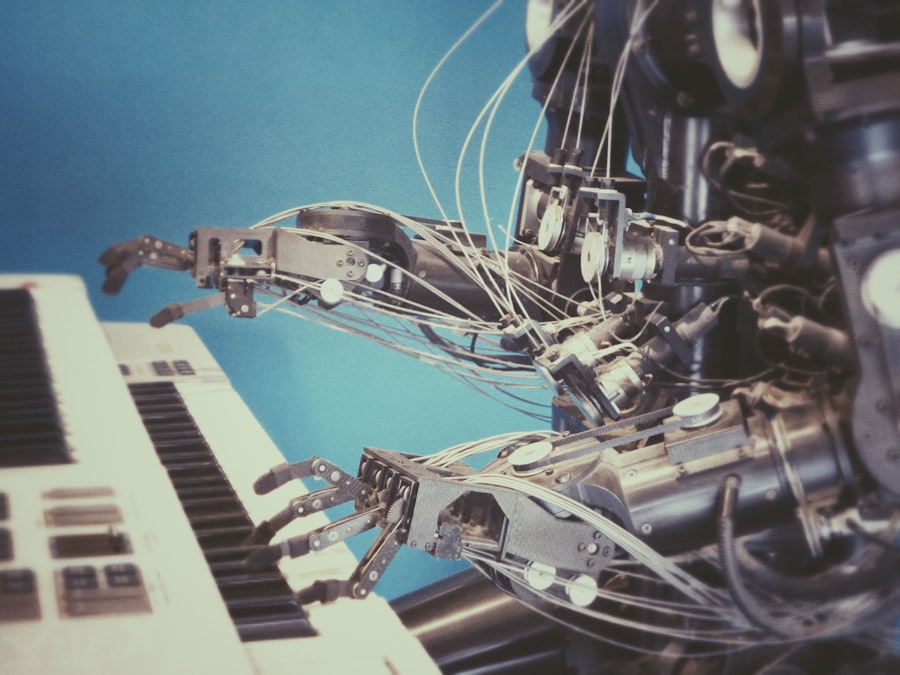
Despite the impressive achievements, the ancient world’s automation was limited by available materials, power sources, and manufacturing techniques. However, its legacy is undeniable, serving as a crucial stepping stone in the long journey of technological development.
Power Sources: Water, Weights, and Air
The primary power sources for ancient automata were water (hydrostatic and hydraulic pressure), falling weights, and compressed air. These natural forces, harnessed through clever mechanical designs, were the engines of these early machines.
The Constraints of the Ancient World
The reliance on these relatively simple power sources meant that the complexity and duration of operation for most automata were limited. Unlike modern electric-powered devices, ancient machines often required continuous human intervention to maintain their power source or reset them.
Waterwheels and Weight-Driven Systems: The Foundation of Early Mechanics
Waterwheels, driven by flowing rivers or carefully channeled water, provided a consistent source of rotational power. Falling weights, connected to pulley systems, offered a more controlled and predictable energy release. These fundamental mechanical principles formed the backbone of much ancient engineering and automation.
The Mystery of Compressed Air Applications
While Hero of Alexandria documented significant applications of compressed air in his devices, the widespread adoption and sophisticated scaling of pneumatics in the ancient world remain somewhat elusive. It suggests a remarkable mastery of certain principles, yet perhaps a lack of broad dissemination or application.
The Evolution of Gears and Mechanisms
The development of intricate gear systems, as evidenced by the Antikythera Mechanism, was crucial for the advancement of ancient automation. The precise cutting and meshing of these gears allowed for complex calculations and coordinated movements.
Precision Engineering in Antiquity
The construction of the Antikythera Mechanism, with its remarkably fine gears, demonstrates a level of precision engineering that challenges conventional assumptions about ancient manufacturing capabilities. The ability to create such intricate components suggests specialized workshops and skilled artisans.
From Simple Levers to Complex Gear Trains
The evolution from simple levers and pulleys to sophisticated gear trains marks a significant progression in mechanical sophistication. This allowed for the transmission of force and motion with greater control and complexity, enabling the creation of more advanced automated devices.
The Disappearance and Rediscovery of Knowledge
Much of the knowledge and many of the devices from the ancient world were lost to time, either through natural decay, deliberate destruction, or the fragmentation of empires. The rediscovery of texts and artifacts, like Hero’s writings and the Antikythera Mechanism, has been essential in piecing together this forgotten history.
The fragility of Knowledge and its transmission
The survival of ancient mechanical knowledge was a precarious affair. Texts could be lost in fires, libraries plundered, and skilled artisans die without passing on their craft. This fragility highlights the importance of diligent preservation and ongoing research.
The Scholar’s Role as a Bridge to the Past
Scholars and archaeologists play a vital role as bridge builders, sifting through the dust of ages to bring these forgotten innovations to light. Their meticulous work allows us to connect with the ingenuity of our ancestors and understand the long, winding road that has led to our modern technological landscape. The evidence of ancient automation is not just about machines; it is about the enduring human drive to understand, to create, and to automate. By uncovering these past achievements, we gain a deeper appreciation for the continuum of human innovation, a river of ingenuity that has flowed through millennia, shaping the world we inhabit today.
STOP: Why They Erased 50 Impossible Inventions From Your Textbooks
FAQs
What is considered the earliest evidence of automation in ancient history?
The earliest evidence of automation dates back to ancient civilizations such as Greece and Egypt, where simple mechanical devices like water clocks and automata powered by water or steam were used for practical and entertainment purposes.
Did ancient cultures develop robotic devices similar to modern robots?
While ancient cultures did not create robots as we know them today, they developed automata—mechanical devices designed to perform specific tasks or mimic human or animal actions—using gears, pulleys, and other mechanisms.
What materials and technologies were used in ancient automation?
Ancient automation often relied on materials like wood, metal, and stone, combined with technologies such as water power, wind power, and basic mechanical components like gears, levers, and cams to create moving devices.
Can you name some famous ancient automata or robotic devices?
Famous examples include Hero of Alexandria’s mechanical theater and automated temple doors, as well as the ancient Greek engineer Ctesibius’s water clocks and the automata described by the Chinese inventor Yan Shi.
How did ancient automation influence later technological developments?
Ancient automation laid foundational principles in mechanics and engineering that influenced medieval and Renaissance inventors, eventually contributing to the development of modern robotics and automated machinery.