
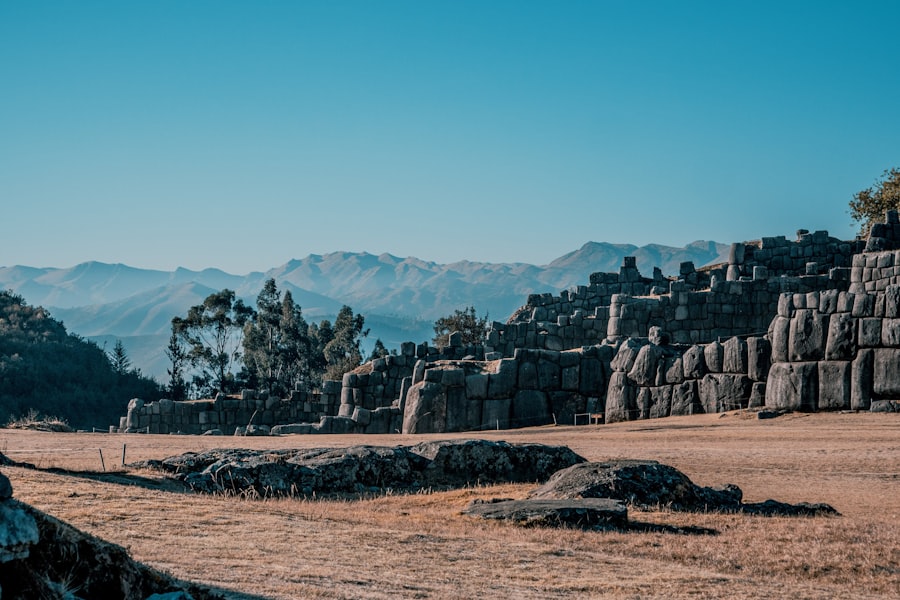
The colossal fortress-temple complex of Sacsayhuaman, perched majestically above the city of Cusco in the Peruvian Andes, stands as a testament to the extraordinary engineering prowess of the Inca civilization. Its massive, meticulously fitted stonework, some blocks weighing in excess of 100 tons, has long captivated archaeologists, engineers, and everyday observers alike. The sheer scale and precision of the construction have fueled centuries of speculation, giving rise to numerous theories regarding the methods employed to create such an awe-inspiring structure. This article delves into the enduring puzzle of Sacsayhuaman, exploring the logistical challenges, the proposed techniques, and the enduring questions surrounding how these colossal stones were so impeccably integrated.
The Incans and Their Stonework: A Legacy of Precision
The Inca civilization, flourishing in the Andes from the early 13th century until the Spanish conquest in 1532, left behind an unparalleled architectural legacy. Their mastery of stonework, characterized by dry-stone construction (ashlar masonry) without the use of mortar, is evident across their vast empire. Sacsayhuaman, however, represents the zenith of this architectural achievement, pushing the boundaries of what was thought possible with pre-industrial technology.
Contextualizing Inca Engineering
To understand Sacsayhuaman, it’s crucial to appreciate the broader context of Inca engineering. They were adept builders of roads, bridges, terraces, and urban centers, all designed to function harmoniously with the rugged Andean landscape. Their understanding of geology, hydrology, and seismic activity was sophisticated, allowing them to construct resilient structures in an earthquake-prone region. This expertise wasn’t accidental; it was the culmination of generations of accumulated knowledge and experimentation.
The Philosophy Behind the Stones
For the Inca, stone was more than just a building material; it held deep spiritual significance. Mountains were revered as apu (deities), and stone, as an extension of the earth, possessed a living quality. The precise fitting of blocks, often with complex polygonal shapes, was not merely an aesthetic choice but a reflection of their worldview – a desire to seamlessly integrate human creations with the natural world, echoing the interlocking patterns found in mountain ranges and geological formations.
The Unseen Labor: Unraveling the Logistics
The construction of Sacsayhuaman was an undertaking of monumental proportions, demanding an immense amount of planning, organization, and sheer human effort. The sheer weight and number of stones present a logistical puzzle that continues to challenge modern understanding.
Quarries and Transportation: The Journey Begins
The primary quarries for Sacsayhuaman were located several kilometers away from the construction site, notably the Rumiqolqa quarry. While some smaller stones might have been sourced closer, the massive blocks, some exceeding 10 meters in height and weighing hundreds of tons, had to be transported over undulating terrain. This journey was not a simple matter of rolling stones; it involved navigating valleys, hills, and river crossings.
The Enigma of Movement
How did the Inca move these colossal blocks? This remains one of the most debated aspects of Sacsayhuaman’s construction. Several theories have been proposed:
- Ramps and Levers: The most widely accepted theory involves the construction of earthen or stone ramps, gradually inclined, along which the stones could be moved. Teams of hundreds, even thousands, of laborers would then pull the stones using ropes made from strong fibers like maguey and ichu grass. Levers, made from sturdy timber, would have been essential for adjusting the stone’s position and overcoming obstacles.
- Log Rolling: Similar to ancient Egyptian methods, some propose that logs were placed beneath the stones, allowing them to be rolled. However, the uneven terrain around Sacsayhuaman would have made sustained log rolling difficult without extensive groundwork and potentially damaging to the logs themselves.
- Liquid Suspension (Hypothetical): Though largely dismissed by mainstream archaeology, some fringe theories suggest the use of unknown techniques involving liquid suspension or even sound-based levitation. These theories lack empirical evidence and are not supported by archaeological findings.
Shaping the Stones: The Art of Precision
Once at the construction site, the stones underwent an extraordinary transformation. The irregular, often multi-faceted shapes of the blocks are a hallmark of Inca masonry at Sacsayhuaman. This wasn’t merely about fitting; it was about creating a wall that was exceptionally strong and earthquake-resistant.
Tools and Techniques: A Labor of Love
The Inca possessed no iron tools, relying instead on bronze, tumbaga (a gold-copper alloy), and various stone tools. Their primary tools for shaping hard igneous rock like diorite and andesite would have included:
- Hammers and Mauls: Made from harder stones such as hematite or basalt, these were used for rough shaping, battering away at the rock surface.
- Abrasion and Polishing: Sand, water, and softer stones would have been used for finer shaping, grinding, and polishing the surfaces to achieve the remarkably smooth finishes observed on some blocks.
- Wedging and Fracturing: Precisely placed wooden wedges, soaked in water to expand, could create controlled fractures in the stone, aiding in its initial breakdown and shaping.
The Interlocking Puzzle: How the Stones Fit
The most mesmerizing aspect of Sacsayhuaman is the unparalleled precision with which the stones interlock. Gaps between adjacent blocks are often so minute that a single blade of grass cannot be inserted, a feat even more remarkable given the irregular shapes and colossal sizes of the individual stones.
The Art of Ensamble
The Inca mastered a technique known as ensamble, where stones were cut and fitted with such exactness that no mortar was required. This wasn’t just aesthetic; it was functional. The interlocking shapes provided exceptional structural integrity, resisting the lateral forces of earthquakes that frequently strike the Andean region.
Methods of Fitting: A Dialogue with Stone
How did the Inca achieve this seemingly impossible precision? While direct historical accounts are scarce, archaeological evidence and experimental archaeology offer compelling insights:
- Trial and Error: It is plausible that stones were initially rough-shaped and then repeatedly lifted, placed, and adjusted against their neighbors. Marks on the stones suggest a process of “dressing” the surfaces to achieve the perfect fit.
- Templates and Measurement: While the Inca didn’t possess written language in the European sense, they utilized knot-based mnemonic devices called quipu. It’s conceivable that some form of templates or sophisticated measuring techniques were employed to guide the shaping process, translating abstract designs into tangible forms.
- “Bumping and Grinding”: This theory suggests that the stones were maneuvered into approximate position, and then one of the surfaces was “bumped” or “ground” against the other, leaving witness marks. These marks would then guide further removal of material until a seamless fit was achieved. This would have required immense patience and a skilled workforce.
- The “Boss” and Recess Technique: Many blocks exhibit “bosses” or protrusions designed to interlock with corresponding recesses in adjacent stones. These served as guiding points and anchors, ensuring stability and even weight distribution.
Earthquake Resistance: A Design Masterstroke
The meticulous fitting of the stones was not merely an artistic flourish; it was a fundamental engineering principle designed to withstand the volatile seismic activity of the Andes. The dry-stone construction allows for a degree of movement between the blocks during an earthquake, dissipating energy and preventing catastrophic collapse. Unlike rigid, mortared structures that are prone to cracking, Sacsayhuaman’s walls act like a flexible, integrated puzzle, allowing the earth to shiver without shattering the whole.
Beyond the Physical: The Human Element
While the technical aspects of Sacsayhuaman are undeniably impressive, it is crucial not to overlook the human element that underpinned this colossal undertaking. The scale of the project suggests a highly organized society with a disciplined workforce.
The Mit’a System: Labor for the Empire
The Inca empire operated on a sophisticated system of reciprocal labor service known as the mit’a. Instead of taxes, citizens contributed labor to public works, agriculture, and military service. The construction of Sacsayhuaman would have been a prime example of mit’a in action, drawing thousands of laborers from across the empire. This system, while seemingly egalitarian, also represented a powerful mechanism of state control and resource allocation.
Leadership and Vision: The Architects of Power
Such a grand project would have required exceptional leadership and a clear vision. The Inca emperors, particularly Pachacuti, are credited with initiating many of the empire’s most ambitious building projects. The architects and master stonemasons, likely forming a specialized class within Inca society, would have possessed a profound understanding of geometry, materials, and structural mechanics. Their knowledge was empirical, tested over centuries of building and refinement.
Enduring Enigmas and Future Investigations
Despite centuries of study and numerous archaeological investigations, Sacsayhuaman continues to guard some of its secrets. The sheer complexity of its construction leaves ample room for further inquiry and discovery.
Unanswered Questions: The Veil of Time
Some of the key questions that continue to puzzle researchers include:
- The Exact Sequence of Construction: While the general phases of construction are understood, the precise order in which individual walls and sections were built, and how they integrated with the natural topography, remains debated.
- The Role of Specialized Teams: How specialized was the workforce? Were there teams dedicated solely to quarrying, transportation, rough shaping, and final fitting?
- The Source of Advanced Knowledge: While the Inca clearly possessed an advanced understanding of engineering, the origins of some of their most sophisticated techniques remain elusive. Was this knowledge developed organically over generations, or were there external influences?
Archaeological Advancements and New Insights
Modern archaeological techniques, such as laser scanning, photogrammetry, and geophysical surveys, are providing new ways to analyze Sacsayhuaman without disturbing its integrity. These methods can reveal hidden features, map the precise contours of the stones, and even identify subtle tool marks, offering fresh perspectives on the construction process.
Experimental Archaeology: Re-enacting the Past
Experimental archaeology, where researchers attempt to replicate ancient building techniques using historical tools and methods, is also yielding valuable insights. While it’s impossible to perfectly recreate the Inca context, these experiments help to understand the practical challenges and potential solutions involved in moving and shaping massive stones. For instance, attempts to fit large stones with simple tools demonstrate the immense time, skill, and manpower required.
In conclusion, the puzzle of Sacsayhuaman – how the stones fit – is a multifaceted one, encompassing not only the physics of moving and shaping colossal blocks but also the organizational genius, the spiritual beliefs, and the unwavering dedication of the Inca people. It stands as a powerful reminder of the ingenuity and perseverance of ancient civilizations, an enduring monument that continues to inspire awe and curiosity. While we may never fully unravel every secret held within its ancient stones, the ongoing pursuit of understanding only deepens our appreciation for this magnificent testament to human achievement. As you contemplate its walls, imagine the collective effort, the precise planning, and the sheer force of will that transformed raw stone into an edifice that has stood defiant against the passage of time and the forces of nature. Sacsayhuaman is not just a ruin; it is a living question posed by a civilization that dared to build beyond imagination.
STOP: Why They Erased 50 Impossible Inventions From Your Textbooks
FAQs
What is Sacsayhuamán?
Sacsayhuamán is an ancient archaeological complex located near Cusco, Peru. It is known for its impressive stone walls constructed by the Inca civilization, featuring large, precisely cut stones that fit together without mortar.
How were the stones at Sacsayhuamán cut and shaped?
The stones were shaped using a combination of stone hammers, bronze tools, and possibly harder stones to chip away and smooth the surfaces. The Inca craftsmen achieved precise fits by carefully shaping each stone to interlock with its neighbors.
Why do the stones at Sacsayhuamán fit together so tightly?
The stones fit tightly due to meticulous craftsmanship and the technique of shaping each stone to match the contours of adjacent stones. This method provided structural stability and resistance to earthquakes, as the stones could move slightly without collapsing.
What materials are the Sacsayhuamán stones made of?
The stones are primarily made of andesite, a volcanic rock that is both durable and workable. The large blocks vary in size, with some weighing several tons.
Did the Incas use mortar to hold the stones together at Sacsayhuamán?
No, the Incas did not use mortar. The stones were cut and fitted so precisely that they remain stable through their interlocking shapes and weight alone, a technique that has helped the structure endure for centuries.