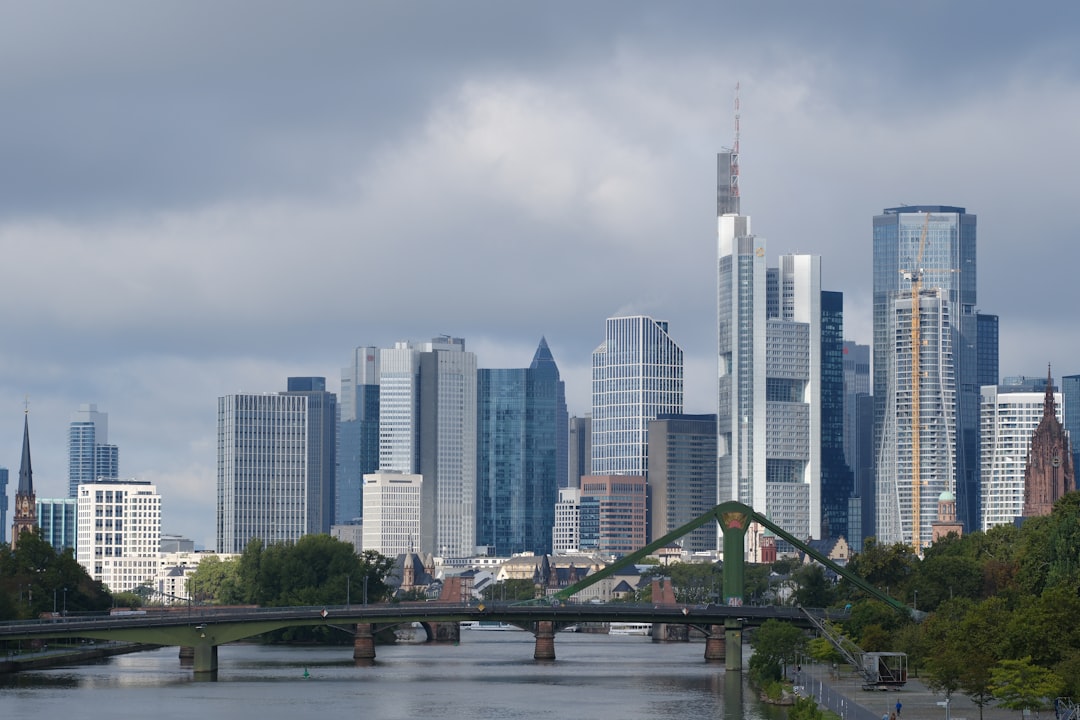
Germany, long lauded as the economic powerhouse of Europe, has cultivated an image of unshakeable stability and industrial prowess. For decades, its consistently positive trade balances, robust manufacturing sector, and low unemployment figures painted a picture of an economy firing on all cylinders. However, a deeper examination reveals that this perception, while not entirely fabricated, was arguably an illusion – a carefully constructed facade built upon misleading indicators and hidden weaknesses that, for a significant period, obscured underlying vulnerabilities. The narrative of German economic strength, while convenient for policymakers and financial markets, ultimately masked a more complex and, at times, precarious reality.
For many years, the primary indicators of Germany’s economic health presented a consistently optimistic outlook. These figures, while accurate in their raw form, often lacked sufficient contextualization to reveal the deeper structural issues at play. Observing these data points in isolation fostered a pervasive belief in Germany’s unparalleled resilience.
Trade Surpluses: A Double-Edged Sword
Germany’s persistent trade surpluses were frequently cited as irrefutable proof of its economic might. Year after year, the value of its exports significantly outstripped its imports, generating substantial capital inflows and bolstering its national accounts. This seemingly unwavering success was often attributed to the high quality and engineering excellence of German products, particularly in the automotive, machinery, and chemical sectors.
However, the narrative surrounding these surpluses often overlooked crucial nuances. While certainly demonstrating strong export capabilities, the sheer magnitude of the surpluses also hinted at suppressed domestic demand. A nation that consistently exports significantly more than it imports can be seen as under-consuming, potentially at the expense of its own citizens’ purchasing power and overall economic vibrancy. Furthermore, Germany’s export model became heavily reliant on specific global markets, particularly China, creating a concentrated risk profile. Any slowdown in these key markets had the potential to ripple through the German economy, exposing a vulnerability masked by the overall positive trade balance.
Low Unemployment Rates: A Statistical Anomaly?
Germany’s consistently low unemployment rates were another cornerstone of its economic reputation. Compared to many of its European counterparts, Germany successfully maintained remarkably low levels of joblessness, even during periods of global economic turbulence. This achievement was frequently attributed to its dual vocational training system, which provided a skilled workforce aligned with industry needs, and its flexible labor market policies.
Yet, a closer inspection reveals that the headline unemployment figures might have presented an incomplete picture. The rise of temporary contracts, an expanding low-wage sector, and the implementation of Kurzarbeit (short-time work schemes) during economic downturns, while effective in preventing mass layoffs, could also obscure underemployment and a decline in real wage growth for certain segments of the population. While these policies undoubtedly helped maintain social stability, they also arguably masked underlying challenges related to job quality and income inequality, which did not necessarily reflect a uniformly thriving labor market for all.
Manufacturing Dominance: A Relic of the Past?
The “Made in Germany” label became synonymous with quality and reliability, underpinned by a robust manufacturing sector that remained a significant contributor to GDP. Unlike many other developed nations that had largely de-industrialized, Germany steadfastly held onto its industrial base, often seen as a crucial competitive advantage.
However, this dominance, while still significant, faced growing pressures. The global shift towards digitalization, artificial intelligence, and new energy technologies began to expose a certain inertia within some traditional German industries. While celebrated for its engineering prowess, a reluctance to fully embrace disruptive innovations and a sometimes-slow pace of digital transformation threatened future competitiveness. Furthermore, the reliance on internal combustion engine technology within the automotive sector, while historically successful, became a significant liability as the world rapidly transitioned towards electric vehicles, highlighting a potential over-reliance on established, rather than emerging, industrial strengths.
Germany’s economy has often been portrayed as a model of stability and efficiency, but a closer examination reveals underlying issues that challenge this narrative. For an insightful analysis on this topic, you can read the article titled “The Illusion of Germany’s Economic Success” which delves into the discrepancies between perceived growth and actual economic indicators. This article provides a critical perspective on the factors that contribute to the myth of Germany’s economic prowess. To explore this further, visit this link.
Cracks in the Edifice: Emerging Weaknesses and Unaddressed Challenges
Beneath the veneer of surface-level indicators, a series of unaddressed challenges and structural weaknesses began to manifest, slowly eroding the foundation of Germany’s perceived economic invincibility. These issues, often downplayed or ignored, were key to understanding the subsequent recalibration of expectations.
Infrastructure Decay: Neglecting the Foundation
Despite its wealth, Germany’s public infrastructure often showed signs of neglect. Potholed roads, aging bridges, strained rail networks, and slow broadband internet speeds became increasingly common complaints. This deterioration was a direct consequence of chronic underinvestment over several decades.
The focus on fiscal prudence, famously embodied by the “zero new debt” policy (Schwarze Null), led to a reluctance to fund necessary upgrades and expansions. While laudable in its intent to maintain budgetary discipline, this approach arguably prioritized short-term financial stability over long-term economic competitiveness. A nation’s infrastructure is the circulatory system of its economy; its degradation acts as a silent drag on productivity, efficiency, and ultimately, growth potential. The illusion of economic strength was maintained while important arteries of the economy slowly constricted.
Demographic Shifts: The Looming Crisis
Germany faces one of the most significant demographic challenges among developed nations. A rapidly aging population, coupled with persistently low birth rates, creates a demographic time bomb that has long been recognized but inadequately addressed. This demographic shift presents a multifaceted problem.
Firstly, a shrinking working-age population places increasing pressure on the social security system, particularly pensions and healthcare. Fewer contributors are left to support a growing number of retirees, threatening the long-term sustainability of the welfare state. Secondly, a declining workforce can lead to labor shortages, particularly in skilled professions, hindering innovation and economic expansion. Thirdly, an aging population tends to be less entrepreneurial and innovative, potentially stifling dynamism and adaptability. While Germany has historically benefited from its well-trained workforce, the demographic trend threatened to erode this advantage, presenting a fundamental challenge to its long-term growth prospects.
Digital Lag: A Reluctance to Innovate
For a country renowned for its engineering, Germany surprisingly lagged behind many of its peers in digital transformation. Despite being a major industrial power, the country often struggled with the adoption of cutting-edge digital technologies, both in the public and private sectors.
The causes were multi-faceted: a bureaucratic mindset, a strong preference for established technologies over nascent ones, and a fragmented digital infrastructure contributed to this lag. While industries like automotive and machinery were world leaders in their analog forms, their digital counterparts often faced challenges adapting to the rapid pace of technological change. This digital lethargy threatened to undermine Germany’s competitiveness in an increasingly data-driven and interconnected global economy. Relying on past successes in traditional industries, while neglecting the imperative for digital innovation, created a significant vulnerability, particularly as other nations aggressively pursued technological leadership.
The External Gaze: Misinterpreting Germany’s Role

The perception of Germany’s economic strength was not solely an internal construct; it was also heavily influenced by external factors and the way its economy was perceived within the wider European and global context. These external lenses often simplified a complex reality, contributing to the illusion.
The Anchor of the Eurozone: A Burden or a Blessing?
Within the Eurozone, Germany was consistently seen as the economic anchor, the guarantor of stability during times of crisis. Its fiscal prudence and strong export performance were often lauded as models for other member states. This perception, while partly true, also placed significant expectations and sometimes burdens on Germany.
During the Eurozone sovereign debt crisis, Germany’s economic strength was leveraged to provide financial assistance to struggling member states. This role, while necessary for the stability of the common currency, also exposed Germany to significant financial risks. Furthermore, its consistent trade surpluses within the Eurozone raised questions about internal imbalances, with some critics suggesting that Germany benefited disproportionately from the common currency at the expense of less competitive member states. The image of the strong anchor, while reassuring, also obscured the systemic interconnectedness and the potential for contagion that could affect Germany itself.
Global Supply Chains: A Fragile Interdependence
Germany’s highly specialized manufacturing industries were deeply integrated into complex global supply chains. This integration was a cornerstone of its export success, allowing it to source components efficiently and distribute finished goods worldwide.
However, the COVID-19 pandemic and subsequent geopolitical disruptions brutally exposed the fragility of these chains. Dependencies on single suppliers or specific regions for critical components led to severe bottlenecks, production halts, and significant economic disruption. The illusion of seamless global integration was shattered, revealing a vulnerability to external shocks that had previously been underestimated. While efficient in peacetime, a lack of diversification and resilience in supply chains proved to be a critical weakness, challenging the notion of an unassailable industrial base.
The Unveiling of Reality: A Shift in Perception

In recent years, a confluence of factors – geopolitical instability, energy crises, and the accelerated pace of technological change – began to chip away at the illusion of Germany’s unparalleled economic strength. Policymakers, businesses, and the public alike started to acknowledge the deeper systemic issues.
The Energy Crisis: A Vulnerability Exposed
Germany’s reliance on Russian natural gas, a strategic decision driven by economic considerations, became a profound geopolitical liability following Russia’s invasion of Ukraine. The subsequent energy crisis exposed a critical vulnerability that had long been underestimated.
The sudden spike in energy prices and the potential for supply disruptions threatened to cripple crucial industrial sectors, particularly those that were energy-intensive. The illusion of reliable, affordable energy powering Germany’s industrial might was shattered, forcing a rapid and costly pivot towards alternative energy sources and a re-evaluation of energy security. This crisis served as a stark reminder that economic strength is not solely built on industrial output but also on the security and diversity of critical inputs.
Geopolitical Headwinds: Shifting Global Order
The era of globalization, which had largely benefited Germany’s export-oriented economy, began to experience significant headwinds. Rising protectionism, increased geopolitical tensions, and the fragmentation of global trade blocs posed new challenges for a country heavily dependent on open markets.
The emphasis on national security over purely economic efficiency, coupled with a renewed focus on domestic production and supply chain resilience in many parts of the world, challenged Germany’s traditional export model. The illusion of a consistently expanding and predictable global market, where German goods could always find buyers, gave way to a more volatile and uncertain landscape. Adapting to this new reality required fundamental shifts in strategy, moving away from an unquestioning embrace of globalization towards a more nuanced approach that balanced economic opportunity with geopolitical risk.
The Tiring Engine: Questions of Future Competitiveness
As the global economy underwent rapid transformation, questions began to emerge about the long-term competitiveness of Germany’s core industries. While still strong, some traditional sectors faced increasing pressure from emerging economies and innovative players in other developed nations.
The delayed digital transformation, the challenges of transitioning to a green economy, and the demographic crunch combined to create doubts about Germany’s capacity to maintain its leading edge. The comfortable illusion of perpetual industrial dominance began to fade, replaced by a more sober assessment of the need for accelerated innovation, significant investment in future technologies, and a fundamental modernization of its economic structures to adapt to a changing world. The once unshakeable engine now required substantial re-tooling to ensure it could continue to drive prosperity in the decades to come.
In conclusion, Germany’s economic strength, while undoubtedly real in many aspects, was for a significant period amplified by misleading indicators and obscured by unaddressed structural weaknesses. The illusion of an unblemished economic powerhouse, while serving a political and psychological purpose, ultimately delayed necessary reforms and adjustments. The recent confluence of global challenges has served as a powerful catalyst, forcing a more realistic appraisal of Germany’s economic landscape. Moving forward, a sustained and honest approach to addressing these long-standing issues will be crucial for Germany to build a truly resilient and future-proof economy, rather than merely maintaining a persuasive, but ultimately fragile, illusion.
FAQs
What is the main argument behind the claim that Germany’s economy was a lie?
The main argument is that Germany’s economic strength was overstated due to factors like high levels of debt, reliance on exports, and structural weaknesses that were masked by short-term growth indicators.
How did Germany’s export dependency affect perceptions of its economic health?
Germany’s economy heavily depends on exports, especially to other European countries and China. This reliance made the economy vulnerable to global market fluctuations, which sometimes gave a misleading impression of stability and growth.
What role did government debt and fiscal policies play in the critique of Germany’s economy?
Critics argue that Germany’s fiscal policies, including austerity measures and underinvestment in infrastructure and social services, contributed to hidden economic problems. Additionally, some debt levels and financial obligations were not fully transparent, leading to skepticism about the true economic condition.
Were there structural issues within Germany’s economy that contributed to the perception of it being a ‘lie’?
Yes, structural issues such as an aging population, labor market rigidities, and insufficient domestic demand were cited as underlying problems that challenged the sustainability of Germany’s economic model.
How did the global economic environment impact the narrative around Germany’s economy?
Global economic slowdowns, trade tensions, and the COVID-19 pandemic exposed vulnerabilities in Germany’s export-driven economy, prompting analysts to question the durability and authenticity of its previously perceived economic strength.