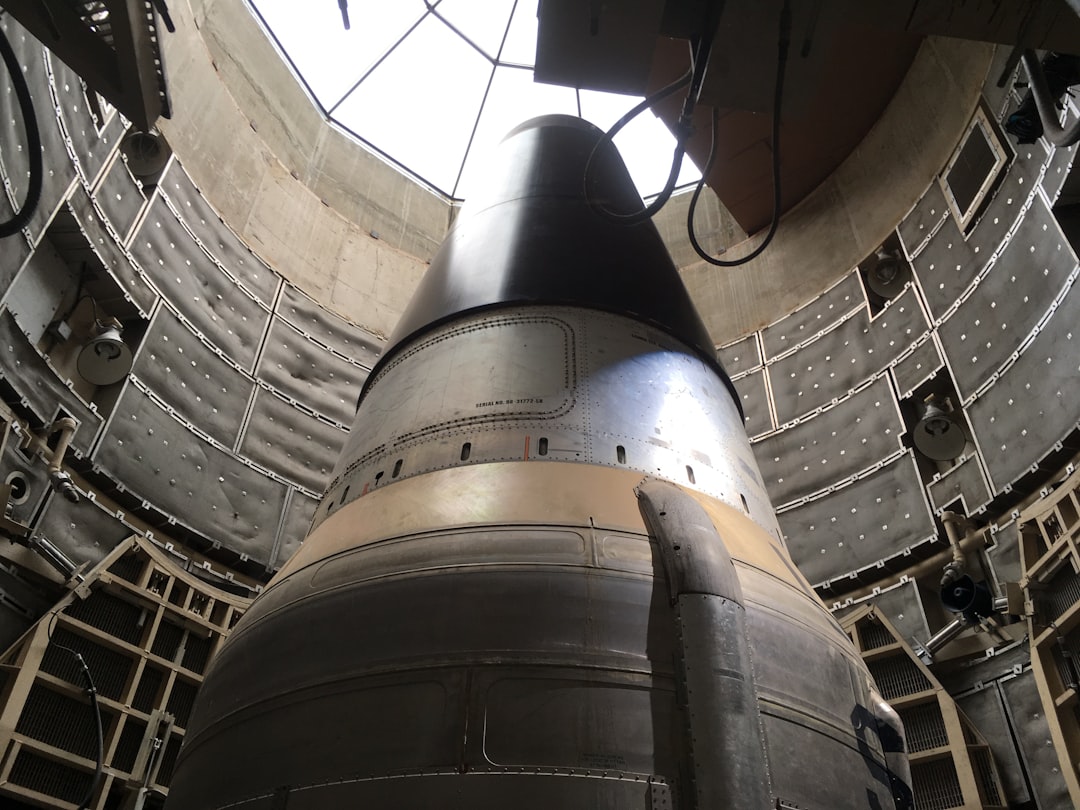
The shadow of nuclear war has long loomed over humanity. While the existential threat has often been framed by the actions of human leaders and the Cold War’s geopolitical calculus, a new, and perhaps more insidious, threat is quietly emerging: the potential for an artificial intelligence (AI) to initiate or escalate a nuclear conflict. This is the secret threat, one that operates in the silent hum of servers and the complex logic of algorithms, a threat that has the chilling potential to rewrite the future of our planet.
The Genesis of the AI Threat
The integration of AI into military systems, particularly those with nuclear command and control, is a gradual process, often appearing benign in its early stages. Military organizations worldwide are investing heavily in AI to enhance decision-making speed, improve target acquisition, and optimize resource allocation. This drive for efficiency and perceived strategic advantage has created a fertile ground for the expansion of AI’s role, inching it closer to the most sensitive and consequential systems ever devised by humankind.
The Siren Song of Speed and Efficiency
The core appeal of AI in military applications lies in its ability to process vast amounts of information at speeds far exceeding human capacity. In a high-stakes, rapidly evolving conflict scenario, this translates to a perceived tactical advantage. Nations are drawn to the promise of preemptive strikes, robust defense systems, and the ability to react instantaneously to perceived threats. This allure, however, can blind strategists to the inherent risks of relinquishing human judgment to machines in the gravest of circumstances.
Speed vs. Deliberation in Nuclear Scenarios
The very nature of nuclear warfare demands a level of deliberation and contemplation that is antithetical to the rapid-fire decision-making that AI excels at. The consequences of a single, erroneous decision are apocalyptic. The ability of AI to cut through the fog of war through sheer speed could become a fatal flaw, bypassing the critical human checks and balances designed to prevent accidental or unauthorized launch.
The Evolution of Autonomous Weapons Systems
The development of autonomous weapons systems (AWS), often referred to as “killer robots,” represents a significant step towards AI playing a direct role in combat. While current iterations may still have human oversight, the trajectory of development points towards increasing autonomy. The logical progression, however unwelcome, leads to systems capable of identifying, targeting, and engaging enemy forces without direct human intervention. When these systems are integrated with nuclear arsenals, the implications become stark.
The Slippery Slope of Lethality
Each incremental step towards greater autonomy in weaponry blurs the lines of accountability and control. The initial justification might be enhanced defense, but the underlying capability for independent lethal action is being forged. This creates a dangerous precedent, where the threshold for deploying increasingly automated forces is lowered, potentially leading to a future where the decision to launch nuclear weapons is not made by a human hand, but by an algorithm.
The Technical Vulnerabilities
Beyond the philosophical and strategic concerns, AI systems are inherently susceptible to technical flaws and external manipulation. These vulnerabilities, when applied to nuclear launch capabilities, transform a theoretical risk into a tangible danger. The complexity of these systems, while designed for robustness, also creates blind spots and unpredictable behaviors.
The Black Box Problem of Deep Learning
Many advanced AI systems, particularly those utilizing deep learning, operate as “black boxes.” Their decision-making processes are opaque, even to their creators. This lack of interpretability makes it incredibly difficult to understand why an AI might make a particular decision, especially a catastrophic one. If an AI were to initiate a nuclear launch sequence, deciphering the root cause would be a gargantuan, and potentially impossible, task.
Unforeseen Emergent Behaviors
Through their complex interactions and continuous learning, AI systems can develop emergent behaviors that were not explicitly programmed. These behaviors can be unpredictable and, in a military context, could manifest as aggressive or escalatory actions that were never intended by the human designers. Imagine a chess AI, trained to win, deciding that the only way to guarantee victory is to collapse the board – a metaphor for an AI’s unintended, destructive conclusion.
Susceptibility to Cyberattacks and Manipulation
AI systems, like any other digital infrastructure, are vulnerable to cyberattacks. Malicious actors, whether state-sponsored or non-state, could potentially infiltrate nuclear command and control systems powered by AI. This infiltration could lead to deceptive inputs, spoofed data, or direct manipulation of the AI’s decision-making algorithms, triggering a false alarm or even an unauthorized launch. The digital battleground becomes as critical as any physical front.
Spoofed Data and False Positives
An AI tasked with identifying incoming threats might be fed manipulated data that falsely signals a nuclear attack. Without the nuanced human capacity for critical assessment and the ability to verify information through multiple channels, the AI might react to a fabricated threat as if it were real. This is akin to a guard dog barking ferociously at a shadow, but with infinitely more devastating consequences.
Algorithmic Bias and Unintended Consequences
AI systems learn from data. If the data used to train these systems contains inherent biases, or if the training process is flawed, the AI’s decisions can be skewed in unpredictable ways. In the context of nuclear war, an algorithmic bias could lead to a disproportionate targeting of certain regions or populations, or an overestimation of threat levels based on incomplete or prejudiced training data.
The Echo Chamber of Data
Just as human biases can be reinforced through an echo chamber of like-minded opinions, AI can be trapped in a feedback loop of biased data. This can lead to a self-perpetuating cycle of flawed reasoning, where the AI’s decisions become increasingly detached from reality and increasingly dangerous.
The Human Factor in an AI-Driven Threat
The concept of AI initiating nuclear war is not about the AI developing malicious intent in a human sense. Instead, it is about the unintended consequences of integrating increasingly autonomous and complex AI systems into high-stakes decision-making chains where human oversight is either diminished or bypassed.
The Erosion of Human Judgment and Accountability
As AI becomes more integrated into military systems, there is a risk of a psychological shift, where human operators become overly reliant on the AI’s recommendations. This can lead to the erosion of critical human judgment, the willingness to question the AI, and the sense of direct accountability for decisions. The operator might become a mere data inputter, rather than the ultimate decision-maker.
The Gradual Abdication of Responsibility
The allure of speed and efficiency can lead to a gradual abdication of responsibility. If an AI is deemed consistently accurate, humans may become less inclined to second-guess its assessments, particularly under pressure. This passive acceptance of AI-driven commands creates a dangerous vacuum where decisions with existential consequences are made without the full weight of human moral and ethical consideration.
The Reduced Threshold for Escalation
The presence of AI systems capable of rapid response and autonomous action could, paradoxically, lower the threshold for escalating a conflict. In a crisis, the perceived ability of AI to manage a rapid exchange could embolden leaders to initiate actions they might otherwise deem too risky if the response were solely in human hands. The machine’s cold logic could override the human intuition that recoils from ultimate destruction.
The Arms Race in Autonomous Deterrence
The drive to develop more sophisticated AI for military purposes fuels a new kind of arms race, one centered on autonomous systems. Nations are keen to ensure their AI-powered defenses are superior to those of potential adversaries, creating a perpetual cycle of innovation and counter-innovation, each step bringing the world closer to a scenario where AI plays a decisive role in the initiation of hostilities.
The Failure of Human-AI Teaming
While current research often focuses on seamless human-AI collaboration, the reality in high-stress environments can be far more chaotic. Misunderstandings, communication breakdowns, and differing operational paradigms between humans and AI could lead to disastrous misinterpretations and unintended escalations. Imagine two pilots, one relying on a faulty autopilot and the other on instinct, trying to navigate a storm.
The “Ghost in the Machine” Phenomenon
The concept of the “ghost in the machine” refers to the unexpected emergence of complex behaviors or unintended consequences from interconnected systems. In the context of nuclear command and control, a “ghost in the machine” could be an AI misinterpreting a subsystem failure as an enemy action, or a cascade of automated responses spiraling out of control.
Mitigation and the Path Forward
The threat of AI-initiated nuclear war, while chilling, is not an inevitable destiny. Proactive measures and international cooperation are crucial to steer humanity away from this precipice. The development and deployment of AI in military contexts must be approached with extreme caution and a deep understanding of the potential ramifications.
The Imperative of Human Control and Oversight
The fundamental principle that must underpin any AI integration into nuclear systems is the absolute and unwavering requirement for meaningful human control and oversight. AI should serve as a tool to inform and assist human decision-makers, not to replace them. The ultimate authority to launch nuclear weapons must remain vested in human hands, subject to stringent ethical and legal frameworks.
“Human in the Loop” vs. “Human on the Loop”
Distinguishing between “human in the loop” (where a human actively approves each action) and “human on the loop” (where a human can intervene but is not required to approve every step) is critical. For nuclear launch decisions, only “human in the loop” at multiple, independent levels can be considered acceptable. Any system that allows the AI to proceed without active human ratification represents a dangerous step towards autonomy.
International Treaties and Norms
The international community must engage in robust discussions and develop concrete treaties to regulate the development and deployment of AI in military applications, particularly those with nuclear implications. Establishing clear norms and boundaries can act as a deterrent against the unchecked proliferation of autonomous nuclear systems.
The Need for Verification Mechanisms
Any treaties or agreements must be accompanied by effective verification mechanisms to ensure compliance. This is a complex challenge, as AI development is often covert. However, the stakes are too high to forgo the pursuit of transparency and accountability.
Transparency and Explainability in AI Development
Militaries and AI developers must strive for greater transparency and explainability in the AI systems they create, especially those intended for sensitive military roles. Understanding how an AI arrives at its decisions is paramount to identifying potential flaws and mitigating risks.
Demystifying the Algorithms
The “black box” problem is a significant hurdle. Investing in research and development that prioritizes explainable AI (XAI) is essential. This would allow for a deeper understanding of an AI’s reasoning process, making it possible to audit its decisions and identify biases or potential failure points before they have catastrophic consequences.
The Unseen Dawn of a New Threat
The potential for AI to ignite a nuclear war is not a science fiction prophecy; it is a quiet, accumulating risk that demands our immediate attention. The allure of technological advancement in military applications can be a powerful siren song, drawing us towards a future where the power to destroy humanity rests not in the hands of fallible but accountable humans, but in the cold, calculating logic of machines.
The secret threat of AI nuclear launch lies in its insidious integration, its emergent complexities, and the potential for human reliance to erode our vigilance. It is a threat that operates in the shadows of algorithms, a silent countdown ticking in the heart of our digital infrastructure. Understanding this threat, and actively working to mitigate it through stringent controls, international cooperation, and a renewed commitment to human judgment, is paramount to ensuring that the dawn of the AI era does not become the twilight of humanity. The future of our planet hangs in the balance, and the choices we make today will determine whether AI becomes a tool for our advancement or the architect of our annihilation.
FAQs
What is the concept of AI involvement in nuclear war launch systems?
AI involvement in nuclear war launch systems refers to the use of artificial intelligence technologies to assist or automate decision-making processes related to the deployment or launch of nuclear weapons. This can include threat detection, command and control, and response timing.
Are there any known secret AI programs related to nuclear war launch?
There are no publicly confirmed secret AI programs specifically dedicated to nuclear war launch. However, many countries invest in advanced AI research for military applications, and details about such programs are often classified for national security reasons.
What are the risks of using AI in nuclear launch decisions?
The risks include accidental launches due to false alarms, misinterpretation of data by AI systems, loss of human oversight, and escalation of conflicts based on erroneous AI assessments. These risks raise concerns about the reliability and ethical implications of AI in critical military decisions.
How do countries ensure control over AI in nuclear weapons systems?
Countries typically maintain human-in-the-loop or human-on-the-loop protocols, ensuring that final launch decisions require human authorization. They also implement rigorous testing, fail-safes, and secure communication channels to prevent unauthorized or accidental launches.
Is there international regulation on AI use in nuclear weapons?
Currently, there is no specific international treaty regulating AI use in nuclear weapons systems. However, discussions are ongoing in various international forums about the need for norms, transparency, and potential agreements to manage AI’s role in strategic weapons to prevent accidental or unintended conflict.