
The human drive to innovate and protect has forged a remarkable tapestry of weaponry throughout history. From the raw power of a sharpened stone to the intricate design of a siege engine, these instruments of conflict have not merely been tools of destruction, but catalysts for change, shaping civilizations, forging empires, and dictating the course of human events. This exploration delves into fifteen ancient weapons that have left an indelible mark on history, demonstrating the ingenuity and relentless pursuit of tactical advantage that has defined warfare for millennia.
The earliest human ingenuity was born out of necessity, and in the realm of conflict, this translated into the repurposing of natural materials. Stone, readily available and remarkably effective, became the bedrock of early weaponry, a testament to the power of simple adaptation.
The Hand Axe: The Genesis of Portable Power
The hand axe, a chipped stone tool with a sharpened edge, represents one of humanity’s oldest and most versatile weapons. Its origins stretch back to the Lower Paleolithic period, predating the emergence of Homo sapiens as a distinct species. This rudimentary implement served a dual purpose: as a tool for butchering game and crafting other objects, and as a formidable weapon for close-quarters combat.
- Design and Functionality: Typically formed from flint, obsidian, or other hard stones, the hand axe was shaped by striking flakes off a core stone, creating a sharp, often bifacial edge. Its weight and balance were crucial for effective use, allowing for a powerful chopping or thrusting motion. While seemingly primitive, its effectiveness lay in its simplicity and the raw force it could deliver. This was not a weapon of subtlety, but of brute impact.
- Historical Significance: The widespread distribution of hand axes across continents speaks to their fundamental role in early human survival and expansion. They were the Swiss Army knives of the Paleolithic, enabling early hominins to hunt, defend themselves, and manipulate their environment. Their presence in archaeological sites is a direct indicator of human presence and activity, marking the very first steps in the development of portable offensive capabilities.
The Sling: Projectile Prowess from Afar
The sling revolutionized ranged warfare, allowing individuals to project projectiles with significant force and accuracy from a distance. Its simplicity belies its lethal potential, offering a tactical advantage that remained relevant for thousands of years.
- Technological Evolution: Early slings were likely made from braided plant fibers or animal hides. The principle was straightforward: a pouch held a projectile, typically a stone, which was then whirled and released with focused energy. The velocity achieved by a skilled user could be considerable, capable of incapacitating or even killing an opponent. This was the precursor to modern ballistic weapons, a primal drumbeat of projectile power.
- Military Applications: The sling found widespread use in ancient armies, particularly among irregular troops and skirmishers. Its effectiveness against massed infantry was undeniable, sowing disruption and casualties before close combat ensued. The slingers of the Balearic Islands, renowned for their accuracy, were highly sought after mercenaries throughout the ancient Mediterranean.
In exploring the fascinating world of ancient weaponry, one can gain deeper insights into how these tools shaped civilizations and altered the course of history. A related article that delves into this topic is “15 Ancient Weapons That Broke History,” which highlights the significance of various weapons and their impact on warfare and society. To further enhance your understanding of this subject, you can read more about it in this comprehensive piece found at this link.
Bronze and Iron: The Metal Revolution in Warfare
The discovery and mastery of metallurgy marked a seismic shift in the capabilities of ancient weaponry. Bronze and, subsequently, iron allowed for the creation of more durable, sharper, and more potent instruments of war, fundamentally altering the nature of conflict and the balance of power.
The Bronze Sword: The Elegance of Edge
The advent of bronze casting, around 3000 BCE, ushered in an era of superior weaponry. The bronze sword, a defining weapon of its period, offered a significant improvement over stone and bone implements.
- Material Advantages: Bronze, an alloy of copper and tin, was more resilient than stone, less prone to shattering, and could hold a finer edge. Swords could be forged in various lengths and styles, from short thrusting daggers to longer, slashing blades, adapting to different fighting styles and tactical needs. This was a weapon that spoke of artistry and lethal precision.
- Impact on Warfare: The bronze sword became a symbol of status and martial prowess. Its introduction led to more organized warfare and the rise of warrior elites. The ability to equip soldiers with standardized, reliable blades significantly impacted battlefield tactics, allowing for more effective offensive maneuvers and a more decisive engagement of the enemy.
The Iron Spear: Reach and Penetration
While bronze was a significant advancement, the subsequent discovery of iron smelting, around 1200 BCE, introduced an even more accessible and versatile material for weapon crafting. The iron spear, in its many forms, was a cornerstone of ancient armies.
- Forging the Frontier: Iron, being more abundant than the components of bronze, allowed for the mass production of weapons. The iron spear, with its sharpened tip and often the addition of a metal butt spike, provided both reach and penetration. It was effective against both infantry and cavalry, serving as a primary weapon for centuries.
- The Backbone of the Phalanx: The spear was the quintessential weapon of the phalanx, the tightly packed infantry formations that dominated ancient battlefields. The coordinated thrust of hundreds of leveled spears presented an almost impenetrable barrier, capable of breaking enemy charges and dominating the field through sheer organized force.
The Chariot: Speed and Shock on the Ancient Battlefield
The invention of the chariot, powered by horses, represented a monumental leap in battlefield mobility and offensive capability. This agile platform combined speed, shock value, and the ability to deliver a concentrated assault.
- Design and Deployment: Chariots, typically light, two-wheeled vehicles pulled by one or two horses, were crewed by a driver and an archer or spearmen. They allowed warriors to rapidly reposition, launch missile attacks, and then withdraw before the enemy could effectively respond. The psychological impact of a charging chariot, with its thundering hooves and flashing weaponry, was immense. This was not just a weapon; it was a mobile thunderclap of destruction.
- An Empire’s Enforcer: Chariots were indispensable to the armies of early empires such as the Egyptians, Hittites, and Assyrians. They were used for reconnaissance, shock attacks, and to break enemy infantry formations, paving the way for the main body of the army to advance. Their effectiveness waned with the development of more robust cavalry, but their impact on early warfare was profound.
Siegecraft and Engineering: The Art of Breaking Walls

As settlements grew into fortified cities, the need to breach defenses became paramount. This gave rise to a sophisticated branch of ancient weaponry focused on engineering and destructive power, designed to overcome the most formidable static fortifications.
The Battering Ram: The Blunt Force of Conquest
The battering ram, a simple yet devastatingly effective siege weapon, relied on brute force to overcome gates and walls. Its impact could reduce even the stoutest defenses to rubble over time.
- Construction and Application: These were typically long, heavy timbers, often reinforced with metal at the striking end. They were swung by teams of soldiers or suspended from a frame to increase momentum. To protect the operators from missile fire, rams were often housed within protective sheds, themselves designed to withstand the rigmaton of siege warfare. This was the relentless hammer against the anvil of the city.
- A Symbol of Determination: The battering ram’s effectiveness was directly proportional to the perseverance of the attackers. While a single blow might do little, repeated impacts would splinter wood, crack stone, and eventually create a breach through which attackers could pour. Its use was a testament to the attacker’s will and the defender’s dwindling resistance.
The Ballista: Ancient Precision Artillery
The ballista, a large mechanical bolt-thrower, brought a new level of precision and destructive power to siege warfare. It acted as a precursor to modern artillery, capable of launching heavy projectiles with considerable force.
- Tension and Trajectory: Based on the principles of torsion, the ballista used tightly wound ropes or sinews to power its release mechanism. This allowed it to propel large bolts or stones with accuracy over significant distances. The sound of a ballista firing was a chilling prelude to impact, each shot a carefully calibrated threat.
- Countering Defenses and Assaults: Ballistae were employed to shower defenders on walls with missiles, to destroy siege engines, and to batter sections of fortifications from a safe distance. They provided attackers with a mobile, ranged threat that could disrupt enemy defenses and suppress counter-attacks, playing a crucial role in the success of many sieges.
The Catapult (Onager): Slinging Destruction
While the ballista fired bolts, the catapult, particularly the onager, was designed to hurl heavy stones and incendiary projectiles. Its power lay in its immense throwing arm, powered by torsion.
- Leverage and Launch: The onager utilized a large torsion bundle to power a long throwing arm. When the arm was released, it would slam against a crossbar, launching its payload with tremendous force. The sheer mass of the projectiles, often many kilograms, meant that any direct hit could cause significant structural damage or devastating casualties. This was the ancient world’s answer to area denial and demolition.
- Psychological and Physical Warfare: Catapults were instrumental in breaking down city walls, showering garrisons with rocks, and spreading fire through the use of incendiary projectiles. The psychological impact of these massive projectiles raining down upon a city was immense, often demoralizing defenders and hastening their surrender.
The Rise of Missiles: Ranged Warfare Perfected
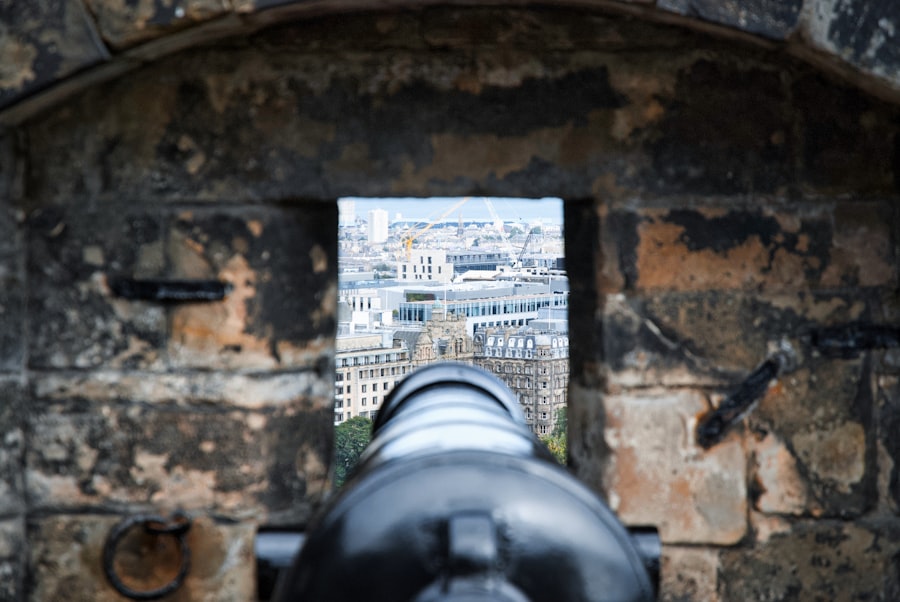
The evolution of ranged weapons continued apace, with innovations that increased range, accuracy, and rate of fire, fundamentally altering battlefield dynamics and the effectiveness of infantry and cavalry.
The Composite Bow: Power in a Compact Form
The composite bow, crafted from layered wood, horn, and sinew, represented a significant leap in archery technology. Its construction allowed for a much higher draw weight and thus greater power and range than simple wooden bows.
- Engineering for Power: The combination of different materials, each with unique elastic properties, created a bow that could store and release more energy. This resulted in arrows that could penetrate armor and travel farther, making archers a far more potent force on the battlefield. This was an ingenious fusion of natural elements to create a weapon of lethal velocity.
- The Scourge of Mounted Warriors: The effectiveness of the composite bow was particularly evident in the hands of mounted archers, such as the Huns and Mongols (though slightly later than the “ancient” period for some, their influence is undeniable in the lineage of such weapons). Their ability to rain down arrows from horseback while maintaining mobility made them a highly feared and effective military force.
The Crossbow: The Civilian’s Powerful Arm
While the bow required significant skill and practice, the crossbow offered a more accessible yet powerful ranged weapon. Its mechanical advantage allowed for greater drawing weight and easier aiming.
- Simplicity and Strength: The crossbow’s design allowed users to draw the string back and hold it cocked, ready to fire, without constant physical strain. This meant that even less experienced individuals could wield a weapon capable of significant penetration power, often surpassing that of a traditional bow. It democratized ranged lethality, putting significant power into more hands.
- Impact on Infantry and Defense: Crossbows were used by both offensive armies and defensive garrisons. Their ability to punch through armor made them a threat to heavily armored knights and soldiers alike. Their relative ease of use also meant that they could be deployed in larger numbers, providing concentrated missile fire.
Greek Fire: The Unquenchable Flame
Greek fire, a mysterious incendiary weapon used by the Byzantine Empire, was renowned for its ability to burn on water, making it particularly devastating in naval warfare. Its composition remains a closely guarded secret to this day.
- The Terror of the Seas: Delivered through siphons or thrown in clay pots, Greek fire could engulf enemy ships in flames that were incredibly difficult to extinguish. Its psychological impact was profound, striking fear into the hearts of sailors and commanders alike. This was a weapon that defied the very nature of water, turning the battlefield into an inferno.
- A Naval Decoy: The use of Greek fire was a key factor in many Byzantine naval victories, allowing them to repel larger invading fleets. Its strategic importance was immense, acting as a highly effective deterrent and a decisive offensive weapon in maritime engagements.
In exploring the fascinating world of ancient weaponry, one can gain deeper insights into how these tools shaped civilizations and influenced historical events. A related article that delves into the significance of these weapons is available at Real Lore and Order, where you can discover more about the impact of these remarkable artifacts on warfare and society. Understanding the stories behind these ancient weapons not only enriches our knowledge of history but also highlights the ingenuity of human craftsmanship throughout the ages.
Early Forms of Explosives and Projectiles: The Seeds of Modern Warfare
| Weapon Name | Origin | Period | Material | Notable Feature | Historical Impact |
|---|---|---|---|---|---|
| Khanda | India | Ancient to Medieval | Steel | Double-edged straight sword | Symbol of power and valor in Indian warfare |
| Gladius | Rome | 1st Century BC – 3rd Century AD | Iron/Steel | Short stabbing sword | Key to Roman infantry dominance |
| Composite Bow | Central Asia | Ancient to Medieval | Wood, horn, sinew | Highly powerful and compact | Revolutionized mounted archery |
| Scimitar | Middle East | Medieval | Steel | Curved single-edged sword | Favored by cavalry for slashing |
| Halberd | Europe | 14th-16th Century | Steel, wood | Combination spear and axe | Effective against armored knights |
| Katana | Japan | Feudal Japan | Folded steel | Curved, single-edged sword | Icon of samurai culture and warfare |
| Chakram | India | Ancient | Steel | Throwing circular blade | Used for ranged attacks in battle |
| Ballista | Ancient Greece/Rome | Classical Antiquity | Wood, metal | Large missile weapon | Siege weapon that broke fortifications |
| War Hammer | Europe | Medieval | Steel, wood | Blunt force weapon for armor | Countered heavy plate armor |
| Trident | Ancient Greece/Rome | Classical Antiquity | Iron/Steel | Three-pronged spear | Used by gladiators and fishermen |
| Jian | China | Ancient to Medieval | Steel | Double-edged straight sword | Known as the “Gentleman of Weapons” |
| Atlatl | Prehistoric Worldwide | Prehistoric | Wood, bone | Spear-thrower for increased range | Enhanced hunting and warfare effectiveness |
| Flail | Europe | Medieval | Steel, wood | Spiked ball on chain | Could bypass shields and armor |
| Ulfberht Sword | Viking Age Europe | 8th-11th Century | High-quality steel | Superior metallurgy and durability | Advanced weapon technology of its time |
| Siege Tower | Ancient Mesopotamia/Egypt | Ancient | Wood | Mobile tower for scaling walls | Changed siege warfare tactics |
While gunpowder as we know it emerged much later, ancient civilizations experimented with pyrotechnic and explosive substances, laying the groundwork for future innovations.
The Grenade: Early Incendiary Devastation
The early grenade, often a clay pot filled with incendiary materials or shrapnel, was a primitive but effective weapon for close-quarters combat and for use against troops in confined spaces.
- Thrown Incendiaries: These were essentially throwable incendiary devices. When hurled into enemy ranks or fortifications, they would shatter, spreading burning pitch, oil, or other flammable substances, causing chaos and casualties. They represented a contained burst of destructive potential, delivered by hand.
- Supplementing Close Combat: Grenades were particularly useful for flushing out enemies from cover, disrupting formations, and adding an element of terror to assaults. They provided a short-range, high-impact option that could influence the outcome of skirmishes and engagements.
Arrowheads: The Silent Assassins
While not a singular weapon, the variety and development of arrowheads illustrate the constant pursuit of enhanced lethality and tactical advantage in projectile warfare.
- From Flint to Iron: Early arrowheads were fashioned from stone, bone, or antler. The advent of metalworking allowed for the creation of iron and bronze arrowheads, which were sharper, more durable, and could be mass-produced. Different shapes and sizes were developed for specific purposes, such as piercing armor or inflicting wider wounds. This was the meticulous tailoring of death, each point designed for a specific purpose.
- Specialized Designs: Beyond the basic bodkin point for armor penetration, specialized arrowheads included barbed designs that were difficult to remove, incendiary tips to set structures ablaze, and even poison-coated heads to inflict deadly toxins. The constant refinement of the arrowhead speaks to the intelligence and adaptability of ancient warriors.
These fifteen ancient weapons represent a fraction of the vast arsenal humanity has devised throughout history. Each one, in its own way, tells a story of ingenuity, struggle, and the enduring human capacity to adapt and overcome. They are not simply relics of the past, but foundational stones upon which the edifice of modern warfare has been built, a testament to the relentless evolution of conflict and the human mind’s unending quest for advantage.
FAQs
What are some examples of ancient weapons that had a significant impact on history?
Some notable ancient weapons that shaped history include the Roman gladius, the Greek hoplite spear, the Chinese crossbow, the Viking axe, and the Japanese katana. These weapons were instrumental in various battles and influenced military tactics and technology.
How did ancient weapons influence the outcomes of historical battles?
Ancient weapons often determined the effectiveness of armies by providing advantages in range, power, or versatility. For example, the Roman gladius allowed for close combat efficiency, while the crossbow offered superior ranged attack capabilities, often turning the tide in key battles.
What materials were commonly used to make ancient weapons?
Ancient weapons were typically made from materials such as bronze, iron, steel, wood, and stone. The development of metallurgy, especially the transition from bronze to iron and steel, greatly enhanced weapon durability and effectiveness.
How did the design of ancient weapons evolve over time?
Weapon designs evolved to improve functionality, durability, and ease of use. Early weapons were simple and made from stone or bronze, but over time, innovations like the composite bow, improved metallurgy for swords, and mechanical devices like the catapult emerged, reflecting advancements in technology and warfare strategies.
Why are ancient weapons still studied and displayed in museums today?
Ancient weapons are studied to understand historical warfare, technological progress, and cultural practices. Museums display them to preserve heritage, educate the public about past civilizations, and showcase the craftsmanship and innovation of ancient societies.