
The ScanPyramids project, an ambitious initiative to explore the internal structure of the Great Pyramid of Giza using non-invasive cosmic ray muon radiography, has recently provided a significant update regarding its investigation of the North Face Corridor. This revelation marks a crucial step in deciphering the millennia-old mysteries held within the monumental tomb of Pharaoh Khufu. For decades, the sheer scale and complexity of the pyramid have inspired awe and speculation, and ScanPyramids’ meticulous research offers a tangible glimpse into its hidden architecture. The current phase of the project focuses on a specific, previously inaccessible region, promising to shed new light on construction techniques and potential hidden chambers.
The northern face of the Great Pyramid has long held a particular fascination for archaeologists and historians. Among its features is a notable corridor, the precise function and extent of which have remained obscure for centuries. While the pyramid boasts several known internal passages and chambers, this particular anomaly on the North Face has been a persistent puzzle. Its existence has been inferred from earlier investigations, but its full dimensionality and purpose have been elusive. The ScanPyramids team, armed with advanced technology, has been meticulously mapping and analyzing this area, treating it as a key to unlocking further secrets. The corridor, in essence, is a closed book that ScanPyramids is carefully turning page by page, seeking to understand its narrative.
Historical Context of Previous Investigations
Before delving into the ScanPyramids findings, it is essential to contextualize the efforts made by previous researchers. Early explorations, often driven by treasure hunters and amateur archaeologists, provided initial descriptions of the pyramid’s known internal features. Later, more scientific expeditions, employing techniques such as thermal imaging and ground-penetrating radar, began to refine our understanding. However, the limitations of these methods, primarily their depth penetration and resolution, meant that many internal structures remained hidden or only hinted at. The Great Pyramid, like a vast, unexamined geological formation, presented challenges that required new tools and approaches.
The ScanPyramids Approach: Muon Radiography Explained
The ScanPyramids project distinguishes itself through its innovative use of muon radiography. Muons are elementary particles created when cosmic rays – high-energy particles originating from outer space – collide with atoms in the Earth’s atmosphere. These muons, a form of cosmic background radiation, constantly bombard our planet. They possess the remarkable ability to penetrate significant amounts of matter, including the dense limestone and granite of the Great Pyramid. By placing specialized detectors within and around the pyramid, the ScanPyramids team can track the trajectories of these muons. Regions of higher density within the pyramid will deviate more muons, while less dense areas, such as voids or chambers, will allow more to pass through. This differential attenuation acts like an X-ray for the pyramid, revealing its internal structure without any physical excavation. Imagine the muons as invisible probing fingers, feeling their way through the stone.
The recent updates on the ScanPyramids project, particularly regarding the north face corridor of the Great Pyramid of Giza, have sparked significant interest among archaeologists and historians alike. For those looking to delve deeper into this fascinating topic, a related article can be found at Real Lore and Order, which explores the implications of these discoveries and their potential impact on our understanding of ancient Egyptian architecture and engineering.
The Breakthrough: Identifying a Significant Void
The most significant recent discovery emanating from the ScanPyramids’ North Face Corridor investigation is the identification of a substantial void. This void, detected through the analysis of muon data, is estimated to be several meters in length and located above the original entrance to the pyramid, aligning with the known North Face Corridor. The implications of this discovery are profound, suggesting the presence of a previously unknown architectural feature. The void is not merely a small gap but represents a significant cavity within the massive structure. It’s akin to finding a hidden room within a well-mapped house.
Initial Detection and Data Analysis
The initial identification of this anomaly was the culmination of months, if not years, of meticulous data collection and analysis. The muon detectors, positioned at various points within the pyramid, continuously record the passage of these particles. Sophisticated algorithms are then employed to process this immense dataset, looking for patterns that deviate from what would be expected from a solid mass of stone. A “density deficit” in the muon flux in a particular direction pointed towards the presence of a less dense region. This was the first whisper of something new, a subtle anomaly in the otherwise consistent symphony of muon data.
Characterizing the Void
Further analysis of the muon data has allowed researchers to begin characterizing the void. While its exact dimensions and internal configuration are still being refined, preliminary estimations suggest it is a substantial space. The precise orientation and location have been triangulated with a high degree of confidence. This allows for a more targeted approach to understanding its potential function and construction. The void is not a nebulous cloud but a defined space, delineated by the limitations of the surrounding stone.
Potential Functions and Implications: Beyond a Simple Cavity
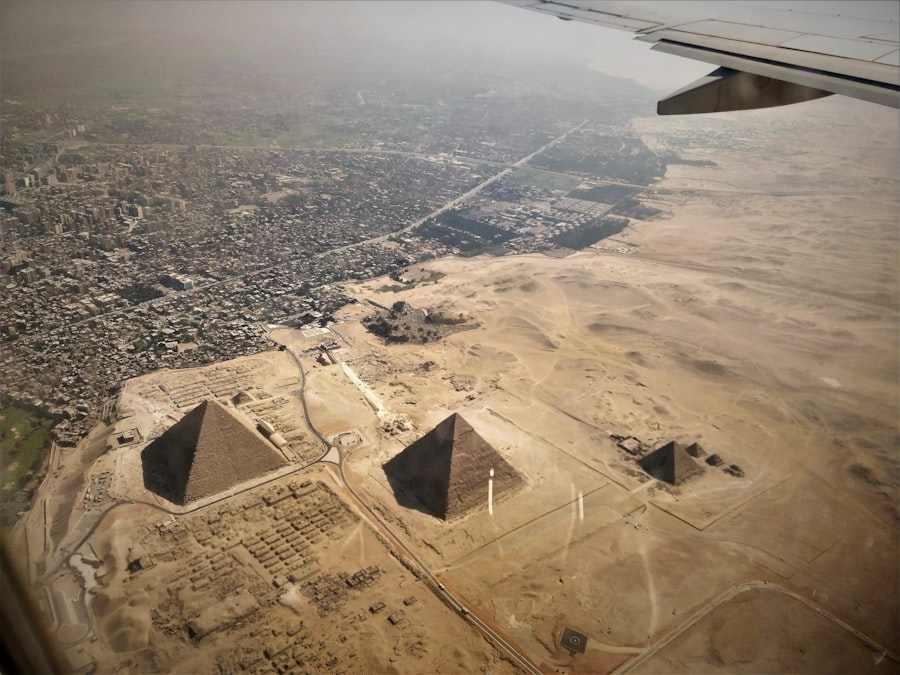
The discovery of this void immediately sparks speculation about its purpose. Given its location and size, several hypotheses have emerged, each with its own set of supporting arguments and unanswered questions. The void is not an end in itself but a beginning, opening up new avenues of inquiry.
Hypothesis 1: A Constructional Feature
One of the primary hypotheses is that the void served a functional role during the pyramid’s construction. Ancient builders often incorporated temporary internal structures or access points to facilitate the movement of massive stones and the execution of complex logistical operations. This void could have been a staging area, a shaft for lowering stones, or a passage for workers. The architects of the pyramid were masters of engineering, and this void might be a testament to their ingenious, albeit now hidden, methods.
Hypothesis 2: A Hidden Chamber or Sarcophagus
Another compelling possibility is that the void represents a deliberately concealed chamber. Ancient Egyptians were known to create secret burial places or repository chambers for valuable grave goods. The location above the known entrance, potentially accessible from an undetected point, lends credence to this idea. The possibility of a hidden sarcophagus or a chamber filled with ritualistic objects cannot be discounted. This would be a treasure trove of information about funerary practices and beliefs.
Hypothesis 3: A Structural Element for Stability
A less discussed, but still plausible, theory suggests that the void might have been designed to relieve stress or provide structural stability within the massive edifice. The immense weight of the pyramid could have necessitated certain internal architectural considerations to prevent settling or collapse over millennia. This would imply a sophisticated understanding of structural mechanics by the ancient architects, a testament to their engineering prowess.
Technological Advancements and Future Research Directions

The success of the ScanPyramids project in revealing this void underscores the power of modern non-invasive technologies in archaeological research. It also opens up exciting avenues for future investigation, promising a deeper understanding of the Great Pyramid and ancient Egyptian engineering. The current discovery acts as a beacon, illuminating paths for further exploration.
Refinements in Muon Detector Technology
The ScanPyramids team has been at the forefront of developing and deploying advanced muon detectors. These detectors have become more sensitive, capable of providing higher resolution data, and more robust, allowing for longer deployment periods in challenging environments. The continuous refinement of this technology is crucial for pushing the boundaries of what can be detected within such massive structures. The eyes of the ScanPyramids project are constantly sharpening.
Complementary Non-Invasive Techniques
While muon radiography has proven to be highly effective, the researchers are also exploring the integration of other non-invasive techniques. Ground-penetrating radar, laser scanning, and advanced thermal imaging could be employed to further probe the void and its surroundings. This multi-faceted approach is like using different lenses to capture a more complete picture, ensuring that no detail is missed.
The Role of Robotics and Remote Sensing
Looking ahead, future research may involve the deployment of specialized robotic probes or micro-drones. If physical access to the void can be achieved through existing or newly discovered passages, these miniature explorers could provide close-up visual evidence and even collect samples. This would be the ultimate step, allowing us to send our senses into the heart of the mystery.
The recent updates on the ScanPyramids project, particularly regarding the north face corridor, have sparked significant interest among archaeologists and history enthusiasts alike. For those looking to delve deeper into this fascinating exploration of ancient Egyptian architecture, a related article can provide further insights into the methodologies and discoveries made during the project. You can read more about it in this detailed article, which discusses the implications of these findings for our understanding of the Great Pyramid of Giza.
Concluding Thoughts: A New Chapter in Pyramidology
| Metric | Value | Details |
|---|---|---|
| Project Name | ScanPyramids North Face Corridor | Structural and thermal analysis of the North Face corridor |
| Update Date | 2024-04 | Latest data acquisition and analysis update |
| Scan Technology | Muography and Infrared Thermography | Used to detect voids and temperature variations |
| Corridor Length | 15 meters | Measured length of the North Face corridor |
| Detected Anomalies | 3 | Potential voids or structural irregularities identified |
| Temperature Variation | +2.5°C to -1.8°C | Range of thermal differences detected along the corridor |
| Scan Resolution | 5 cm | Spatial resolution of the scanning equipment |
| Data Processing Time | 48 hours | Time taken to analyze and interpret scan data |
| Next Steps | Detailed structural analysis and 3D modeling | Planned follow-up actions based on current findings |
The ScanPyramids North Face Corridor update is not merely an incremental finding; it represents a significant leap forward in our understanding of the Great Pyramid of Giza. The identification of the void opens a new chapter in the ongoing narrative of pyramidology, challenging existing theories and forging new pathways for research. The Great Pyramid, a titan of antiquity, continues to yield its secrets, slowly but surely, as science and human curiosity converge. This discovery serves as a powerful reminder that even the most studied ancient monuments can still hold profound surprises, waiting to be unveiled by ingenuity and persistent inquiry. The enduring legacy of Khufu’s monument is being further illuminated, brick by ancient brick, or in this case, muon by muon. The journey of discovery is far from over; indeed, for the North Face Corridor, it appears to have just begun.
SHOCKING: 50 Artifacts That Prove History Was Erased
FAQs
What is the ScanPyramids project?
The ScanPyramids project is an international scientific initiative launched in 2015 that uses advanced non-invasive technologies such as muon tomography, infrared thermography, and 3D reconstruction to explore and study the internal structure of Egyptian pyramids, particularly the Great Pyramid of Giza.
What is the North Face Corridor in the Great Pyramid?
The North Face Corridor is a recently discovered internal passage or void located on the north face of the Great Pyramid of Giza. It was identified using muon tomography as part of the ScanPyramids project and is believed to be a previously unknown internal feature within the pyramid.
What recent updates have been made regarding the North Face Corridor?
Recent updates on the North Face Corridor include further analysis and imaging that have provided more detailed information about its size, shape, and orientation. Researchers continue to study the corridor to understand its purpose and how it fits into the overall structure of the pyramid.
What technologies are used to study the North Face Corridor?
The primary technology used to study the North Face Corridor is muon tomography, which detects cosmic-ray muons passing through the pyramid to create detailed images of its internal voids. This is complemented by infrared thermography and 3D modeling to better understand the corridor’s characteristics.
Why is the discovery of the North Face Corridor significant?
The discovery of the North Face Corridor is significant because it reveals previously unknown architectural features of the Great Pyramid, offering new insights into ancient Egyptian construction techniques and potentially shedding light on the pyramid’s purpose and internal layout.