For millennia, the established narrative of human development positioned the Neolithic revolution—the adoption of agriculture and sedentary lifestyles—as the prerequisite for complex social structures, monumental architecture, and organized religion. This understanding suggested a linear progression: stable food sources led to population growth, which in turn fostered specialization and the leisure time necessary for grand projects. However, the archaeological site of Göbekli Tepe in southeastern Turkey has dramatically challenged this long-held paradigm, forcing a re-evaluation of the origins of civilization itself. This essay delves into Göbekli Tepe, examining its architectural marvels, its implications for understanding hunter-gatherer societies, and the enduring questions it poses for our comprehension of human history.
The initial recognition of Göbekli Tepe as a site of profound archaeological significance occurred in the early 1960s during a regional survey, but it was not until excavations began in 1996 under the direction of Klaus Schmidt that its true grandeur began to emerge. Prior to Schmidt’s work, the prevailing assumption was that any significant archaeological features in the region from the Pre-Pottery Neolithic (PPN) period would consist of small settlements or workshops. What Schmidt’s team uncovered, however, defied all expectations.
A Mountain of Mysteries
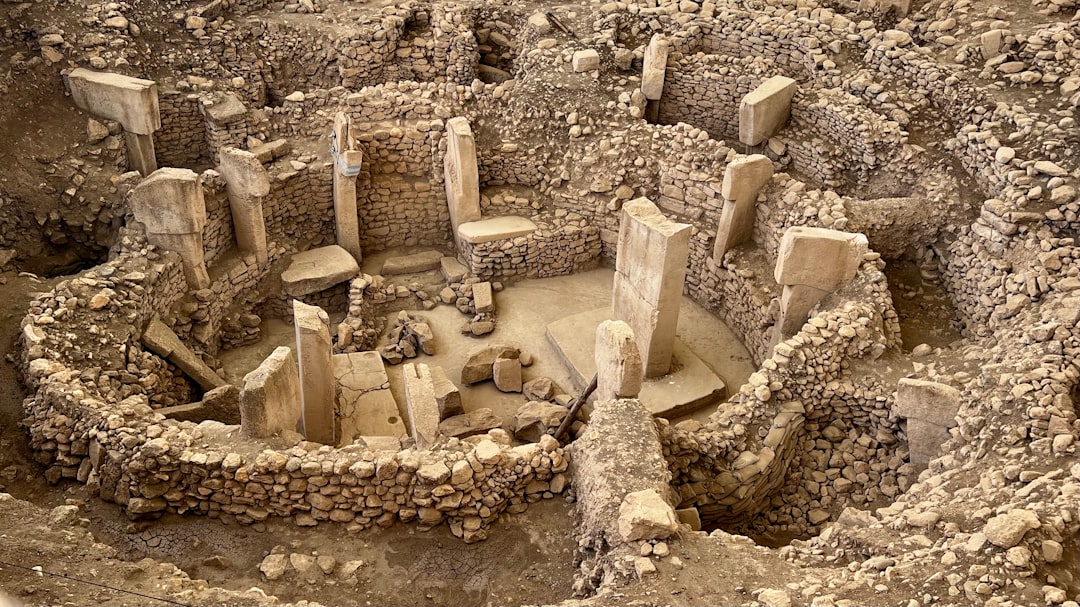
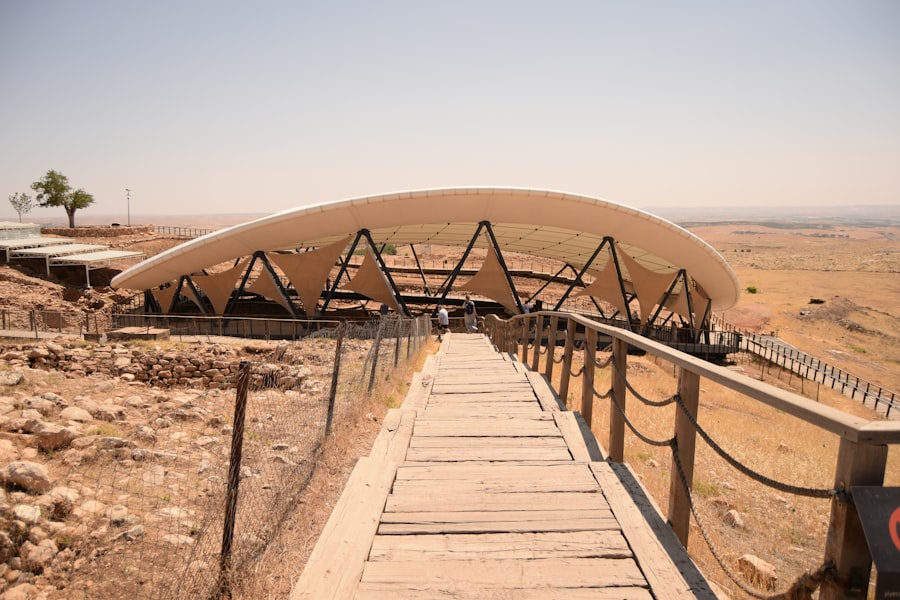
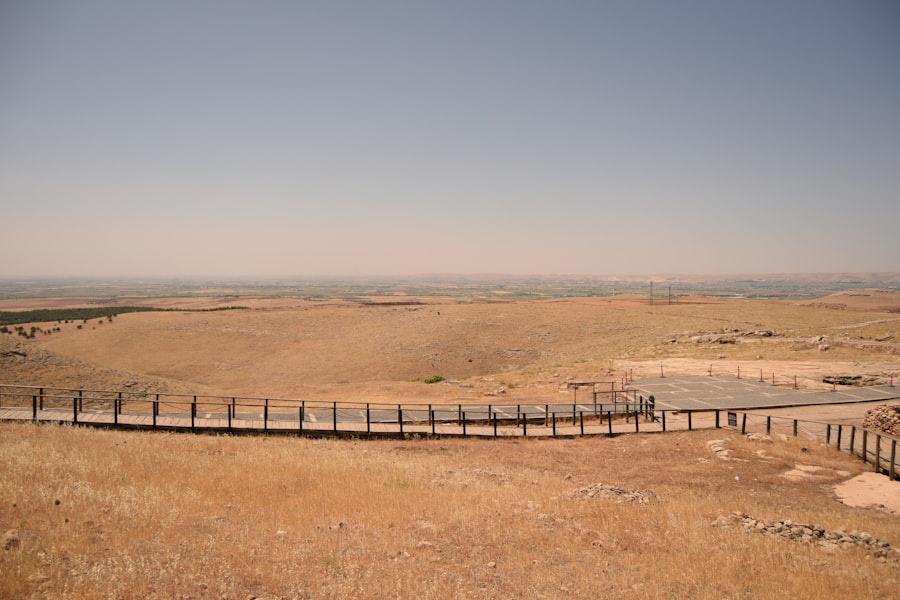
Göbekli Tepe is situated on the highest point of a long, barren mountain ridge. Its name, “Potbelly Hill” in Turkish, offers a deceptive simplicity given the complexities it conceals. The initial surveys revealed numerous T-shaped pillars scattered across the surface, leading to the suspicion that a substantial monument lay beneath. The first trenches quickly confirmed this, revealing intricate stone circles and monumental pillars standing several meters tall, adorned with sophisticated carvings.
Dating the Undateable
Perhaps the most astonishing aspect of Göbekli Tepe is its age. Radiocarbon dating places its construction firmly within the Pre-Pottery Neolithic A (PPNA) and early Pre-Pottery Neolithic B (PPNB) periods, roughly between 9600 and 8200 BCE. This predates the earliest known agricultural settlements and pottery production by several millennia. To put this into perspective, Göbekli Tepe was built before the invention of the wheel, before writing, and before the domestication of most staple crops. It is approximately 6,000 years older than Stonehenge and over 7,000 years older than the Egyptian pyramids. This chronological placement fundamentally disrupts the traditional understanding of human social and technological development.
Göbekli Tepe, often regarded as one of the world’s oldest known religious structures, provides fascinating insights into the rituals of hunter-gatherer societies. The intricate carvings and monumental architecture suggest that these early humans engaged in complex spiritual practices long before the advent of agriculture. For a deeper understanding of how such rituals may have influenced social structures and cultural development, you can explore a related article on the topic at Real Lore and Order. This resource delves into the significance of ceremonial sites and their impact on the evolution of human society.
Architecture and Construction: A Pre-Neolithic Marvel
The structures at Göbekli Tepe are characterized by massive, T-shaped limestone pillars, some weighing up to 20 tons, meticulously quarried and transported from nearby bedrock and then erected within circular or oval enclosures. These pillars are not merely structural; they are imbued with symbolic meaning.
The T-Shaped Pillars: Anthropomorphic Sentinels
The T-shaped pillars are the defining feature of Göbekli Tepe. Scholars generally interpret them as highly stylized anthropomorphic representations, perhaps guardians or deities. This interpretation is supported by the occasional presence of carved arms, hands, and loincloths on the narrower sides of some pillars, implying a human-like form. The flat top of the ‘T’ might represent a head, a broad shoulder, or even a stylized crown.
Enclosures and Their Layout
To date, at least four distinct circular enclosures (A, B, C, and D) have been partially excavated, with geophysical surveys indicating at least 16 more lie buried beneath the surface. Each enclosure typically features two larger, central T-shaped pillars, surrounded by a ring of smaller T-pillars facing inwards. The spaces between these pillars are filled with rough stone walls, and stone benches often line the inner perimeter. The floors are made of a finely polished lime plaster, suggesting a significant investment of labor and skill.
Intricate Carvings and Iconography
The pillars and stone surfaces at Göbekli Tepe are adorned with a rich array of animal reliefs and carvings, offering a glimpse into the symbolic world of its builders.
Bestiary of the Sacred
The animal imagery is diverse and includes snakes, scorpions, spiders, lions, boars, foxes, gazelles, wild asses, cranes, ducks, and various birds of prey. These depictions are often rendered with striking realism and artistic sophistication. The prevalence of predatory animals and dangerous creatures suggests a focus on the wild, untamed aspects of nature, perhaps representing spiritual power or the challenges of the hunter’s world.
Abstract Symbols and Human Depictions
Beyond the animals, there are occasional abstract symbols, such as H-shaped markers and concentric circles, whose meanings remain enigmatic. Rare human depictions, often headless or in contorted positions, also appear, perhaps suggesting rituals involving sacrifice or ancestral veneration. The careful arrangement and recurring motifs indicate a sophisticated symbolic system, deeply embedded within the cultural practices of these early societies.
Hunter-Gatherers and the Origins of Monumental Architecture
Göbekli Tepe challenges the long-held assumption that the invention of agriculture was a prerequisite for the development of complex social structures and monumental architecture. Its builders were unequivocally hunter-gatherers, yet they possessed the organizational capacity and ideological drive to undertake construction projects on a scale previously thought impossible for their societal stage.
Beyond Subsistence: A Ritual Economy
The lack of evidence for permanent settlements, hearths, or extensive food preparation areas at Göbekli Tepe itself suggests it was not a dwelling site but rather a specialized ritual complex. This implies that hunter-gatherer groups, likely from a wide radius, converged sporadically for communal feasts, ceremonies, and construction projects.
Feasting and Social Cohesion
The discovery of vast quantities of wild animal bones, particularly from gazelles and wild cattle, suggests that large-scale communal feasting was a central activity. Such feasts would have served not only as a means of sustenance but also as crucial opportunities for social bonding, exchange of information, and reaffirmation of group identity among disparate hunter-gatherer bands. The preparation and consumption of food in such quantities would have required significant coordination and effort.
The Power of Belief
The sheer investment of labor required to quarry, transport, and erect the massive pillars, not to mention the elaborate carvings, points to a powerful ideological or religious motivation. The desire to create these sacred spaces must have been a driving force strong enough to overcome the considerable logistical challenges. This suggests that organized religion, or at least highly structured ritual practices, predate permanent settlements and agricultural societies.
Implications for Sedentism and Agriculture
One of the most profound implications of Göbekli Tepe is the possibility that the need to construct and maintain such massive ritual centers may have driven the development of agriculture rather than being a consequence of it.
The “Cult Site First” Hypothesis
Klaus Schmidt famously proposed that “first came the temple, then the city.” This idea suggests that the demands of feeding and organizing large numbers of workers for extended periods to build and maintain sites like Göbekli Tepe could have spurred innovations in food production. The reliable provision of sustenance for communal gatherings might have encouraged the deliberate cultivation of wild cereals and the domestication of animals, laying the groundwork for the Neolithic revolution. The early cultivators would have been drawn to the fertile crescent region where wild ancestors of many cultivated crops grew abundantly, providing the resources needed to support ritual gatherings before true domestication.
A New Evolutionary Path
This perspective flips the traditional narrative on its head, suggesting that religious and social complexity were not merely byproducts of agricultural surplus but potentially pivotal drivers for its emergence. The human impulse to create shared meaning and ritual spaces, it proposes, may have been a more fundamental catalyst for societal change than previously understood.
The Enigma of the “Burial” and Abandonment
Perhaps one of the most puzzling aspects of Göbekli Tepe is its eventual abandonment and deliberate burial. Sometime around 8200 BCE, the structures were intentionally covered with vast quantities of earth, rubble, and even discarded tools. This was not a slow process of decay and natural accumulation; it was a carefully executed act of burial.
Intentional Infill and Preservation
The uniform nature of the infill suggests a concerted effort to inter the complex. This act of burial has inadvertently preserved the site in remarkable condition, protecting it from the ravages of time and erosion for millennia. The reasons behind this deliberate decommissioning remain a subject of intense debate.
Ritual Closure or Environmental Pressure?
One hypothesis posits that the burial was a ritual act, a form of sacred closure. Perhaps the purpose of the structures had been fulfilled, or a new phase of religious understanding necessitated their interment. Alternatively, environmental factors may have played a role. The end of the Pre-Pottery Neolithic B period was marked by a significant climatic event—the 8.2 kiloyear event—a global cooling trend that could have severely impacted the ecosystems and resource availability for these hunter-gatherer groups.
Shifting Beliefs and Social Transformations
As societies transitioned towards more settled, agricultural lifestyles, the nature of their spiritual practices and social structures likely evolved. The ceremonial significance of Göbekli Tepe might have waned, or the resources required for its maintenance may have become prohibitive as populations dispersed or re-oriented their focus towards sedentary farming. The deliberate burial could represent a ceremonial severing of ties with an older way of life, a physical closing of a chapter in human history.
Göbekli Tepe, often regarded as one of the world’s oldest known temples, provides fascinating insights into the rituals of hunter-gatherer societies. Recent studies suggest that the elaborate stone structures may have served as ceremonial sites, reflecting the complex social dynamics of these early communities. For a deeper understanding of how such rituals influenced the development of social hierarchies, you can explore this related article on the subject. The findings highlight the significance of communal gatherings in shaping cultural practices and beliefs, emphasizing the role of spirituality in the lives of our ancestors. To learn more, visit this article.
Enduring Questions and Future Research
| Metric | Data/Value | Description |
|---|---|---|
| Site Age | c. 9600–9500 BCE | Estimated time period when Göbekli Tepe was constructed and used |
| Number of Pillars | Over 200 | Large T-shaped limestone pillars found at the site |
| Circle Enclosures | At least 20 | Number of circular ritual enclosures excavated |
| Pillar Height | Up to 5.5 meters | Maximum height of the T-shaped pillars |
| Animal Carvings | 100+ | Number of animal reliefs carved on pillars, including boars, foxes, snakes, and birds |
| Hunter-Gatherer Population | Estimated few hundred | Likely size of the community involved in rituals and construction |
| Ritual Function | Likely ceremonial and religious | Purpose inferred from archaeological evidence and symbolic carvings |
| Construction Duration | Several centuries | Estimated period over which the site was built and used |
Despite decades of excavation and study, Göbekli Tepe continues to pose a myriad of questions that challenge our understanding of early human societies. It serves as a stark reminder that the archaeological record is a complex tapestry, and our interpretations are constantly evolving.
The Builders: Who Were They?
While we can infer much about their capabilities and beliefs, the identity of the people who built Göbekli Tepe remains largely unknown. Were they a single cohesive culture, or a confederation of diverse hunter-gatherer bands united by shared spiritual practices? What languages did they speak? What were their specific social hierarchies, if any? These questions highlight the inherent limitations of archaeological evidence when seeking to understand non-literate societies.
The Purpose: Reaching for the Sacred
While evidence points to a ritualistic function, the precise nature of these rituals remains speculative. Were they ancestral cults, fertility rites, astronomical observances, or something entirely different? The rich animal iconography has led some scholars to suggest totemistic beliefs or a profound connection to the wild landscape. Unraveling the specific meaning of each symbol and their collective narrative is a monumental task. The T-shaped pillars, for example, could be interpreted as representations of deities, ancestors, or even shamans with extraordinary powers.
Unveiling the Unseen: The Buried Past
With geophysical surveys indicating that the excavated structures represent only a fraction of the total complex, future excavations promise to further expand our understanding. Each unearthing brings new data that could either corroborate existing theories or entirely upend them. The full extent of Göbekli Tepe, its chronological development, and its internal organization are still largely unknown. Each new trench is a window into a world we are only just beginning to comprehend, a world where the foundations of human complexity were laid not by the plow, but by the hammer and chisel, driven by the profound human need for meaning and connection.
Göbekli Tepe stands as a monumental testament to the ingenuity, organizational capabilities, and spiritual depths of pre-Neolithic hunter-gatherer societies. It compels us to reconsider the linearity of human progress and offers a powerful counter-narrative, suggesting that the drive for ritual and collective expression may have been as fundamental to our development as the quest for food and shelter. The site is not merely an archaeological wonder; it is a profound intellectual challenge, a stone-hewn riddle that continues to reshape our understanding of what it means to be human and how our complex cultures first began to take root.

SHOCKING: 50 Artifacts That Prove History Was Erased
FAQs
What is Göbekli Tepe?
Göbekli Tepe is an archaeological site in southeastern Turkey, dating back to around 9600 BCE. It is considered one of the world’s oldest known temples, featuring massive stone pillars arranged in circular formations.
Who were the people associated with Göbekli Tepe?
The site is believed to have been built by hunter-gatherer groups before the advent of settled farming societies. These people were likely nomadic or semi-nomadic and used the site for ritualistic or religious purposes.
What kind of rituals might have taken place at Göbekli Tepe?
While the exact nature of the rituals is unknown, the presence of carved animal figures and large stone pillars suggests that the site was used for ceremonial gatherings, possibly involving ancestor worship, hunting magic, or social cohesion activities.
How does Göbekli Tepe change our understanding of hunter-gatherer societies?
Göbekli Tepe challenges the traditional view that complex religious structures only emerged after the development of agriculture. It shows that hunter-gatherer groups were capable of organizing large-scale construction projects and engaging in sophisticated ritual practices.
What evidence supports the idea that Göbekli Tepe was a ritual site?
Archaeologists have found intricately carved pillars depicting animals and abstract symbols, arranged in circular enclosures without signs of domestic habitation. The lack of typical living structures and the monumental nature of the site support its interpretation as a ceremonial or ritual center.