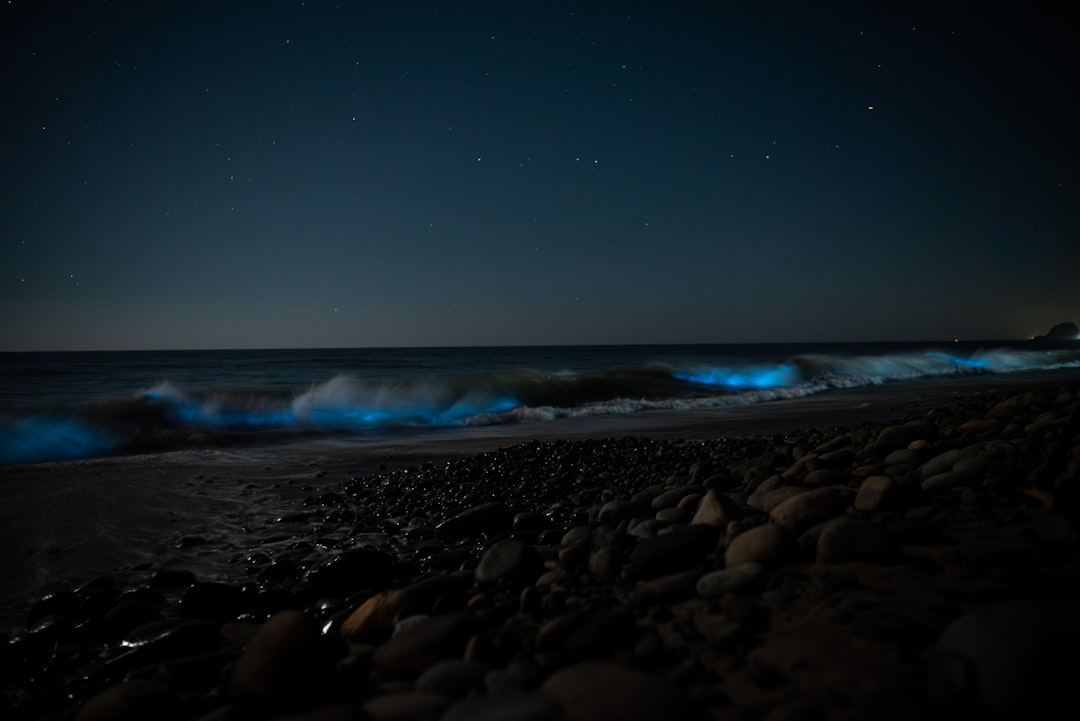
The ocean depths, a realm veiled in perpetual twilight, harbor a luminous spectacle that has captivated humanity for centuries. This article delves into the fascinating world of marine bioluminescence, an ethereal glow that transforms the abyss into a living tapestry of light. The phenomenon, born from intricate biological processes, not only serves crucial ecological functions but also continues to unlock scientific mysteries.
Bioluminescence in the ocean is not a mere accident; it is a sophisticated biochemical marvel. At its core lies a chemical reaction, a precisely orchestrated dance of molecules within specialized cells or symbiotic bacteria. Understanding this fundamental process is key to appreciating the diversity and prevalence of light production in marine organisms.
The Luciferin-Luciferase System
The most common mechanism underlying marine bioluminescence is the luciferin-luciferase system. This system involves two key components:
- Luciferin: This is the light-emitting molecule. Think of it as the fuel for the biological light bulb. There are various types of luciferins found across different marine species, each with its own unique chemical structure and emission spectrum. For instance, some luciferins emit blue light, while others produce green or even red light. The diversity of luciferins reflects the long evolutionary history of bioluminescence, with different lineages independently evolving their light-producing capabilities.
- Luciferase: This is an enzyme that acts as a catalyst for the oxidation of luciferin. It can be thought of as the switch that ignites the fuel, initiating the light-producing reaction. Like luciferins, luciferases are also diverse, with different enzymes responsible for oxidizing specific luciferins. The rate of the reaction, and thus the intensity and duration of the emitted light, is often controlled by the organism through various physiological mechanisms.
The basic reaction typically involves the oxidation of luciferin, often in the presence of oxygen and sometimes cofactors like ATP (adenosine triphosphate) or calcium ions. This oxidation process releases energy, which is then emitted as photons of light. The color of the light is determined by the specific chemical structure of the luciferin and the microenvironment within the light-producing organelle.
The Role of Symbiotic Bacteria
In many cases, marine organisms do not produce their own luciferin and luciferase; instead, they host bioluminescent bacteria within specialized structures called photophores. These bacteria, such as species of Vibrio or Photobacterium, are typically acquired from the environment and live in a mutually beneficial relationship with their host. The bacteria are provided with a safe habitat and nutrients, and in return, they generate light for the host.
The host organism then controls the light emission by regulating blood flow to the photophore, which supplies oxygen to the bacteria, or by using shutters or screens to block or modulate the light. This symbiotic relationship is a remarkable example of co-evolution, where two distinct life forms have adapted to depend on each other for survival and reproductive success. The density of bacteria within the photophore can also influence the intensity of the light, allowing for fine-tuned control.
Variations in the Biochemical Pathway
While the luciferin-luciferase system is widespread, there are other biochemical pathways that lead to bioluminescence. For example, some organisms utilize photoproteins, which are pre-formed complexes of a luciferin-like molecule and a protein. In these cases, the trigger for light emission is often the binding of calcium ions, without the need for additional enzymatic catalysis. A prominent example is the photoprotein aequorin, found in the jellyfish Aequorea victoria, which has been instrumental in the development of bioluminescent protein markers in molecular biology.
These variations highlight the convergent evolution of bioluminescence in the marine environment. Different lineages have independently arrived at similar, or analogous, solutions for producing light, demonstrating the strong selective pressures that favor this trait in the deep sea. The study of these diverse biochemical systems continues to reveal new insights into the fundamental principles of energy transfer and molecular interactions.
The ocean is home to a myriad of bioluminescent wonders, with approximately 95 percent of these fascinating phenomena remaining unseen by the human eye. For those intrigued by the mysteries of the deep sea, a related article that delves into this captivating topic can be found at Real Lore and Order. This resource explores the science behind bioluminescence, highlighting the unique adaptations of marine organisms that allow them to produce light in the dark depths of the ocean.
The Spectrum of Light: Colors and Their Significance
The bioluminescent glow from the ocean is not monochromatic. A dazzling array of colors paints the darkness, each hue carrying its own ecological message and serving specific purposes for the organisms that produce it. The wavelengths of light emitted are a direct consequence of the underlying chemistry and the environment in which they are produced.
Blue and Green: The Dominant Hues
The vast majority of marine bioluminescence falls within the blue and green parts of the visible spectrum. This is no coincidence. Water absorbs longer wavelengths of light more readily than shorter ones. Red light, for example, is quickly attenuated in seawater, while blue light penetrates deeper. Therefore, blue and green light are the most effective for visibility in the ocean, making them the preferred colors for communication and other light-based functions.
Think of the ocean as a giant canvas where only certain colors can be seen from a distance. Blue and green are the universally understood languages of light in this environment because they travel the farthest. This spectral tuning is a testament to the power of adaptation, where organisms have evolved to broadcast their signals most effectively in their specific environment.
Red and Other Rarer Colors
While less common, some marine organisms can produce red bioluminescence. This is a significant evolutionary advantage in certain contexts. Very few deep-sea creatures can perceive red light, as it is rapidly absorbed by seawater. Organisms that emit red light can therefore use it for private communication or to illuminate prey without alerting them to their presence. This creates a clandestine communication channel, unheard and unseen by most other inhabitants of the abyss.
Some species have also been found to produce yellow, orange, or even white light. These occurrences are often the result of complex mixtures of different bioluminescent systems or the presence of accessory pigments that modify the emitted light. Research into these rarer colors is ongoing, promising to unveil new facets of marine bioluminescence.
The Role of Pigments and Filters
The perceived color of bioluminescence can also be influenced by pigments present within the organism’s photophores or overlying tissues. These pigments can act as filters, absorbing certain wavelengths and allowing others to pass through, thereby modifying the emitted spectrum. In some cases, these pigments can shift the emission from blue to green, or even to longer wavelengths.
Furthermore, some organisms possess specialized lenses or reflectors within their photophores that can focus and direct the light. These structures can enhance the intensity of the bioluminescence or shape the beam of light, further contributing to the diversity of visual displays observed in the ocean. The intricate design of these optical elements is akin to the craftsmanship of a skilled lens maker, perfecting the illumination for a specific purpose.
Functions of Light: From Defense to Deception
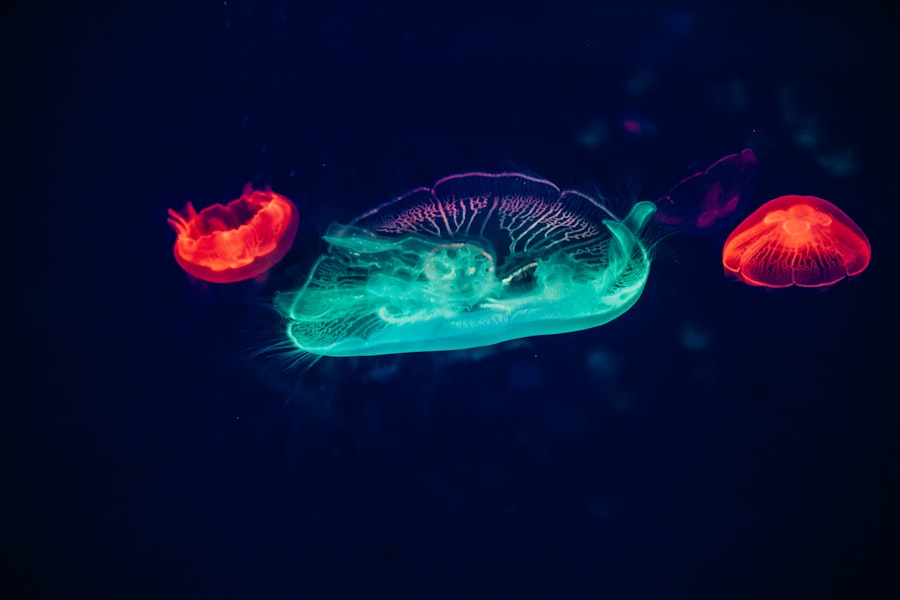
Bioluminescence is not merely a beautiful display; it is a vital tool for survival in the competitive and often perilous ocean environment. Organisms employ their luminous capabilities for a wide range of purposes, from warding off predators to attracting mates and locating prey. The evolutionary pressures in the deep sea have sculpted these luminous adaptations into elegant solutions.
Defense Mechanisms: Startle and Illuminate
One of the most common uses of bioluminescence is for defense against predators. When threatened, many marine animals can emit a sudden flash of light. This can serve several purposes:
- Startle Response: The sudden flash can momentarily startle or disorient a predator, giving the prey a crucial window of opportunity to escape. Imagine a burglar entering a dark room and suddenly being blinded by a strobe light; the disorientation is immediate.
- Misdirection and Decoy: Some species release glowing particles or a cloud of luminous fluid, creating a diversion that can draw the predator away from the escaping prey. This luminous smoke screen is a sophisticated form of misdirection.
- Counter-illumination: In the mesopelagic zone, where sunlight penetrates but is dim, some animals use bioluminescence on their undersides to match the faint ambient light from above. This effectively camouflages them from predators lurking below, rendering them virtually invisible against the dimly lit surface. This is akin to wearing a tailored suit that precisely matches the background, making one blend seamlessly.
Offense and Predation: Luring and Illuminating Prey
Bioluminescence also plays a significant role in predation. Some predators use light to attract and capture their prey:
- Anglerfish Lures: The iconic anglerfish famously uses a bioluminescent lure, a modified fin ray, to attract smaller fish and invertebrates. This glowing appendage dangles enticingly in the darkness, acting as a deceptive beacon for unsuspecting meals.
- Illuminated Hunting: Certain deep-sea fish use their bioluminescent organs to illuminate their surroundings, allowing them to spot and capture prey in the perpetual darkness. They become mobile searchlights, scanning the abyss for their next meal.
- Disruption of Prey Vision: Some predators may use bioluminescence to temporarily blind or disorient their prey, making them easier to catch. This sudden burst of light can overwhelm the visual systems of smaller organisms.
Communication and Reproduction: Signaling in the Dark
Bioluminescence is also a sophisticated form of communication within marine populations, particularly for mating. In the vastness of the ocean, finding a mate can be a considerable challenge. Bioluminescent signals, with their unique patterns and flashes, serve as beacons for recognition and attraction.
- Species-Specific Signals: Different species have evolved distinct bioluminescent patterns, such as specific flash frequencies, durations, or spatial arrangements of photophores. These signals act like unique passwords, ensuring that individuals of the same species can find and recognize each other.
- Courtship Displays: Elaborate bioluminescent displays are often used in courtship rituals. Males may flash their lights to attract females, and females may respond with their own luminous signals. These displays are as intricate and varied as a bird’s mating dance, but enacted in the silent, dark theater of the deep.
- Aggregation and Schooling: In some cases, bioluminescence may play a role in social behavior, helping individuals to maintain contact within schools or groups. These fleeting flashes can act as subtle cues, keeping the collective cohesive.
Diversity and Distribution: Who Glows Where

The phenomenon of bioluminescence is not confined to a single corner of the ocean; it is a widespread and remarkably diverse trait found across a vast array of marine taxa and in nearly every oceanic habitat. From the sunlit surface waters to the crushing pressures of the abyssal plains, life has found innovative ways to generate light.
Shallow Waters: A Luminous Surface
While often associated with the deep sea, bioluminescence is also prevalent in shallow marine environments. Many species of plankton, jellyfish, and crustaceans, including some shrimp and ostracods, exhibit bioluminescent capabilities in coastal waters and coral reefs.
- Dinoflagellates: These single-celled plankton are a common source of bioluminescence in surface waters. When disturbed, such as by the passage of a boat or the movement of marine animals, they emit a blue glow, often creating spectacular displays known as “sea sparkle.” This defensive reaction serves to startle potential grazers.
- Jellyfish and Ctenophores: Many species of jellyfish and comb jellies possess photophores that produce light, often in patterns that ripple across their bodies. These displays can be used for attracting prey or deterring predators.
- Crustaceans: Various small crustaceans, including ostracods and some copepods, are bioluminescent. Some release luminous secretions, while others flash their own light to communicate or defend themselves.
The Mesopelagic Zone: A Twilight World of Light
The mesopelagic zone, often referred to as the “twilight zone,” extends from approximately 200 to 1,000 meters (660 to 3,300 feet) below the surface. This region, characterized by low light levels, is a hotbed of bioluminescent activity. Many fish, squid, and other invertebrates have evolved sophisticated bioluminescent systems to survive and thrive in this dim environment.
- Counter-illumination: As mentioned previously, counter-illumination is a critical adaptation for survival in the mesopelagic. Numerous fish species, including hatchetfish and lanternfish, possess ventral photophores that emit light to match the downwelling sunlight.
- Bioluminescent Squid: Many species of squid inhabit the mesopelagic and utilize bioluminescence for camouflage, communication, and predation. Some can produce intricate patterns of light on their skin, while others release clouds of luminous ink.
- Fish with Photophores: A vast array of mesopelagic fish, from viperfish to dragonfish, possess photophores strategically placed along their bodies. These lights are used for a variety of purposes, including attracting prey, signaling to conspecifics, and illuminating their surroundings.
The Deep Sea: A Realm of Perpetual Darkness and Light
The bathyal and abyssal zones, extending from 1,000 meters to the deepest ocean trenches, are regions of extreme pressure, low temperatures, and complete darkness. In this seemingly inhospitable environment, bioluminescence becomes an indispensable tool for life. It is estimated that a vast majority of deep-sea organisms are bioluminescent.
- Abyssal Fish: Anglerfish, gulper eels, and other deep-sea predators often employ bioluminescent lures to attract prey in the absolute darkness. Their adaptations for light production are as varied as the species themselves.
- Bioluminescent Invertebrates: Many deep-sea invertebrates, including various species of jellyfish, siphonophores, and worms, also produce light. These organisms often exhibit large and complex photophores, suggesting the importance of light-based signaling in their lives.
- Deep-Sea Microbes: Even the smallest inhabitants of the deep sea, such as certain bacteria and dinoflagellates, contribute to the bioluminescent landscape. These microbes can live symbiotically within larger organisms or exist independently, illuminating patches of the abyssal plain.
The ocean is home to a myriad of bioluminescent wonders that remain largely unseen by the human eye, with an astonishing 95 percent of these phenomena hidden beneath the waves. For those intrigued by the mysteries of marine life, a fascinating article explores this topic in depth, shedding light on the incredible organisms that create these natural light displays. You can read more about these captivating creatures and their environments in the article found here.
Scientific Applications: Unveiling Biological Secrets
| Metric | Value | Description |
|---|---|---|
| Percentage of Ocean Bioluminescent Species Unseen | 95% | Estimated portion of bioluminescent species yet to be discovered or studied |
| Known Bioluminescent Species | ~1,500 | Number of species currently identified with bioluminescent capabilities |
| Depth Range of Bioluminescence | 0 – 1,000+ meters | Depths in the ocean where bioluminescence is commonly observed |
| Primary Functions of Bioluminescence | 3 | Functions include predation, defense, and communication |
| Estimated Bioluminescent Organisms in Deep Sea | Thousands | Potential number of bioluminescent organisms inhabiting deep ocean zones |
| Bioluminescence Chemical Compound | Luminescent Proteins & Luciferin | Key chemicals responsible for light emission in marine organisms |
The study of marine bioluminescence has not only expanded our understanding of marine ecosystems but has also yielded invaluable tools for scientific research across various disciplines. The precise chemical reactions and the proteins involved have found applications far beyond their natural oceanic context.
Reporter Genes and Imaging
Perhaps the most significant scientific application of marine bioluminescence lies in its use as a reporter system in molecular biology. The genes encoding luciferase enzymes have been widely utilized as reporter genes. This technology allows scientists to track gene expression and protein localization within living cells and organisms.
- Tracking Gene Expression: By attaching a luciferase gene to a gene of interest, scientists can measure the activity of that gene by quantifying the light produced. This is like attaching a tiny light meter to a specific gene to see when and how much it is turned on.
- Protein Localization Studies: Luciferase can also be fused to proteins of interest to visualize their location within cells or tissues. As the protein moves and functions, the associated light emission indicates its whereabouts.
- In Vivo Imaging: The advent of highly sensitive imaging devices allows for the non-invasive visualization of bioluminescence in living animals. This technique is crucial for studying disease progression, drug efficacy, and developmental processes without harming the organism. The ability to see biological processes unfold in real-time, without invasive procedures, is a powerful advantage.
Biomedical Research and Diagnostics
The bioluminescent systems derived from marine organisms have also found applications in biomedical research and diagnostic tools.
- Cancer Research: Bioluminescent imaging is used to track the growth and spread of cancer cells in animal models. This helps researchers to develop and test new anti-cancer therapies.
- Infectious Disease Detection: Bioluminescent assays can be used to rapidly detect the presence of pathogens, such as bacteria and viruses. This is crucial for early diagnosis and treatment of infectious diseases.
- Drug Discovery and Development: The ability to monitor biological processes in real-time using bioluminescence accelerates the drug discovery and development pipeline. Scientists can screen potential drug candidates more efficiently and assess their impact on cellular functions.
Environmental Monitoring
Bioluminescence can also serve as an indicator of environmental health. Changes in the abundance or behavior of bioluminescent organisms can reflect alterations in water quality, pollution levels, or the presence of invasive species.
- Water Quality Assessment: Some bioluminescent microorganisms are sensitive to pollutants. Their luminescence can be used to monitor the presence and concentration of various contaminants in marine waters.
- Ecosystem Health: Shifts in the composition or activity of bioluminescent communities can signal broader changes in the health of marine ecosystems, providing early warnings of environmental degradation.
FAQs
What is bioluminescence in the ocean?
Bioluminescence is the natural emission of light by living organisms in the ocean, such as certain species of plankton, jellyfish, and fish. This light is produced through a chemical reaction involving the molecule luciferin and the enzyme luciferase.
Why is 95 percent of ocean bioluminescence unseen?
Approximately 95 percent of ocean bioluminescence occurs in deep or midwater zones that are difficult for humans to access and observe. Many bioluminescent organisms live at depths where sunlight does not penetrate, making their glowing displays largely hidden from view.
What purposes does bioluminescence serve for marine organisms?
Bioluminescence serves various functions including camouflage, attracting mates, deterring predators, and luring prey. For example, some species use light to blend in with faint surface light, while others use flashes to startle predators or communicate.
How do scientists study bioluminescent organisms in the deep ocean?
Researchers use specialized equipment such as remotely operated vehicles (ROVs), submersibles, and sensitive cameras to observe and record bioluminescent organisms in their natural habitats. These tools allow scientists to explore deep ocean environments that are otherwise inaccessible.
Are bioluminescent organisms found only in the ocean?
No, bioluminescent organisms are found in various environments including terrestrial habitats like forests and caves. However, the ocean hosts the greatest diversity and abundance of bioluminescent species, especially in deep-sea ecosystems.