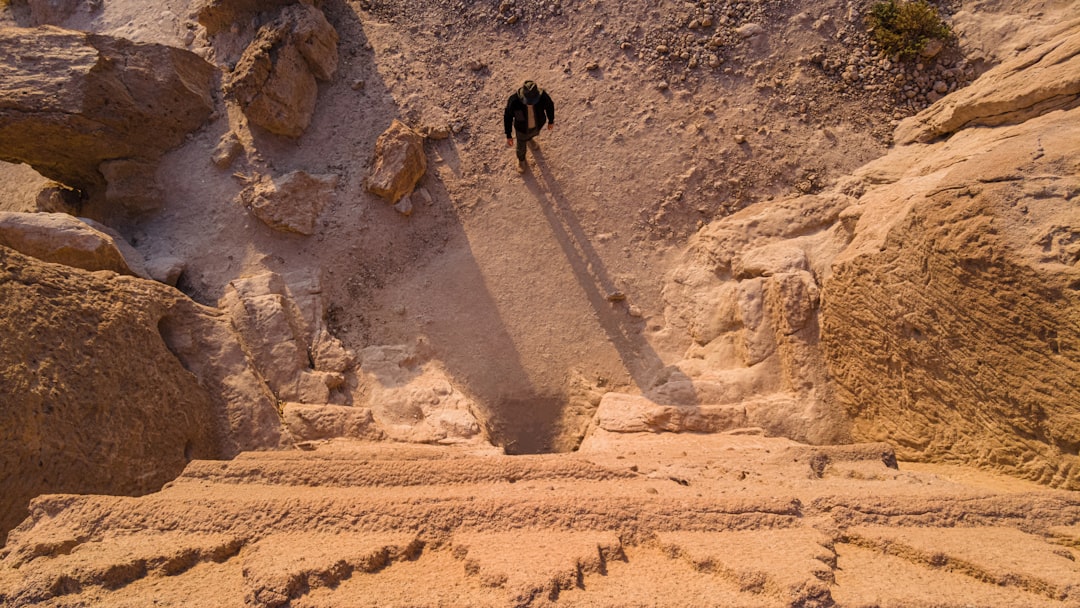
The crimson dust of Mars settled on the expedition’s boots, each grain a testament to a journey that began not in the stars, but a mere five millennia ago. Earth, a jewel of blue and green, was a distant memory, a cradle from which humanity had, with a mixture of trepidation and unyielding curiosity, pushed outwards. This is not a tale of fantastical leaps or overnight metamorphoses, but of a steady, calculated expansion, a testament to the enduring human drive to explore the unknown. Imagine a seed, dormant for eons, finally finding fertile ground beyond its parent plant. This is the essence of early human exploration, five thousand years hence.
The initial impetus for venturing beyond Earth was not a singular event, but a confluence of pressures and opportunities. Resource depletion, climate shifts that irrevocably altered terrestrial habitability in certain regions, and the sheer, undeniable allure of the cosmos provided the twin engines for this great seeding. The Earth, for all its beauty, had become a densely packed lifeboat, and humanity, ever the adaptable organism, sought new vessels on the cosmic sea.
The Lunar Outposts: A Stepping Stone to the Stars
The Moon, our celestial neighbor, was the logical first step. Not for its inherent riches, though helium-3 proved a valuable commodity, but for its proximity and relative ease of access. Lunar bases, gleaming like metallic mushrooms under the stark starlight, became vital staging grounds. These were not the romanticized lunar colonies of speculative fiction, but functional, utilitarian hubs, primarily focused on resource extraction, scientific research into low-gravity environments, and as launch points for further excursions. The challenges were immense: radiation shielding, life support in a vacuum, and the psychological toll of prolonged isolation. Yet, within these robust structures, humanity proved its capacity to not only survive but to thrive in alien environments. The Moon, once a silent observer, became a buzzing hive of human activity, a launchpad for dreams.
Martian Colonization: The Red Frontier Beckons
Mars, with its tantalizing possibility of past or even present microbial life, captured the collective imagination. The colonization of Mars was a far more arduous undertaking. The thin atmosphere, the lower gravity, and the harsh cocktail of radiation presented significant engineering hurdles. Early Martian settlements were built largely underground, a necessity dictated by the unforgiving Martian environment. These subterranean communities, carved into the ruddy soil, were a testament to human ingenuity, utilizing in-situ resource utilization (ISRU) technologies to extract water ice, build with local regolith, and generate breathable air. The vision of sprawling, domed cities remained a distant, aspirational goal, while the reality was one of hardy survival, of establishing a fragile foothold on a world still fundamentally wild. Each new survey, each drill core, was a whisper of potential, a promise of a future yet unwritten in the Martian soil.
Asteroid Mining: Unlocking the Solar System’s Pantry
Beyond the terrestrial planets, the asteroid belt emerged as a veritable treasure trove. These celestial rocks, remnants of the solar system’s formation, are rich in precious metals, rare earth elements, and vital industrial components. Asteroid mining operations, initially conducted by automated drones and later by increasingly sophisticated crewed expeditions, became a cornerstone of the off-world economy. The development of efficient propulsion systems and the mastering of zero-gravity construction were crucial to this endeavor. Each successful extraction, each carefully navigated rendezvous with a tumbling chunk of cosmic debris, represented a step towards independence from Earth’s finite resources, a diversification of humanity’s material base. These metallic nomads, once seen as potential threats, became the silent benefactors of humanity’s outward expansion.
Recent discoveries have suggested that humans may have explored Earth as far back as 5,000 years earlier than previously thought, challenging long-held beliefs about the timeline of human civilization. This fascinating topic is explored in detail in a related article that delves into archaeological findings and historical evidence supporting this theory. For more insights, you can read the full article here: Humans Explored Earth 5,000 Years Earlier.
The Technological Leap: Tools of the Cosmic Age
The journey outward was not solely a matter of willpower and daring; it was inextricably linked to a series of technological breakthroughs that, taken together, represented a paradigm shift in human capability. These advancements were not sudden flashes of inspiration, but the culmination of decades of research and development, built upon the foundations laid by earlier generations.
Advanced Propulsion Systems: Breaking the Terrestrial Shackles
The limitations of chemical rockets, while sufficient for lunar and early Martian endeavors, proved inadequate for the vast distances of the solar system. The development of fusion drives, ion propulsion systems, and even early, experimental warp field technologies, transformed interplanetary travel from a months-long ordeal to a matter of weeks or even days. These propulsion systems, humming with contained stellar energy, were the arteries through which humanity flowed, connecting disparate worlds and opening up new frontiers. The concept of distance, once an unbreakable terrestrial constraint, began to shrink with each pulse of these engines.
Life Support and Terraforming: Cultivating New Homes
Creating breathable air and sustainable ecosystems on alien worlds was a monumental challenge. Advanced closed-loop life support systems, capable of recycling all waste and generating oxygen with near-perfect efficiency, became ubiquitous. For Mars, the long-term goal of terraforming, a process of gradually altering the planet’s atmosphere and climate to make it more Earth-like, began in earnest. This ambitious undertaking, spanning centuries, involved the strategic release of greenhouse gases, the introduction of extremophile organisms, and the careful management of planetary resources. The dream of walking on Mars under an open, blue sky, though still in its nascent stages, was the ultimate prize of this endeavor. The slow, deliberate act of coaxing life from a barren world was akin to a painter meticulously layering pigments to bring a landscape to life.
Artificial Intelligence and Robotics: The Unseen Hands of Exploration
The sheer scale and danger of off-world exploration necessitated the extensive use of artificial intelligence and advanced robotics. AI played a crucial role in everything from mission planning and navigation to the operation of complex machinery and the analysis of vast datasets. Robotic probes and autonomous mining units performed the hazardous precursor missions, scouting potential sites, assessing risks, and paving the way for human arrival. These intelligent machines, extensions of human will and intellect, were the tireless scouts, the silent laborers, and the ever-vigilant guardians of humanity’s nascent interstellar presence. They were the vanguard, venturing into the shadow of the unknown, reporting back with unfaltering accuracy.
Societal Evolution: The Shifting Landscape of Human Civilization

The expansion beyond Earth had a profound and transformative impact on human society. The challenges of establishing new communities, managing inter-planetary relations, and adapting to new environments necessitated significant societal adjustments. Humanity, like a river branching into new channels, began to evolve in distinct yet interconnected ways.
The Rise of Decentralized Governance: New Political Architectures
The vast distances and unique challenges of off-world settlements made centralized Earth-based governance impractical. This led to the rise of decentralized political structures, with each colony developing its own forms of governance, often tailored to its specific environment and needs. Inter-planetary trade agreements and arbitration bodies emerged to mediate disputes and facilitate cooperation. While the concept of a unified humanidad persisted, its manifestation became more complex, a federation of distinct yet allied worlds. The old maps of nation-states began to blur, replaced by a constellation of autonomous hubs.
Cultural Divergence and Hybridization: A Kaleidoscope of Humanity
As human populations established themselves on different worlds, distinct cultural identities began to emerge. Exposure to alien environments, different social pressures, and the adoption of unique technologies led to the development of new languages, art forms, and social customs. Yet, the continuous flow of information and the inherent human desire for connection ensured that these nascent cultures did not become entirely isolated. A vibrant cross-pollination of ideas and traditions occurred, resulting in a rich tapestry of human experience, a kaleidoscope of what it meant to be human in a multi-planetary age. The stories whispered on the Martian dust were different from those sung in the orbital stations, yet both spoke of shared humanity.
The Ethical Quagmire: Questions of Sentience and Rights
The exploration of resource-rich asteroids and the potential discovery of indigenous, non-sentient life on other worlds raised complex ethical questions. The definition of sentience, the rights of non-human entities, and the responsible stewardship of celestial bodies became subjects of intense debate and the formation of new ethical frameworks. The old human narratives of conquest and exploitation were challenged by a growing awareness of our responsibility as custodians of the cosmos, not merely its exploiters. The mirror held up to humanity reflected not just its ambition, but its evolving conscience.
Challenges and Setbacks: The Unblinking Eye of Reality

The narrative of human exploration is not a simple upward trajectory. The path outward was, and continues to be, fraught with peril and punctuated by inevitable setbacks. The universe, for all its wonders, remains a formidable and often indifferent arena.
Resource Wars and Inter-Colonial Tensions: A Familiar Echo
The very resources that fueled expansion also became sources of friction. Disputes over mining rights, trade routes, and strategic locations led to periods of tension and, in some cases, localized conflicts between emerging off-world populations. The echoes of terrestrial resource conflicts, writ large across the void, served as a stark reminder that human nature, while adaptable, did not fundamentally alter with distance. The stars, while offering new horizons, did not erase old shadows.
Environmental Catastrophes and Colonization Failures: The Harshness of the Unknown
Not all ventures proved successful. Colonization attempts on worlds with unforeseen geological instability, unexpected atmospheric hazards, or the failure of crucial life support systems resulted in tragic losses. These failures, though devastating, provided invaluable lessons, sharpening the understanding of planetary selection criteria and risk assessment. Each extinguished outpost served as a cautionary tale, a stark reminder of the unforgiving nature of the cosmos. The embers of these failed dreams served as fuel for the lessons learned.
The Psychological Burden: The Weight of the Void
The vastness of space and the isolation from Earth’s familiar embrace took a significant psychological toll on many explorers. The risks, the prolonged periods of separation from loved ones, and the sheer existential weight of the void could lead to stress, depression, and a range of psychological disorders. Advanced mental health support systems and the cultivation of strong communal bonds within settlements were crucial to mitigating these effects. The human mind, like a delicate plant, required careful nourishment and protection, even in the starkest of conditions. This was not just a physical journey, but a profound inner exploration.
Recent discoveries suggest that humans may have explored Earth as much as 5,000 years earlier than previously believed. This intriguing possibility opens up new avenues for understanding our ancestors’ capabilities and their interactions with the environment. For those interested in delving deeper into this topic, a related article provides fascinating insights into the implications of these findings. You can read more about it in this detailed exploration of ancient human activity.
The Unfolding Future: Beyond the Horizon
| Metric | Estimated Value | Notes |
|---|---|---|
| Time Humans Explored Earth | ~200,000 years ago | Modern Homo sapiens emergence |
| Early Human Migration | ~70,000 years ago | Out of Africa migration |
| First Known Settlements | ~12,000 years ago | Neolithic Revolution begins |
| Humans Explored Earth 5000 Years Earlier | ~17,000 years ago | Hypothetical earlier exploration than previously thought |
| Evidence of Early Exploration | Stone tools, cave paintings | Indicates advanced cognitive abilities |
Five thousand years from its genesis, early human exploration has laid a foundation for a future that is both awe-inspiring and uncertain. The journeys undertaken have not been an end in themselves, but a beginning, a first chapter in a cosmic epic. The seeds sown have taken root, but the ultimate harvest remains to be seen.
The Seeds of Interstellar Travel: The Next Great Leap
The technological advancements that enabled interplanetary travel are now being leveraged for the ultimate frontier: interstellar exploration. While still in its early stages, research into faster-than-light travel or the development of generation ships capable of traversing the vast distances between stars is a primary focus. The dream of reaching other star systems, of finding other cradles of life, is the next logical, albeit colossal, step. The glint of distant stars, once points of unattainable beauty, are now being re-envisioned as potential destinations.
The Search for Extraterrestrial Life: The Great Question
The ongoing search for extraterrestrial life, spurred by the discovery of potential biosignatures in exoplanet atmospheres and the continued investigation of our own solar system, remains a paramount endeavor. The potential discovery of other intelligent or even simple life forms would fundamentally alter humanity’s understanding of its place in the universe. This would be a paradigm shift, a profound recontextualization of human existence. The universe, once thought to be a silent expanse, might yet reveal its vibrant chorus.
The Legacy of Expansion: A New Definition of Humanity
The legacy of this early era of human exploration is not merely one of technological achievement or territorial expansion. It is the tale of humanity’s enduring adaptability, its unyielding curiosity, and its capacity to redefine itself in the face of the unknown. The human journey, once confined to a single blue marble, has now begun to embrace the cosmos, forever altering the definition of what it means to be human. The footprint on Mars, the faint signal from a distant outpost, these are not the end of a story, but the opening lines of an infinite narrative, written in the dust and stars.
FAQs
1. What evidence suggests that humans explored Earth 5000 years earlier than previously thought?
Recent archaeological discoveries, such as ancient tools, fossils, and settlement remains, have been dated using advanced techniques like radiocarbon dating and DNA analysis, indicating human presence thousands of years earlier than earlier estimates.
2. How does this new timeline change our understanding of human migration?
The revised timeline suggests that humans migrated and settled in various parts of the world much earlier than previously believed, which may lead to new insights into the routes taken and the speed of human dispersal across continents.
3. What methods are used to date these ancient human activities?
Scientists use methods such as radiocarbon dating, thermoluminescence, and genetic analysis to determine the age of artifacts and fossils, providing more accurate estimates of when humans first explored different regions.
4. What impact does this discovery have on the study of human evolution?
This discovery may prompt a reevaluation of the timeline of human evolution, including the development of technology, culture, and adaptation strategies, offering a deeper understanding of how early humans lived and evolved.
5. Are there any specific regions where early human exploration has been newly identified?
Yes, some regions previously thought to have been settled later, such as parts of Europe, Asia, and the Americas, have yielded evidence of earlier human activity, reshaping the map of ancient human exploration.