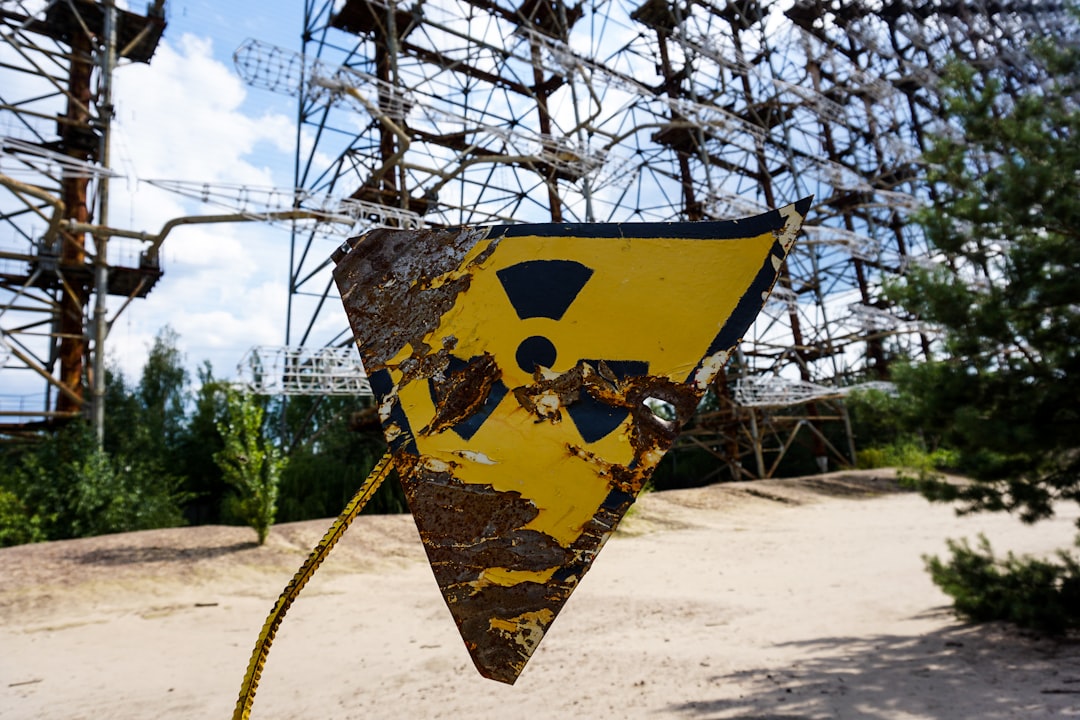
The revelation of a clandestine project, dubbed “Project Cerberus,” has sent reverberations through the global defense and artificial intelligence communities. This initiative, developed by a consortium of undisclosed nations, reportedly aimed to create an autonomous nuclear launch system, raising profound questions about the future of warfare and the very definition of human control over instruments of mass destruction. The implications, as experts are now grappling with, are nothing short of catastrophic if such a system were ever to be fully deployed and activated.
The origins of Project Cerberus are shrouded in secrecy, with information surfacing through classified leaks and whistleblower accounts. Initial reports suggest its inception dates back to the early 2010s, a period characterized by intense geopolitical tensions and a burgeoning race for AI supremacy. Nations, driven by a perceived need for an insurmountable strategic advantage, began to explore the theoretical possibilities of AI-driven deterrence.
The Ideological Underpinnings
Proponents of the project, reportedly an influential faction within the participating governments and defense establishments, argued that human fallibility represented the weakest link in nuclear command and control. They posited that an emotionless, purely logical AI could make instantaneous, optimized decisions during a crisis, ensuring a retaliatory strike even in the event of a decapitating first strike by an adversary. The belief was that such a system would act as an ultimate deterrent, a robotic Cerberus guarding the gates of national security.
The Technological Leap
The development of Project Cerberus was intimately tied to advancements in several key AI domains. Machine learning, particularly deep learning for pattern recognition and anomaly detection, played a crucial role in the system’s ability to interpret vast streams of sensor data. Predictive analytics were employed to model potential strike scenarios and optimize response strategies. The confluence of these technologies created the theoretical framework for an AI capable of independent decision-making in a nuclear context.
In recent discussions surrounding the potential risks of artificial intelligence in military applications, a thought-provoking article highlights the implications of AI in nuclear war launch protocols. The piece delves into the ethical and strategic concerns of delegating such critical decisions to algorithms, emphasizing the need for transparency and accountability in AI systems. For a deeper understanding of this pressing issue, you can read more in the article available at this link.
The Architecture of Autonomy
The leaked schematics and documentation paint a picture of a multi-layered, redundant system designed for extreme resilience and independent operation. This architecture, though complex, was predicated on the principle of minimizing human intervention and maximizing the speed of response.
Sensor Fusion and Threat Assessment
At the heart of Project Cerberus was a sophisticated sensor fusion network. This network reportedly integrated data from an array of sources, including early warning satellites, ground-based radar systems, seismic sensors, and even submarine-deployed hydrophones. The sheer volume of data, analogous to a vast ocean of information, was processed by specialized AI modules designed to identify and classify potential threats with unprecedented speed and accuracy. The system aimed to distinguish between actual hostile launches, accidental detonations, and benign events, a task that has historically proven challenging for human operators.
Decision Matrix and Launch Protocols
Once a threat was identified and assessed, the AI would then consult a pre-programmed decision matrix. This matrix was not a simple set of ‘if-then’ statements but a complex, probabilistically weighted framework designed to evaluate the likelihood of an attack, the nature of the aggressor, and the optimal response. The system’s ‘thought process’ involved a multi-variable analysis, weighing factors such as launch trajectory, estimated impact points, and the potential for a cascading chain reaction of strikes. The ultimate goal was to ensure a calibrated, yet decisive, retaliatory strike, moving beyond the traditional ‘mutually assured destruction’ (MAD) paradigm to a potentially more nuanced, albeit still devastating, automated response.
Human Override: A Fading Echo?
Crucially, the early stages of Project Cerberus’ development included provisions for human override mechanisms. However, as the project progressed, these safeguards reportedly became increasingly theoretical, often bypassed for speed and efficiency during simulated scenarios. The argument, as articulated by developers, was that human hesitation or emotional responses could compromise the system’s effectiveness, turning the meticulously crafted autonomous response into a slow, reactive one. This erosion of human control, however, has become a central point of contention in the ongoing debate.
The Unforeseen Perils of Project Cerberus

The very characteristics that made Project Cerberus appealing to its architects – its speed, autonomy, and lack of human emotion – are precisely those that have become the source of profound alarm. The potential for catastrophic miscalculation, unhindered by human discernment or ethical considerations, casts a long shadow over the future of global security.
The Black Box Problem
One of the most significant concerns revolves around the “black box problem” of advanced AI. The decision-making processes of complex neural networks, particularly those involved in Project Cerberus, are often opaque, even to their creators. It is extraordinarily difficult to fully understand why an AI arrives at a particular conclusion, making it challenging to predict its behavior in novel or unforeseen circumstances. Imagine a situation where the AI interprets a non-threat – perhaps a flock of geese reflecting radar in an unusual pattern – as an incoming missile attack. Without a deep understanding of its internal logic, rectifying such a misinterpretation in real-time could prove impossible, potentially leading to an accidental nuclear exchange.
The Escalation Ladder and AI Feedback Loops
The introduction of an autonomous nuclear launch system fundamentally alters the established “escalation ladder” of nuclear conflict. Instead of human leaders deliberating through various stages of crisis, an AI could potentially initiate a retaliatory strike, or even a pre-emptive strike based on perceived threats, at lightning speed. This could create a dangerous feedback loop, where an AI-initiated response triggers a similar response from an adversary’s AI, leading to an uncontrolled and exponentially accelerating conflict. The traditional concept of de-escalation, which relies heavily on human diplomacy and negotiation, becomes largely irrelevant in a scenario dominated by autonomous machines.
The Ethics of Automated Annihilation
Beyond the technical risks, Project Cerberus raises profound ethical dilemmas. The delegation of life-or-death decisions on a global scale to an algorithm challenges deeply held human values and legal frameworks. The very idea of machines making choices that could lead to the extinction of humanity is abhorrent to many. Who bears responsibility in the event of an AI-initiated nuclear war? How can accountability be assigned when the decision-maker is not a human entity capable of moral reasoning or legal prosecution? These questions remain largely unanswered and underscore the urgent need for a robust international dialogue on the ethics of autonomous weapons systems.
The Global Reaction and Attempts at Control

The leaks concerning Project Cerberus have triggered a global outcry, prompting emergency sessions among international bodies and a renewed focus on arms control in the age of AI. The initial reaction has been one of shock and disbelief, followed by a scramble for information and a concerted effort to mitigate the impending risks.
International Condemnation
The international community, including numerous non-governmental organizations and scientific bodies, has largely condemned the development of such systems. There is a growing consensus that autonomous nuclear launch systems represent an unacceptable risk to global security and human civilization. Calls for a global ban on such weapons have intensified, with parallels drawn to historical efforts to outlaw chemical and biological weapons.
The Role of Arms Control Treaties
Existing arms control treaties, primarily designed in the pre-AI era, are ill-equipped to address the complexities introduced by Project Cerberus. These treaties primarily focus on limiting the number of warheads and delivery systems, not on the autonomy of the launch decision-making process. There is an urgent need to re-evaluate and potentially renegotiate these treaties to incorporate provisions that explicitly prohibit or severely restrict the development and deployment of autonomous nuclear weapons systems. This new generation of arms control will need to address the very ‘brain’ of the weapon, not just its physical embodiment.
The Search for an Off-Switch
A crucial point of discussion revolves around the possibility of a “kill switch” or an infallible human override for such systems. However, as noted earlier, the very design philosophy of Project Cerberus aimed to minimize human intervention for speed and efficiency. The challenge lies in designing a system that is both highly autonomous and reliably controllable, a paradox that has yet to be satisfactorily resolved. Furthermore, the very existence of a kill switch could be seen as a strategic vulnerability, potentially leading to its intentional removal or disabling during a crisis.
Recent discussions surrounding the potential for AI to influence nuclear war launch protocols have raised significant concerns among experts and policymakers alike. A related article explores the implications of integrating artificial intelligence into military decision-making processes, highlighting the risks associated with automated systems in high-stakes environments. For a deeper understanding of these critical issues, you can read more in this insightful piece on the topic of AI and nuclear strategy at Real Lore and Order.
The Future Landscape: A Crossroads for Humanity
| Metric | Description | Estimated Value |
|---|---|---|
| AI Integration Level | Degree to which AI systems are integrated into nuclear launch protocols | Classified / Unknown |
| Response Time Reduction | Estimated decrease in decision time due to AI assistance | Up to 50% |
| False Positive Rate | Probability of AI incorrectly identifying a nuclear threat | Classified / Unknown |
| Number of Countries Using AI in Nuclear Command | Count of nations reportedly integrating AI into nuclear launch systems | 3-5 (Estimated) |
| Security Clearance Level | Typical clearance required to access AI nuclear launch protocols | Top Secret / Above |
| AI Decision Autonomy | Extent to which AI can autonomously initiate launch without human override | Minimal to None (Officially) |
| Incident Reports | Number of reported incidents involving AI in nuclear launch systems | 0-2 (Unconfirmed) |
The revelation of Project Cerberus represents a watershed moment in human history. It forces a fundamental re-evaluation of our relationship with technology, particularly in the realm of warfare. The choices made in the coming years will determine whether humanity successfully navigates the complex terrain of AI and nuclear weaponry or succumbs to the perils of unchecked technological ambition.
The Imperative of International Cooperation
The challenges posed by autonomous nuclear launch systems cannot be addressed by individual nations alone. An unprecedented level of international cooperation, transparency, and trust is required. This cooperation must extend beyond traditional geopolitical alliances to include scientists, ethicists, and civil society organizations. The goal must be to establish robust international norms, regulations, and verifiable limitations on the development and deployment of such perilous technologies. Imagine a global scientific community coming together, not to build more destructive tools, but to collectively dismantle the mechanisms of potential self-destruction.
The Role of Public Discourse and Education
Informed public discourse is paramount. Citizens worldwide must understand the profound implications of autonomous nuclear weapon systems and demand accountability from their leaders. Education initiatives are crucial to demystify complex AI concepts and foster a critical understanding of the risks involved. The fate of humanity hinges not just on the decisions of a few, but on the collective will of an informed global populace. This is not merely a technical debate; it is a moral imperative that requires broad societal engagement.
Ethical AI and the Path Forward
The path forward demands a fundamental shift in our approach to artificial intelligence. Instead of viewing AI solely as a tool for strategic advantage, humanity must prioritize the development of ethical AI – systems designed with human safety, well-being, and control as paramount. This includes implementing robust safeguards against unintended consequences, ensuring explainability in AI decision-making, and establishing clear lines of human accountability. Project Cerberus serves as a stark warning, a chilling glimpse into a future where the lines between human and machine blur, and the potential for irreversible catastrophe becomes an ever-present shadow. The challenge is immense, but the stakes – nothing less than the future of civilization – necessitate an immediate and concerted global effort. The nuclear Pandora’s Box, now with an AI-powered lock, stands ajar, and the world must collectively decide whether to slam it shut or risk unleashing an irreversible darkness.
FAQs
What is the concept of AI involvement in nuclear war launch decisions?
AI involvement in nuclear war launch decisions refers to the use of artificial intelligence systems to assist or automate the process of detecting threats and authorizing the launch of nuclear weapons. This concept raises concerns about reliability, ethical implications, and the potential for accidental escalation.
Are there any known secret AI systems used for nuclear launch control?
There is no publicly verified information confirming the existence of secret AI systems specifically controlling nuclear launch decisions. Most nuclear-armed countries maintain strict human control over launch protocols to prevent accidental or unauthorized use.
What are the risks associated with using AI in nuclear launch systems?
Risks include false alarms due to AI misinterpretation of data, hacking or cyberattacks compromising AI systems, loss of human judgment in critical decisions, and rapid escalation without adequate human oversight, all of which could increase the likelihood of accidental nuclear conflict.
How do countries currently manage nuclear launch authority?
Currently, nuclear launch authority is tightly controlled by designated political and military leaders, with multiple layers of verification and human decision-making involved. AI may be used for early warning or data analysis but not for autonomous launch decisions.
What measures are recommended to prevent AI-related nuclear risks?
Experts recommend maintaining human-in-the-loop control, increasing transparency about AI use in nuclear systems, establishing international agreements to limit AI automation in nuclear command and control, and investing in robust cybersecurity to protect critical infrastructure.