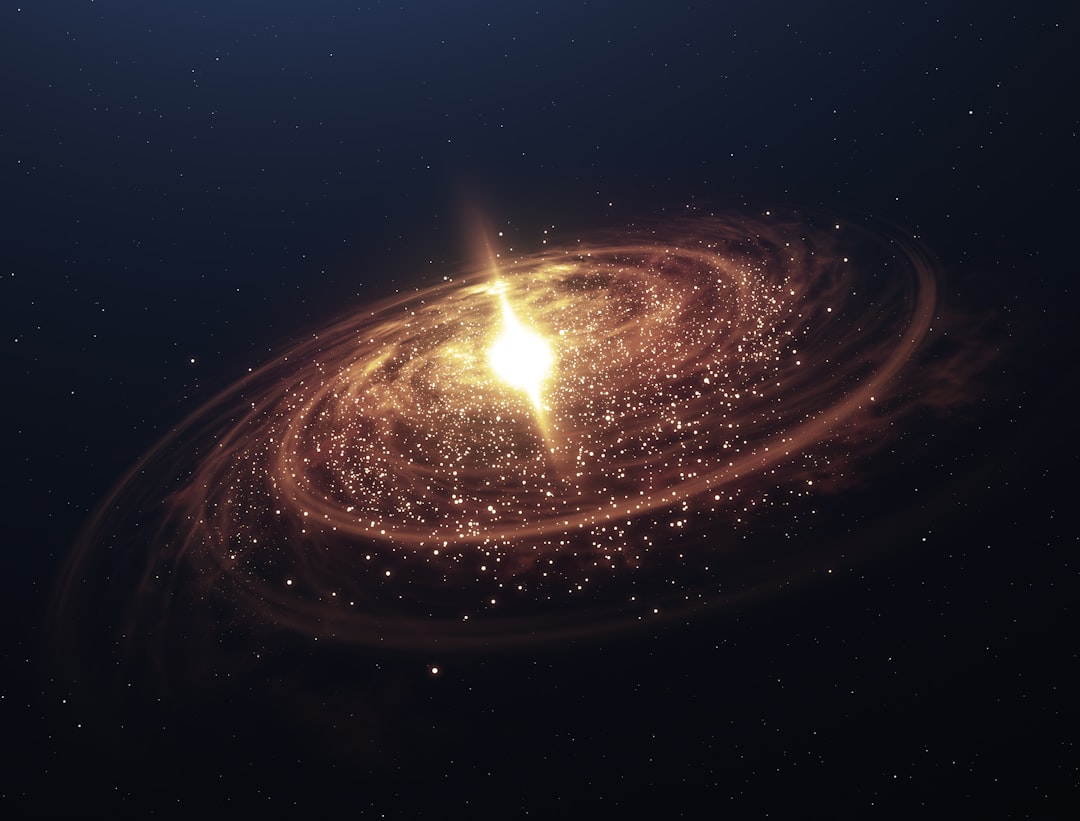
The cosmos, a grand tapestry woven from stars, galaxies, and the vast stretches of intergalactic space, has long been a subject of intense scientific inquiry. Yet, beneath its dazzling surface lies a profound mystery, a gnawing absence that has left astrophysicists and cosmologists grappling with fundamental questions about the very fabric of reality. This enigma, the “missing universe matter,” represents not a simple accounting error, but a gaping chasm in our understanding of the universe’s composition and evolution. It’s as if we’ve meticulously weighed a cake, accounted for every ingredient we can see and touch – flour, sugar, eggs – only to discover it’s significantly lighter than our calculations predict.
The journey to this perplexing realization began with the diligent observation of celestial bodies. For decades, astronomers have employed diverse methods to gauge the mass of the universe. From the orbital speeds of stars within galaxies to the way light bends around massive objects, these cosmic measurements have painted a consistent picture: there is far more gravitational pull at play, far more “stuff” holding things together, than can be accounted for by the visible matter we can detect. This discrepancy, once a fringe observation, has solidified into a central pillar of modern cosmology, demanding an explanation that transcends our current understanding of physics.
Our most immediate perception of the universe is that of luminous objects: the dazzling points of light we call stars, the colossal congregations of stars forming galaxies, and the nebulae, vast interstellar clouds of gas and dust that serve as cosmic nurseries. This visible matter, composed of baryonic matter – protons, neutrons, and electrons – is the building block of everything we can directly observe and interact with. It forms planets, the molecules that make up life, and the very instruments we use to probe the cosmos.
Stars: The Celestial Furnaces
Stars, the quintessential celestial entities, are massive, luminous spheres of plasma held together by their own gravity. Through nuclear fusion in their cores, they generate the energy that makes them shine, providing light and heat across vast distances. The study of starlight, its spectrum and intensity, reveals a wealth of information about their composition, temperature, and age. This allows scientists to estimate the mass of individual stars and, by extension, the total mass of stellar populations within galaxies.
Galaxies: Islands in the Cosmic Ocean
Galaxies are enormous, gravitationally bound systems of stars, stellar remnants, interstellar gas and dust, and dark matter. They are the fundamental structures of the universe, housing billions, and sometimes trillions, of stars. Observing the motion of stars and gas within galaxies has been a critical tool in the search for missing matter.
Galactic Rotation Curves: A Gravitational Enigma
One of the earliest and most compelling pieces of evidence for the existence of unseen matter came from the study of galactic rotation curves. Scientists observed that stars in the outer regions of galaxies were orbiting their galactic centers far too quickly. According to Newtonian gravity, stars further from the center should orbit slower, much like planets further from the Sun orbit at lower speeds. However, empirical observations consistently showed that these outer stars maintained high speeds, suggesting an additional, invisible source of gravitational influence. It’s akin to watching a merry-go-round spin at a speed that should fling riders off the edge, yet they remain firmly in place, implying an unseen force holding them.
Galaxy Clusters: Gravitational Lighthouses
Galaxy clusters, the largest gravitationally bound structures in the universe, are composed of hundreds or thousands of galaxies, interspersed with hot gas and, as we now know, a significant amount of dark matter. The motions of galaxies within these clusters, as well as the temperature and distribution of the hot gas, provide further clues about the total mass present. By applying the principles of gravity, scientists can infer the total mass required to hold these massive structures together.
Interstellar and Intergalactic Gas: The Cosmic Fog
While stars and galaxies capture our attention with their brilliance, much of the baryonic matter in the universe exists in the form of diffuse gas and plasma. Interstellar gas clouds, often the birthplace of stars, and the hotter, less dense intergalactic medium that permeates the space between galaxies, contribute to the overall baryonic mass. While difficult to observe directly, this gas can be detected through its emission and absorption of electromagnetic radiation.
Scientists have recently expressed their astonishment over new findings related to missing universe matter, a topic that has sparked considerable debate in the astrophysics community. This intriguing development is further explored in a related article that delves into the implications of these discoveries and their potential to reshape our understanding of the cosmos. For more insights, you can read the full article here: Missing Universe Matter: Scientists Stunned.
The Unexpected Discovery: The Gravitational Imprint of the Unseen
The inconsistencies between the observed gravitational effects and the calculated mass of visible matter led to a profound conclusion: a substantial portion of the universe’s mass must be composed of something that does not interact with light, something that is, in essence, invisible to us. This “something” was tentatively labeled “dark matter.” It is not dark in the sense of being a black hole or a rogue planet, but dark because it does not emit, absorb, or reflect electromagnetic radiation, rendering it undetectable by traditional astronomical means.
The Pivotal Role of Vera Rubin’s Work
Vera Rubin, an American astronomer, played a pivotal role in solidifying the evidence for dark matter. Her meticulous observations of galactic rotation curves in the 1970s provided some of the most persuasive data. She and her colleagues measured the speeds of stars at various distances from the centers of spiral galaxies. The results were consistent and striking: the outer stars moved much faster than expected, indicating a gravitational pull far stronger than could be accounted for by the visible stars and gas alone. This work, initially met with skepticism, eventually became a cornerstone of the dark matter paradigm.
Fritz Zwicky’s Early Hypothesis
While Rubin’s work provided definitive evidence, the concept of unseen matter was first proposed much earlier by Swiss astronomer Fritz Zwicky in the 1930s. He studied the Coma Cluster of galaxies and calculated its total mass by observing the velocities of individual galaxies within the cluster. His calculations suggested that the cluster contained significantly more mass than could be accounted for by the visible galaxies alone. He referred to this missing mass as “dunkle Materie” – dark matter. However, his observations were made with less precise instruments, and his findings were not widely accepted at the time.
Gravitational Lensing: The Cosmic Magnifying Glass
Gravitational lensing, a phenomenon predicted by Einstein’s theory of general relativity, offers another powerful method for probing the distribution of mass in the universe, including dark matter. Massive objects, such as galaxies and galaxy clusters, warp the fabric of spacetime, bending the path of light from more distant objects. This bending can distort, magnify, or even create multiple images of the background objects. By analyzing the degree of lensing, astronomers can map out the mass distribution in the foreground object, revealing the presence of invisible matter. The way light bends around a galaxy cluster, like a cosmic magnifying glass, allows us to “see” the total mass, including the dark matter component.
The Search for the Elusive Particle: Candidates for Dark Matter
The existence of dark matter is strongly supported by a wealth of observational evidence, but its fundamental nature remains one of the most significant unsolved mysteries in physics. The scientific community is engaged in an ongoing, multifaceted search for the particle or particles that constitute this pervasive, invisible substance. This quest is akin to trying to identify a ghost; we can see its effects – the doors it opens, the objects it moves – but we cannot directly perceive the ghost itself.
Weakly Interacting Massive Particles (WIMPs)
For a long time, the leading candidates for dark matter were Weakly Interacting Massive Particles, or WIMPs. These are hypothetical particles that are thought to be relatively massive and interact only through gravity and the weak nuclear force. Their weak interaction strength would explain why they are so difficult to detect directly. Numerous experiments have been designed to search for WIMPs, typically involving highly sensitive detectors buried deep underground to shield them from cosmic rays. These experiments aim to detect the faint recoil of an atomic nucleus when struck by a WIMP.
Axions: The Lightweights in the Dark Matter Debate
Another class of hypothetical particles being investigated are axions. These are much lighter than WIMPs and were originally proposed to solve a problem in quantum chromodynamics (QCD), the theory of the strong nuclear force. Axions are predicted to interact even more weakly than WIMPs, making them extremely challenging to detect. Experiments searching for axions often involve looking for their potential conversion into photons in strong magnetic fields.
Sterile Neutrinos: The Shadowy Siblings
Sterile neutrinos are hypothetical counterparts to the known neutrinos, the ghostly particles that interact only through the weak force and gravity. Sterile neutrinos, as their name suggests, would interact even more weakly, possibly only through gravity. Their existence is not directly predicted by the Standard Model of particle physics but could potentially explain dark matter if they have the right mass and abundance.
Primordial Black Holes and Other Exotic Explanations
While particle dark matter remains the most widely studied explanation, other more exotic possibilities are also explored. These include primordial black holes, which are black holes that may have formed in the very early universe, and baryonic dark matter in forms like MACHOs (Massive Astrophysical Compact Halo Objects), such as brown dwarfs or rogue planets. However, observational constraints have largely ruled out MACHOs as a significant contributor to dark matter.
Unraveling the Cosmic Inventory: The Dark Energy Conundrum
The story of missing matter doesn’t end with dark matter. As our understanding of the universe deepens, another, even more enigmatic component has emerged: dark energy. While dark matter exerts a gravitational pull, holding structures together, dark energy appears to be doing the opposite – pushing things apart. This discovery has further deepened the mystery of the universe’s composition, revealing that the familiar baryonic matter we understand is merely a small fraction of the cosmic pie.
The Accelerating Expansion of the Universe
In the late 1990s, observations of distant supernovae provided a revolutionary revelation: the expansion of the universe is not slowing down, as predicted by earlier models, but is instead accelerating. This acceleration implies the existence of a repulsive force counteracting gravity on cosmic scales. This mysterious force was dubbed “dark energy.” It’s as if we expected a ball thrown upwards to slow down and eventually fall back, but instead, it’s inexplicably speeding up its ascent.
The Cosmological Constant: Einstein’s Ghostly Legacy
The simplest explanation for dark energy is the cosmological constant, a term that Albert Einstein famously introduced into his equations of general relativity but later abandoned. This constant represents a constant energy density inherent to spacetime itself. If this energy density is positive, it would exert a negative pressure, leading to accelerated expansion.
Quintessence and Other Dynamic Models
Alternative explanations for dark energy involve dynamic fields, such as “quintessence.” These models propose that dark energy is not constant but changes over time, driven by a scalar field that permeates the universe. The behavior of this field would dictate the rate of cosmic acceleration.
Recent discoveries in astrophysics have left scientists stunned, particularly regarding the elusive nature of dark matter in the universe. A related article discusses how researchers are grappling with the implications of missing universe matter and the potential impact on our understanding of cosmic evolution. For more insights on this fascinating topic, you can read the full article here. This ongoing research not only challenges existing theories but also opens new avenues for exploration in the field of cosmology.
Implications for Cosmology and Fundamental Physics
| Metric | Value | Description |
|---|---|---|
| Percentage of Missing Universe Matter | 85% | Estimated portion of the universe’s matter that remains unaccounted for |
| Dark Matter Detection Attempts | 100+ | Number of experiments conducted to detect dark matter particles |
| Years Since Discovery of Missing Matter | 50 | Time elapsed since scientists first identified missing matter in the universe |
| Number of Theories Proposed | 20+ | Various scientific theories attempting to explain the missing matter |
| Recent Surprising Findings | Yes | New data has stunned scientists by challenging previous assumptions |
The existence of dark matter and dark energy profoundly impacts our understanding of cosmology and the fundamental laws of physics. These unseen components are not mere footnotes to our cosmic ledger; they are the dominant players, shaping the universe’s structure, evolution, and ultimate fate.
The Lambda-CDM Model: Our Current Cosmic Blueprint
The prevailing cosmological model, known as the Lambda-CDM model, incorporates both cold dark matter (CDM) and the cosmological constant (Lambda) to explain the observed large-scale structure and evolution of the universe. This model has been remarkably successful in fitting a wide range of cosmological observations, including the cosmic microwave background radiation, the distribution of galaxies, and the accelerating expansion of the universe. However, it relies on the existence of these unknown components and the fundamental nature of dark matter and dark energy remains a profound theoretical challenge.
The Standard Model’s Limitations
The Standard Model of particle physics, our current best description of fundamental particles and their interactions, does not include any candidates for dark matter. This suggests that a more comprehensive theory of physics is required to explain the universe’s observed composition. Similarly, the nature of dark energy is not explained by the Standard Model, indicating a gap in our comprehension of fundamental forces and energies.
Rethinking Gravity and Inertia
The persistent anomalies prompting the dark matter and dark energy hypotheses have also led some scientists to re-examine the fundamental laws of gravity and inertia. While most cosmologists believe that dark matter and dark energy are real substances or fields, a minority are exploring alternative theories, such as Modified Newtonian Dynamics (MOND), which propose that gravity behaves differently on very large scales or at very low accelerations, potentially explaining the observed galactic rotation curves without the need for dark matter.
The Future of Cosmic Exploration
The ongoing quest to understand missing universe matter is driving innovation in astronomical observation and particle physics experimentation. Projects like the Vera C. Rubin Observatory, the James Webb Space Telescope, and next-generation particle detectors are poised to provide unprecedented data, shedding light on the nature of these cosmic enigmas. The unraveling of the missing matter mystery promises to revolutionize our understanding of the universe, potentially leading to new physics and a more complete picture of reality. The cosmos, it seems, still holds many of its deepest secrets in the shadows, waiting to be brought into the light.
FAQs
What is meant by “missing universe matter”?
Missing universe matter refers to the discrepancy between the amount of matter predicted by cosmological models and the amount actually observed in the universe. Scientists have found that a significant portion of ordinary matter, known as baryonic matter, appears to be unaccounted for in galaxies and intergalactic space.
Why are scientists stunned by the discovery related to missing universe matter?
Scientists are stunned because recent observations or studies have revealed unexpected findings about the location, amount, or nature of the missing matter. These findings challenge existing theories and models about the composition and structure of the universe, prompting a reevaluation of current understanding.
How do scientists search for the missing matter in the universe?
Scientists use a variety of observational techniques, including studying the cosmic microwave background, analyzing the distribution of galaxies, observing X-ray emissions from hot gas, and using gravitational lensing to detect invisible matter. Advanced telescopes and space missions help in detecting faint signals from diffuse gas and other forms of matter.
What types of matter are considered when discussing the missing universe matter?
The missing matter primarily refers to baryonic matter, which includes protons, neutrons, and electrons that make up stars, planets, and gas. It is distinct from dark matter, which is non-baryonic and does not emit light. The missing baryonic matter is thought to exist in forms such as warm-hot intergalactic medium (WHIM) that are difficult to detect.
What implications does the discovery of missing universe matter have for cosmology?
Understanding the missing matter helps refine models of cosmic evolution, structure formation, and the overall mass-energy content of the universe. It impacts theories about galaxy formation, the behavior of intergalactic gas, and the fate of the universe. Resolving the mystery of missing matter also aids in accurately measuring fundamental cosmological parameters.