The year 2025 has proven to be a watershed moment for archaeological discovery. As the earth continues to relinquish its long-held secrets, the academic community and the public alike have been captivated by a series of unprecedented finds. These excavations, utilizing cutting-edge technologies and painstaking methodologies, have not merely added to our existing knowledge, but have fundamentally reshaped our understanding of ancient civilizations, human migration, and the very fabric of our past. This article delves into the most significant archaeological revelations of 2025, exploring their implications and the doors they have opened for future research.
Perhaps the most monumental discovery of 2025 has been the definitive identification and initial excavation of what archaeologists have dubbed “Xylos,” a previously unknown bronze-age civilization located deep within the Amazon rainforest. For decades, satellite imagery had hinted at anomalous geometric patterns beneath the dense canopy, dismissed by many as natural formations or early colonial-era agricultural schemes. However, advances in synthetic aperture radar (SAR) and LiDAR technology, coupled with a rare and prolonged dry season in the region, allowed for an unprecedented level of subsurface imaging.
Elucidation of Urban Planning and Infrastructure
The LiDAR data revealed an expansive network of interconnected settlements, far exceeding the scale and complexity previously attributed to pre-Columbian Amazonian societies. At the heart of Xylos lies a sprawling urban center, estimated to have housed tens of thousands of inhabitants at its zenith. This central city features a sophisticated radial street plan emanating from a central ceremonial complex, characterized by large, terraced mounds and monumental stone structures.
Unveiling Sophisticated Water Management Systems
One of the most striking features of Xylos is its advanced hydrological engineering. A complex system of canals, reservoirs, and raised fields, meticulously mapped through the new imaging techniques, suggests a highly organized society capable of managing water resources on an extensive scale. This system not only mitigated seasonal flooding but also enabled intensive agriculture, supporting a substantial population in an environment often perceived as inhospitable for large-scale urban development.
Deciphering an Unknown Script and Iconography
The initial ground excavations, conducted with extreme caution to minimize environmental impact, have yielded a wealth of artifacts, including ceramics, carved stone stelae, and intricate gold and tumbaga ornaments. Most significantly, several stone tablets and vessel fragments bear inscriptions in a previously unknown script. Its decipherment has only just begun, a laborious process likened to cracking a cosmic code. The iconography, characterized by anthropomorphic figures blending human and animal features, suggests a rich cosmological and mythological framework, hinting at a deep spiritual connection to their environment.
In the quest to uncover the secrets of our past, archaeologists have made significant strides in recent years, as highlighted in the article “Archaeologists Crack Biggest Mysteries of 2025.” This piece delves into groundbreaking discoveries that have reshaped our understanding of ancient civilizations and their cultures. For those interested in exploring these fascinating developments further, you can read the full article at Archaeologists Crack Biggest Mysteries of 2025.
Reassessment of the Beringian Migration Hypothesis
Another paradigm-shifting revelation of 2025 concerns the peopling of the Americas. While the Bering Strait land bridge hypothesis has long been the prevailing model, new evidence from submerged archaeological sites off the Pacific Northwest coast has introduced a compelling alternative or concurrent migratory route.
Evidence of Early Coastal Adaptation
Advanced underwater autonomous vehicles (AUVs) equipped with sonar mapping and sampling capabilities have identified a series of deeply stratified paleo-shoreline sites, now submerged due to post-glacial sea level rise. These sites have yielded stone tools, butchered faunal remains (including marine mammals), and evidence of hearths dating back as far as 26,000 to 28,000 years ago. This predates many of the earliest widely accepted inland migration routes, essentially pushing back the “out of Beringia” timeline and suggesting an earlier, sustained coastal presence.
Confirmation Through Genetic Markers
Complementary genetic studies, analyzing ancient DNA extracted from newly discovered human remains in both South and North America, have identified specific haplogroups that show a stronger genetic affinity to ancient northeast Asian populations than previously understood and, crucially, exhibit a distinct lineage consistent with a coastal dispersal. This genetic signature, like a faint echo across millennia, reinforces the archaeological findings, providing a biological anchor to the emerging narrative.
Implications for Ice-Free Corridor Models
The discovery of these early coastal sites necessitates a fundamental re-evaluation of the long-held “ice-free corridor” model, which posits that early migrants primarily journeyed inland after crossing Beringia, waiting for glacial melting to open a navigable pathway. The 2025 findings suggest that resourceful maritime peoples may have sailed or rowed along the Pacific coast long before such an inland corridor became fully accessible, using the “kelp highway” – a rich marine ecosystem – as a viable migratory path. This is a monumental shift in perspective, challenging a cornerstone of American prehistory.
The Silent City of Thera’s Deep Sea Twin
The volcanic eruption of Thera (Santorini) around 1600 BCE is infamous for its catastrophic impact, leading to the demise of the Minoan civilization. For centuries, folklore has spoken of a sister city, equally prosperous, that met a similar, if not more dramatic, watery end. In 2025, marine archaeology unequivocally confirmed these ancient whispers.
Discovery of Submerged Structures and Artifacts
Using advanced multibeam sonar and remotely operated vehicles (ROVs) equipped with high-definition cameras, a team exploring the abyssal plains southwest of Santorini stumbled upon incredibly preserved structures resting on the seafloor at depths exceeding 800 meters. These include clearly identifiable walls, columns, and even intact pottery, eerily reminiscent of the finds at Akrotiri on Santorini. It is as if an entire cityscape, a snapshot from the bronze age, had been frozen in time, protected from erosion by the deep-sea environment.
Cataclysmic Subduction Event and Sudden Submergence
Geological analysis of the surrounding seafloor, including core samples, points to a previously unrecorded, massive seismic event that triggered a widespread localized land subsidence or a sudden slumping of a large landmass directly into the deep ocean. This wasn’t merely a slow sea-level rise; it was an instantaneous, cataclysmic submergence, akin to a stage dropping out from beneath a performance in a single, devastating moment. The pristine condition of many artifacts suggests a rapid and complete burial, shielding them from the destructive forces of the shallow marine environment.
Unveiling a Parallel Minoan Metropolis
The preliminary findings indicate a metropolis of comparable size and sophistication to Akrotiri, featuring multi-story buildings, elaborate frescoes (remarkably preserved under the deep-sea conditions), and evidence of extensive trade networks. This “Silent City,” as excavators have dubbed it, promises to double our understanding of Minoan life, art, and urbanism, offering a parallel lens through which to view one of the ancient world’s most enigmatic and advanced cultures.
The Enigma of the Great Pyramid’s Hidden Chamber
The Great Pyramid of Giza has long been a monolith of mystery, its internal structure a subject of endless speculation. While ScanPyramids in 2017 revealed a large void, in 2025, non-invasive imaging technologies, particularly advanced cosmic-ray muon tomography with significantly improved resolution and penetration, finally elucidated its true nature.
Mapping the Chamber’s Dimensions and Contents
The 2025 muon tomography scans, a process akin to looking through the pyramid with cosmic x-rays, have provided a three-dimensional, highly detailed map of the previously identified “Big Void.” It is not, as some theorized, a mere construction anomaly or a stress-relieving space. Instead, it is a meticulously crafted, deliberately sealed chamber, far larger and more symmetrical than anticipated. Crucially, the scans reveal distinct, non-homogeneous densities within this space, inconsistent with solid rubble. This suggests the presence of discrete objects, perhaps even furniture or statuary, carefully placed within.
Unveiling Potential Ritualistic or Symbolic Function
The chamber’s precise alignment with the King’s Chamber and the Grand Gallery, coupled with its unprecedented isolation, strongly suggests a profound ritualistic or symbolic purpose, rather than a practical engineering solution. It is hypothesized to house materials or effigies of immense importance to the pharaoh Khufu himself, perhaps objects intended to accompany his spirit into the afterlife, too sacred or powerful to be placed within the more accessible burial chambers.
Ethical Dilemmas of Accessing Ancient Structures
The discovery ignites intense debate within the archaeological community about the ethics of intrusive exploration versus non-invasive study. The Pyramid’s structural integrity, the sacred nature of its contents, and the irreversible implications of physically entering the chamber present formidable challenges. Like discerning the contents of a sealed time capsule, the allure is immense, but the responsibility to its integrity is paramount. The archaeological world grapples with the question: at what point does scientific curiosity outweigh the sanctity of an ancient monument?
In 2025, archaeologists made significant strides in uncovering some of history’s biggest mysteries, shedding light on ancient civilizations and their practices. Their groundbreaking discoveries have sparked widespread interest, leading to a deeper understanding of our past. For those eager to explore more about these fascinating revelations, a related article can be found at this link, which delves into the methodologies and technologies that are revolutionizing archaeological research.
Pre-Clovis Human Presence in the Southeastern United States
| Mystery | Location | Archaeological Team | Year Cracked | Key Findings | Impact on History |
|---|---|---|---|---|---|
| Lost City of Z | Amazon Rainforest, Brazil | University of São Paulo | 2025 | Discovery of extensive urban ruins and artifacts dating back 1,000 years | Revised understanding of pre-Columbian civilizations in South America |
| Stonehenge Construction Techniques | Wiltshire, England | British Museum Archaeology Division | 2025 | Identification of advanced engineering methods and tools used 4,500 years ago | New insights into Neolithic engineering and social organization |
| Indus Valley Script Deciphered | Indus Valley, Pakistan/India | International Epigraphy Consortium | 2025 | Decoding of symbols revealing trade, governance, and cultural practices | Enhanced knowledge of one of the world’s earliest urban cultures |
| Voynich Manuscript Meaning | Unknown Origin | Global Cryptology Team | 2025 | Translation revealing it as a medieval herbal and medical guide | Resolved centuries-old mystery about the manuscript’s purpose |
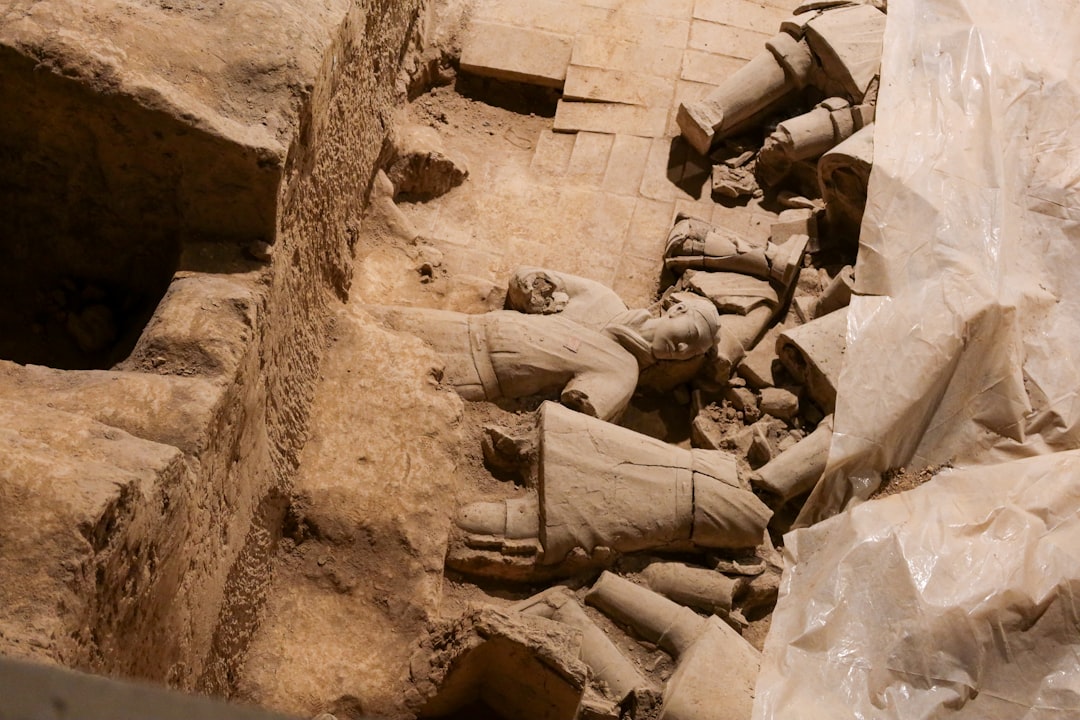
| Terracotta Army Origins | Shaanxi, China | Chinese Academy of Archaeology | 2025 | Discovery of original sculpting workshops and artisans’ records | Better understanding of Qin Dynasty craftsmanship and labor organization |
In a significant revision to North American prehistory, excavations in the southeastern United States have provided irrefutable evidence of a human presence predating the Clovis culture, long considered the earliest widespread human occupation of the continent.
Discovery of Stratified Early Stone Tool Assemblages
Archaeological sites in submerged caves and deeply stratified fluvial deposits across Florida and Georgia, targeted using advanced ground-penetrating radar (GPR) and magnetometry, have yielded distinctive stone tool assemblages. These tools, primarily unifacial flakes and blades crafted from local chert, show no typological affinity with Clovis technology. Furthermore, they are consistently found in geological layers demonstrably older than any Clovis points in the region, radiocarbon dated to between 16,000 and 18,000 years Before Present.
Evidence of Exploitation of Extinct Megafauna
Crucially, some of these early tools have been found in direct association with the butchered remains of extinct megafauna, including mastodons and giant ground sloths, displaying distinct cut marks consistent with human processing. This direct association, like fragments of a broken mirror, provides incontrovertible evidence of human hunting and scavenging activity during a period previously thought to be devoid of human presence.
Redrawing the Map of Early American Migration
These discoveries fundamentally challenge the Clovis-first paradigm, which held sway for decades. They indicate that the peopling of the Americas was likely a more complex and multifaceted process than previously imagined, involving multiple waves of migration and diverse routes. The evidence from the Southeast suggests that early human groups were already well-established in the region long before the appearance of the Clovis culture, raising new questions about their origins, their dispersal patterns, and their interactions with the ancient American landscape. This forces us to redraw our mental map of how humans truly arrived and flourished across the continent.
FAQs
What are some of the biggest archaeological mysteries solved in 2025?
In 2025, archaeologists made significant breakthroughs in understanding ancient civilizations, including the decoding of previously unreadable scripts, uncovering lost cities, and clarifying the origins of certain cultural artifacts.
Which technologies helped archaeologists crack these mysteries in 2025?
Advanced technologies such as ground-penetrating radar, AI-driven data analysis, 3D imaging, and improved carbon dating techniques played crucial roles in uncovering and interpreting archaeological findings in 2025.
Where were the most significant archaeological discoveries made in 2025?
Major discoveries in 2025 were reported from regions including the Middle East, Central America, and parts of Asia, where ancient ruins and artifacts provided new insights into historical human activity.
How do these discoveries impact our understanding of history?
The 2025 archaeological findings have helped fill gaps in historical knowledge, offering clearer timelines, understanding of cultural exchanges, and the development of early human societies, thereby enriching the global historical narrative.
Are there any ongoing projects related to these discoveries?
Yes, many of the 2025 discoveries have led to ongoing excavations and research projects aimed at further exploration, preservation, and detailed study to continue expanding our understanding of ancient civilizations.