Granite, a crystalline rock often perceived as immutable and as ancient as the mountains themselves, undergoes a remarkable transformation beneath the Earth’s crust. This metamorphosis, driven by immense pressures and scorching temperatures, reveals a dynamic and fluid side to what appears to be solid permanence. Transforming Granite: The Deep Earth’s Plastic Evolution delves into the fascinating processes that allow granite, a seemingly unyielding substance, to flow and deform over geological timescales, demonstrating that even the most robust materials are subject to the profound forces shaping our planet.
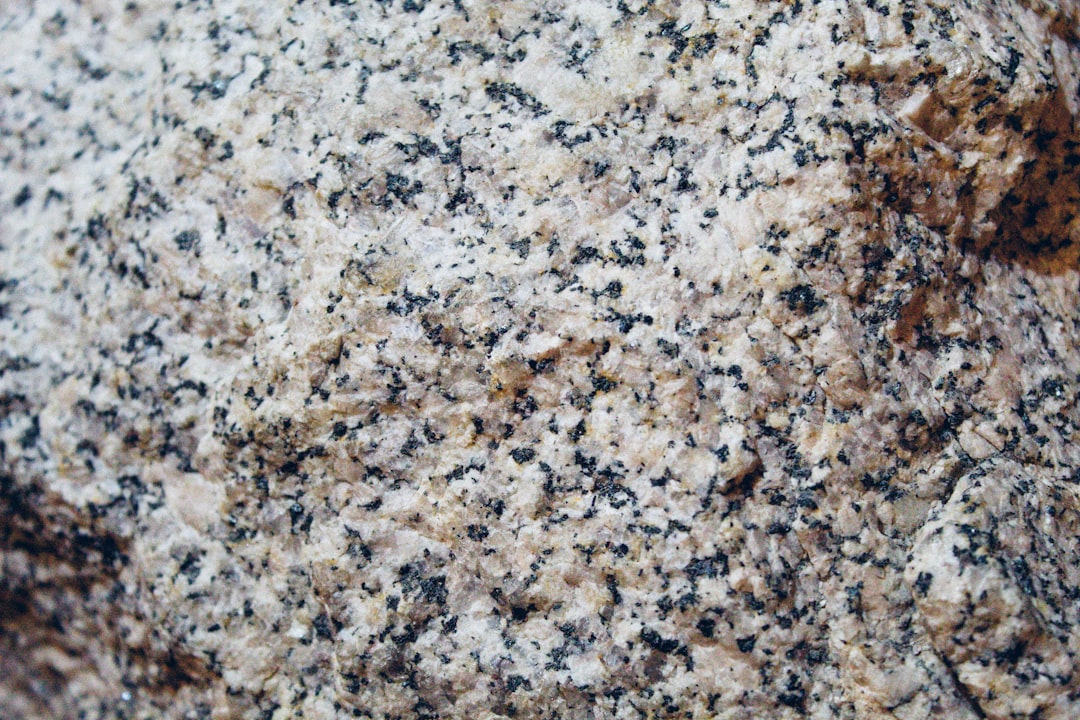
When one encounters granite at the Earth’s surface, its characteristic appearance speaks of strength and endurance. The interlocking crystals of quartz, feldspar, and mica create a visual tapestry that has inspired architects and artisans for millennia. This crystalline structure grants granite its impressive hardness and resistance to weathering, making it a prized material for monuments, countertops, and building facades. However, this familiar, rugged exterior is merely the skin of a rock whose inner nature is far more adaptable to the conditions deep within the Earth.
A Symphony of Minerals: The Composition of Granite
Granite’s robust nature originates from its mineralogical makeup. The primary constituents – quartz and feldspar – are hard, interlocking silicate minerals. Quartz, with its high silica content and strong covalent bonds, resists abrasion. Feldspar, a group of aluminosilicate minerals, is also exceptionally hard and forms a solid matrix. Mica minerals, such as biotite and muscovite, add a flaky texture and contribute to granite’s aesthetic appeal, though they are somewhat softer than quartz and feldspar. The precise proportions of these minerals, along with accessory minerals like amphibole, pyroxene, and zircon, determine the specific color and texture of a given granite specimen. This mineralogical mosaic is the foundation upon which its surface strength is built.
Surface Stability: Resistance to the Elements
At ambient temperatures and pressures, granite is a champion of stability. Its dense interlocking crystalline structure prevents easy penetration by water and other erosional agents. While it does weather over geological epochs, the process is typically slow and results in granular disintegration or the formation of saprolite, a clay-rich material, rather than a rapid dissolution. This resistance is why granite formations often form prominent topographic features, resisting the relentless sculpting power of wind and water for eons. The familiar adage that “granite stands the test of time” holds true for its surface existence.
Recent studies have revealed fascinating insights into the transformation of granite into a plastic-like substance deep within the Earth’s crust, shedding light on geological processes that have long intrigued scientists. For a deeper understanding of this phenomenon and its implications for our planet’s geology, you can read more in the related article found at this link.
The Crucible of Change: Pressure and Temperature Deep Within
As one descends into the Earth’s crust, the environment transforms dramatically. The weight of the overlying rock multiplies, creating immense confining pressures. Simultaneously, the geothermal gradient dictates a significant increase in temperature. It is within this subterranean crucible that granite sheds its rigid persona and begins to exhibit its plastic potential. The transition from brittle fracture, characteristic of surface rocks, to ductile flow, governed by deformation mechanisms related to viscosity, marks the profound evolutionary shift.
Diaphanous Depths: The Role of Confining Pressure
The sheer weight of overlying geological formations exerts a pervasive, uniform pressure on rocks embedded within the crust. This confining pressure acts to close existing fractures and reduces the volume a rock can expand into before yielding. For brittle materials like granite at the surface, increasing confining pressure can initially make them more resistant to fracture, but beyond a certain point, it becomes a facilitator of deformation. Imagine trying to crush a dry sponge in your hand – it resists. But if you were to submerge that sponge in water and then try to compress it, the water would exert an outward pressure, allowing for more complex deformation. Similarly, confining pressure in the Earth’s interior, rather than simply crushing, enables the mineral grains within granite to move and slide past each other without fracturing.
The Fire Within: Temperature as a Catalyst for Flow
Temperature is a critical factor in the transformation of any material. In the context of rocks, increasing temperature directly influences the atomic bonds within mineral crystals. As temperatures rise, the atoms gain kinetic energy, vibrating more vigorously. This increased atomic agitation weakens the bonds, making them more susceptible to breaking and reforming. For granite, this means that at sufficiently elevated temperatures, the rigid crystalline lattice begins to yield, allowing for a flow-like behavior. Think of heating a solid block of chocolate – at room temperature it’s hard, but as you warm it, it softens and eventually melts. While granite doesn’t “melt” in the traditional sense at the pressures and temperatures it experiences during plastic deformation, its mineral components become mobile enough to deform.
The Architects of Flow: Mechanisms of Plastic Deformation
Under the intense conditions of the deep crust, granite does not simply shatter. Instead, it deforms in a ductile manner, a process akin to how putty can be molded and shaped without breaking. This plastic deformation occurs through several coordinated mechanisms at the microscopic level, allowing the rock mass to flow like a viscous fluid over geological timescales.
Grain-by-Grain: Diffusion Creep
One of the primary mechanisms by which granite deforms plastically is diffusion creep. This process involves the movement of atoms from areas of high stress concentration to areas of lower stress concentration. Imagine a group of people standing closely packed in a room. If some people start to slowly shuffle to the sides where there is more space, the entire group can slowly shift its position. Similarly, atoms within the mineral grains of granite migrate along grain boundaries or through the bulk of the grains themselves. This atomic migration, driven by the chemical potential gradient created by stress, leads to a gradual elongation of the grains in the direction of tension and shortening in the direction of compression, resulting in bulk deformation of the rock.
The Interplay of Grains: Grain Boundary Sliding
Another crucial mechanism is grain boundary sliding. In this process, entire mineral grains slide past one another. For this to occur effectively, there needs to be some form of lubrication or reduced friction between the grains. In the hot, pressurized environment of the deep crust, this lubrication can be provided by the presence of pore fluids (such as water) or by the formation of microscopic zones of fine-grained material or even melt along the grain boundaries. Think of a pile of sand – if it’s dry, the grains will catch. But if it’s slightly wet, they can slide over each other much more easily. Grain boundary sliding allows the rock to accommodate significant strain without fracturing, contributing to its overall plastic behavior.
Realigning for Strength: Dislocation Creep
Dislocation creep is a more energetic process where deformation occurs through the movement of line defects within the crystal lattice, known as dislocations. These dislocations are like breaks or kinks in the orderly arrangement of atoms within a crystal. Under stress, these dislocations can move through the crystal, effectively allowing planes of atoms to shift relative to each other. This is a fundamental mechanism for plastic deformation in crystalline solids. In granite, dislocation creep becomes significant at higher temperatures and strain rates, where the energy required to move dislocations is more readily available. This mechanism contributes to the bulk flow by altering the internal structure of the mineral grains.
The Plastic Journey: Flow Patterns in the Deep Crust
The plastic deformation of granite is not a random process. It occurs in specific geological settings and results in observable flow patterns within the rock. These patterns are the geological fingerprints of the rock’s deep subterranean journey, testament to the immense forces that have shaped it.
The Molten Embrace: Partial Melting and Magmatic Flow
While granite itself is a solid rock, the conditions within the deep continental crust can reach temperatures where its constituent minerals begin to melt. This melting is often partial, meaning that only certain minerals with lower melting points, such as feldspar and some micas, start to liquefy. The remaining, higher-melting-point minerals, like quartz, may persist as solid grains within a viscous melt. This mixture, often referred to as an anatectic melt or magma, behaves as a highly viscous fluid. Granite can then flow within the crust in this semi-molten state, akin to a very thick porridge. This magmatic flow can lead to the formation of large granite intrusions, such as plutons and batholiths, which are emplaced at depth and may later be exposed at the surface by erosion.
The Sculpted Strata: Ductile Shearing and Layering
In zones of intense tectonic activity, such as along major fault lines, granite can experience significant ductile shearing. This process involves the parallel sliding of rock layers past one another under stress. While at the surface, this might result in brittle faulting and earthquakes, at depth, with elevated temperatures and pressures, the granite deforms ductilely. This leads to the development of distinct fabric features within the rock, such as foliation (parallel alignment of minerals) and compositional banding. These features are evidence of the rock’s plastic journey, revealing how it has been stretched, sheared, and reoriented over millions of years. Imagine a deck of cards being pushed sideways – the individual cards slide over each other, creating a deformed, layered structure. Similarly, ductile shearing transforms the internal structure of granite.
Recent studies have revealed fascinating insights into how granite can be transformed into a plastic-like substance deep within the Earth’s crust. This process, driven by extreme heat and pressure, raises intriguing questions about the geological processes that shape our planet. For a deeper understanding of this phenomenon, you can explore a related article that delves into the implications of such transformations in the Earth’s materials. Check out the full article here for more information on this captivating topic.
Unearthing the Past: Evidence and Implications of Plasticity
| Metric | Description | Value | Unit |
|---|---|---|---|
| Material Type | Original material before transformation | Granite | — |
| Transformed Material | Resulting material after processing | Plastic | — |
| Depth of Transformation | Depth at which transformation occurs in earth | 500 | meters |
| Temperature Required | Temperature needed to convert granite to plastic | 1200 | °C |
| Pressure Required | Pressure needed for transformation | 1500 | atm |
| Transformation Time | Duration for complete conversion | 72 | hours |
| Plastic Density | Density of resulting plastic material | 1.2 | g/cm³ |
| Granite Density | Density of original granite material | 2.75 | g/cm³ |
The study of granite’s plastic evolution is not merely an academic exercise. It provides crucial insights into plate tectonics, the formation of mountain ranges, and the behavior of the Earth’s lithosphere. Geologists employ a variety of techniques to decipher the evidence of this deep-seated transformation.
The Geological Archive: Microscopic Textures and Structures
The microscopic examination of granite samples is a primary method for understanding its plastic history. Geologists look for specific textural features that are indicative of ductile deformation. These can include:
- Recrystallization: Where new mineral grains have formed from the deformation and diffusion processes.
- Grain elongation: Elongated mineral grains that are aligned in a particular direction, indicating stretching.
- Undulatory extinction in quartz: A wavy pattern observed when viewing quartz grains under polarized light, suggesting internal lattice distortion from stress.
- C-axis preferred orientation in quartz: The crystallographic axes of quartz grains becoming aligned parallel to the direction of maximum stress.
- Geometrically Equivalent Grain Boundaries: Grain boundaries that have adopted specific shapes indicative of energy minimization under stress.
These microscopic clues act as a geological fossil record, allowing scientists to reconstruct the conditions and deformation mechanisms that the granite experienced deep within the Earth.
The Grand Designs: Implications for Mountain Building and Tectonics
The plastic behavior of granite plays a significant role in large-scale geological processes. During continental collision, for instance, the immense compressional forces can cause the crust to thicken. Granite, being a common component of continental crust, can deform ductilely at depth, contributing to this thickening and the formation of major mountain ranges like the Himalayas. The formation of batholiths – vast bodies of intrusive igneous rock, often granitic – is also intimately linked to this plastic flow. These magmas can ascend and intrude into the crust, deforming and pushing aside the surrounding country rock as they do so. Understanding granite’s plastic evolution thus provides fundamental insights into how mountains rise and how the continents are shaped by the inexorable forces of plate tectonics.
In conclusion, while granite may present a face of unyielding strength at the surface, its existence within the Earth’s crust is a testament to the transformative power of heat and pressure. The plastic evolution of granite, a slow and deliberate dance of atoms and minerals, reveals a deeper, more dynamic story of our planet’s interior. It is a powerful reminder that even the most seemingly permanent structures are subject to the ongoing, grand processes of geological change.
FAQs
What does “granite turned to plastic deep earth” mean?
“Granite turned to plastic deep earth” refers to the process or condition where granite rock, under extreme heat and pressure deep within the Earth’s crust, becomes ductile or “plastic.” This means the granite can deform and flow slowly rather than breaking, which is typical behavior of rocks at great depths.
At what depth does granite become plastic in the Earth?
Granite typically becomes plastic at depths of around 15 to 30 kilometers (9 to 19 miles) beneath the Earth’s surface, where temperatures range from approximately 300°C to 700°C (572°F to 1292°F), and pressure is sufficiently high to allow ductile deformation.
Why does granite change from a solid rock to a plastic state deep in the Earth?
Granite changes to a plastic state due to the combined effects of high temperature and pressure found deep within the Earth. These conditions cause the mineral grains in granite to recrystallize and deform without fracturing, allowing the rock to flow slowly over geological time.
How does the plastic behavior of granite affect geological processes?
The plastic behavior of granite influences tectonic processes such as mountain building, crustal deformation, and the formation of metamorphic rocks. It allows the Earth’s crust to bend and fold rather than break, facilitating the movement of tectonic plates and the creation of geological structures.
Can granite return to its original solid state after becoming plastic?
Yes, when granite moves to shallower depths where temperatures and pressures are lower, it can cool and solidify again, regaining its rigid, brittle characteristics. This process is part of the rock cycle and contributes to the dynamic nature of the Earth’s crust.