
The notion of ancient civilizations possessing technology far exceeding our current understanding, particularly concerning flight, fuels considerable debate and speculation. While mainstream archaeology and history largely attribute the invention of powered flight to the Wright brothers in the early 20th century, a subset of researchers and enthusiasts point to purported evidence of ancient flying machines, often termed “ancient aircraft” or “proto-aeroplanes.” This article will explore some of the most frequently cited examples and the arguments for and against their interpretation as evidence of advanced ancient aviation.
One of the most discussed artifacts in this context is the Saqqara Bird. Discovered in a tomb in Saqqara, Egypt, dating back to around 200 B.C., this wooden object is shaped like a bird of prey but possesses features that have led some to believe it is a model glider.
Anatomical Anomalies and Aerodynamic Interpretations
The Saqqara Bird: A Detailed Examination
The bird exhibits a remarkably detailed carving. Its wings are depicted with a distinct dihedral angle (angled upwards from the body), a feature that enhances stability in gliders. The tail, too, is broad and seems designed to provide directional control. proponents of the ancient aircraft theory argue that these features are not merely artistic representations but are indicative of a functional understanding of aerodynamics. They posit that the Saqqara Bird could have been a scaled-down model, demonstrating principles that could have been applied to larger, manned machines. Imagine a child’s carefully crafted kite, a simple precursor to a complex aerial vehicle; the Saqqara Bird, in this view, serves a similar foundational role.
The Skeptical Counterpoint: A Toy or a Ritual Object?
However, Egyptologists and ornithologists generally interpret the artifact as a ceremonial object or a child’s toy. They point out that similar carved birds, often representing falcons associated with the god Horus, are common in ancient Egyptian burials. The aerodynamic features, from this perspective, are either coincidental artistic choices or exaggerated representations of avian anatomy. The lack of any other corroborating evidence – such as blueprints, surviving components of larger machines, or widespread depictions of flight in ancient Egyptian art – weakens the argument for powered or even sophisticated unpowered flight. Skeptics suggest it is akin to finding a beautifully crafted toy airplane today; it represents an interest in the concept, not the actual realization of flight.
Material and Manufacturing Considerations
The wood used for the Saqqara Bird is typically identified as sycamore fig. While wood can be shaped, the precision of its construction, particularly the wing profile, is what sparks debate. Those who advocate for its advanced nature emphasize the skill required to craft such an object with the available tools, suggesting a level of craftsmanship that extends beyond simple woodworking. Conversely, archaeologists are quick to highlight the sophisticated woodworking techniques known to the ancient Egyptians, particularly in shipbuilding and furniture making, arguing that the Saqqara Bird falls within their known capabilities.
In exploring the fascinating realm of ancient technology, one cannot overlook the intriguing article titled “Lost Innovations: Technologies of the Ancient World That Shouldn’t Exist,” which delves into remarkable inventions that challenge our understanding of historical capabilities. This piece highlights various artifacts and engineering feats from civilizations long past, suggesting that they possessed knowledge and skills that seem far ahead of their time. To read more about these astonishing discoveries, visit the article at Lost Innovations: Technologies of the Ancient World That Shouldn’t Exist.
The “Vimanas” of Ancient India
The ancient Indian texts, particularly the Vedic literature and later works like the Ramayana and Mahabharata, contain numerous descriptions of aerial chariots known as “Vimanas.” These descriptions have been interpreted by some as accounts of advanced flying machines used by ancient inhabitants of India.
Vedic Descriptions: More Than Myth?
Textual Analysis of Vimana Accounts
The Sanskrit word “Vimana” itself is complex and has been translated in various ways, including “temple,” “palace,” or “dwelling.” However, certain passages describe these structures as capable of traversing the skies, emitting light, and even possessing offensive capabilities. For example, the Ramayana describes the Pushpaka Vimana, a celestial chariot that could carry numerous people and was capable of reaching any destination. Some researchers have drawn parallels between these descriptions and the functionalities of modern aircraft, suggesting that the ancient Indian texts provide a detailed, albeit allegorical, account of aeronautical engineering. To some, these texts are like encrypted blueprints, their true meaning hidden within poetic language.
Engineering Principles Allegedly Embedded in Texts
Those who champion the Vimana theory often cite specific verses that allegedly detail the construction and propulsion systems of these craft. They point to concepts such as the use of mercury or other volatile substances for propulsion, directional control mechanisms, and even shielding against enemy fire. These interpretations are often based on a literal reading of ancient texts, treating them as technical manuals rather than religious or literary works. The argument is that such detailed descriptions of aerial warfare and travel would not exist without a basis in experienced reality.
The Scholarly Consensus: Metaphor and Mythology
The mainstream scholarly consensus, however, views the Vimanas as mythical or allegorical constructs. They are understood as symbols of divine power, transcendence, or advanced weaponry within the context of ancient Indian mythology and religious beliefs. The descriptions are seen as poetic embellishments rather than literal engineering specifications. The vast gulf between the described capabilities and the known technological limitations of the Bronze Age and Iron Age civilizations makes a literal interpretation highly improbable for most scholars. They are viewed more as the imaginative flights of fancy that power many epic tales, not the specifications for a tangible machine.
The “Sudam” and Other Hypothetical Machines
Beyond the more famous Vimanas, some researchers have analyzed other ancient Indian texts for descriptions of aerial devices. The “Sudam,” a supposed sonic weapon described in some texts, has also been discussed in relation to advanced technology. The interpretation often hinges on finding modern scientific principles hidden within ancient cosmologies, a practice that can be likened to seeing shapes in clouds – what you see is often a projection of your own expectations.
The Baghdad Battery: A Power Source for Flight?
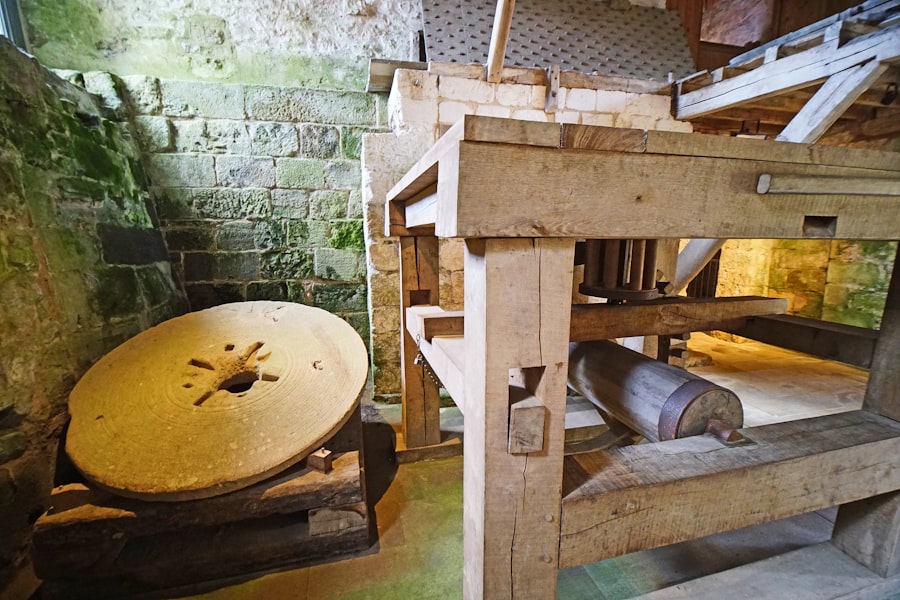
The Baghdad Battery, discovered in the village of Khuzistan, near Baghdad, Iraq, is another artifact that has been brought into the discussion of ancient technology, including potential power sources for flying machines. These artifacts, dating to the Parthian or Sasanian periods (roughly 250 B.C. to 650 A.D.), are earthenware jars containing a copper cylinder and an iron rod.
Composition and Potential Functionality
Examining the Baghdad Battery’s Structure
The Baghdad Battery consists of a clay vessel, a copper tube inserted into it, and an iron rod placed within the tube, separated from the tube by some form of insulator, possibly bitumen. When filled with an acidic liquid, such as vinegar or fermented grape juice, this assembly would function as a galvanic cell, producing a small electrical current. This has led some to propose that these batteries could have been used to power various devices, including the propulsion systems of hypothetical ancient aircraft. It’s like finding a single AA battery and assuming it powered entire cities; the potential is there, but the scale and application are often misunderstood.
The Electric Current: Significance and Limitations
The output of a single Baghdad Battery is very low, typically only a volt or two. While this is sufficient to create a mild electric shock or potentially electroplate small objects, it is significantly less than what would be required to power any aerial vehicle of substantial size or complexity. To achieve a useful amount of power, a vast number of such batteries would need to be connected in series, creating a cumbersome and impractical power supply for flight. The argument for its use in aviation often overlooks the sheer scale of energy required for sustained flight.
Alternative Explanations: A Practical Application?
Archaeologists and historians offer more prosaic explanations for the Baghdad Batteries. One prevailing theory suggests they were used for electroplating, a process known to have been developed in later centuries but possibly having earlier roots. The inscription of deities on some of the jars has also led to speculation that they were used in religious rituals, perhaps for purification or to produce a tingling sensation for spiritual purposes. The principle of electrochemistry was known, and this might have been an early, practical application, not necessarily tied to aerial pursuits.
Ancient Egyptian Hieroglyphs and “Airplanes”

Certain Egyptian hieroglyphs, particularly those found in the Temple of Abydos, have been interpreted by some as depicting recognizable modern machines, including what appear to be aircraft.
The Abydos “Helicopter” and “Airplane” Glyphs
Deciphering the Controversial Carvings
A set of reliefs in the Abydos temple, created during the reign of Seti I (c. 1300 B.C.), exhibits shapes that some observers claim strongly resemble modern vehicles. One carving, in particular, has been compared to a helicopter, while others are said to look like airplanes and submarines. Proponents of the ancient astronaut theory, in particular, often highlight these glyphs as evidence of extraterrestrial influence or forgotten advanced civilizations. These glyphs are like a Rorschach test of the ancient world; observers see what they are predisposed to see.
The Palimpsest Explanation: A Natural Phenomenon
The most widely accepted scientific explanation for these anomalous glyphs is the “palimpsest” effect. The reliefs at Abydos were apparently plastered over and then re-carved multiple times throughout history. The original carvings were from the reign of Seti I. Later, his son, Ramesses II, added his own inscriptions. Over time, the plaster has eroded, allowing the underlying Seti I hieroglyphs to show through. In some areas, the plaster has worn away in such a way that the combined effect of the superimposed carvings creates shapes that, through pareidolia, appear to resemble modern technology. The older carvings are like ghostly outlines beneath the newer ones, and the erosion has created a visual smudge that the human eye stitches into recognizable forms.
The Role of Pareidolia
Pareidolia is the psychological phenomenon where the mind perceives a familiar pattern (such as a face or an animal) in random or ambiguous visual stimuli. This is a powerful cognitive bias that can lead people to see “airplanes” in clouds or “faces” in inanimate objects. In the case of the Abydos glyphs, it is argued that the human tendency to find patterns in unfamiliar shapes, combined with the layered carving and erosion, has led to the misinterpretation of natural geological and artistic processes as evidence of advanced technology.
In exploring the fascinating realm of ancient technology, one cannot overlook the intriguing concept of advanced civilizations that seemingly possessed knowledge far beyond their time. A compelling article that delves into this topic is available at this link, where it discusses various artifacts and structures that challenge our understanding of historical technological capabilities. From the precision of the Great Pyramids to the mysterious Antikythera mechanism, these examples raise questions about the true extent of ancient ingenuity and the potential for lost knowledge that may have once existed.
The Nazca Lines: Aerial Views and Ancient Observers
| Ancient Technology | Estimated Age | Location Found | Notable Feature | Modern Equivalent | Why It Shouldn’t Exist |
|---|---|---|---|---|---|
| Antikythera Mechanism | ~2,100 years old | Greece | Complex astronomical calculator | Analog computers | Highly advanced gear technology predates known mechanical devices by over a millennium |
| Baghdad Battery | ~2,000 years old | Modern-day Iraq | Possible galvanic cell (early battery) | Electrochemical batteries | Electricity use not documented in that era |
| Roman Concrete | ~2,000 years old | Roman Empire | Durable underwater concrete | Modern concrete | Formula lost for centuries, superior durability compared to modern concrete |
| Pulley Systems of Ancient Egypt | ~4,500 years old | Egypt | Complex lifting mechanisms for pyramid construction | Modern cranes and pulleys | Advanced engineering knowledge unexpected for the era |
| Damascus Steel | ~1,000 years old | Middle East | Extremely strong and flexible steel blades | Modern high-carbon steel | Manufacturing process lost, unmatched blade quality for centuries |
The Nazca Lines in Peru are a series of geoglyphs etched into the desert floor by the ancient Nazca culture, dating from approximately 500 B.C. to 500 A.D. These massive designs, some stretching for hundreds of meters, are best viewed from a significant height.
The Scale and Precision of the Geoglyphs
Understanding the Nazca Culture’s Achievement
The Nazca culture created hundreds of intricate designs, including geometric shapes, animals, and human figures, by removing the reddish-brown pebbles from the desert surface to expose the lighter soil underneath. The precision with which these large-scale designs were executed, and the fact that they are most effectively appreciated from an aerial perspective, has led some to speculate that they were created for aerial observers, potentially ancient aviators or even extraterrestrial visitors. It is like finding a meticulously drawn map on the ground, where the full context is only revealed from above.
Theories of Aerial Construction and Observation
The “Sky-Writer” Hypothesis
Some researchers propose that the Nazca Lines were created by a culture possessing aerial capabilities. They argue that the scale and complexity of the designs, along with their visibility from above, suggest that the Nazcans had the means to survey their work from the air and guide its creation. This interpretation posits the Nazcans as perhaps early balloonists or primitive glider users.
The Scientific and Anthropological Interpretation
However, anthropological and archaeological evidence supports the theory that the Nazca Lines were created using relatively simple tools and techniques, such as surveying stakes, ropes, and plumb bobs. The lines can be accurately created by individuals walking on the ground, with the designs being planned in smaller, manageable sections. The ability to view the entire design from a distance – perhaps from a nearby hillside or watchtower – would have been sufficient for monitoring progress and ensuring accuracy. The purpose of the lines is still debated, with theories including astronomical calendars, religious rituals, or pathways. The lack of any direct evidence of ancient flight technology among the Nazca culture makes the aerial construction hypothesis speculative. The sheer willpower and coordination of a ground-based society, rather than advanced technology, is the more accepted explanation for their creation.
The “Conveyor Belt” Effect and Perception from Height
While the Nazca Lines are most striking from above, it is important to note that they are not entirely invisible from ground level. Many of the figures are composed of lines that are relatively close together, and it is possible for a person standing on the ground to trace parts of the designs. The “unbelievable” aspect from a modern perspective often stems from our modern understanding of scale and visibility, projecting our own expectations onto the past.
In conclusion, the concept of ancient flying machines remains a captivating, albeit contentious, area of inquiry. While intriguing artifacts and texts are offered as evidence, mainstream scholarship generally attributes these phenomena to artistic expression, mythological narratives, or natural processes. The pursuit of definitive proof for ancient aviation continues, fueling ongoing research and debate. Until undeniable, scientifically verifiable evidence emerges – such as surviving components of complex aerial vehicles, detailed schematics, or unambiguous historical accounts – the flying machines of antiquity will likely remain in the realm of fascinating speculation.
FAQs
What is meant by “ancient tech that should not exist”?
“Ancient tech that should not exist” refers to artifacts, tools, or technologies found in ancient civilizations that appear to be far more advanced than what historians and archaeologists expect based on the known technological capabilities of those time periods.
Can you give examples of ancient technologies that seem advanced for their time?
Examples include the Antikythera mechanism, an ancient Greek analog computer used to predict astronomical positions; the Baghdad Battery, which some believe could have been an early form of a galvanic cell; and the precise stone-cutting techniques used in structures like the Pyramids of Egypt and Machu Picchu.
How do experts explain the existence of these advanced ancient technologies?
Most experts explain these technologies as the result of human ingenuity, trial and error, and accumulated knowledge over time. Some advanced artifacts may have been misunderstood or misinterpreted, and ongoing research often provides more conventional explanations.
Are there any credible theories suggesting ancient civilizations had access to lost advanced technology?
While some fringe theories propose that ancient civilizations had access to lost or extraterrestrial technology, these ideas lack strong scientific evidence and are not widely accepted by mainstream archaeology or history.
Why is it important to study ancient technologies?
Studying ancient technologies helps us understand the development of human civilization, the evolution of science and engineering, and the cultural achievements of past societies. It also provides insight into how ancient people solved complex problems with the resources available to them.