
The trajectory of human civilization has, at numerous junctures, been irrevocably altered by the invention and deployment of specific weapons. These are not merely instruments of destruction; they are catalysts for change, reshaping political landscapes, driving technological innovation, and influencing the very fabric of societies. The following compilation explores fifteen such ancient weapons, examining their historical context, their impact on warfare, and their enduring legacy.
Before the advent of gunpowder and sophisticated siege engines, the effectiveness of a warrior or army often hinged on the quality and design of their close-combat weaponry. These tools, forged from stone, bronze, and later iron, represented the cutting edge of ancient metallurgy and craftsmanship. Their development marked a significant step in humanity’s ability to project force and defend territory.
The Stone Axe: The Dawn of Impact
The stone axe, appearing as early as the Paleolithic era and evolving through the Neolithic period, was one of humanity’s earliest and most versatile tools. While often regarded as a construction implement, its hafted stone head served as a potent weapon for both blunt force trauma and, with sharpened edges, for hacking and cleaving.
- Early Forms and Materials: The earliest stone axes were crude, with stones lashed to wooden handles. Over millennia, techniques improved, leading to more refined shaping and the use of harder stones like flint and obsidian. The advent of polished stone heads in the Neolithic marked a refinement in both its utilitarian and martial applications.
- Impact on Warfare: In its weaponized form, the stone axe could inflict devastating injuries, capable of cracking skulls and disabling limbs at close range. It was a primary tool for individual combat and could be used as a projectile in rudimentary forms of thrown warfare. Its presence allowed for more effective group engagements and the subjugation of rivals.
- Societal Implications: The ability to fell trees and clear land with the axe facilitated agricultural expansion and the construction of more permanent settlements. As a weapon, it provided a defensive advantage against predators and rival human groups, contributing to the formation of more organized communities and early forms of territorial control.
The Bronze Sword: The First True Blade
The Bronze Age witnessed the revolutionary leap from stone to metal weaponry. The bronze sword, emerging around the 2nd millennium BCE, was a game-changer. Its ability to retain a sharp edge through repeated use and its superior strength allowed for a more lethal and versatile fighting style.
- Metallurgical Advancements: The discovery and mastery of bronze casting, an alloy primarily of copper and tin, allowed for the creation of weapons that were both durable and sharp. The process was complex, requiring significant resources and knowledge, which often concentrated power in the hands of those who controlled bronze production.
- Tactical Revolution: The bronze sword offered significant advantages over earlier weapons. It could be used for thrusting and slashing, allowing for a wider range of combat maneuvers. Its length and robustness enabled warriors to maintain a tactical distance and engage enemies with greater lethality. This led to the development of more sophisticated fighting techniques and formations.
- The Rise of Warrior Elites: The cost and expertise required to produce bronze weapons meant they were often in the hands of a select few – chieftains, noble warriors, and their retinue. This contributed to the emergence and solidification of warrior classes and social hierarchies, where martial prowess became a significant determinant of status.
The Iron Sword: The Ubiquitous Edge
Following the Bronze Age, the development of iron smelting and forging presented a new paradigm. Iron, once its techniques were mastered, was more abundant and cheaper to produce than bronze, democratizing access to superior weaponry and fundamentally altering the scale and nature of warfare.
- From Rarity to Commonality: While early iron weapons were often brittle and inferior to good bronze, advancements in forging and carburization eventually led to iron weapons that were stronger, sharper, and more readily available. This transition, often referred to as the Iron Age, saw a widespread proliferation of effective close-combat arms.
- Mass Warfare and Shifting Power: The greater availability of iron weapons allowed larger armies to be equipped. This diminished the exclusive advantage of elite bronze-armed warriors and enabled the rise of mass infantry formations. Empires that effectively organized and armed their populations with iron weapons found themselves at a significant strategic advantage.
- The End of an Era and the Dawn of New Empires: The widespread adoption of iron weaponry contributed to the decline of bronze-dependent civilizations and facilitated the expansion of new powers. The ability to field larger, well-armed forces became a key factor in the formation and maintenance of vast territorial empires across Eurasia and Africa.
In exploring the fascinating world of ancient weaponry, one can gain deeper insights into how these tools shaped the course of history. A related article that delves into the significance of these weapons is titled “15 Ancient Weapons That Broke History.” This piece not only highlights the innovative designs and uses of these weapons but also examines their impact on warfare and civilization. For a more comprehensive understanding, you can read the article here: 15 Ancient Weapons That Broke History.
Projectiles and Precision: Warfare from a Distance
The development of effective projectile weapons extended the reach of combat, allowing for the engagement of enemies before they could close the distance. These innovations introduced new tactical considerations, the importance of ranged suppression, and the potential for inflicting casualties on a larger scale from relative safety.
The Sling: The Unsung Artillery
The sling, one of the oldest projectile weapons, utilized centrifugal force to hurl projectiles with surprising speed and accuracy. Its simplicity belied its effectiveness, making it a staple weapon across many ancient cultures.
- Simplicity and Effectiveness: Composed of a thong or cord, the sling could be fashioned from readily available materials. Its operative principle is straightforward: a projectile is placed in a pouch, whirled, and released at the peak of its acceleration.
- Combat Applications: Slingers could unleash a hail of stones or lead bullets, capable of incapacitating or killing enemy combatants at ranges exceeding that of most early bows. They were particularly effective in defensive roles, guarding fortifications, and could be used to disrupt enemy formations before they engaged.
- Ubiquity and Accessibility: The ease with which a sling could be made and used meant that it was accessible to a broad segment of any population, not just specialized warriors. This made it a democratizing weapon, providing a significant military capability to common soldiers. In some instances, skilled slingers could even rival the effectiveness of archers.
The Bow and Arrow: The Archer’s Dominance
The bow and arrow, a weapon system that has persisted in various forms for millennia, represents a significant leap in ranged combat capability. Its ability to deliver accurate and lethal projectiles from a distance provided a tactical advantage that profoundly influenced warfare.
- Evolution of Design: From simple self bows made of a single piece of wood to more complex composite bows incorporating animal sinew and horn, the bow’s design evolved to increase range, power, and ease of use. The development of the recurve bow and the composite bow, in particular, represented significant technological achievements.
- Tactical Dominance: Archers could inflict casualties from a distance, softening up enemy formations before they closed, providing covering fire for advancing troops, or disrupting enemy maneuvers. The psychological impact of volleys of arrows was also considerable. Elite archer units could turn the tide of battles through sustained, accurate fire.
- Specialized Warfare: The bow and arrow lent itself to specialized military roles, such as skirmishers, scouts, and military corps. The development of specialized arrowheads further enhanced their lethality for different purposes, from piercing armor to causing maximum tissue damage.
The Crossbow: Precision and Power Amplified
Emerging independently in various cultures, the crossbow offered a significant advantage in terms of ease of use and projectile velocity compared to the traditional bow. This allowed less trained individuals to wield a potent ranged weapon.
- Mechanical Advantage: The crossbow stores energy in a bowspart mounted horizontally on a stock, which is drawn and held by a mechanical lock. This allows the user to aim precisely before releasing the projectile, typically a bolt or quarrel.
- Increased Lethality and Accessibility: The mechanical advantage of the crossbow meant it could project bolts at higher velocities and with greater accuracy than many bows, often with greater penetrating power. Crucially, it required less physical strength and training to operate effectively than a traditional bow, making a potent ranged weapon accessible to a wider demographic.
- Siege and Defense: The power and accuracy of the crossbow made it an invaluable weapon in siege warfare, both for defending fortifications and for attacking them. Its ability to penetrate armor at close to medium ranges made it a feared weapon on the battlefield.
The Might of the Machine: Siege Engines and Fortifications
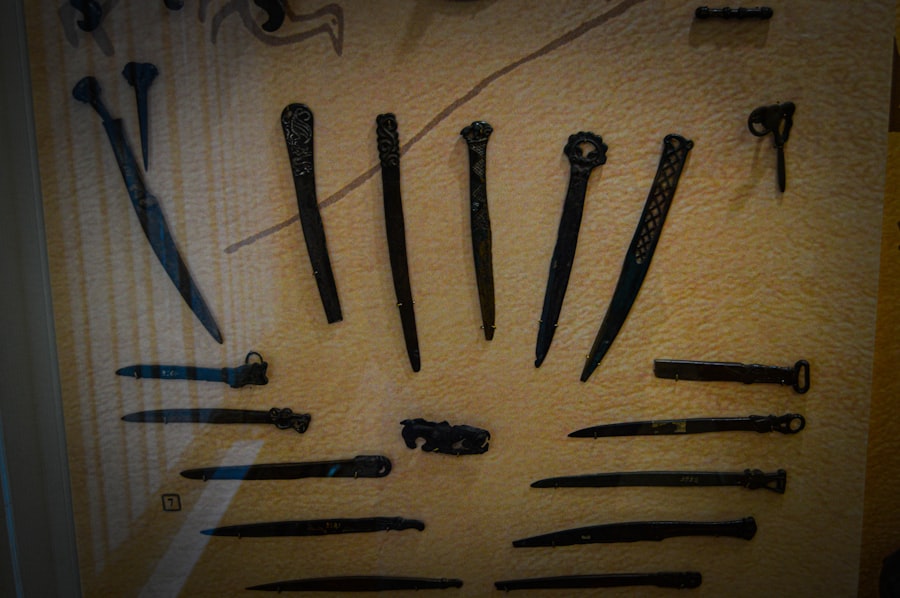
The development of siege engines marked a shift in warfare from individual combat to large-scale, organized assaults on fortified positions. These mechanical marvels were designed to overcome the defensive advantages of walls and ramparts, fundamentally altering the dynamics of conflict and the growth of empires.
The Ram: Breaching the Impenetrable
The battering ram, in its various forms, was one of the earliest and most enduring siege weapons. Its simple yet brutal function was to break down fortified gates and walls through repeated, forceful impact.
- Evolution of Design: From simple logs swung by hand to heavily reinforced beams suspended within protective shelters and propelled by manpower or winches, the battering ram evolved to become more powerful and better protected. The addition of wheels allowed for greater mobility.
- Direct Assault: The ram’s primary objective was to achieve a direct breach in a fortification. Its effectiveness lay in its ability to concentrate immense force on a single point, eventually causing structural failure. This often required significant effort and exposed operators to enemy fire.
- Psychological and Physical Impact: Beyond its physical destructive capacity, the relentless pounding of a battering ram had a significant psychological impact on defenders, fostering a sense of inevitability and despair. The presence of a ram often signaled an imminent assault.
The Catapult and Trebuchet: Projectile Power Unleashed
Catapults and their later, more powerful iteration, the trebuchet, represented a monumental leap in projectile warfare. These machines could hurl massive projectiles over impressive distances, capable of leveling fortifications and demoralizing defenders.
- The Catapult: Early catapults, such as the onager and ballista, utilized torsion or tension to propel projectiles. The onager, for instance, used twisted ropes to power a throwing arm, while the ballista resembled a large crossbow, firing bolts.
- The Trebuchet Revolution: The counterweight trebuchet, developed in China and later adopted and refined in Europe, represented a significant advancement. By using a heavy counterweight to swing a long arm, it could launch far heavier projectiles over greater distances with remarkable accuracy, effectively becoming ancient artillery.
- Transforming Siege Warfare: These machines fundamentally altered siege warfare. They allowed attackers to bombard fortifications from a safe distance, weakening walls, destroying munition stores, and raining terror upon defenders. Their presence could force surrenders or pave the way for direct assaults.
Chemical and Incendiary Warfare: The Corrosive and the Combustible
While not as prevalent as blunt force or ranged projectiles, the use of chemical and incendiary agents in ancient warfare served to sow chaos, inflict lingering damage, and overcome defenses through unconventional means. These were often early, rudimentary steps in exploiting the destructive potential of chemical reactions.
Greek Fire: The Unquenchable Inferno
Greek Fire, a legendary incendiary weapon developed by the Byzantine Empire, was a formidable weapon that played a critical role in defending Constantinople. Its composition and precise method of deployment remain a subject of historical fascination and debate.
- The Secret of the Formula: The exact ingredients of Greek Fire are lost to history, but it is believed to have been a petroleum-based mixture that could burn on water, making it incredibly difficult to extinguish. Its deployment often involved specialized siphons and projectile weapons.
- Naval Dominance: Greek Fire was particularly devastating in naval combat and sieges, where its ability to spread and burn uncontrollably could decimate enemy fleets and fortifications. It offered the Byzantines a significant strategic advantage against numerically superior attackers.
- Psychological and Strategic Impact: The terrifying sight and destructive power of Greek Fire instilled immense fear in enemies. It was a weapon of terror as much as destruction, contributing significantly to the survival of the Byzantine Empire for centuries.
Poisoned Weapons: The Silent Killer
The deliberate application of poisons to weapons, while often ethically condemned, was a tactic employed by various ancient cultures to increase the lethality of their attacks and gain an advantage over their adversaries.
- Varied Sources and Methods: Poisons were derived from a variety of natural sources, including plant extracts, animal venoms, and mineral compounds. They could be applied directly to arrowheads, spear tips, or even used in water supplies.
- Enhanced Lethality and Psychological Warfare: Poisoned weapons could incapacitate or kill enemies even if they did not suffer a fatal wound from the initial strike. This amplified the effectiveness of ranged attacks and contributed to the psychological warfare by sowing fear of unseen contamination.
- Challenges in Detection and Countermeasures: The subtle and often delayed effects of poisons made them difficult to detect and counteract. However, the risk of accidental poisoning also made their use a double-edged sword, and knowledge of antidotes or protective measures could mitigate their impact.
Throughout history, various ancient weapons have played pivotal roles in shaping civilizations and altering the course of events. For those interested in exploring this fascinating topic further, a related article titled “15 Ancient Weapons That Broke History” delves into the significance of these tools of war and their impact on society. You can find it at this link. From the legendary sword of King Arthur to the formidable Roman gladius, each weapon tells a story of innovation and power that resonates even today.
The Unseen Force: Psychological and Tactical Innovations
| Weapon Name | Origin | Era | Material | Notable Feature | Historical Impact |
|---|---|---|---|---|---|
| Gladius | Roman Empire | 1st Century BC | Iron | Short sword for close combat | Key to Roman infantry dominance |
| Khopesh | Ancient Egypt | 1500 BC | Bronze | Sickle-shaped sword | Symbol of power and warfare |
| Longbow | England | 14th Century | Yew wood | High range and penetration | Decisive in Hundred Years’ War |
| Katana | Japan | 13th Century | Folded steel | Curved, razor-sharp blade | Icon of samurai culture |
| Chariot Bow | Hittite Empire | 1600 BC | Wood and horn | Composite bow for mounted archers | Revolutionized mobile warfare |
| Spartan Hoplite Spear | Ancient Greece | 5th Century BC | Bronze tip, wooden shaft | Long thrusting spear | Central to phalanx formation |
| Scimitar | Middle East | 9th Century | Steel | Curved sword for slashing | Used by cavalry in Islamic empires |
| Ballista | Ancient Rome | 3rd Century BC | Wood and metal | Large crossbow-like siege engine | Effective in siege warfare |
| War Hammer | Medieval Europe | 14th Century | Steel and wood | Blunt force weapon against armor | Countered plate armor |
| Throwing Axe (Francisca) | Franks | 5th Century | Iron and wood | Light axe designed for throwing | Used in early medieval warfare |
| Halberd | Medieval Europe | 15th Century | Steel and wood | Combination spear and axe | Versatile infantry weapon |
| Trident | Ancient Rome/ Greece | 1st Century BC | Iron | Three-pronged spear | Used by gladiators and fishermen |
| Crossbow | China/ Europe | 5th Century BC (China), 11th Century (Europe) | Wood and metal | Mechanical bow with high power | Changed ranged combat tactics |
| Macuahuitl | Aztec Empire | 14th Century | Wood and obsidian | Sword-like club with obsidian blades | Deadly in close combat |
| Javelin | Various ancient cultures | Prehistoric to Classical Era | Wood and metal tip | Light spear for throwing | Essential for skirmishers |
Beyond physical weaponry, certain innovations focused on disrupting the enemy’s morale, creating illusions, or gaining tactical advantages through less tangible means. These were early forms of psychological warfare and battlefield deception that proved effective in shaping the outcome of conflicts.
The Phalanx: The Unyielding Wall of Shields
The phalanx, a tightly packed formation of infantry armed with long spears or pikes and large shields, was a dominant military tactic in ancient Greece. Its strength lay in its collective defense and coordinated offensive power.
- Collective Strength: The phalanx transformed individual soldiers into a cohesive unit. By standing shoulder-to-shoulder, shields locked, they presented a formidable, almost impenetrable wall against enemy charges. The collective weight and discipline of the formation were its primary assets.
- Disruption and Breakthrough: While highly effective defensively, the phalanx could be vulnerable to flanking maneuvers or attacks from the rear. However, when moving forward in unison, its sheer momentum and bristling spear points could break through enemy lines.
- The Spartan Symbol: The Spartan phalanx, in particular, became legendary for its discipline and effectiveness, embodying a warrior ideal that influenced military thought for centuries to come. It represented a paradigm shift from individualistic combat to disciplined, formation-based warfare.
The Trireme: The Ramming Machine of the Seas
The trireme, an ancient warship propelled by three banks of oars, was a dominant naval force for centuries, particularly in the Mediterranean. Its speed, maneuverability, and primary weapon – the ram – made it a fearsome instrument of war.
- Speed and Agility: The trireme’s triple row of oars allowed for unprecedented speed and maneuverability. This enabled them to outmaneuver heavier sailing vessels and attack from unexpected angles.
- The Power of the Ram: The trireme’s most devastating weapon was its bronze-sheathed ram extending from the bow. By gaining speed and maneuvering skillfully, a trireme could pierce the hulls of enemy ships, causing them to sink rapidly.
- Naval Supremacy: The trireme played a crucial role in naval engagements throughout antiquity, from the Persian Wars to the Peloponnesian War and beyond. Control of the seas often translated to political and military dominance.
These fifteen ancient weapons, from the humble stone axe to the complex trireme, represent pivotal moments in the evolution of human conflict. They are not merely artifacts of a bygone era, but rather echoes of the ingenuity, brutality, and relentless drive for advantage that have shaped our world. Their stories are woven into the grand tapestry of history, reminding us of the enduring impact of human invention on the course of civilization.
FAQs
What are some examples of ancient weapons that had a significant impact on history?
Some ancient weapons that broke history include the Roman gladius, the Greek hoplite spear, the Chinese crossbow, the Viking axe, and the Japanese katana. These weapons were pivotal in shaping military tactics and outcomes in their respective eras.
How did ancient weapons influence the development of warfare?
Ancient weapons influenced warfare by introducing new combat techniques, improving range and lethality, and enabling armies to adapt to different terrains and enemies. For example, the invention of the crossbow allowed soldiers to strike from a distance with greater accuracy, changing battlefield dynamics.
What materials were commonly used to make ancient weapons?
Ancient weapons were typically made from materials such as bronze, iron, steel, wood, and stone. The transition from bronze to iron and later steel marked significant advancements in weapon durability and effectiveness.
Why are some ancient weapons considered revolutionary in military history?
Certain ancient weapons are considered revolutionary because they introduced new technology or tactics that gave armies a strategic advantage. For instance, the Roman gladius was effective in close combat and contributed to Rome’s military dominance.
Can ancient weapons still be seen or studied today?
Yes, many ancient weapons are preserved in museums around the world and are studied by historians and archaeologists. These artifacts provide valuable insights into the technological and cultural aspects of ancient civilizations.