
Egyptian blue pigment, one of the earliest synthetic pigments known to humanity, has a rich and storied history that dates back to around 2500 BCE. This vibrant blue hue was first developed in ancient Egypt, where it quickly became a staple in the artistic palette of the time. The pigment was not only prized for its striking color but also for its durability and versatility, making it a favored choice among artists and craftsmen.
Its origins can be traced to the early dynastic period, where it was used in tomb paintings, pottery, and various decorative arts, symbolizing the sky and the Nile River, both of which were central to Egyptian life and spirituality. As the centuries progressed, Egyptian blue became synonymous with the artistic achievements of ancient Egypt. It was utilized in various forms of art, from monumental wall paintings in temples to intricate jewelry and amulets.
The pigment’s significance extended beyond mere aesthetics; it was believed to possess protective qualities, often associated with the gods and the afterlife. The use of Egyptian blue persisted through various dynasties, influencing neighboring cultures and leaving an indelible mark on the history of art. Its legacy can be seen in artifacts that have survived millennia, showcasing the ingenuity and creativity of ancient Egyptian civilization.
Key Takeaways
- Egyptian Blue Pigment has a history dating back over 4000 years, making it one of the oldest synthetic pigments known to mankind.
- The chemical composition of Egyptian Blue Pigment consists of silica, lime, copper, and alkali, resulting in its vibrant blue color.
- The production process of Egyptian Blue Pigment involved heating the raw materials at high temperatures, then grinding them into a fine powder.
- Egyptian Blue Pigment was widely used in ancient Egypt for a variety of purposes, including painting, pottery, and even in tombs and temples.
- The symbolism of Egyptian Blue Pigment in ancient Egyptian art represented the heavens and rebirth, and was often associated with the god Amun.
The Chemical Composition of Egyptian Blue Pigment
The chemical composition of Egyptian blue pigment is a fascinating aspect that contributes to its unique properties. This pigment is primarily composed of calcium copper silicate, with the chemical formula CaCuSi4O10. The synthesis of this compound involves a combination of silica, lime, and copper oxide, which are heated together at high temperatures.
This process results in a crystalline structure that gives Egyptian blue its distinctive hue. The presence of copper ions within the structure is what imparts the vibrant blue color, making it one of the first synthetic pigments created by humans. The stability and durability of Egyptian blue are attributed to its chemical makeup.
Unlike many organic pigments that can fade or degrade over time, Egyptian blue retains its color even after centuries of exposure to light and environmental conditions. This resilience has allowed numerous artifacts containing the pigment to survive through the ages, providing invaluable insights into ancient Egyptian art and technology. Furthermore, the pigment’s ability to reflect infrared light has led to modern scientific applications, including its use in archaeological studies to identify ancient artworks and artifacts.
The Production Process of Egyptian Blue Pigment
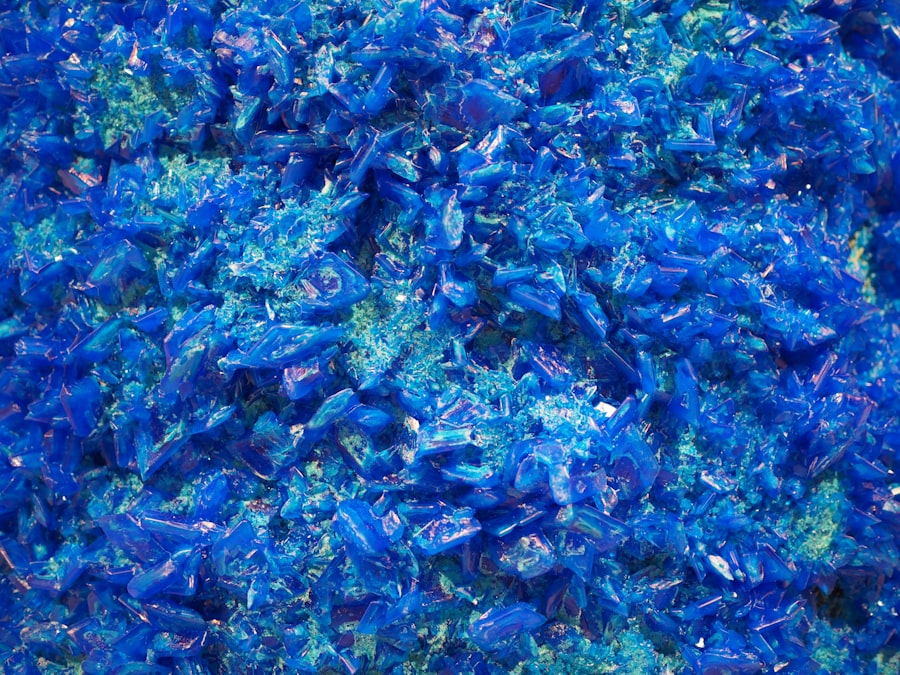
The production process of Egyptian blue pigment is a remarkable feat of ancient chemistry that showcases the advanced knowledge possessed by artisans of the time. To create this vibrant pigment, artisans would begin by sourcing the necessary raw materials: silica sand, lime (calcium oxide), and copper compounds such as malachite or azurite. These materials were carefully measured and mixed in specific proportions to ensure the desired color and quality of the final product.
Once the ingredients were prepared, they were placed in a crucible and subjected to high temperatures, typically around 900 to 1000 degrees Celsius. This intense heat facilitated a chemical reaction that transformed the raw materials into a crystalline form of calcium copper silicate. After cooling, the resulting solid was ground into a fine powder, which could then be used as a pigment in various artistic applications.
The entire process required not only skill but also an understanding of materials and their properties, highlighting the sophisticated techniques employed by ancient Egyptian craftsmen.
The Use of Egyptian Blue Pigment in Ancient Egypt
| Time Period | Use | Color |
|---|---|---|
| Ancient Egypt | Wall paintings, tombs, statues | Blue |
| Chemical Composition | Calcium copper silicate | |
| Symbolism | Associated with the sky and the Nile |
In ancient Egypt, the use of Egyptian blue pigment was widespread and varied across different forms of artistic expression. It adorned tomb paintings that depicted scenes from daily life, religious rituals, and mythological narratives, serving both decorative and symbolic purposes. The pigment’s vibrant hue was often used to represent water and the heavens, reinforcing its connection to life-giving elements essential for survival in the arid landscape of Egypt.
Beyond wall paintings, Egyptian blue found its way into pottery, sculptures, and even cosmetics. Artisans would mix the pigment with binders to create paints for wooden statues or apply it directly onto ceramics for decorative purposes. Its use extended to jewelry as well, where it was incorporated into beads and amulets believed to offer protection and bring good fortune.
The versatility of Egyptian blue made it an integral part of ancient Egyptian culture, reflecting not only artistic innovation but also spiritual beliefs that permeated every aspect of life.
The Symbolism of Egyptian Blue Pigment in Ancient Egyptian Art
The symbolism associated with Egyptian blue pigment is deeply rooted in the spiritual and cultural beliefs of ancient Egyptians. This color was often linked to divinity and immortality, representing the heavens and the eternal nature of life after death. In tomb paintings, blue was frequently used to depict deities or celestial bodies, reinforcing the connection between the earthly realm and the divine.
Moreover, Egyptian blue was also associated with fertility and rebirth. The Nile River’s annual flooding brought life to the surrounding land, and the color blue symbolized this vital connection to water and sustenance.
As such, artists employed this pigment not only for its aesthetic appeal but also as a means of conveying deeper meanings within their works. The careful application of Egyptian blue in various contexts illustrates how color played a crucial role in storytelling and communication within ancient Egyptian art.
The Conservation and Restoration of Egyptian Blue Pigment in Artifacts

The conservation and restoration of artifacts containing Egyptian blue pigment present unique challenges for modern archaeologists and conservators. Over time, exposure to environmental factors such as humidity, temperature fluctuations, and pollutants can lead to deterioration or fading of this once-vibrant color. As a result, preserving these artifacts requires specialized techniques that take into account both the chemical properties of Egyptian blue and the materials surrounding it.
Conservators often employ methods such as controlled climate environments to stabilize artifacts and prevent further degradation. Additionally, they may use non-invasive imaging techniques to assess the condition of artworks without causing damage. In some cases, restoration efforts may involve carefully reapplying Egyptian blue pigment using modern synthetic equivalents that mimic its original properties while ensuring compatibility with existing materials.
These efforts not only help preserve cultural heritage but also provide insights into ancient techniques and practices related to pigment production.
The Unique Optical Properties of Egyptian Blue Pigment
One of the most intriguing aspects of Egyptian blue pigment is its unique optical properties that set it apart from other colors used in ancient art. This pigment exhibits a remarkable ability to reflect infrared light while absorbing visible light wavelengths, resulting in its distinctive appearance. This characteristic has made it a subject of interest not only for art historians but also for scientists studying materials science and optics.
The optical properties of Egyptian blue have led to innovative applications beyond traditional art forms. Researchers have explored its potential use in modern technologies such as solar energy conversion and photonic devices due to its ability to manipulate light effectively. This intersection between ancient knowledge and contemporary science highlights how historical materials can inspire new advancements in technology while also deepening our understanding of their historical significance.
The Role of Egyptian Blue Pigment in Modern Art and Technology
In contemporary times, Egyptian blue pigment has experienced a resurgence in interest among artists and technologists alike. Modern artists have embraced this ancient hue for its vibrant color and historical significance, often incorporating it into their works as a nod to traditional techniques while exploring new artistic expressions. The revival of interest in natural pigments has led many artists to experiment with recreating Egyptian blue using traditional methods, fostering a deeper appreciation for craftsmanship.
Moreover, advancements in technology have opened new avenues for utilizing Egyptian blue in innovative ways. Its unique optical properties have inspired research into applications such as energy-efficient coatings and materials that enhance light absorption or reflection. As scientists continue to explore these possibilities, they draw upon ancient knowledge while pushing the boundaries of modern technology.
This synergy between art and science underscores the enduring legacy of Egyptian blue pigment as both a cultural artifact and a source of inspiration for future innovations.
The Cultural Significance of Egyptian Blue Pigment
The cultural significance of Egyptian blue pigment extends far beyond its aesthetic appeal; it embodies a rich tapestry of history, spirituality, and innovation within ancient Egyptian society. As one of the first synthetic pigments created by humans, it represents a milestone in artistic achievement that reflects the advanced understanding of materials possessed by ancient artisans. Its widespread use across various forms of art underscores its importance as a symbol of identity and continuity within a civilization that valued creativity.
Furthermore, Egyptian blue serves as a testament to the interconnectedness between art, religion, and daily life in ancient Egypt. The pigment’s association with deities and celestial elements highlights how color played a vital role in shaping cultural narratives and beliefs. Today, as scholars continue to study artifacts containing this pigment, they uncover layers of meaning that enrich our understanding of ancient societies while reminding us of our shared human experience through art.
The Rediscovery and Revival of Egyptian Blue Pigment in Contemporary Art
The rediscovery and revival of Egyptian blue pigment in contemporary art reflect a growing interest in traditional materials among modern artists seeking authenticity in their work. As artists explore historical techniques and practices, they often turn to ancient pigments like Egyptian blue for inspiration. This revival is not merely about recreating past styles; it represents a broader movement towards sustainability and a return to natural materials that resonate with contemporary values.
Workshops dedicated to traditional painting techniques have emerged worldwide, where artists learn how to produce their own pigments using methods passed down through generations. This hands-on approach fosters a deeper connection between artists and their materials while promoting an appreciation for craftsmanship that transcends time periods. By incorporating Egyptian blue into their works, contemporary artists pay homage to an enduring legacy while contributing to an ongoing dialogue about art’s role in society.
The Future of Research and Innovation in Egyptian Blue Pigment
The future of research and innovation surrounding Egyptian blue pigment holds exciting possibilities as scholars continue to explore its historical significance while investigating new applications for this ancient material. Ongoing studies aim to uncover more about its production methods, trade routes, and cultural implications within ancient societies.
Moreover, interdisciplinary collaborations between art historians, chemists, and materials scientists are paving the way for innovative uses of Egyptian blue in contemporary contexts. From sustainable building materials that incorporate its unique optical properties to advancements in art conservation techniques that ensure its preservation for future generations, the potential applications are vast. As interest in natural pigments continues to grow within both artistic communities and scientific research fields alike, Egyptian blue stands poised at the intersection of history and innovation—a testament to humanity’s enduring quest for beauty through color.
Egyptian blue, one of the first synthetic pigments, has fascinated researchers due to its unique properties, including its ability to emit infrared radiation when exposed to visible light. This characteristic has potential applications in modern technology, such as in biomedical imaging and telecommunications. For those interested in exploring more about the historical and scientific significance of Egyptian blue, a related article can be found on the Real Lore and Order website. You can read more about it by visiting this link.
WATCH THIS 🤯Ancient Tech That Should Not Exist
FAQs
What is Egyptian blue pigment?
Egyptian blue is a synthetic pigment that was first produced in ancient Egypt around 2500 BCE. It is considered to be one of the first synthetic pigments created by humans.
What are the properties of Egyptian blue pigment?
Egyptian blue pigment is a bright blue color with a high degree of stability. It is known for its durability and resistance to fading, even when exposed to light and heat.
How is Egyptian blue pigment made?
Egyptian blue pigment is made by heating a mixture of quartz sand, copper compounds, and a flux (such as natron or plant ash) to a high temperature. This process creates a glassy material that is then ground into a fine powder to produce the pigment.
What were the uses of Egyptian blue pigment in ancient Egypt?
In ancient Egypt, Egyptian blue pigment was used in various forms of art and decoration, including wall paintings, pottery, and jewelry. It was also used in the creation of amulets and other religious objects.
What are the modern uses of Egyptian blue pigment?
Today, Egyptian blue pigment is used in conservation and restoration efforts for ancient artifacts and artworks. It is also used in modern art and design, as well as in scientific research and technological applications.