
The narrative of human endeavor is a tapestry woven with threads of curiosity and necessity. While modern expeditions often conjure images of gleaming spacecraft and distant celestial bodies, the roots of human exploration lie in the distant past, a time when the very next horizon represented an uncharted, often perilous, frontier. To truly understand our drive to explore, one must cast their gaze back, not just centuries, but millennia, to an era where the “next world” was simply the land beyond the familiar valley or the sea beyond the coastline. This article delves into the early human exploration that occurred, in essence, “5000 years ahead” of its time, examining the motivations, achievements, and lasting impact of these foundational journeys.
The earliest human explorations were not driven by scientific curiosity or a thirst for conquest in the modern sense. Instead, they were intrinsically linked to the fundamental imperative of survival. As human populations grew and the immediate environment became depleted of its resources, the necessity to find new territories for sustenance and shelter became a driving force. This was a slow, incremental process, unfolding over vast stretches of time, but it was a form of exploration as profound as any that followed.
Following the Food Chain: The Paleolithic Hunts
During the Paleolithic period, hunter-gatherer societies were inherently nomadic. Their existence was dictated by the movement of the animals they hunted and the seasonal availability of edible plants. This necessitated constant exploration, albeit on a localized scale initially.
Tracking Mammoths and Megafauna: Large-Scale Movements
Early humans were not content with merely subsisting on readily available prey. Evidence suggests they actively tracked and hunted large game, such as mammoths, woolly rhinoceroses, and giant sloths. This would have involved following herds over considerable distances, venturing into territories less familiar and potentially more dangerous. The pursuit of these colossal creatures was a sophisticated form of exploration, requiring detailed knowledge of animal behavior, geography, and survival strategies. It was, in essence, following a living map etched into the landscape.
Seasonal Foraging: Navigating Environmental Cycles
Beyond hunting, the procurement of plant-based foods played an equally crucial role. Early humans possessed an intimate understanding of plant life and its seasonal cycles. This knowledge drove exploration to find areas rich in specific fruits, nuts, roots, and tubers at different times of the year. This could involve moving between different ecological zones, such as moving from higher elevations in the summer to lower valleys in the winter. Their exploration was a dance with the rhythm of the natural world.
The Seeds of Agriculture: Transforming the Landscape
The advent of agriculture around 10,000 BCE marked a paradigm shift in human interaction with the environment. While it led to sedentary lifestyles in many areas, the spread of new crops and farming techniques also spurred new forms of exploration and dissemination.
Disseminating Crops and Techniques: The Neolithic Revolution’s Reach
As agriculture took hold, the desire to cultivate new, more productive crops or to find land suitable for existing ones led to the movement of people and their knowledge. The Neolithic Revolution was not confined to a single origin point; it spread outwards, carrying with it not just seeds but also the sophisticated understanding of soil, water management, and cultivation techniques. This diffusion represented an exploration of new agricultural possibilities.
Adapting to New Climates: The Great Green Expansion
The expansion of agriculture into different climate zones required adaptation and innovation. Early farmers had to identify crops that could thrive in varied conditions, from the arid plains to the temperate forests. This process of trial and error, of planting and observing, was a form of experimental exploration, a silent dialogue with the earth.
Recent discoveries have suggested that humans may have explored Earth 5,000 years earlier than previously thought, challenging our understanding of ancient civilizations and their capabilities. This intriguing topic is explored in detail in the article available at this link, which delves into archaeological findings and historical analyses that support this groundbreaking theory. As researchers continue to uncover new evidence, the implications for our knowledge of human history could be profound.
Bridging the Gaps: Early Maritime and Riverine Voyages
While overland migration dominated early human movement, the allure and utility of water bodies could not be ignored. Rivers served as arteries of travel and trade, while the oceans, once viewed with apprehension, gradually became highways for exploration and connection.
Navigating Inland Waterways: Rivers as Lifelines
Rivers have always been crucial facilitators of human settlement and movement. Their consistent flow provided water, sustenance, and a natural pathway through often dense terrain. Early explorations were frequently tied to the exploration and utilization of these vital waterways.
The Nile, Tigris, and Euphrates: Cradle of Civilizations
The great river valleys of the Nile, Tigris, and Euphrates were not just cradles of early civilization; they were also routes of early exploration. The development of rafts and simple boats allowed for travel upstream and downstream, facilitating trade, communication, and the establishment of settlements along their fertile banks. These rivers acted as the first highways, carrying human ambition and innovation.
Inland Seas and Lakes: Localized Maritime Ventures
Beyond the major rivers, early humans also explored and utilized smaller bodies of water, such as inland seas and large lakes. These provided opportunities for fishing, transportation, and access to resources on opposite shores, fostering a sense of community and interdependence. Even a small lake could represent a significant exploratory frontier for a small group.
The Dawn of Ocean Exploration: Venturing Beyond the Shoreline
The transition from coastal waters to the open ocean represents one of the most significant leaps in human exploration. This was a gradual process, marked by increasing confidence and technological advancement in seafaring.
Coastal Navigation: The Edge of the Known World
Initial maritime exploration was largely confined to coastal waters. Early mariners hugged the shore, using familiar landmarks to guide them. This allowed them to discover new coastal resources, establish fishing grounds, and make contact with neighboring communities. It was exploration conducted with a safety net of the familiar.
The Polynesian Expansion: A Masterclass in Open-Ocean Voyaging
Perhaps one of the most remarkable feats of early exploration is the Polynesian expansion across the vast Pacific Ocean. Over centuries, Polynesian navigators, using sophisticated knowledge of stars, currents, and wave patterns, colonized islands spread over millions of square miles. This was not accidental; it was a deliberate and highly skilled act of exploration, pushing the boundaries of human capability. They were the cartographers of the sea, charting their course by the celestial sphere and the pulse of the ocean.
The Quest for Resources: Trade and the Early Global Network

As human societies developed, the desire for resources not readily available in their immediate vicinity spurred the growth of trade networks. This quest for goods fueled exploration, pushing people to venture further afield to acquire raw materials, manufactured items, and luxury goods.
The Silk Road and Beyond: Early Trade Routes as Exploratory Pathways
The emergence of long-distance trade routes, such as the Silk Road, represents a testament to early human ingenuity in connecting disparate regions. These routes were not solely for commerce; they were also conduits for the exchange of ideas, technologies, and cultural practices, all facilitated by dedicated exploration.
Bartering and Exchange: The Economic Driver of Exploration
The fundamental driver behind these trade routes was the mutual benefit of exchange. Communities with surplus resources sought to trade them for goods they lacked. This economic imperative incentivized exploration to discover new sources of desired commodities and to establish safe passage for traders. It was a pragmatic form of discovery, motivated by tangible rewards.
The Discovery of New Materials: Metals, Gemstones, and Spices
The search for valuable materials played a significant role in early exploration. The discovery and exploitation of metal ores like copper, tin, and iron revolutionized tool-making and warfare. Similarly, the allure of gemstones and spices drove expeditions into remote and often challenging territories. These were the treasures that beckoned explorers from afar.
The Formation of Early Empires: Expansion and Resource Control
The rise of early empires was often intertwined with the exploration and acquisition of new territories and their associated resources. Expansionist policies led to campaigns of conquest and the establishment of control over vast areas, driven by the need to secure vital resources.
Securing Trade Routes: Military and Diplomatic Expeditions
To ensure the smooth flow of goods and to protect their economic interests, empires undertook expeditions to secure and maintain their trade routes. This involved military campaigns to subdue restless tribes or recalcitrant states, as well as diplomatic missions to forge alliances and establish favorable trade agreements. Exploration was often a prelude to, or a consequence of, imperial ambition.
Exploration for Tribute and Taxation: Expanding the Imperial Reach
The economic engine of an empire often relied on the extraction of tribute and taxes from conquered territories. This required exploring and understanding the geography, resources, and populations of these new domains to effectively administer and exploit them. The imperial map was not static; it was constantly being redrawn through exploration and consolidation.
The First Intellectual Frontiers: Mapping and Understanding the World
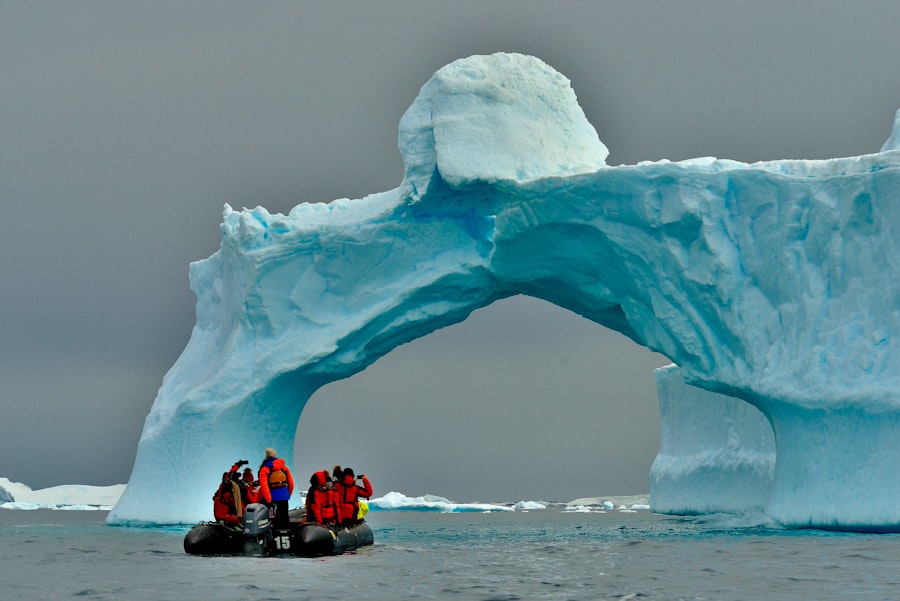
While survival and resource acquisition were primal motivators, the inherent human curiosity to understand the world around them also played a crucial role in early exploration. This led to the development of early forms of cartography, navigation, and scientific observation.
From Oral Tradition to Written Maps: The Genesis of Cartography
The desire to record and communicate knowledge about the explored world led to the development of early mapping techniques. Initially, this knowledge was passed down through oral traditions, but the need for more precise and enduring forms of representation led to the creation of rudimentary maps and geographical descriptions.
Recording Landmarks and Routes: Early Geographic Knowledge
Early maps, often etched onto clay tablets or painted onto surfaces, served practical purposes of recording important landmarks, water sources, and established routes. These were not abstract representations but rather functional tools designed to aid in travel and to convey information about the known world. They were the first attempts to make the invisible visible.
Celestial Navigation and Its Early Forms: Guiding Lights in the Darkness
The observation of celestial bodies played a vital role in early navigation, particularly for long-distance voyages. Early cultures developed sophisticated understandings of star patterns and their movements, using them to orient themselves and to chart their course. This was an early form of astronomical exploration, turning the night sky into a cosmic compass.
Observing the Natural World: Early Natural History and Geography
The exploration of new lands also provided opportunities for detailed observation of the natural world. Early explorers documented new flora and fauna, geological formations, and climatic conditions, laying the groundwork for later scientific disciplines.
Documenting New Species: The Foundations of Natural History
The encounters with unfamiliar plants and animals during voyages of exploration led to the first systematic documentation of species. These early naturalists, often lacking formal scientific training, nevertheless made invaluable contributions by recording descriptions, sketches, and sometimes even specimens, expanding the known biodiversity of the planet.
Understanding Earth’s Formations: Early Geological and Geographical Insights
Explorers encountered diverse geological landscapes, from towering mountains to vast deserts. Their observations, though often anecdotal, provided early insights into the formation of the earth’s surface and contributed to a growing understanding of geographical diversity, hinting at the immense forces shaping the planet.
Recent discoveries have suggested that humans may have explored parts of Earth as much as 5,000 years earlier than previously thought. This intriguing possibility opens up new avenues for understanding ancient civilizations and their interactions with the environment. For those interested in delving deeper into this topic, a related article can be found at Real Lore and Order, which discusses the implications of these findings on our perception of history and human development.
The Lasting Legacy: Shaping Our Future by Understanding Our Past
| Metric | Value | Notes |
|---|---|---|
| Estimated Time Humans Explored Earth | ~50,000 years ago | Based on archaeological evidence of early human migration |
| Previous Estimate | ~45,000 years ago | Earlier scientific consensus before new findings |
| Difference in Exploration Time | 5,000 years earlier | New evidence suggests humans explored Earth 5,000 years earlier than thought |
| Key Evidence | Stone tools, fossil remains | Artifacts dated using radiocarbon and other dating methods |
| Regions Explored | Africa, Asia, Europe | Early human migration routes |
The early explorations of our ancestors, driven by necessity, curiosity, and the pursuit of resources, laid the foundation for virtually every human endeavor that followed. Their journeys, often undertaken with rudimentary tools and limited knowledge, represent a profound testament to the resilience and adaptability of the human spirit. To understand where we are going, we must first understand the path that has already been forged.
The Ancestral Footprints: The DNA of Exploration in Modern Society
The innate drive to explore, to push beyond established boundaries, is deeply ingrained in our collective human DNA. The explorations of our ancestors created the migratory routes, the trade networks, and the initial understanding of the world that allowed subsequent generations to build upon their achievements. They were the first architects of our interconnected world.
The Echoes of Innovation: Learning from Past Ingenuity
The challenges faced by early explorers forced them to innovate and adapt. Their solutions to problems of navigation, resource management, and survival, though seemingly simple by today’s standards, represent remarkable feats of ingenuity. Studying these early innovations offers valuable lessons for tackling contemporary challenges, proving that sometimes, the oldest solutions hold the greatest wisdom.
The Continuous Journey: The Ongoing Human Quest
The story of human exploration is far from over. The same fundamental drives that propelled our earliest ancestors to venture into the unknown continue to motivate us today, albeit in new and more technologically advanced ways. From the depths of the oceans to the surface of Mars, the human spirit of exploration remains an enduring force, a perpetual horizon beckoning us forward. The expeditions of millennia past are not mere historical footnotes; they are the prologue to our ongoing human adventure.
FAQs
1. What evidence suggests that humans explored Earth 5000 years earlier than previously thought?
Recent archaeological discoveries, such as ancient tools, fossils, and settlement remains, have been dated using advanced techniques like radiocarbon dating and stratigraphy, indicating human presence thousands of years earlier than earlier estimates.
2. How does this new timeline change our understanding of human migration?
The revised timeline suggests that humans migrated and settled in various parts of the world much earlier than previously believed, which may lead to new insights into the routes taken and the speed of human dispersal across continents.
3. What methods are used to date ancient human artifacts and fossils?
Scientists use methods such as radiocarbon dating, thermoluminescence, optically stimulated luminescence, and uranium-series dating to determine the age of artifacts and fossils, providing more accurate timelines for human history.
4. Which regions have shown evidence of earlier human exploration based on recent findings?
Regions including parts of Africa, Asia, and Europe have revealed artifacts and fossils indicating human activity thousands of years earlier than previously recorded, reshaping the understanding of early human habitation.
5. What implications does this discovery have for the study of human evolution?
This discovery may prompt a reevaluation of evolutionary timelines, adaptation strategies, and cultural development, offering a deeper understanding of how early humans interacted with their environment and evolved over time.