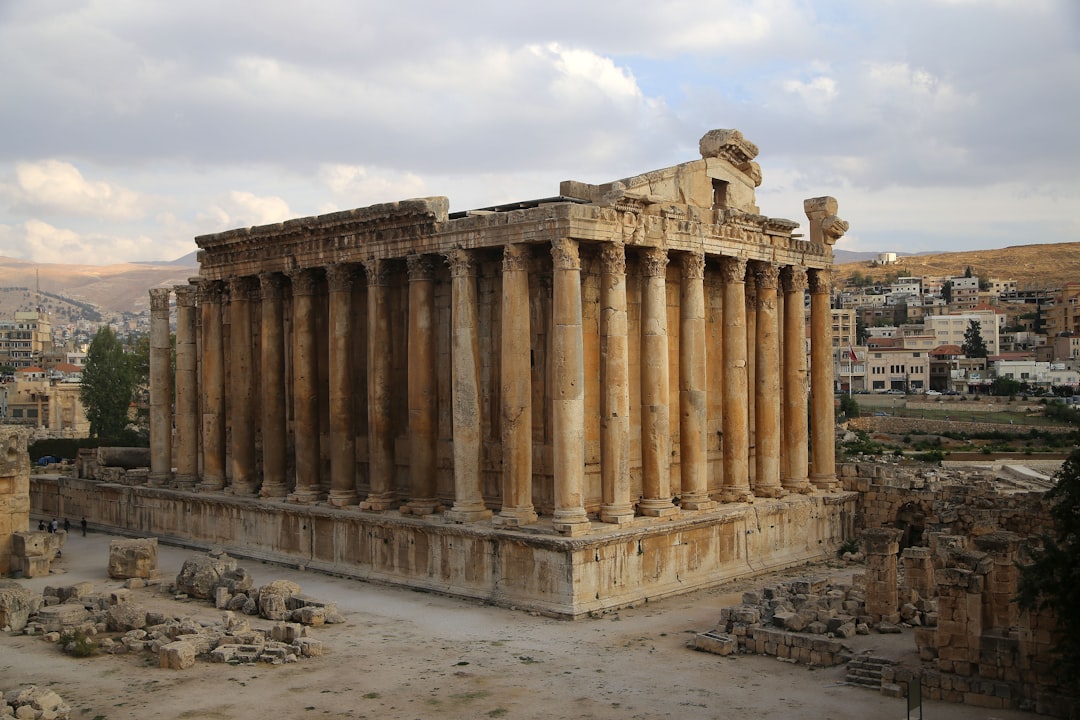
Baalbek, a site of immense historical and archaeological significance, is renowned for its colossal stone blocks that have puzzled scholars and visitors alike for centuries. Located in the Beqaa Valley of Lebanon, this ancient city is home to some of the largest stone blocks ever used in construction. The sheer size and weight of these stones, some weighing over 800 tons, raise questions about the engineering capabilities of the civilizations that once thrived there.
The Baalbek stone blocks are not merely remnants of a bygone era; they are a testament to the ingenuity and ambition of ancient builders who sought to create monumental structures that would stand the test of time. The fascination with Baalbek’s stone blocks extends beyond their physical dimensions. They embody a rich tapestry of history, culture, and mythology that has captivated historians, archaeologists, and tourists alike.
As one gazes upon these massive stones, it becomes evident that they are not just construction materials; they are symbols of human endeavor and creativity. The story of Baalbek and its stone blocks invites exploration into the mysteries of ancient engineering, the cultural significance of monumental architecture, and the enduring legacy of a civilization that sought to connect with the divine through its monumental creations.
Key Takeaways
- Baalbek Stone Blocks are some of the largest and heaviest in the world, found in the ancient city of Baalbek in Lebanon.
- The historical context of Baalbek dates back to Phoenician times, with the Romans later adding their own structures to the site.
- The stone blocks at Baalbek are enormous, with the largest one weighing an estimated 1,650 tons.
- Theories on how the stone blocks were moved include the use of ramps, cranes, and even extraterrestrial assistance.
- Theories on how the stone blocks were quarried range from simple chiseling to advanced stone-cutting techniques.
- The purpose of the stone blocks at Baalbek is still a subject of debate among historians and archaeologists.
- Baalbek is often compared to other ancient megalithic structures like the pyramids of Egypt and Stonehenge in England.
- Modern technological attempts to replicate the stone blocks have been made, but none have been able to match the precision and scale of the original blocks.
- Many unanswered questions and unsolved mysteries surround Baalbek, including the methods used to move and quarry the stone blocks.
- Baalbek holds cultural and religious significance for many, with various myths and legends associated with the site.
- The future of Baalbek and the stone blocks remains uncertain, with ongoing preservation efforts and continued research into its history and significance.
Historical Context of Baalbek
The history of Baalbek is as layered as the stones that comprise its ancient structures. Originally known as Heliopolis, the city was a significant religious center dedicated to the worship of various deities, including Jupiter, Bacchus, and Venus. Its strategic location made it a crossroads for trade and cultural exchange in the ancient world.
The Romans recognized the city’s importance and transformed it into a grand temple complex during the first century AD, further enhancing its status as a center of worship and pilgrimage. Throughout its history, Baalbek has witnessed the rise and fall of empires, each leaving its mark on the city.
The Roman period was particularly transformative, as massive stone blocks were quarried and transported to construct monumental temples that showcased the empire’s power and religious devotion. This historical context is crucial for understanding not only the significance of the stone blocks but also their role in the broader narrative of human civilization.
The Enormous Size of the Stone Blocks
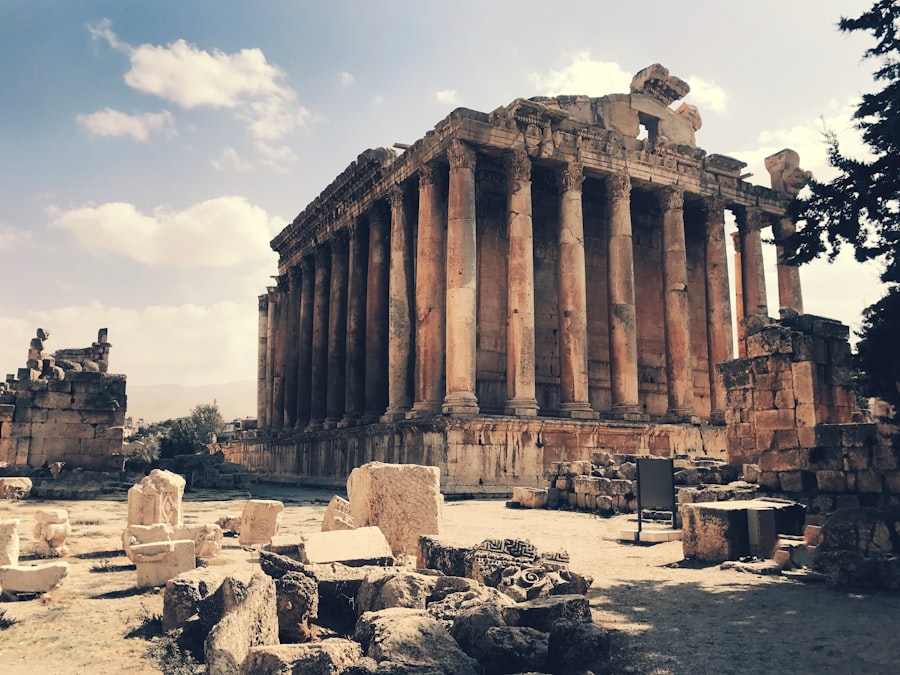
The stone blocks of Baalbek are among the largest ever used in construction, with some weighing an astonishing 1,000 tons. These massive stones were quarried from a nearby site known as the “Stone of the Pregnant Woman,” which itself is a colossal block that remains largely unworked. The sheer scale of these stones raises questions about how ancient builders managed to transport and position them with such precision.
The Great Temple of Jupiter, one of Baalbek’s most famous structures, features several of these enormous blocks as its foundation, creating an awe-inspiring sight that continues to draw visitors from around the world. The dimensions of these stone blocks are not only impressive but also serve as a testament to the advanced engineering techniques employed by ancient civilizations. The precision with which they were cut and fitted together suggests a level of craftsmanship that challenges modern understanding.
Each block is meticulously shaped, with some featuring intricate carvings that hint at their original purpose. The enormity of these stones invites contemplation about the labor force required for their construction and the societal organization necessary to undertake such monumental projects.
Theories on How the Stone Blocks Were Moved
| Theory | Description | Evidence |
|---|---|---|
| Ramp Theory | Belief that ramps were used to move the stone blocks up the pyramid during construction. | Historical accounts of ramps being used in construction, archaeological evidence of ramp remnants. |
| Roller Theory | Proposes that large cylindrical rollers were used to transport the stone blocks. | Depictions of rollers in ancient artwork, experimental archaeology demonstrating feasibility. |
| Water Theory | Suggests that water was used to lubricate the path for moving the stone blocks. | Historical accounts of water being used in construction, presence of water channels near construction sites. |
| Levitation Theory | Claims that the stone blocks were moved using advanced levitation technology. | Lack of concrete evidence, reliance on speculative interpretations of ancient texts and artwork. |
The transportation of Baalbek’s massive stone blocks has sparked numerous theories and debates among historians and archaeologists. One prevailing theory suggests that ancient builders utilized a combination of manpower, sledges, and lubrication techniques to move these colossal stones from their quarry to their final resting place. This method would have required a well-coordinated workforce capable of harnessing human strength and ingenuity to navigate the challenges posed by the terrain.
Another theory posits that ancient engineers may have employed simple machines such as levers and ramps to facilitate the movement of these heavy blocks. By creating inclined planes or using wooden rollers beneath the stones, they could have reduced friction and made transportation more manageable. Additionally, some researchers speculate that water may have played a role in this process, either by wetting the ground to create a smoother path or by using it to float the stones on rafts along nearby rivers.
Despite these theories, no definitive evidence has emerged to conclusively explain how these massive stones were moved, leaving room for continued exploration and discovery.
Theories on How the Stone Blocks Were Quarried
The quarrying process for Baalbek’s stone blocks is equally enigmatic and has led to various hypotheses regarding ancient techniques. One widely accepted theory suggests that workers used copper tools to extract these massive stones from the quarry. Copper was a common material in antiquity, and its malleability would have allowed for effective shaping and cutting of stone.
However, this theory raises questions about how workers managed to cut through such hard rock with relatively primitive tools. Another intriguing possibility is that ancient builders may have utilized fire-setting techniques to fracture the stone before extraction. By heating the rock with fire and then rapidly cooling it with water, they could create fissures that made it easier to break apart large sections.
This method would have required a sophisticated understanding of geology and thermal dynamics, showcasing the ingenuity of ancient engineers. Regardless of the specific techniques employed, it is clear that quarrying such enormous blocks was no small feat and required significant skill and labor.
The Purpose of the Stone Blocks
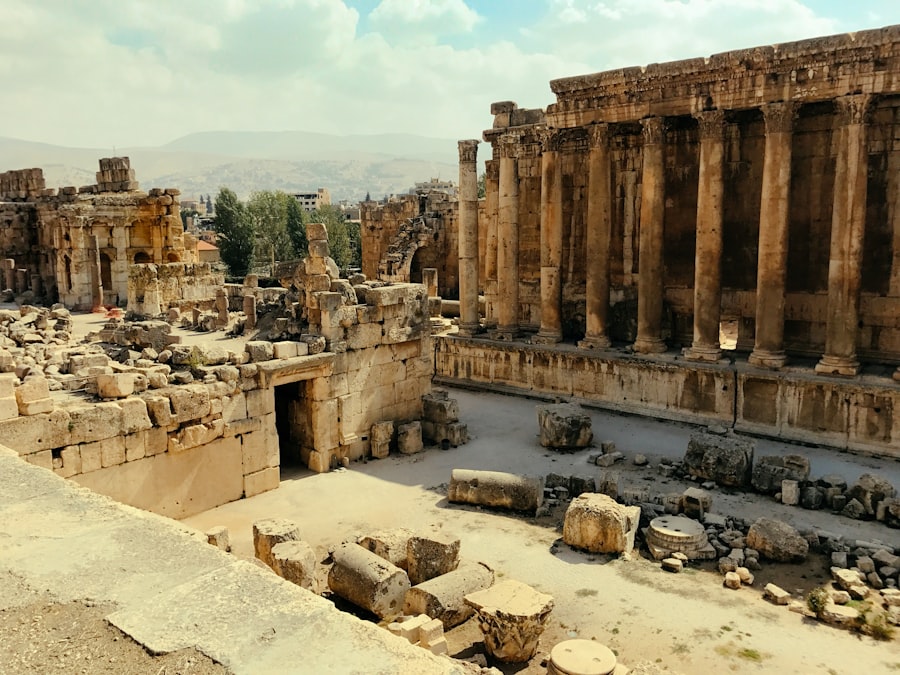
The purpose behind Baalbek’s monumental stone blocks extends beyond mere construction; they were integral to religious practices and cultural identity in ancient times. The Great Temple of Jupiter, built upon these massive foundations, served as a center for worship and pilgrimage dedicated to one of Rome’s most important deities. The sheer scale of the temple complex was designed to inspire awe and reverence among worshippers, reinforcing the connection between the divine and earthly realms.
Moreover, these stone blocks symbolize power and permanence in a world marked by change. By constructing such grand structures, ancient civilizations sought to leave a lasting legacy that would endure through time. The use of enormous stones not only demonstrated engineering prowess but also conveyed a message about the strength and stability of their society.
In this sense, Baalbek’s stone blocks are not merely architectural elements; they are embodiments of cultural aspirations and religious devotion.
Comparison to Other Ancient Megalithic Structures
When comparing Baalbek’s stone blocks to other ancient megalithic structures around the world, several similarities and differences emerge. For instance, sites like Stonehenge in England and Göbekli Tepe in Turkey also feature massive stones arranged in significant configurations. However, while Stonehenge’s stones are relatively smaller than those at Baalbek, they share a common purpose: serving as sites for ritualistic practices.
In contrast, structures like the Pyramids of Giza showcase different engineering techniques but also reflect humanity’s desire to create monumental architecture that transcends time. The Pyramids’ precise alignment with celestial bodies highlights an advanced understanding of astronomy similar to what may have been present in Baalbek’s construction methods. While each site possesses unique characteristics shaped by cultural context, they collectively illustrate humanity’s enduring fascination with monumental architecture as a means of expressing beliefs, power, and identity.
Modern Technological Attempts to Replicate the Stone Blocks
In recent years, modern technology has attempted to replicate the techniques used in constructing megalithic structures like those at Baalbek. Engineers and archaeologists have conducted experiments using contemporary machinery to understand how ancient builders might have moved and positioned such massive stones. These experiments often involve recreating ancient tools or employing modern cranes to lift heavy weights while analyzing stress points and structural integrity.
Despite advancements in technology, replicating the exact methods used by ancient civilizations remains challenging. The precision with which Baalbek’s stone blocks were cut and fitted together continues to baffle modern engineers. While contemporary machinery can lift heavy loads with ease, it lacks the finesse required for intricate stonework seen at Baalbek.
This ongoing exploration highlights not only humanity’s quest for knowledge but also serves as a reminder of the remarkable achievements of ancient builders who accomplished feats that still inspire awe today.
Unanswered Questions and Unsolved Mysteries
Despite extensive research into Baalbek’s stone blocks and their construction, many unanswered questions persist. One major mystery revolves around the exact methods used for quarrying and transporting these colossal stones. While various theories exist, no definitive evidence has emerged to provide conclusive answers.
This lack of clarity invites further investigation into ancient engineering practices and challenges modern scholars to rethink their understanding of historical capabilities. Additionally, questions remain regarding the societal organization necessary for such monumental projects. How did ancient civilizations mobilize labor forces?
What motivated them to undertake such ambitious constructions? These inquiries delve into broader themes related to power dynamics, religious beliefs, and cultural identity in antiquity. As researchers continue to explore these mysteries, Baalbek remains an enduring symbol of humanity’s quest for knowledge about its past.
Cultural and Religious Significance of Baalbek
Baalbek holds profound cultural and religious significance that extends beyond its architectural marvels. As a center for worship dedicated to various deities throughout history, it served as a focal point for spiritual practices among diverse communities. The temples built upon its massive stone blocks were not merely places of worship; they represented a connection between humanity and the divine.
Moreover, Baalbek’s cultural significance is reflected in its role as a melting pot where different civilizations converged over centuries. The blending of Phoenician, Greek, Roman, and later Islamic influences created a rich tapestry of traditions that continue to shape Lebanese identity today. This cultural heritage is celebrated through festivals, art forms, and local customs that pay homage to Baalbek’s storied past.
The Future of Baalbek and the Stone Blocks
As Baalbek continues to capture global attention, its future remains intertwined with preservation efforts aimed at safeguarding its historical treasures. The site faces challenges from environmental factors such as erosion and urban development that threaten its integrity. Ongoing archaeological research seeks not only to uncover more about its past but also to ensure that future generations can appreciate its significance.
In addition to preservation efforts, Baalbek’s potential as a tourist destination offers opportunities for economic growth while fostering cultural exchange. By promoting awareness about its historical importance through educational initiatives and responsible tourism practices, stakeholders can help ensure that this remarkable site remains a source of inspiration for years to come. Ultimately, Baalbek stands as a testament to human creativity and resilience—a legacy worth preserving for future generations who will continue to marvel at its monumental stone blocks.
The Baalbek stone block mystery, often referred to as one of the greatest enigmas of ancient engineering, continues to baffle historians and archaeologists alike. These massive stone blocks, some weighing over a thousand tons, were somehow transported and precisely placed in the ancient city of Baalbek, Lebanon. The mystery deepens when considering the technological limitations of the time. For those intrigued by ancient mysteries and the feats of early civilizations, a related article that delves into similar enigmas can be found on Real Lore and Order.
You can read more about these fascinating topics by visiting Real Lore and Order.
WATCH THIS 🤯Ancient Tech That Should Not Exist
FAQs
What is the Baalbek stone block mystery?
The Baalbek stone block mystery refers to the massive stone blocks found at the ancient site of Baalbek in Lebanon, which are some of the largest and heaviest in the world. The mystery surrounds how these blocks were quarried, transported, and placed in their precise positions.
How large are the stone blocks at Baalbek?
The largest stone block at Baalbek, known as the “Stone of the Pregnant Woman,” weighs an estimated 1,000 tons. Other blocks at the site weigh several hundred tons each.
How were the stone blocks quarried and transported?
The exact methods used to quarry and transport the stone blocks at Baalbek remain a mystery. Some theories suggest the use of advanced ancient technology, while others propose the involvement of extraterrestrial beings.
What is the significance of the Baalbek stone blocks?
The Baalbek stone blocks are significant due to their immense size and the mystery surrounding their construction. They have sparked debate and speculation among archaeologists, historians, and ancient astronaut theorists.
What is the historical and archaeological significance of Baalbek?
Baalbek is an ancient Phoenician city that was later occupied by the Romans. The site is home to well-preserved Roman ruins, including the Temple of Jupiter, which is one of the largest Roman temple complexes in the world. Baalbek is a UNESCO World Heritage site.