The Arctic, a region once considered a desolate, frozen expanse, has increasingly become a focal point of international geopolitical interest. Its melting ice caps, a stark visual of climate change, are simultaneously unveiling new opportunities and exacerbating existing tensions. At the heart of this complex discourse lies the question of ownership, particularly concerning the North Pole and the vast, resource-rich seabed beneath it. The legal and political frameworks governing these claims are intricate, drawing upon international law, historical precedent, and geographical realities. This article delves into the various territorial assertions, the legal instruments that underpin them, and the strategic implications for the global community.
The foundational legal framework for Arctic territorial claims rests primarily upon the United Nations Convention on the Law of the Sea (UNCLOS), adopted in 1982. This comprehensive treaty, often referred to as a “constitution for the oceans,” delineates the rights and responsibilities of nations regarding their use of the world’s oceans. For the Arctic, UNCLOS provides the primary mechanism for coastal states to extend their sovereign rights beyond their traditional territorial waters.
Understanding UNCLOS and its Application
UNCLOS establishes several zones of maritime jurisdiction, each with distinct legal implications. These zones are crucial for understanding the claims in the Arctic.
Territorial Sea
A state’s territorial sea extends up to 12 nautical miles from its baseline. Within this zone, the coastal state exercises full sovereignty, akin to its land territory, subject only to the right of innocent passage for foreign vessels. For Arctic coastal states, this means full control over their immediate coastal waters.
Contiguous Zone
Beyond the territorial sea, a contiguous zone can extend up to 24 nautical miles from the baseline. Here, the coastal state can enforce its customs, fiscal, immigration, and sanitary laws, preventing infringement of these laws within its territorial sea.
Exclusive Economic Zone (EEZ)
The EEZ extends up to 200 nautical miles from the baseline and grants the coastal state sovereign rights for the purpose of exploring and exploiting, conserving and managing natural resources, whether living or non-living, of the waters superjacent to the seabed and of the seabed and its subsoil. This is a critical zone for resource-rich areas like the Arctic, where fisheries and potential hydrocarbon deposits are abundant.
Continental Shelf
Perhaps the most contentious and significant aspect of UNCLOS for Arctic claims is the concept of the continental shelf. The convention defines a continental shelf as the natural prolongation of a state’s land territory to the outer edge of the continental margin, or to a distance of 200 nautical miles from the baselines from which the breadth of the territorial sea is measured where the continental margin does not extend up to that distance. Crucially, UNCLOS allows states to claim sovereign rights over the resources of the seabed and subsoil of their continental shelf beyond 200 nautical miles, provided they can scientifically demonstrate that their continental shelf extends further. This is where the scientific expeditions and extensive mapping efforts come into play, as nations strive to prove the geological continuity of their landmasses with the Arctic seabed.
The ongoing territorial claims in the Arctic have become a focal point of international relations, as nations vie for control over this resource-rich region. For a deeper understanding of the complexities surrounding these claims, you can read a related article that explores the geopolitical implications and the interests of various countries involved. Check it out here: Arctic Territorial Claims and Geopolitical Tensions.
The Five Arctic Littoral States and Their Claims
Five nations — Canada, Denmark (via Greenland), Norway, Russia, and the United States — are considered Arctic littoral states, meaning they border the Arctic Ocean. Each of these nations has made, or is in the process of making, extensive claims to the Arctic seabed, particularly beyond the 200-nautical-mile EEZ.
Russia’s Ambitious Assertions
Russia has been particularly assertive in its Arctic claims, viewing the region as vital to its economic prosperity and national security. Its claims are arguably the most expansive and have garnered significant international attention.
Lomonosov and Mendeleev Ridges
Russia’s primary argument for an extended continental shelf hinges on the Lomonosov and Mendeleev Ridges, immense underwater mountain ranges that traverse the Arctic Ocean. Russia contends that these ridges are natural prolongations of its continental landmass, thereby granting it sovereign rights over the resources beneath them, including vast potential hydrocarbon reserves. In 2007, a highly publicized Russian expedition planted a flag on the seabed at the North Pole, a symbolic gesture intended to underscore its claim, though it held no legal weight under UNCLOS.
Strategic Imperatives
Beyond resource exploitation, Russia views the Arctic as a strategic military outpost. The melting ice opens up new shipping routes, such as the Northern Sea Route, which Russia seeks to control and leverage for commercial and military advantage. Its increased military presence and infrastructure development in the Arctic underscore this strategic priority.
Canada’s Measured but Firm Stance
Canada, with its vast Arctic territory and extensive coastline, is another key player. Its claims, while perhaps less theatrical than Russia’s, are equally determined.
Mapping the High Arctic
Canada has invested heavily in scientific expeditions to map its continental shelf, particularly exploring the Alpha Ridge and the Lomonosov Ridge, to demonstrate their geological connection to the Canadian landmass. These scientific endeavors are crucial for submitting a robust claim to the Commission on the Limits of the Continental Shelf (CLCS), the UN body responsible for reviewing such submissions.
Indigenous Rights and Environmental Concerns
Canada also places a strong emphasis on the rights of its Indigenous peoples in the Arctic and on environmental protection. Its claims often incorporate a commitment to sustainable development and the preservation of the unique Arctic ecosystem, reflecting a broader national policy.
Denmark’s Greenlandic Gateway
Denmark’s Arctic claims are primarily exercised through Greenland, an autonomous territory within the Kingdom of Denmark. Greenland’s strategic location and its geological connection to the Lomonosov Ridge are central to Denmark’s assertions.
Geological Evidence and CLCS Submission
Denmark, through Greenland, has also submitted extensive scientific data to the CLCS, arguing that the Lomonosov Ridge is an extension of Greenland’s continental shelf. Their submission directly overlaps with parts of Russia’s and Canada’s claims, highlighting the complex nature of these overlapping assertions.
Northwest Passage and International Waters
While primarily focused on the continental shelf, Denmark, like Canada, has an interest in the legal status of the Northwest Passage. Canada considers it internal waters, while the United States and others argue it is an international strait open to transit passage. Denmark’s stance often aligns with Canada’s on this issue.
Norway’s Established Claims
Norway has perhaps the most established and least disputed continental shelf claims in the Arctic, primarily due to its earlier submissions to the CLCS.
Barents Sea Delimitation
Norway successfully delimited its maritime boundary with Russia in the Barents Sea in 2010 after decades of negotiations. This agreement is often cited as a model for peaceful resolution of Arctic boundary disputes, demonstrating that cooperation is possible even amidst competing interests.
Svalbard Treaty and Beyond
Norway’s sovereignty over the Svalbard archipelago is recognized by the 1920 Svalbard Treaty, which grants all signatories equal rights to engage in commercial activities on the islands, but not in their territorial waters or continental shelf beyond agreed limits. Norway has been careful to assert its full sovereign rights over Svalbard’s territorial waters and continental shelf while respecting the treaty’s provisions for land-based activities.
United States’ Unique Position
The United States stands alone among the Arctic littoral states in having signed but not ratified UNCLOS. This unique position creates complexities for its Arctic claims.
Beyond 200 Nautical Miles
Despite not being a state party to UNCLOS, the U.S. generally adheres to its principles as customary international law. It has been engaged in extensive mapping efforts to delineate its extended continental shelf, particularly in the Beaufort Sea and the Chukchi Sea, and intends to submit a claim to the CLCS should it ratify the treaty.
Freedom of Navigation and Strategic Accessibility
The U.S. strongly advocates for freedom of navigation in the Arctic, viewing the region as an international waterway. Its strategic interests include ensuring access for its naval forces and commercial shipping through emerging Arctic routes, consistent with its global maritime strategy.
The North Pole: A Special Case
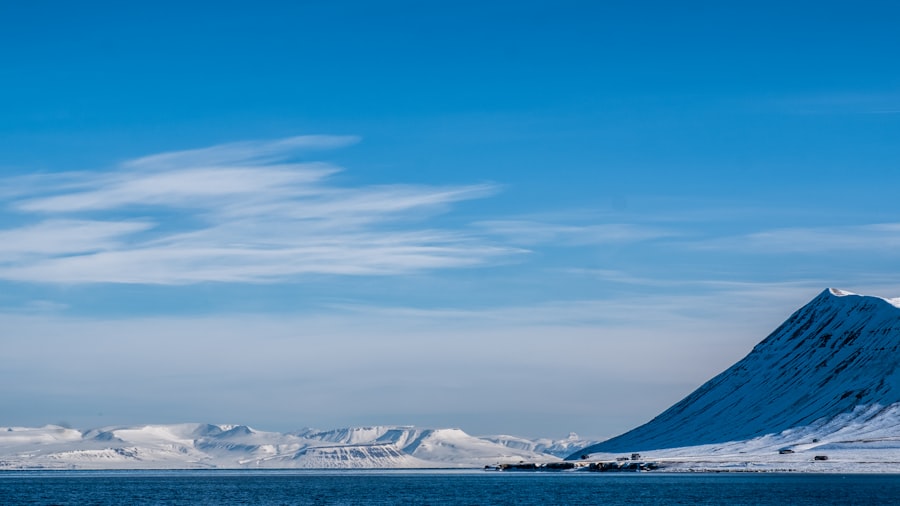
The North Pole itself, the precise geographical point at 90° North latitude, holds no landmass and is covered by constantly shifting sea ice. Legally, it falls within the international waters of the Arctic Ocean.
No National Sovereignty
Under current international law, no single nation can claim sovereignty over the North Pole itself. It is not territory that can be owned or occupied in the traditional sense. Any activities undertaken there, such as scientific research or resource exploitation beneath the ice, are subject to the principles of freedom of the high seas, unless they fall within a state’s legitimately claimed continental shelf.
Overlapping Continental Shelf Claims
The significance of the North Pole in territorial disputes stems from the fact that the extended continental shelf claims of Russia, Canada, and Denmark (via Greenland) all converge or overlap in the vicinity of the North Pole. This makes the region a focal point for the CLCS’s deliberations. The Lomonosov Ridge, central to Russia’s and Denmark’s claims, passes directly under the North Pole.
The Role of the Commission on the Limits of the Continental Shelf (CLCS)
The CLCS is a crucial, yet sometimes overlooked, body in the Arctic territorial claims saga. It is a panel of 21 independent experts in geology, geophysics, and hydrography.
Reviewing Scientific Submissions
Member states of UNCLOS submit detailed scientific data and arguments to the CLCS to justify their extended continental shelf claims. The Commission then reviews these submissions to determine if the geological and scientific evidence supports the claim that the seabed beyond the 200-nautical-mile EEZ is a natural prolongation of the coastal state’s land territory.
Non-Binding Recommendations
It is important to understand that the CLCS does not make legally binding decisions on delimitation disputes. Instead, it issues recommendations on the outer limits of the continental shelf. These recommendations, while highly influential and based on robust scientific assessment, do not automatically grant sovereign rights. If two or more states have overlapping claims, they are expected to negotiate a mutually agreeable boundary based on the CLCS recommendations and other principles of international law. This process can be lengthy and complex, a diplomatic ballet where scientific evidence is the choreography.
The ongoing disputes over Arctic territorial claims have garnered significant attention in recent years, particularly as climate change opens up new shipping routes and access to untapped resources. A related article explores the complexities of these claims and the geopolitical tensions involved, shedding light on the interests of various nations in this strategically important region. For more insights, you can read the full article here.
Future Outlook and Challenges
| Country | Claimed Area (sq km) | Claim Type | Key Regions Claimed | Status |
|---|---|---|---|---|
| Russia | 1,200,000 | Extended Continental Shelf | Lomonosov Ridge, North Pole | Submitted to UN, under review |
| Canada | 1,200,000 | Extended Continental Shelf | Lomonosov Ridge, North Pole | Submitted to UN, under review |
| Denmark (via Greenland) | 895,000 | Extended Continental Shelf | Lomonosov Ridge, North Pole | Submitted to UN, under review |
| Norway | 175,000 | Extended Continental Shelf | Barents Sea | Partially resolved with Russia |
| United States | Not officially claimed | Exploratory studies ongoing | Arctic Ocean seabed | Research and data collection |
The Arctic territorial claims present a multifaceted challenge for international relations. The convergence of climate change, resource potential, and strategic interests creates a complex geopolitical landscape.
Climate Change and New Opportunities
The accelerating melt of Arctic ice is arguably the single greatest driver of current interest. It unlocks potential access to vast, unexploited oil, gas, and mineral reserves previously trapped beneath thick ice. Simultaneously, the opening of new shipping routes, such as the Northern Sea Route and the Northwest Passage, promises to significantly reduce transit times between Europe, Asia, and North America, offering substantial economic benefits. However, these opportunities are shadowed by environmental concerns and the inherent risks of increased human activity in a fragile ecosystem.
Cooperation vs. Competition
While the specter of competition for resources looms large, there have also been significant instances of cooperation among Arctic states. The Arctic Council, an intergovernmental forum promoting cooperation, coordination, and interaction among Arctic states, Indigenous communities, and other Arctic inhabitants, serves as a vital platform for addressing shared challenges. Agreements on search and rescue, oil spill prevention, and scientific research demonstrate a capacity for collaborative governance. However, the underlying territorial issues remain a potential wellspring of discord. The future balance between cooperation and competition will largely depend on the states’ willingness to adhere to international law and engage in good-faith negotiations.
The Role of Non-Arctic States
While the five littoral states are central to the territorial claims, a growing number of non-Arctic states, such as China, India, and various European nations, are expressing increasing interest in the region. They seek to participate in Arctic governance, benefit from new shipping routes, and potentially access resources. Their involvement adds another layer of complexity to the region’s geopolitical dynamics. The question of who owns the North Pole, and the broader Arctic, is not merely a matter for those nations whose shores touch its icy waters but a global concern shaping the future of a vital and vulnerable region. The coming decades will likely see continued scientific exploration, diplomatic negotiations, and a delicate balancing act between national interests and collective stewardship of a shared planet.
FAQs
What are Arctic territorial claims?
Arctic territorial claims refer to the assertions made by countries bordering the Arctic Ocean regarding sovereignty over parts of the Arctic region, including land, ice-covered areas, and seabed resources.
Which countries have territorial claims in the Arctic?
The primary countries with Arctic territorial claims are Canada, Denmark (via Greenland), Norway, Russia, and the United States. These nations assert rights based on proximity, historical usage, and international law.
What international laws govern Arctic territorial claims?
The United Nations Convention on the Law of the Sea (UNCLOS) is the main international framework governing Arctic territorial claims. It allows countries to extend their exclusive economic zones (EEZs) and continental shelves beyond the standard 200 nautical miles under certain conditions.
Why are Arctic territorial claims important?
Arctic territorial claims are significant due to the region’s vast natural resources, including oil, gas, and minerals, as well as new shipping routes emerging from melting ice. Control over these areas has economic, environmental, and strategic implications.
How are disputes over Arctic claims resolved?
Disputes over Arctic territorial claims are typically resolved through diplomatic negotiations, submission of scientific data to the United Nations Commission on the Limits of the Continental Shelf (CLCS), and adherence to international law, particularly UNCLOS. So far, most claims have been managed peacefully.