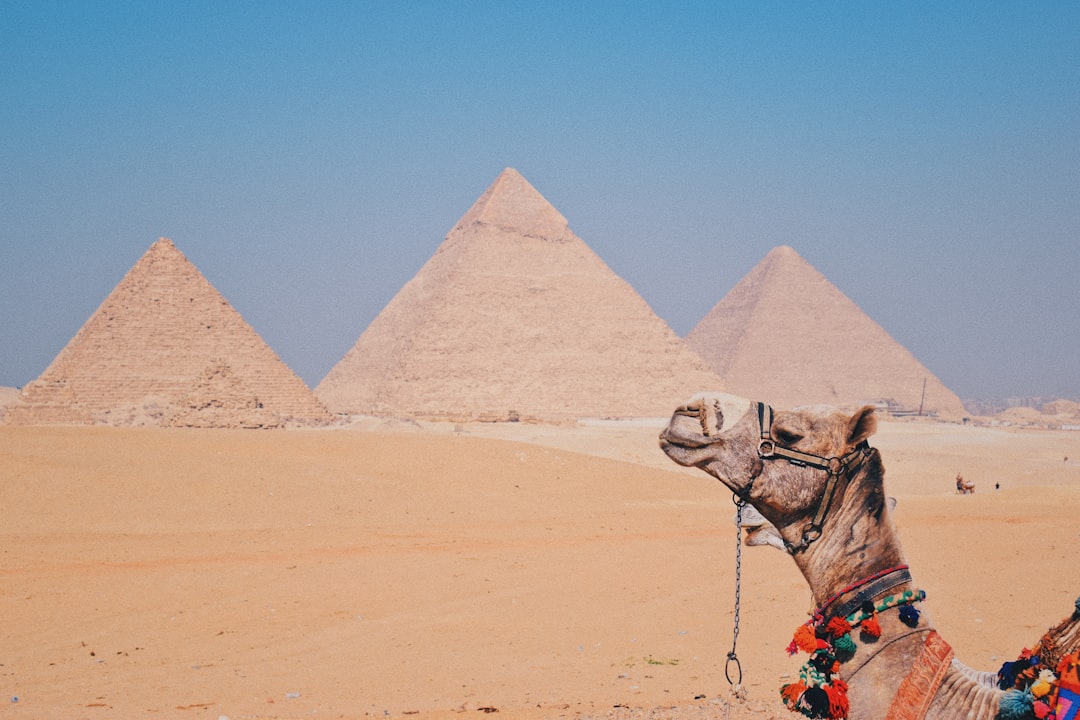
The Great Pyramid of Giza, a monumental structure located on the Giza Plateau near Cairo, Egypt, stands as the oldest and largest of the three pyramids in the Giza Necropolis. It is the only one of the Seven Wonders of the Ancient World to remain largely intact, a testament to the ingenuity and organizational capabilities of its builders. Constructed for the Pharaoh Khufu of the Fourth Dynasty during the Old Kingdom period, the pyramid’s sheer scale and precise engineering have captivated archaeologists, historians, and engineers for millennia, prompting countless inquiries into its purpose, construction methods, and internal complexities.
The Great Pyramid’s genesis is intrinsically linked to Pharaoh Khufu, whose full name was Khnum-Khufu, meaning “Khnum is his Protector.” He ruled during the Fourth Dynasty of the Old Kingdom, a period generally dated from approximately 2589 to 2566 BCE. The Old Kingdom, often referred to as the “Age of the Pyramids,” witnessed an unprecedented flourishing of Egyptian civilization, characterized by advancements in art, architecture, and administration.
Genealogical Connections
Khufu was the son of Pharaoh Sneferu, the founder of the Fourth Dynasty, who himself was a prolific pyramid builder, responsible for the Bent Pyramid and the Red Pyramid at Dashur. This lineage underscores a dynastic drive towards monumental constructions and a mastery of pyramid building techniques that were refined over generations. Khufu’s mother was Queen Hetepheres I, and he was succeeded by his sons, Djedefre and Khafre, the latter of whom commissioned the second-largest pyramid at Giza and possibly the Great Sphinx.
Khufu’s Reign and Legacy
Details regarding Khufu’s reign are sparse, largely relying on later historical accounts from sources such as Herodotus, whose narratives, while influential, should be approached with critical consideration due to their temporal distance from the actual events. Herodotus, writing some two millennia after Khufu, described him as a harsh ruler who enslaved his people to construct the pyramid. Modern archaeological evidence and scholarly consensus, however, contradict this portrayal, suggesting that the workforce comprised skilled craftsmen, laborers, and farmers fulfilling corvée labor during the annual Nile flood, rather than slaves. Khufu’s legacy is primarily embodied by his colossal tomb, a structure that would forever bear his name and a silent witness to his reign.
Khufu, the ancient Egyptian pharaoh known for commissioning the Great Pyramid of Giza, has been the subject of much scholarly interest and debate. For those looking to explore more about the historical context and significance of Khufu’s reign, a related article can be found at this link. This article delves into the architectural achievements of the Fourth Dynasty and the cultural impact of Khufu’s monumental constructions.
Engineering Marvels and Construction Techniques
The construction of the Great Pyramid represents an extraordinary feat of ancient engineering and logistical planning, astonishing scholars with its precision and scale even by modern standards. Estimates suggest that approximately 2.3 million stone blocks, each weighing an average of 2.5 to 15 tons, were used in its construction.
Quarrying and Transportation
The bulk of the pyramid’s core was quarried from local limestone bedrock, immediately adjacent to the construction site. For the finer quality casing stones that originally covered the pyramid’s exterior, white limestone was transported from Tura, across the Nile. Granite blocks, used for the King’s Chamber and other internal structures, were brought from quarries over 800 kilometers south in Aswan. The transportation of these massive stones likely involved wooden sledges pulled over carefully prepared paths, possibly lubricated with water or silt to reduce friction. Barges would have been employed to traverse the Nile, especially during the annual inundation when the river’s reach extended closer to the plateau.
Lifting and Placement
The conventional theory regarding the lifting and precise placement of these monumental blocks involves the use of ramps. Several ramp theories have been proposed, including straight ramps, spiral ramps, and combination ramps. The specific methodology remains a subject of ongoing debate, as no definitive evidence of a large-scale ramp structure has been found. One prominent theory suggests an external ramp that spiraled up the pyramid’s sides, while another posits an internal ramp system. The precision with which these blocks were cut and fitted, often with gaps of less than a millimeter, suggests advanced surveying techniques and meticulous craftsmanship. The casing stones, polished to a brilliant white, would have created a gleaming surface that reflected the sun, a truly awe-inspiring sight in antiquity.
Internal Labyrinth and Chambers
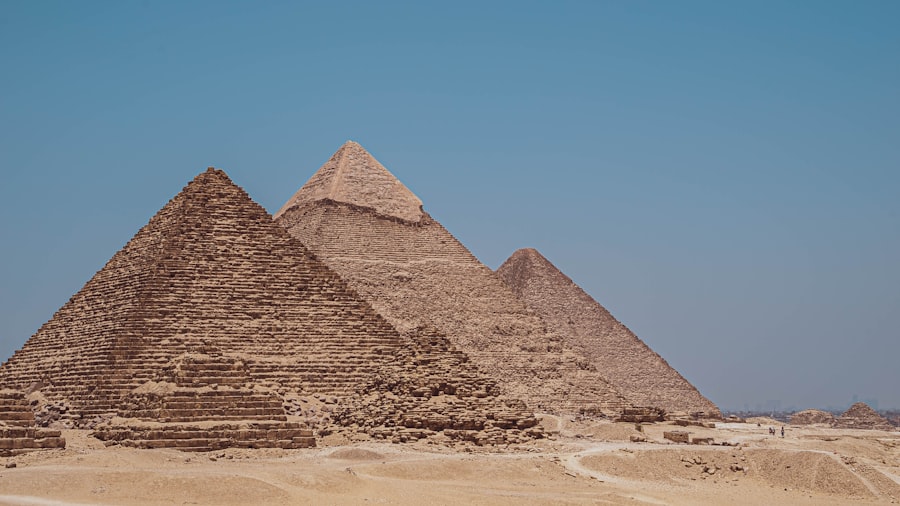
The internal layout of the Great Pyramid is a complex system of passages, chambers, and shafts, revealing an intricate design far beyond a simple solid mass of stone. This internal architecture has fueled numerous theories regarding its purpose and potential hidden compartments.
Descending and Ascending Passages
The primary entrance to the pyramid, now accessible through a forced entry made by Caliph al-Ma’mun in the 9th century, leads to a Descending Passage that extends deep into the bedrock beneath the pyramid. This passage eventually connects to the Subterranean Chamber, an unfinished rock-cut room, sometimes referred to as the “Pit.” From earlier along the Descending Passage, an Ascending Passage branches upwards, leading to the Grand Gallery.
The Grand Gallery and Chambers
The Grand Gallery is a remarkable architectural feature, a steeply ascending corridor approximately 47 meters long and 8.5 meters high, constructed with corbelled walls. Its purpose remains debated, with theories ranging from a ceremonial pathway to a structural element involved in the raising of the colossal granite blocks to the King’s Chamber. At the upper end of the Grand Gallery, a short horizontal passage leads to the Queen’s Chamber, which, despite its name, is believed to have been intended for a statue of the pharaoh or as a serdab (a sealed chamber containing a statue of the deceased in ancient Egyptian tombs). Above the Queen’s Chamber lies the King’s Chamber, constructed entirely of red Aswan granite. This chamber contains a large, lidless granite sarcophagus, now empty, traditionally associated with Khufu. Above the King’s Chamber are five relieving chambers, designed to distribute the immense weight of the overlying masonry and prevent the King’s Chamber from collapsing.
Purpose and Symbolism

The primary purpose of the Great Pyramid, like other Egyptian pyramids, is widely accepted as a tomb for the pharaoh and a repository for his funerary goods, intended to facilitate his journey into the afterlife and ensure his eternal well-being. However, its symbolic significance extends beyond mere sepulture.
Royal Necropolis and Afterlife Beliefs
The pyramids at Giza were part of a larger necropolis complex, including temples, smaller satellite pyramids for queens, and mastabas for high-ranking officials. This entire complex served as a sacred landscape, designed to protect the pharaoh’s body and soul, ensure his continued reign in the afterlife, and maintain the cosmic order (Ma’at). The precise alignment of the pyramid with cardinal directions reflects the Egyptians’ advanced understanding of astronomy and their belief in the heavens as a divine realm. The pyramid, as a representation of the primordial mound that first emerged from the waters of creation, symbolized rebirth and eternal life for the pharaoh, allowing him to ascend to join the gods.
Astronomical Alignments and Theories
Beyond its funerary function, some theories propose that the Great Pyramid also served as an astronomical observatory or a calendrical device. Its remarkably precise alignment to true north has led to speculation about the sophisticated astronomical knowledge possessed by the ancient Egyptians. Others suggest connections to constellations, particularly Orion, as part of the “Orion Correlation Theory,” which posits that the layout of the Giza pyramids mirrors the stars in Orion’s Belt. While these theories spark considerable debate among Egyptologists, they highlight the multifaceted nature of the pyramid’s design and the deep intellectual curiosity it inspires.
Khufu, the ancient Egyptian pharaoh known for commissioning the Great Pyramid of Giza, has been the subject of much fascination and study. His reign marked a significant period in the development of monumental architecture. For those interested in exploring more about the historical context and significance of Khufu’s achievements, you can read a related article that delves into the intricacies of ancient Egyptian civilization. This article provides insights into the era’s culture and the engineering marvels that continue to captivate historians and archaeologists alike. To learn more, visit this informative resource.
Enduring Enigma and Modern Exploration
| Metric | Value | Details |
|---|---|---|
| Full Name | Khufu | Also known as Cheops |
| Reign | c. 2589–2566 BC | Fourth Dynasty of Egypt’s Old Kingdom |
| Famous Monument | Great Pyramid of Giza | Largest pyramid in Egypt |
| Height of Pyramid | 146.6 meters (original) | Now approximately 138.8 meters due to erosion |
| Base Length | 230.4 meters | Each side of the pyramid’s base |
| Number of Blocks | Approximately 2.3 million | Estimated number of stone blocks used |
| Estimated Weight | 6.5 million tons | Total weight of the pyramid |
| Purpose | Tomb | Built as a burial place for Pharaoh Khufu |
| Location | Giza Plateau, Egypt | Near Cairo |
Despite centuries of study and modern technological advancements, the Great Pyramid of Khufu remains a vast repository of unanswered questions, continuing to intrigue and challenge researchers. Its enduring enigma serves as a powerful reminder of the limitations of our current understanding of ancient civilizations.
Unexplored Passages and Chambers
Recent technological advancements, particularly non-invasive techniques like muography (muon tomography), have detected previously unknown voids and anomalies within the pyramid’s structure. The ScanPyramids project, for instance, identified a large, previously unknown void above the Grand Gallery in 2017. The precise nature and purpose of this “Big Void,” as it has been dubbed, are yet to be determined, fueling speculation about hidden chambers, undiscovered artifacts, or perhaps a structural function. The possibility of additional shafts, passages, or even a concealed burial chamber for Khufu himself, continues to drive exploration.
Ongoing Research and Interpretations
Modern archaeological and scientific investigations continue to push the boundaries of our knowledge. Researchers employ a range of tools, from drones and laser scanning to geophysical surveys and advanced imaging, to map the pyramid’s internal and external structures with unprecedented detail. Each new discovery, however small, often opens new avenues of inquiry, prompting re-evaluations of existing theories and generating fresh perspectives on ancient Egyptian capabilities. The Great Pyramid is not merely a static monument; it is a dynamic field of study, a colossal palimpsest that still holds untold stories within its monumental stones, beckoning future generations to continue its unraveling. It stands as a silent sentinel, a monumental question mark etched into the desert landscape, forever inviting humanity to ponder its profound mysteries and the remarkable people who built it.
FAQs
Who was Khufu?
Khufu was an ancient Egyptian pharaoh who ruled during the Fourth Dynasty of the Old Kingdom, around 2589–2566 BCE. He is best known for commissioning the Great Pyramid of Giza.
What is Khufu famous for?
Khufu is most famous for the Great Pyramid of Giza, which is considered one of the Seven Wonders of the Ancient World and the only one still largely intact.
Where is Khufu’s pyramid located?
Khufu’s pyramid, also known as the Great Pyramid, is located on the Giza Plateau near Cairo, Egypt.
What was the purpose of Khufu’s pyramid?
The Great Pyramid was built as a tomb for Pharaoh Khufu, intended to ensure his safe passage to the afterlife and to demonstrate his power and divine status.
How was the Great Pyramid of Khufu constructed?
The Great Pyramid was constructed using millions of limestone and granite blocks, transported and assembled with remarkable precision using ancient engineering techniques, though the exact methods remain a subject of research and debate.