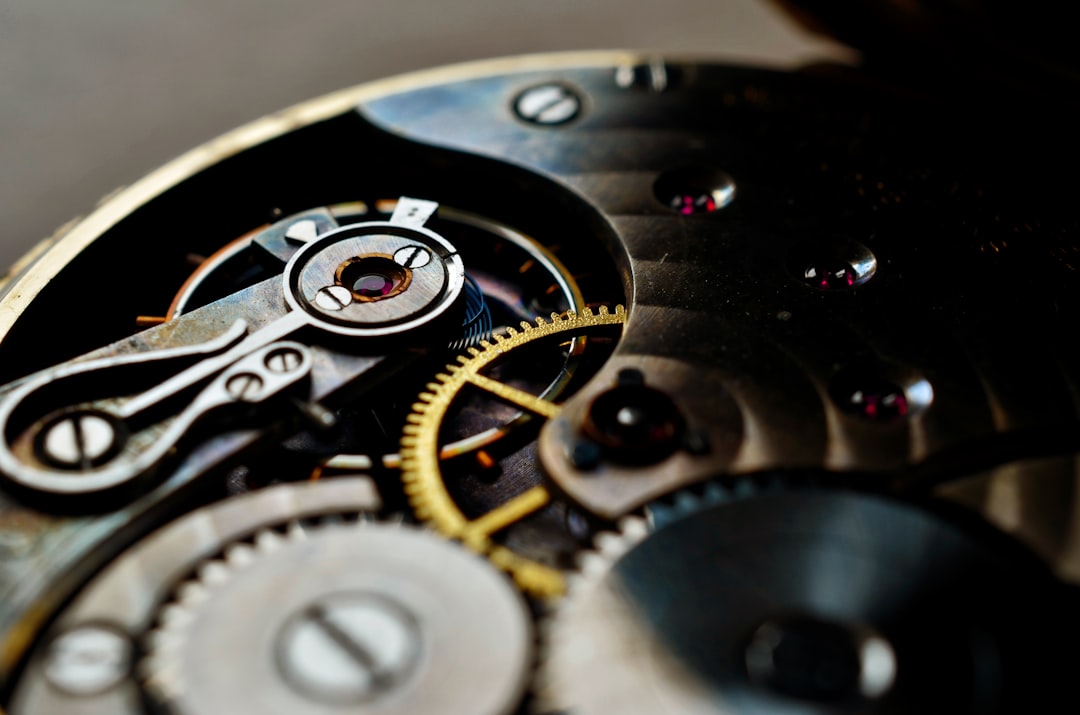
The human fascination with the passage of time and the desire to quantify it are as ancient as civilization itself. Before the advent of sophisticated clockwork mechanisms, early societies relied on the predictable rhythms of celestial bodies and the ephemeral nature of water and sand to keep track of hours and days. However, the true revolution in timekeeping arrived with the development of mechanical devices, a progression of ingenious inventions that transformed our relationship with temporality and laid the groundwork for the modern world. This historical perspective explores the evolution of ancient mechanical timekeeping, tracing its roots and charting its significant advancements.
The earliest attempts at mechanical timekeeping were not driven by the desire for precision as we understand it today, but rather by the need for regulated and repeatable methods of measurement. These were the embryonic stages, where the abstract concept of time began to interact with tangible physical processes.
Sundials and Their Limitations
While not strictly mechanical in the sense of gears and springs, the sundial stands as a crucial precursor. It harnesses the predictable movement of the sun across the sky, its shadow acting as a pointer on a calibrated surface.
Principles of Sundial Operation
The rudimentary principle behind the sundial involves a gnomon, a fixed object that casts a shadow, and a marked surface (the dial) that indicates the time based on the shadow’s position. The angle of the gnomon is often fashioned to be parallel to the Earth’s axis, allowing it to track the sun’s apparent diurnal motion with relative consistency. This inherent dependency on solar illumination, however, rendered sundials useless during the night or in overcast conditions, presenting a significant practical limitation.
Regional Adaptations and Variations
Across different cultures and geographical locations, sundials evolved to suit local needs and astronomical observations. Different dial styles, such as the horizontal, vertical, and equatorial sundial, emerged to account for varying latitudes and sunlight angles. Some sophisticated sundials incorporated additional markings for astronomical events or even seasonal adjustments, reflecting a growing understanding of celestial mechanics.
Water Clocks: The Flow of Time
Water clocks, also known as clepsydras, represented a significant leap forward as they offered a means of timekeeping independent of sunlight. These devices utilized the controlled flow of water to mark the passage of time.
Inflow and Outflow Mechanisms
Early water clocks typically employed either an inflow or an outflow mechanism. In an inflow clepsydra, water was collected in a vessel marked with time intervals, with the rising water level indicating the elapsed time. Conversely, outflow clepsydras allowed water to drip from one vessel into another, with the decreasing water level in the source vessel measuring the time. The rate of water flow was crucial for accuracy and often required careful calibration and maintenance.
Materials and Engineering Challenges
The construction of effective water clocks posed various engineering challenges. Finding materials that were resistant to corrosion and evaporation, and developing methods to control the trickle of water with reasonable consistency, were paramount. Early examples utilized stone, ceramic, and even metal vessels, with the precision of the orifices through which water passed being a key factor in their functionality.
Sandglasses: A Stable Alternative
Sandglasses, or hourglasses, offered a more robust and portable form of timekeeping that did not rely on the flow of water, which could be affected by temperature and evaporation.
The Principle of Granular Flow
Similar to water clocks, sandglasses operate on the principle of controlled flow, but instead of liquid, finely granulated sand or other powders moved through a constricted passage. The rate of flow was determined by the size and shape of the granules and the diameter of the passage.
Applications and Durability
Sandglasses were favored for their relative simplicity, durability, and independence from environmental factors like temperature. They found widespread use in maritime settings for measuring ship watches, in religious services, and even in laboratories for timing experiments. Their inherent limitation was that once the sand had run through, the device had to be manually inverted to restart the measurement.
In exploring the fascinating concept of mechanical time in the ancient world, one can gain further insights by reading the article on the evolution of timekeeping devices throughout history. This article delves into how ancient civilizations, such as the Greeks and Egyptians, developed intricate mechanisms to measure time, laying the groundwork for modern timekeeping. For more information, you can visit the article here: The Evolution of Timekeeping Devices.
The Birth of the Mechanical Clock: Interplay of Gears and Gravity
The true genesis of mechanical timekeeping arrived with the integration of gears, weights, and escapements. This period marked a fundamental shift, moving from devices that measured time through continuous flow to those that divided it into discrete, regulated steps.
Early Weight-Driven Mechanisms
The earliest mechanical clocks were powered by falling weights, a force of nature harnessed to drive a series of gears. These were colossal machines, often housed in towers, and their primary purpose was to chime the hours.
The Role of the Verge Escapement
A pivotal innovation was the development of the verge escapement. This mechanism, consisting of a verge wheel (a toothed wheel) and two pallets attached to an oscillating rod (the verge), controlled the release of the falling weight’s energy. The verge would swing back and forth, alternately engaging and disengaging with the teeth of the verge wheel, allowing the gears to advance in a series of controlled impulses. This escapement was the heartbeat of the early mechanical clock.
Monumental Clocks and Public Time
These early weight-driven clocks were inherently imprecise by modern standards, often losing or gaining several minutes per day. However, their sheer presence and the audible chiming of the hours served as the primary public time signals for centuries. They were monumental feats of engineering for their time, often bearing intricate astronomical dials and striking mechanisms, becoming symbols of civic pride and technological advancement.
The Transition to Smaller, More Portable Devices
While tower clocks dominated the early landscape, a gradual evolution began to favor smaller, more manageable timekeeping devices. This transition was driven by the desire for personal timekeeping and the potential for integration into homes and even portable objects.
The Influence of Guilds and Craftsmanship
The development of smaller mechanical clocks was intrinsically linked to the specialized skills of clockmakers and metalworkers. Guilds played a crucial role in standardizing practices and fostering innovation, as craftsmen competed and collaborated to refine designs and improve accuracy.
Early Table Clocks and Verge Recorders
The emergence of table clocks in the 15th century marked a significant step towards domestication of mechanical time. These were still powered by weights but were designed to fit on tables or desks. More importantly, the development of smaller, albeit still relatively imprecise, verge recorders paved the way for watches, though true portable personal timekeeping was still some way off.
The Age of the Pendulum: A Leap in Accuracy

The introduction of the pendulum was a watershed moment in the history of mechanical timekeeping. This simple yet profound innovation dramatically increased the accuracy and reliability of clocks, transforming them from approximate time indicators to precise measuring instruments.
Christiaan Huygens and the Pendulum Clock
Christiaan Huygens, a Dutch mathematician and scientist, is widely credited with independently discovering and applying the isochronism of the pendulum – the principle that a pendulum of a given length will always swing with the same period, regardless of the amplitude of its swing (within reasonable limits).
The Principle of Isochronism
The elegance of the pendulum’s isochronism lay in its predictable and uniform oscillation. By regulating the escapement to be driven by the pendulum’s swing, clockmakers could achieve unprecedented levels of accuracy. This was a revelation, as previous mechanisms were subject to greater variations in performance.
Design Innovations and Improved Escapements
Huygens’ work led to the development of the pendulum clock, significantly improving the accuracy of clocks, reducing their error rate considerably. This in turn spurred further innovation, leading to the refinement of escapement mechanisms, such as the anchor escapement, which further minimized the disturbance of the pendulum’s swing by the clock’s mechanism.
The Impact on Science and Navigation
The enhanced accuracy of pendulum clocks had profound implications beyond simply telling time. It provided scientists with a more reliable tool for astronomical observation and measurement, and crucially, it revolutionized navigation.
Astronomical Observations and Scientific Experiments
Accurate timekeeping enabled more precise measurements of celestial events, aiding astronomers in their charting of the stars and planets. It also became essential for conducting scientific experiments that involved the measurement of time intervals, allowing for more rigorous and repeatable research.
The Longitude Problem and Maritime Clocks
Perhaps the most significant impact was on navigation. The ability to accurately determine one’s longitude at sea was a persistent challenge for centuries, a puzzle that cost countless lives and fortunes. The development of accurate marine chronometers, hardy pendulum clocks designed to withstand the rigors of sea voyages, finally provided the solution. These clocks allowed navigators to calculate longitude by comparing the local time (determined by celestial observation) with the time at a known meridian.
The Evolution of the Balance Spring and the Pocket Watch
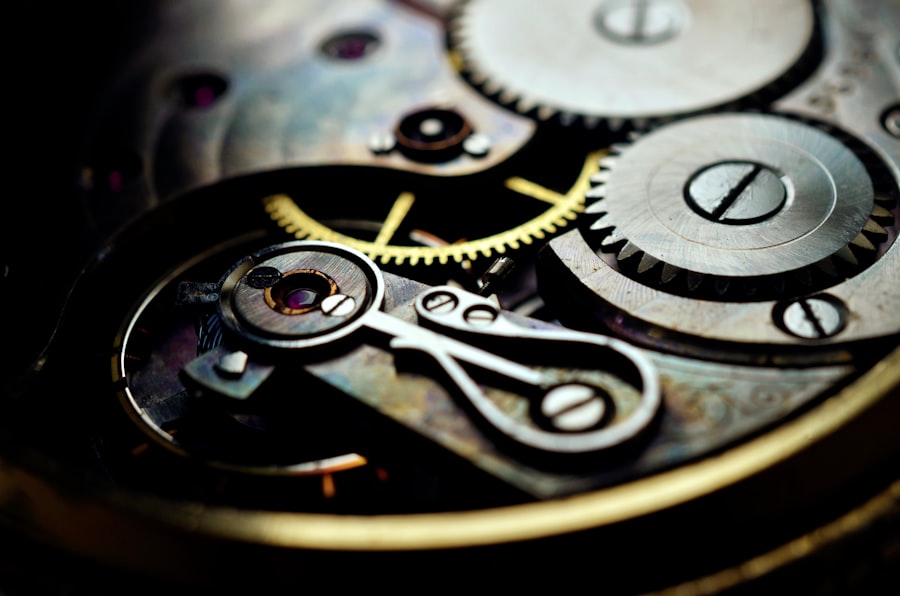
The pursuit of personal, portable timekeeping continued, culminating in the development of the balance spring. This innovation freed clocks from their reliance on a pendulum and enabled the creation of the pocket watch, a device that would become a personal emblem and a ubiquitous tool.
The Quest for Portability
The dream of a clock that could be carried and used anywhere was a driving force for generations of clockmakers. The limitations of the pendulum – its need for a stable mounting and its bulk – were a significant impediment to this goal.
Revolutionary Concepts: Springs and Balances
The key insight was the use of a coiled spring to provide the motive force and a balance wheel connected to a hairspring (or balance spring) to regulate the oscillations. The hairspring acts as an elastic element, causing the balance wheel to oscillate back and forth with a consistent period, analogous to the pendulum’s swing but on a much smaller scale.
The Contribution of English and French Clockmakers
While the exact origins are debated, clockmakers in both England and France made crucial contributions to the development of the balance spring and the early balance-controlled clocks. Innovations in escapement design and the intricate manufacturing of these small components were essential for their success.
The Birth of the Pocket Watch
The successful integration of the balance spring and a miniaturized escapement led to the creation of the pocket watch. Initially large and somewhat clumsy, these devices gradually became more refined and aesthetically pleasing.
Early Designs and Material Choices
The earliest pocket watches often bore little resemblance to their modern counterparts. They were usually round, housed in sturdy cases made of brass or silver, and lacked the protective crystals that would become standard later. Their dials often featured Roman numerals and elaborate hands.
The Watch as a Status Symbol and Practical Tool
The pocket watch quickly transitioned from a purely functional item to a status symbol. The ability to own and carry a device that could tell time with reasonable accuracy was a mark of sophistication and modernity. They became essential accessories for gentlemen, signifying punctuality and a connection to the advancing technological world.
In exploring the fascinating realm of mechanical time in the ancient world, one can gain deeper insights by examining various historical innovations that shaped our understanding of timekeeping. For instance, the intricate designs of water clocks and sundials played a crucial role in early civilizations. To learn more about these remarkable advancements, you might find this article on ancient timekeeping particularly enlightening. It delves into the methods and significance of time measurement throughout history, which can be accessed through this link: ancient timekeeping.
Legacy and Enduring Influence
| Time Period | Mechanical Time Device | Location | Approximate Year | Key Features | Accuracy |
|---|---|---|---|---|---|
| Ancient Egypt | Water Clock (Clepsydra) | Egypt | 1500 BCE | Used water flow to measure time intervals | About 15 minutes per hour |
| Ancient Greece | Water Clock with Gears | Greece | 3rd Century BCE | Incorporated gears to improve time measurement | Improved over earlier water clocks |
| Ancient China | Mechanical Clock Tower | China | 1088 CE | Escapement mechanism and water-driven gears | Accurate to within minutes per day |
| Ancient Rome | Sun Dial | Rome | 1st Century BCE | Used shadow of gnomon to indicate time | Varied with season and weather |
| Ancient Babylon | Water Clock | Babylon | 1400 BCE | Measured time by water flow, used for rituals | Less precise, about 30 minutes error |
The history of ancient mechanical timekeeping is not merely a chronicle of gears and springs; it is a testament to human ingenuity, perseverance, and the relentless drive to understand and master our environment. The foundational principles established in these early eras continue to resonate in the technological landscape of today.
The Mechanical Foundation of Modern Clocks
Even in our digital age, the fundamental principles of mechanical timekeeping endure. The gear trains, escapements, and power sources that powered these early devices laid the groundwork for the elaborate clockwork mechanisms that would follow, culminating in the highly accurate mechanical watches and clocks we still admire today.
Enduring Principles of Energy and Regulation
The interplay of stored energy (from weights or springs) and the controlled release of that energy through an escapement remains the core concept in mechanical timekeeping. The pursuit of greater accuracy has consistently driven innovation in escapement design, material science, and lubrication.
The Craft of Horology
The art and science of clockmaking, known as horology, emerged from these ancient roots. The skills developed by early clockmakers – precision metalworking, understanding of physics, and aesthetic design – continue to be celebrated and practiced by artisans around the world.
Timekeeping as a Societal Unifier
The evolution of mechanical timekeeping profoundly shaped human society. It moved us from an existence dictated by the vagaries of nature to one structured by standardized, quantifiable units of time. This shift had far-reaching consequences for commerce, industry, and social organization.
The Standardization of Work and Life
The ability to measure and divide time with increasing accuracy allowed for the standardization of work schedules, the coordination of complex projects, and the synchronization of social activities. This played a crucial role in the development of industrialization and the modern urban environment.
The Perception of Time Itself
Ultimately, the development of mechanical timekeeping altered our very perception of time. It transformed time from a fluid, qualitative experience into a linear, quantitative dimension, a quantifiable resource that could be managed, saved, and even “spent.” This abstract understanding of time, a product of mechanical ingenuity, is one of the most enduring legacies of these ancient inventors.

WATCH NOW ▶️ WARNING: The Giza Muon Scans Just Changed Everything
FAQs
What methods were used to measure mechanical time in the ancient world?
Ancient civilizations used devices such as water clocks (clepsydras), sundials, and early mechanical clocks to measure time. Water clocks measured time by the regulated flow of water, while sundials used the position of the sun’s shadow.
Which ancient cultures are known for developing mechanical timekeeping devices?
Ancient Egyptians, Greeks, Chinese, and Babylonians are notable for their contributions to early mechanical timekeeping. For example, the Greeks improved water clocks, and the Chinese developed intricate mechanical clocks during the Han dynasty.
How accurate were ancient mechanical timekeeping devices?
While innovative for their time, ancient mechanical timekeeping devices were relatively imprecise compared to modern standards. Water clocks could be affected by temperature and water flow variations, and sundials depended on sunlight availability.
What was the significance of mechanical time in ancient societies?
Mechanical timekeeping allowed ancient societies to regulate daily activities, religious ceremonies, and agricultural practices. It also played a role in astronomy and navigation, helping to standardize time measurement.
When did mechanical clocks first appear in history?
The earliest known mechanical clocks appeared in Europe during the 13th century, evolving from earlier water clocks and escapement mechanisms developed in the ancient and medieval periods. However, simpler mechanical timekeeping devices existed in ancient China centuries earlier.