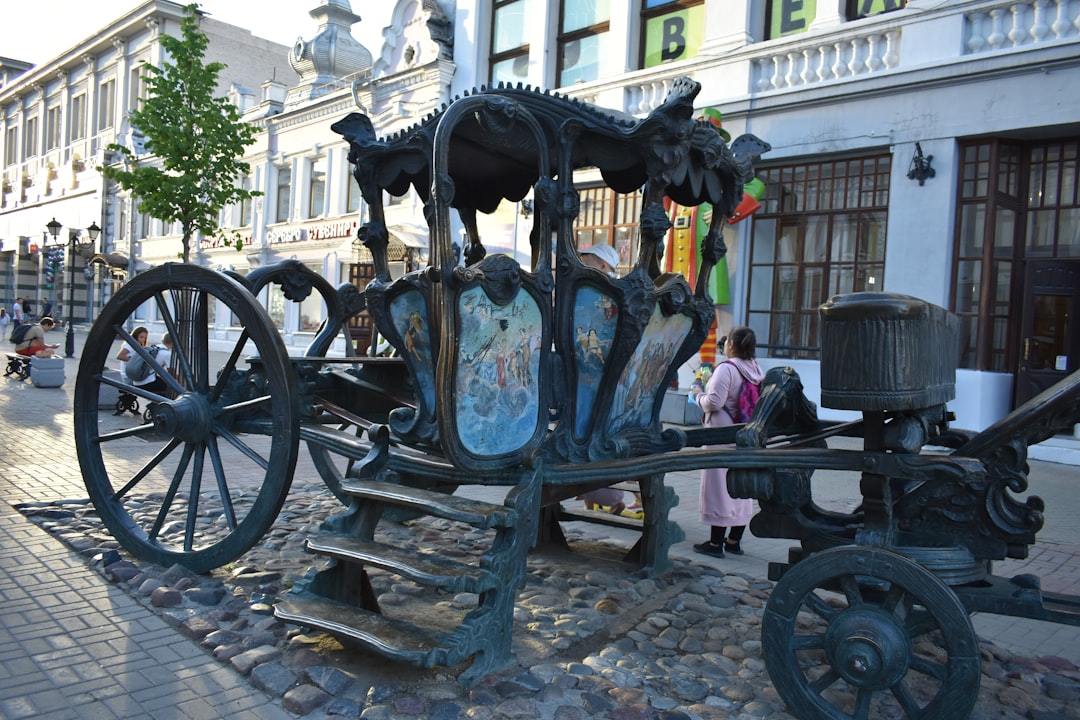
The popular understanding of the “horse and buggy era” often conjures images of a slow, idyllic, and relatively static past, a period where life proceeded at a measured pace, unburdened by the complexities of modern transportation. This romanticized view, however, is a simplification that overlooks the dynamism, challenges, and rapid evolution characteristic of the late 19th and early 20th centuries. To view this period exclusively through the lens of a quaint and unchanging existence is to ignore the profound impact of evolving technologies, significant social transformations, and the nascent seeds of the industrial age that were already taking root. The term itself, “horse and buggy,” while evocative, acts as a sort of historical shorthand, often used to contrast with the perceived speed and efficiency of the automobile age. Yet, beneath this seemingly placid surface lay a world in constant flux, marked by innovation, congestion, and increasingly sophisticated infrastructure.
Misconceptions of Simplicity
The horse-drawn vehicle was, admittedly, a ubiquitous sight, serving as the primary mode of personal and commercial transport for millennia. This long reign, however, should not be mistaken for an unchanging paradigm. The idea of a simple, uniform “horse and buggy” overlooks the incredible diversity of these conveyances. From the stately brougham to the utilitarian farm wagon, the swift gig to the heavy dray, the variety of horse-drawn vehicles was immense, each designed for specific purposes and catering to different social strata. This specialization reflects a mature and highly developed transportation ecosystem, not a primitive one. Moreover, the perceived “slowness” of the era is often a relative judgment, made from the vantage point of high-speed modernity. For the people of the time, the speed offered by a well-matched team of horses was itself a marvel, representing a significant improvement over foot travel or rudimentary animal-drawn carts of earlier periods. One must consider the contemporary context: what constituted “fast” then would be considered slow now, but this does not diminish its significance for those living at the time.
The myth of the horse and buggy era often romanticizes a time when transportation was limited to horse-drawn vehicles, overlooking the significant technological advancements that were already taking place. For a deeper understanding of how these innovations shaped society and paved the way for modern transportation, you can explore the article titled “Revolutionizing Technology: Advancements Beyond Modern” available at this link. This article delves into the transformative changes that occurred during that period, highlighting the interplay between tradition and progress.
The Urban Landscape: A Symphony of Hooves and Wheels
The urban environment of the late 19th century was far from the quiet, bucolic scene often imagined. Instead, it was a cacophony of sound and movement, a vibrant and often chaotic tableau primarily orchestrated by the horse.
Congestion and Chaos
Picture, if you will, the bustling streets of a major city like New York or London in the 1890s. The sheer number of horse-drawn vehicles was staggering. Drays laden with goods vied for space with elegant carriages, omnibuses packed with commuters, and private hacks. This density led to frequent traffic jams, a phenomenon not exclusive to the age of the automobile, but a persistent feature of urban life in the horse-drawn era. Accounts from the period often describe the “choking crush” of traffic and the almost deafening din of hooves on cobblestone, wagon wheels rumbling, and drivers shouting. Far from being a serene picture, it was a scene of constant negotiation and often slow-going progress. This urban dynamism challenges the notion of a uniformly slow and tranquil past.
Infrastructure and Its Challenges
Supporting this vast equine infrastructure required extensive planning and investment. Roads, while often unpaved or poorly maintained, were essential arteries. Stables, livery services, blacksmiths, and feed stores were integral parts of the urban fabric. The environmental impact was also significant. The sheer volume of horse manure posed a major public health challenge, contributing to disease and creating an pervasive odor. Estimates suggest that in a city like New York, hundreds of tons of manure were produced daily, alongside thousands of gallons of horse urine, presenting a sanitation crisis of considerable magnitude. The carcass disposal of deceased horses was another grim logistical challenge. These realities paint a far less romantic picture of the “horse and buggy era” than is often depicted.
Technological Innovation: Beyond the Horse Itself
While the horse was central, the “horse and buggy era” was itself a period of considerable technological innovation in transportation. It was not a stagnant epoch awaiting external disruption.
Improvements in Vehicle Design
The design of carts, carriages, and wagons underwent continuous refinement. Advances in suspension systems, such as elliptical springs, improved rider comfort. Lighter, stronger materials allowed for more efficient designs. Wheel technology, harness design, and braking systems also saw incremental but significant improvements. These were not primitive machines but often highly sophisticated examples of engineering for their time, demonstrating an ongoing quest for efficiency and performance even within the constraints of animal power. The specialized design of sulkies for racing, for instance, showcases a clear focus on aerodynamic efficiency and minimal weight, predating modern automotive design principles.
The Rise of Mass Transit
Even before the widespread adoption of the automobile, cities were grappling with the need for more efficient mass transit. Horse-drawn omnibuses and streetcars, while still reliant on animal power, represented a significant step towards public transportation systems. These innovations were driven by the growing populations of urban centers and the demand for more accessible and affordable ways for people to move around. The development of cable cars and later electric streetcars (trolleys) began to displace horse-drawn conveyances even before the internal combustion engine became dominant, demonstrating an internal evolutionary process rather than a sudden, external revolution. This period was therefore not merely about horses, but about the transition from various forms of horse power to other forms of power for mass transit.
The Business of Horses: An Economic Powerhouse
The “horse and buggy era” was not merely a lifestyle; it was a colossal economic engine, employing millions and driving vast sectors of industry.
A Multibillion-Dollar Industry
Consider the scale of the horse industry: breeding, training, fodder production, veterinary services, farriery, stable management, harness manufacturing, wagon and carriage building, and the vast array of related support services. This represented a substantial portion of the economy, akin to the automotive industry today. Fortunes were made and lost in the horse trade, and a skilled horseman or blacksmith was a highly valued professional. The economic ripple effect extended to agriculture, as vast tracts of land were dedicated to growing hay and oats to feed the immense equine population. This intricate economic web underscores the sophisticated nature of the era, far removed from a simplistic or rudimentary existence.
Social Stratification Reflected in Transport
Just as today, transportation was a clear indicator of social status. The wealthy traveled in exquisitely crafted carriages, often with liveried coachmen and footmen, drawn by pedigreed horses. The middle class might own a more modest buggy or use public transportation. The working class walked or utilized more basic, utilitarian carts for their work. This stratification was not merely about personal preference but reflected the immense economic investment associated with owning and maintaining horses and vehicles. The “horse and buggy era” was therefore a period of significant social differentiation, with transport playing a key role in its expression.
The myth of the horse and buggy era often romanticizes a time when life seemed simpler and more connected to nature, yet it overlooks the complexities and challenges of that period. For a deeper understanding of how historical narratives shape our perceptions, you might find it interesting to explore the article on the consequences of an attack on a lunar base, which draws parallels between past and future societal challenges. This article highlights how our interpretations of history can influence our views on technological advancements and their implications. You can read more about it here.
The Dawn of a New Age: Transition and Disruption
The eventual decline of the horse and buggy was not a sudden collapse but a gradual, complex transition, marked by significant disruption and adaptation.
The Automobile as Disruptor
While the internal combustion engine offered undeniable advantages in terms of speed, range, and independence from animal welfare concerns or feed requirements, its adoption was initially slow and met with skepticism. Early automobiles were expensive, unreliable, and required specialized knowledge to operate and maintain. The roads themselves were often unsuitable for motor vehicles. The “horse and buggy era” did not simply vanish overnight. For several decades, horses and automobiles coexisted, often in an uneasy truce on shared roads. This transitional period highlights the complex interplay of new and old technologies, a struggle for dominance that ultimately reshaped landscapes and lifestyles.
Legacy and Enduring Impact
Even as the automobile became dominant, the legacy of the horse and buggy era continues to influence our world. Road networks, urban planning, and even many of our traffic laws were initially developed to manage horse-drawn traffic. The concepts of “right of way,” “traffic lanes,” and even the design of many early roads stemmed from the necessities of a horse-powered world. Our vocabulary, too, retains echoes of this past: “horsepower” remains a standard unit of measure, and idioms like “getting a head start” or “holding your horses” are directly traceable to equine practices. To dismiss this era as merely a quaint prelude is to overlook its profound and lasting influence on human society and infrastructure.
The “myth of the horse and buggy era” thus stands revealed as a mischaracterization. Far from being a static, simple, or uniformly slow period, it was a vibrant, complex, and dynamic time characterized by significant economic activity, continuous technological innovation in design and infrastructure, and the constant challenges of urban life. It was an era of intense traffic, environmental problems, and the sophisticated management of a society reliant on animal power. By acknowledging these complexities, one gains a more accurate and nuanced understanding of human history and the relentless drive towards progress and adaptation that has always defined our species. To look back at this period requires discarding the rose-tinted spectacles of nostalgia and instead viewing it through the practical, often messy, lens of historical reality. The transition from widespread horse travel to mechanized transport was not a simple leap, but a protracted evolution, the lessons of which continue to resonate in our ongoing relationship with technology and infrastructure.
WATCH NOW ▶️ WARNING: They Erased The World Before Us
FAQs

What time period is commonly referred to as the horse and buggy era?
The horse and buggy era generally refers to the late 19th and early 20th centuries, before the widespread adoption of automobiles.
Was the horse and buggy era as slow-paced as often portrayed?
No, the era was not necessarily slow-paced. Horse-drawn vehicles were a primary mode of transportation and could be quite efficient for their time, especially in urban areas with established infrastructure.
Did people rely solely on horse and buggy transportation during this era?
No, while horse-drawn carriages were common, other forms of transportation such as trains, streetcars, and bicycles were also widely used during this period.
Why is the horse and buggy era considered a “myth” in some contexts?
The term “myth” refers to the oversimplified or romanticized view that life was uniformly slow and primitive before cars. In reality, the era was marked by significant technological and social changes.
How did the transition from horse and buggy to automobiles impact society?
The transition led to faster travel, changes in urban planning, and shifts in economic activities. It also reduced reliance on horses, which had implications for city sanitation and animal welfare.