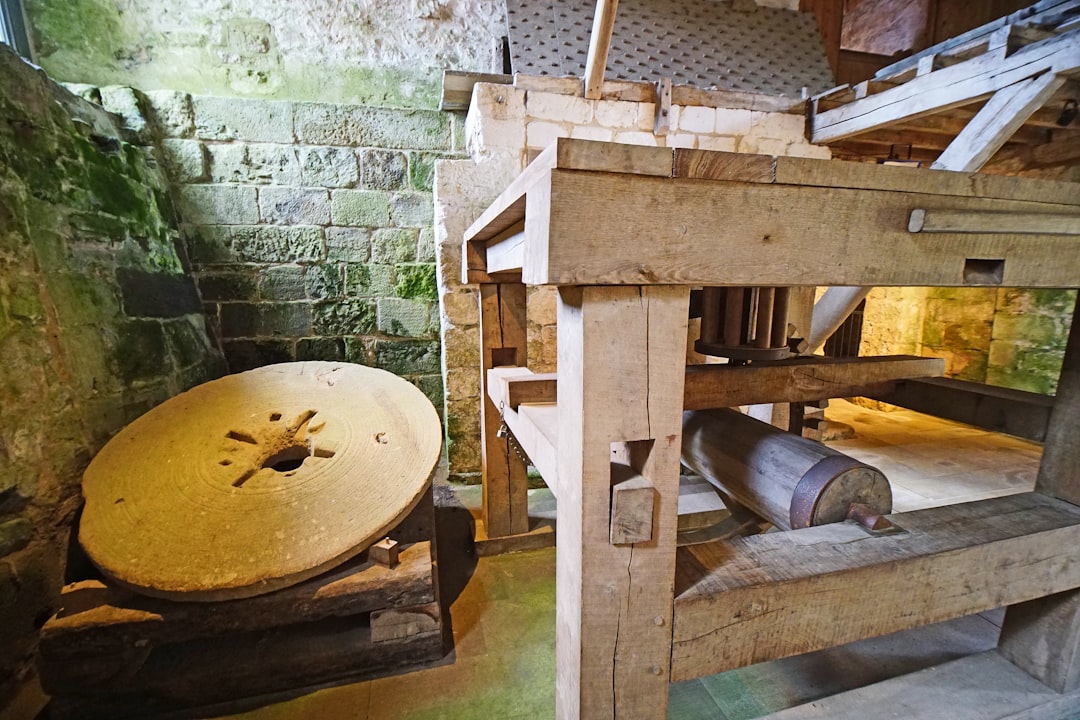
Ancient control technology represents a fascinating intersection of human ingenuity and the quest for efficiency in managing resources and processes. From the earliest civilizations, societies have sought ways to exert control over their environments, whether through irrigation systems, architectural innovations, or mechanical devices. This technology not only facilitated daily life but also played a crucial role in the development of complex societies.
By examining the principles and applications of ancient control technology, one can gain insight into how these early innovations laid the groundwork for modern engineering practices. The study of ancient control technology encompasses a wide range of disciplines, including archaeology, history, and engineering. It invites scholars to explore how ancient peoples harnessed their understanding of physics, mathematics, and materials to create systems that addressed their specific needs.
As researchers delve into the remnants of these technologies, they uncover not only the mechanics behind them but also the cultural significance they held for the societies that created them. This exploration reveals a rich tapestry of human achievement that continues to inspire contemporary innovation.
Key Takeaways
- Ancient control technology refers to the use of mechanisms and systems to regulate and manipulate various aspects of ancient societies.
- Control technology in ancient civilizations evolved from simple tools and mechanisms to sophisticated systems that influenced architecture, infrastructure, and societal organization.
- The engineering and design of ancient control systems demonstrate the advanced knowledge and skills of ancient engineers and craftsmen.
- Ancient control technology played a crucial role in shaping the organization, governance, and development of ancient societies.
- Examples of ancient control technology can be found in the architecture and infrastructure of ancient civilizations, showcasing their innovative and advanced engineering capabilities.
The Evolution of Control Technology in Ancient Civilizations
The evolution of control technology can be traced back to some of the earliest known civilizations, such as Mesopotamia, Egypt, and the Indus Valley. In these societies, the need for effective resource management led to the development of sophisticated systems for irrigation, agriculture, and construction. For instance, the Sumerians devised intricate canal systems to divert water from rivers to arid fields, enabling them to cultivate crops in otherwise inhospitable environments.
This early form of control technology not only increased agricultural productivity but also supported population growth and urbanization. As civilizations progressed, so too did their control technologies. The Egyptians, renowned for their monumental architecture, employed advanced techniques in surveying and construction that allowed them to build the iconic pyramids with remarkable precision.
They utilized simple machines such as levers and ramps to move massive stone blocks, demonstrating an understanding of mechanical principles that would not be fully appreciated until centuries later. The evolution of control technology in these ancient societies reflects a continuous quest for improvement and efficiency, setting the stage for future advancements.
Uncovering the Engineering and Design of Ancient Control Systems

The engineering and design of ancient control systems reveal a remarkable level of sophistication that often goes unrecognized. Archaeologists and historians have worked diligently to reconstruct these systems, employing modern technology such as ground-penetrating radar and 3D modeling to visualize what once existed. For example, the aqueducts built by the Romans exemplify an impressive feat of engineering that allowed for the transportation of water over long distances.
These structures were meticulously designed to maintain a consistent gradient, ensuring a steady flow of water to urban centers. In addition to aqueducts, ancient control systems included various mechanical devices such as water clocks and windmills. The Greeks developed the first known water clocks, or clepsydra, which utilized the steady flow of water to measure time accurately.
This innovation not only served practical purposes but also reflected a deeper understanding of fluid dynamics. Similarly, windmills in Persia harnessed wind energy for tasks such as grinding grain, showcasing an early application of renewable energy technology.
The Role of Control Technology in Ancient Societies
| Control Technology | Ancient Societies |
|---|---|
| Irrigation Systems | Ancient Mesopotamia used canals and levees to control water flow for agriculture. |
| City Planning | Ancient Romans used grid patterns and aqueducts to control the layout and water supply of their cities. |
| Fortifications | Ancient Chinese built the Great Wall to control and defend their borders. |
| Legal Systems | Ancient Greeks developed laws and courts to control behavior and resolve disputes. |
Control technology played a pivotal role in shaping the social and economic structures of ancient societies.
For instance, irrigation systems allowed for surplus food production, which in turn supported larger populations and led to the rise of cities.
As communities grew, so did the complexity of their social hierarchies, with specialized roles emerging in agriculture, trade, and governance. Moreover, control technology often served as a means of asserting power and influence. Rulers and elites utilized monumental architecture and infrastructure projects as symbols of their authority.
The construction of grand temples and palaces not only demonstrated engineering prowess but also reinforced social stratification by showcasing the wealth and resources controlled by those in power. In this way, ancient control technology was not merely a tool for practical purposes; it was also a vehicle for expressing cultural identity and political dominance.
Examples of Ancient Control Technology in Architecture and Infrastructure
Numerous examples of ancient control technology can be found in architectural marvels and infrastructure projects across various civilizations. The Great Wall of China stands as a testament to the engineering capabilities of ancient societies. Constructed over several dynasties, this monumental structure employed advanced techniques in masonry and design to create a formidable barrier against invasions.
The wall’s construction involved careful planning and resource allocation, showcasing an early understanding of project management principles. Similarly, the intricate road systems established by the Romans exemplify another aspect of ancient control technology. These roads facilitated trade and military movement across vast distances, connecting disparate regions within the empire.
The Romans employed techniques such as surveying and grading to ensure that their roads were durable and efficient. The legacy of Roman road construction can still be seen today in modern transportation networks, underscoring the lasting impact of ancient engineering on contemporary infrastructure.
The Influence of Ancient Control Technology on Modern Engineering

The influence of ancient control technology on modern engineering is profound and far-reaching. Many contemporary engineering principles can be traced back to innovations developed by ancient civilizations. For instance, the use of arches and vaults in architecture can be attributed to Roman engineering practices that allowed for the construction of larger and more stable structures.
These techniques have been adapted and refined over centuries but remain foundational elements in modern architectural design. Furthermore, ancient control technologies have inspired advancements in various fields such as hydraulics and mechanics. The principles behind ancient water management systems continue to inform modern irrigation practices and flood control measures.
Engineers today draw upon historical knowledge to develop sustainable solutions that address contemporary challenges related to water scarcity and environmental management. By studying ancient technologies, modern engineers can gain valuable insights into efficient design practices that have stood the test of time.
The Cultural and Societal Impacts of Ancient Control Technology
The cultural and societal impacts of ancient control technology extend beyond mere functionality; they shaped identities and influenced worldviews within various civilizations. For example, the construction of monumental structures often served religious or ceremonial purposes, reflecting the values and beliefs of a society. Temples dedicated to deities were not only architectural feats but also centers for community gatherings and rituals, reinforcing social cohesion.
Moreover, control technologies facilitated communication and interaction among different cultures. Trade routes established by ancient civilizations enabled the exchange of goods, ideas, and technologies across vast distances. This cultural diffusion contributed to the development of shared knowledge systems that transcended geographical boundaries.
As societies interacted through trade and conquest, they adopted and adapted technologies from one another, leading to a rich tapestry of innovation that shaped human history.
The Preservation and Restoration of Ancient Control Technology
Preserving and restoring ancient control technology poses significant challenges but is essential for understanding humanity’s technological heritage. Archaeologists work tirelessly to excavate sites where these technologies once thrived, often facing obstacles such as environmental degradation and urban encroachment. Preservation efforts require collaboration among governments, institutions, and local communities to ensure that these historical sites are protected for future generations.
Restoration projects also play a crucial role in bringing ancient technologies back to life. By employing traditional craftsmanship alongside modern techniques, restorers can recreate lost elements while maintaining historical accuracy. For instance, efforts to restore ancient aqueducts or irrigation systems not only provide insights into their original function but also demonstrate their relevance in contemporary discussions about sustainable water management practices.
Challenges and Limitations in Studying Ancient Control Technology
Studying ancient control technology presents numerous challenges that researchers must navigate carefully. One significant limitation is the scarcity of written records detailing the design and operation of these systems. Much of what is known comes from archaeological evidence or later historical accounts that may not accurately reflect original practices.
This lack of documentation can lead to gaps in understanding how specific technologies functioned within their cultural contexts. Additionally, interpreting archaeological findings requires careful consideration of various factors such as environmental conditions and societal changes over time. Researchers must account for how these factors influenced technological development and usage within different civilizations.
As new discoveries are made, scholars must continually reassess existing theories and interpretations to build a more comprehensive understanding of ancient control technology.
The Future of Research and Exploration in Ancient Control Technology
The future of research and exploration in ancient control technology holds great promise as new methodologies emerge and interdisciplinary collaboration expands. Advances in technology such as remote sensing, artificial intelligence, and data analysis are revolutionizing how researchers study archaeological sites. These tools enable scholars to uncover hidden structures or patterns that may have previously gone unnoticed, providing fresh insights into ancient engineering practices.
Moreover, increased global interest in heritage preservation has led to greater funding opportunities for research initiatives focused on ancient technologies. Collaborative projects involving international teams can foster knowledge exchange while promoting cultural understanding among diverse communities. As researchers continue to explore ancient control technology’s complexities, they will undoubtedly uncover new dimensions that enrich our understanding of human history.
The Significance of Unearthing Ancient Control Technology
Unearthing ancient control technology is not merely an academic pursuit; it is a vital endeavor that connects humanity’s past with its present and future. By studying these technologies, researchers gain valuable insights into how early civilizations navigated challenges similar to those faced today—resource management, environmental sustainability, and social organization. The lessons learned from ancient innovations can inform contemporary practices while fostering a deeper appreciation for human ingenuity throughout history.
Ultimately, recognizing the significance of ancient control technology allows society to celebrate its shared heritage while inspiring future generations to innovate responsibly. As scholars continue their exploration into this fascinating field, they contribute not only to our understanding of history but also to shaping a sustainable future grounded in lessons from the past.
In recent years, there has been a growing interest in the study of ancient technologies and their potential implications for modern society. One fascinating aspect of this research is the idea that certain advanced technologies from ancient civilizations may have been deliberately buried or hidden to maintain control over knowledge and power. An article that delves into this intriguing topic can be found on Real Lore and Order, which explores various theories and evidence surrounding ancient technologies and their mysterious disappearance. For more insights, you can read the full article by visiting this link.
WATCH THIS! The Lost Tech They Buried to Control Us
FAQs
What is ancient technology buried for control?
Ancient technology buried for control refers to the concept that advanced technological artifacts or knowledge from ancient civilizations have been deliberately hidden or suppressed by powerful groups or governments in order to maintain control over society.
What are some examples of ancient technology that may have been buried for control?
Examples of ancient technology that may have been buried for control include advanced knowledge of energy sources, advanced medical practices, and sophisticated engineering techniques that surpass our current understanding of ancient civilizations.
Is there any evidence to support the idea of ancient technology being buried for control?
There is limited concrete evidence to support the idea of ancient technology being buried for control. However, there are various historical and archaeological anomalies that have led some to speculate about the existence of advanced ancient technology.
What are some theories about why ancient technology may have been buried for control?
Some theories suggest that powerful groups or governments may have hidden advanced ancient technology in order to maintain their own power and control over society. Others believe that the suppression of ancient technology may be due to fear of the societal upheaval that could result from the revelation of such knowledge.
What is the current mainstream scientific view on the idea of ancient technology being buried for control?
The current mainstream scientific view is that there is no substantial evidence to support the idea of ancient technology being buried for control. Most archaeologists and historians believe that the technological achievements of ancient civilizations can be explained through the knowledge and resources available to them at the time.