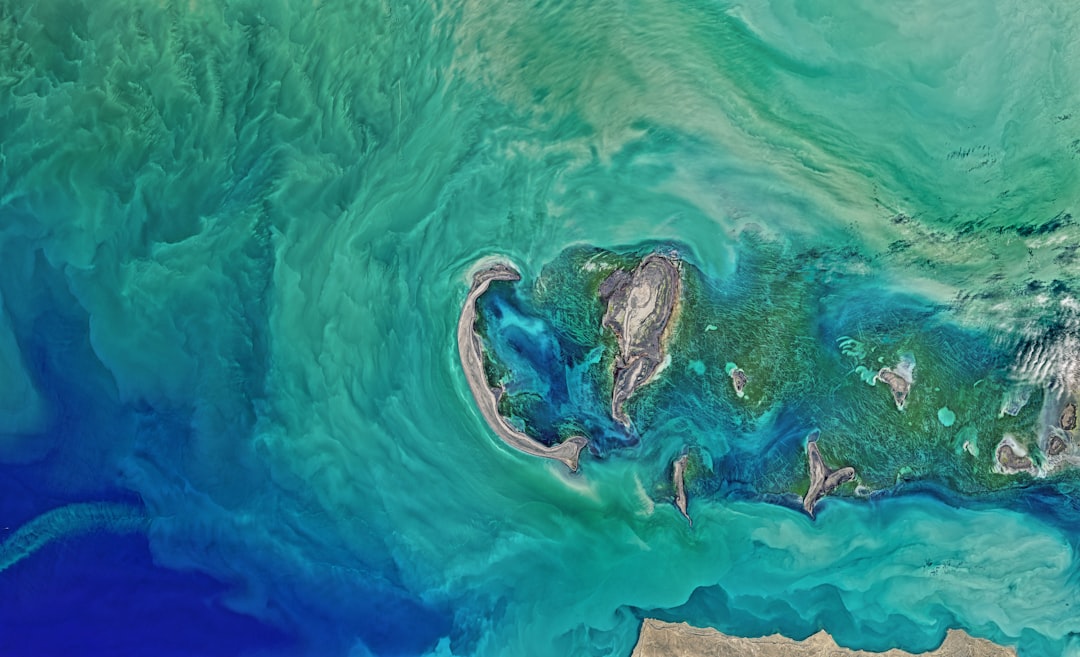
The Caspian Sea, a vast expanse of water that has captivated geographers and scientists for centuries, holds a peculiar distinction: its classification as either a lake or a sea remains a subject of ongoing debate. This seemingly academic question carries significant weight, influencing international law, resource management, and environmental policy. To understand this unique status, one must delve into the geological, hydrological, and geopolitical factors that define this remarkable body of water.
The Caspian Sea’s unique position on the map is a direct consequence of its geological history. It is a relic of the ancient Paratethys Sea, a vast inland sea that once stretched across much of Eurasia. Over millions of years, tectonic shifts and changes in sea level gradually isolated this large body of water from the world’s oceans.
Ancient Tethys and Continental Drift
The Tethys Sea, a super-ocean that existed from the Paleozoic to the Cenozoic eras, was a formative influence on the Earth’s geography. As the continents drifted and collided, the Tethys Sea began to break apart and shrink. The Pannonian Basin and the Caspian Depression, areas that eventually housed the precursors to the Caspian Sea, were part of this ancient marine system. The gradual uplift of landmasses, particularly the Caucasus Mountains to the west and the Kopet Dag Range to the south, effectively sealed off these basins, transforming them into extensive inland water bodies.
Enclosed Basin and Salinity
A defining characteristic of the Caspian Sea, and a key point of contention in its classification, is its nature as an endorheic basin. This means it has no natural outlet to the world’s oceans. Water flows into the Caspian primarily from the Volga River, which accounts for about 80% of the inflow, along with contributions from the Ural River and several smaller rivers. The water leaves the basin solely through evaporation. This process significantly impacts the salinity of the Caspian. While not as saline as most oceans, its salt content is roughly one-third that of typical seawater. However, salinity is not uniform, with the northern, shallower parts being considerably less saline due to the heavy freshwater input from the Volga, while the southern, deeper sections exhibit higher salinity. This variability, not seen in most freshwater lakes, yet lacking the oceanic connectivity of true seas, places it in a hydrologically ambiguous zone.
Depth Variations and Geographic Extent
The Caspian Sea is the largest enclosed inland body of water by area on Earth. Its sheer scale is impressive, stretching some 1,200 kilometers (750 miles) from north to south and averaging about 320 kilometers (200 miles) in width, with a maximum width of 435 kilometers (270 miles). However, its bathymetry is highly variable. The northern sector is remarkably shallow, with an average depth of only about 6 meters (20 feet), making it essentially a large, shallow bay. In stark contrast, the southern basin plunges to depths of over 1,000 meters (3,280 feet), reaching a maximum of 1,025 meters (3,363 feet). This extreme variation in depth, with abyssal trenches comparable to those found in oceans, further complicates its classification.
The debate surrounding the Caspian Sea’s classification as either a lake or a sea has significant implications for international law and environmental management. This discussion is further enriched by understanding geological processes, such as isostatic rebound, which can influence water bodies over time. For a deeper insight into how changing landscapes, like those in Antarctica, can impact global water systems, you can read the article on isostatic rebound and Antarctic topography at this link.
Defining a Sea: Ocean Connectivity and Geological Basis
The conventional definition of a sea often hinges on its connection to the global ocean system. This connection allows for tidal influences, the exchange of marine life, and a certain degree of salinity consistency. The Caspian Sea, by its very nature as an enclosed basin, lacks this oceanic link.
Oceanographic Thresholds and Salinity Levels
Oceanographers typically define a sea as a large expanse of saltwater that is part of, or connected to, the world ocean. Key indicators include oceanic salinity (generally around 35 parts per thousand), tidal movements, and the presence of characteristic marine flora and fauna. The Caspian’s salinity, averaging around 1.2% or 12 parts per thousand, falls significantly below oceanic averages. While some enclosed or marginal seas can have lower salinity, the lack of connection to the wider ocean remains the most significant differentiating factor. The Caspian’s salinity is more akin to that of a brackish lake, albeit a very large one.
Bedrock and Continental Shelf Analogies
Geologically, the distinction between a lake and a sea can also be drawn from the nature of the underlying crust. Oceans are typically underlain by oceanic crust, which is denser and thinner than continental crust. Seas, being marginal extensions of oceans, often share this oceanic crust. Lakes, on the other hand, are generally situated within continental crust, often in depressions formed by geological processes like glaciation or tectonic activity. The Caspian Sea’s basin lies on continental crust, further supporting the argument for its lake-like nature from a geological perspective. However, the sheer scale and depth of some parts of the Caspian basin present sedimentary structures that can resemble oceanic basins, blurring these distinctions in the eyes of some geologists.
Historical Sea Levels and Transgressions
Throughout its history, the Caspian Sea’s water levels have fluctuated dramatically. There have been periods of significant transgressions, where its waters have expanded and even reached a connection with the Black Sea through temporary channels driven by glacial melt or tectonic activity. These periods of higher sea level might have led to its being considered a sea in its past. Conversely, prolonged periods of low precipitation and high evaporation have resulted in significant regressions, shrinking the basin and exposing extensive shorelines. These cyclical changes, a testament to the dynamic Earth, add another layer of complexity to its classification, as periods of greater connectivity might have existed.
Defining a Lake: Inland Endorheic Basins and Freshwater Influence
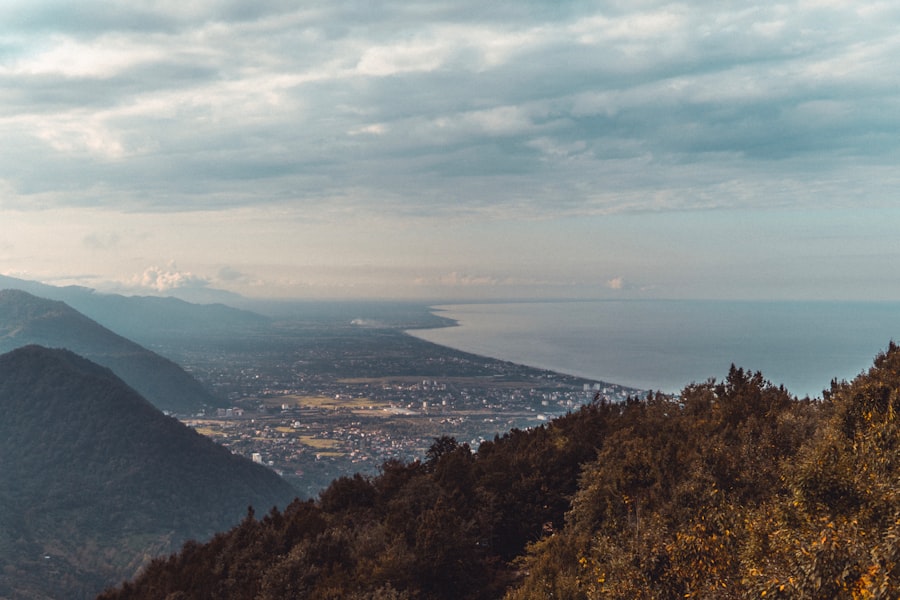
Conversely, the definition of a lake often emphasizes its inland nature, its isolation from the ocean, and the potential for significant freshwater influence. The Caspian Sea embodies many of these characteristics, albeit on a monumental scale.
Endorheic Nature and Freshwater Inflow Dominance
The most compelling argument for the Caspian’s classification as a lake lies in its status as an endorheic basin. As mentioned, it possesses no natural outflow to the ocean. The vast majority of its water supply comes from the Volga River, Europe’s longest river, which floods the northern delta with considerable freshwater. This massive influx of freshwater, coupled with high evaporation rates, creates a unique hydrological regime. While the salinity exists, it is a consequence of concentration through evaporation rather than direct oceanic influence. This dominance of freshwater input and lack of oceanic connection aligns strongly with the characteristics of a large lake.
Absence of Oceanic Tides and Marine Biota
True seas, connected to the ocean, experience predictable tidal cycles driven by the gravitational pull of the moon and sun. The Caspian Sea, being landlocked, does not exhibit these significant tidal fluctuations. Its water level changes are primarily influenced by wind, atmospheric pressure, and long-term variations in riverine inflow and evaporation. Furthermore, while the Caspian does host a unique array of endemic species, a significant portion of its fauna exhibits adaptations to its brackish conditions and differs from the characteristic marine life found in oceans. Its seal population, for instance, the Caspian seal, is a remnant of ancient marine ancestors isolated by geological changes, rather than an active marine immigrant.
Historical Nomenclature and Geographic Context
Historically, the Caspian Sea has been referred to as both a sea and a lake depending on the era and the observer. Ancient Greeks and Romans, for instance, often referred to it as the Hyrcanian Sea or the Pontic Sea, reflecting its vastness and its perceived connection to other large water bodies. However, in modern scientific discourse, its enclosed nature has led many to classify it as the world’s largest lake. The geographical context, being entirely surrounded by land and bordered by multiple countries, also lends itself to the concept of a lake rather than a vast oceanic extension.
The Geopolitical Dimension: Legal and Resource Implications
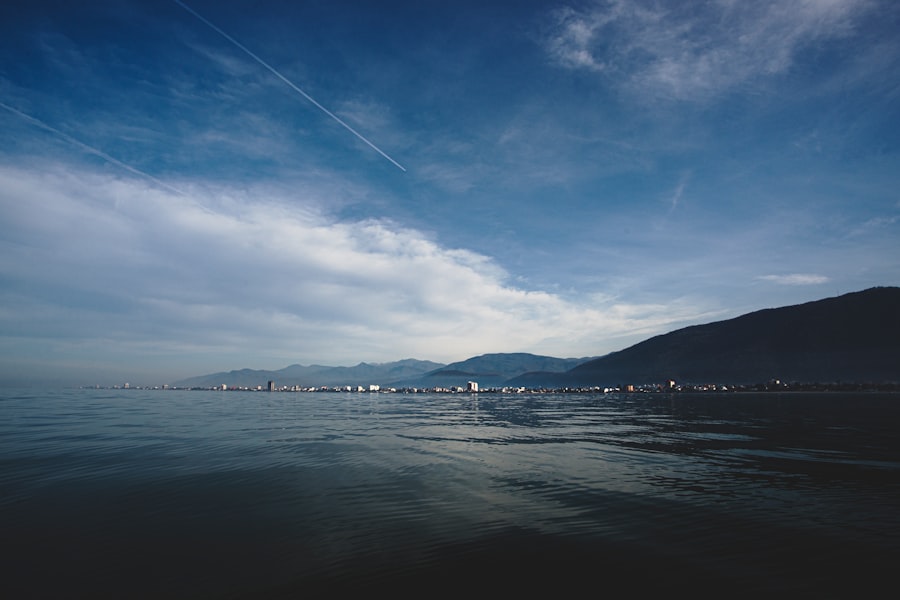
The classification of the Caspian Sea is not merely an academic exercise; it has profound geopolitical and economic implications, particularly concerning the vast hydrocarbon reserves estimated to lie beneath its bed. The legal framework governing the Caspian’s waters, its seabed, and its resources has been a complex and often contentious issue since the dissolution of the Soviet Union.
The Soviet-Iranian Agreement of 1921 and 1940
For much of the 20th century, the legal status of the Caspian was largely dictated by agreements between the Soviet Union and Iran. The 1921 and 1940 treaties established the Caspian as a shared body of water, allowing both nations equal navigational rights and restricting access to other countries. These agreements, however, did not specifically define whether it was a sea or a lake, thus sidestepping the core definitional dilemma for practical purposes at the time. Under these treaties, the resources were not explicitly divided.
Post-Soviet Ambiguity and the Search for a Convention
The disintegration of the Soviet Union in 1991 dramatically altered the geopolitical landscape, introducing five new littoral states: Russia, Kazakhstan, Turkmenistan, Azerbaijan, and Iran. This necessitated a new legal framework for the Caspian, as the old Soviet-Iranian agreements were no longer universally applicable. The absence of a clear definition as a sea or a lake created a legal vacuum, as international maritime law (governing seas) and international freshwater law (governing lakes) differ significantly in their provisions for resource division, navigation, and environmental protection. This ambiguity became a sticking point, with each nation advocating for an interpretation that best suited its interests.
Division of Seabed and Resource Allocation
The primary point of contention has been the division of the Caspian seabed and its estimated vast reserves of oil and natural gas. If the Caspian is considered a sea, principles of international maritime law could potentially lead to a division based on median lines or equidistant lines from the coast, allowing for the exploitation of resources within contiguous zones. If it is classified as a lake, the division could be interpreted as a condominium, meaning shared ownership and management, or a division based on the extent of territorial waters. This uncertainty has led to disputes over exploration rights and the delimitation of maritime borders, sometimes straining relations between the littoral states.
The debate surrounding the Caspian Sea’s classification as either a lake or a sea has significant implications for the surrounding nations, particularly in terms of resource management and territorial rights. This complex issue is further explored in a related article that delves into the historical context and geopolitical ramifications of such classifications. For those interested in uncovering more about ancient knowledge and its relevance to modern disputes, you can read about it in this intriguing piece on forbidden ancient technology.
The 2018 Caspian Convention: A Pragmatic Solution?
| Aspect | Caspian Sea as a Sea | Caspian Sea as a Lake | Special Status Considerations |
|---|---|---|---|
| Type | Inland sea (largest enclosed inland body of water) | Largest enclosed lake in the world | Unique classification due to its size, salinity, and lack of outflow |
| Surface Area | ~371,000 km² | ~371,000 km² | Same physical size regardless of classification |
| Salinity | Approximately 1.2% (about one-third of ocean salinity) | Saline lake (not freshwater) | Salinity affects ecosystem and legal definitions |
| Water Inflow and Outflow | Inflow from rivers, no natural outflow to ocean | Endorheic basin (no outflow) | Endorheic nature supports lake classification |
| Legal Status | Considered a sea by some countries, governed by maritime law | Considered a lake by others, governed by lake treaties | Disputes over resource rights and territorial waters |
| Bordering Countries | Russia, Kazakhstan, Turkmenistan, Iran, Azerbaijan | Same countries | Shared management challenges |
| Resource Exploitation | Oil and gas extraction regulated under sea law or lake law | Resource sharing agreements vary | Classification impacts legal rights to resources |
| Environmental Concerns | Pollution, water level fluctuations, biodiversity loss | Same concerns | Joint environmental management needed |
After decades of negotiations, the five littoral states finally signed the Convention on the Legal Status of the Caspian Sea in August 2018. This landmark agreement, while not definitively classifying the Caspian as a lake or a sea, provided a framework for managing its resources and ensuring regional cooperation.
“Water Body,” Not “Lake” or “Sea”
The Convention notably avoids explicitly labeling the Caspian Sea as either a lake or a sea. Instead, it refers to it as a “water body” with a special legal status. This pragmatic approach acknowledges the unique characteristics of the Caspian and bypasses the contentious definitional debate. The convention establishes a surface division of national waters, territorial seas, and exclusive fishing zones, while the seabed will be divided by agreement between adjacent and opposite states.
Joint Resource Management and Environmental Protection
The convention also encourages cooperation on issues such as navigation, environmental protection, and the prevention of military buildup. It aims to foster a more stable and predictable environment for investment and resource development. While details regarding the delimitation of the seabed are left to bilateral agreements, the convention provides a crucial foundation for resolving future disputes and managing this shared resource sustainably. This pragmatic approach reflects a recognition that the unique nature of the Caspian demands a unique legal solution, one that prioritizes cooperation over rigid, potentially divisive, definitions.
Ongoing Challenges and Future Prospects
Despite the progress made with the 2018 Convention, challenges remain. The exact delimitation of the seabed, particularly in areas with disputed hydrocarbon fields, will require complex negotiations. Furthermore, the environmental health of the Caspian Sea, facing threats from pollution, overfishing, and climate change, will require sustained collaborative efforts from all littoral states. The unique status of the Caspian Sea, existing as a puzzle piece that doesn’t neatly fit into pre-defined geographical or legal boxes, will continue to necessitate ongoing dialogue and adaptive management strategies to ensure its prosperity and stability for generations to come.
FAQs
What is the Caspian Sea?
The Caspian Sea is the world’s largest enclosed inland body of water, located between Europe and Asia. It is bordered by five countries: Russia, Kazakhstan, Turkmenistan, Iran, and Azerbaijan.
Why is the Caspian Sea sometimes called a lake?
The Caspian Sea is often referred to as a lake because it is an enclosed body of water with no natural outflow to the world’s oceans. Its classification as a sea or lake affects legal and territorial rights among the bordering countries.
What determines whether the Caspian is classified as a sea or a lake?
The classification depends on legal, geographical, and environmental factors. Seas are typically connected to the ocean and have saline water, while lakes are inland and may have varying salinity. The Caspian has saline water but no ocean connection, leading to its unique status.
How does the Caspian Sea’s status affect resource rights?
The classification impacts how the bordering countries divide the seabed and water resources, including oil and gas reserves. If considered a sea, international maritime law applies; if a lake, the resources are divided based on agreements among the littoral states.
What agreements exist regarding the Caspian Sea’s status?
The five bordering countries have signed treaties, such as the 2018 Convention on the Legal Status of the Caspian Sea, which defines the sea’s special legal status and outlines rights and responsibilities related to navigation, resource exploitation, and environmental protection.