
Unlocking the Past: Charcoal Dating for Ancient Smelting Sites
The echoes of ancient industry whisper from the earth, carried on the winds of time. For millennia, humans have harnessed the power of fire and metal, shaping their world through the forge and furnace. Uncovering the precise timelines of these earliest technological leaps is a monumental task, a historical detective story where the clues lie buried, often in the very remnants of the processes themselves. One of the most potent tools in this archaeological investigation is the science of radiocarbon dating, specifically when applied to charcoal found at ancient smelting sites. This article will delve into the intricate process of charcoal dating, exploring its principles, methodologies, and its profound significance in illuminating the operational timelines of humanity’s ancestral metallurgical endeavors.
Radiocarbon dating, also known as carbon-14 dating, is a scientific method used to determine the age of organic materials. It hinges on the predictable decay of a radioactive isotope of carbon, carbon-14 (¹⁴C), which is naturally present in the atmosphere and subsequently absorbed by living organisms. Understanding this fundamental principle is the bedrock upon which the entire edifice of dating ancient materials is built.
The Cosmic Nursery: Creation of Carbon-14
The journey of carbon-14 begins in the upper atmosphere. Cosmic rays, energetic particles originating from deep space, bombard the Earth’s atmosphere. These rays interact with nitrogen-14 (¹⁴N) atoms, the most abundant element in our air, transforming them into carbon-14. This process, known as neutron activation, creates a continuous, albeit small, supply of this radioactive isotope. Think of the atmosphere as a cosmic forge, constantly producing this unique atomic ingredient.
The Biological Exchange: Incorporation into the Biosphere
Once formed, carbon-14 quickly oxidizes to form carbon dioxide. This ¹⁴CO₂ mixes with the stable isotopes of carbon, carbon-12 (¹²C) and carbon-13 (¹³C), to become part of the global carbon cycle. Plants absorb atmospheric carbon dioxide through photosynthesis, thereby incorporating both stable carbon isotopes and the radioactive carbon-14 into their tissues. Animals, in turn, consume these plants, or consume other animals that have eaten plants, accumulating carbon-14 within their bodies. At any given moment, living organisms maintain a relatively constant ratio of carbon-14 to stable carbon isotopes, mirroring the ratio present in the atmosphere. This biological exchange is akin to every living thing wearing a ‘carbon clock’ that is continuously ticking and being reset.
The Irreversible Decay: The Clock Starts Ticking
When an organism dies, it ceases to exchange carbon with its environment. The carbon-14 within its remains, being radioactive, begins to decay back into nitrogen-14 at a specific, predictable rate. This decay process is governed by the half-life of carbon-14, which is approximately 5,730 years. The half-life represents the time it takes for half of the radioactive isotope in a sample to decay. Imagine a population of marbles, half black and half white. Over time, the black marbles disappear at a steady rate, leaving fewer and fewer black marbles behind. The remaining black marbles represent the remaining carbon-14.
The Measurement: Quantifying the Remaining Radicals
Archaeologists and scientists, armed with sophisticated laboratory equipment, can measure the remaining amount of carbon-14 in an organic sample. By comparing the ratio of carbon-14 to stable carbon isotopes in the ancient sample to the ratio that would have been present in a living organism at the time of its death, they can calculate how many half-lives have passed. This calculation allows for the determination of the sample’s age. The more carbon-14 that has decayed, the older the sample. This meticulous measurement is the key that unlocks the timeline, transforming a forgotten relic into a dated artifact.
Charcoal dating has become an essential tool for archaeologists studying ancient smelting sites, providing insights into the timeline of metal production and technological advancements in various cultures. For a deeper understanding of how legal frameworks, such as the IIEPA Act, can impact archaeological research and asset management in these contexts, you can refer to this informative article: IIEPA Act: Asset Freezing Powers Explained. This resource highlights the intersection of legal considerations and archaeological practices, shedding light on the complexities involved in preserving historical sites.
Charcoal: A Time Capsule of the Forge
Charcoal, the carbonaceous residue of incomplete combustion, is an exceptionally well-suited material for radiocarbon dating, particularly in the context of ancient smelting sites. Its production process, its preservation potential, and its direct relationship to the industrial activities under investigation make it an invaluable witness to the past. When we find charcoal at these sites, it’s not just burnt wood; it’s a solidified fragment of a specific moment in time, a whisper from the hearth of an ancient furnace.
The Genesis of Smelting Fuel: From Living Wood to Burnt Remains
The creation of charcoal is a critical link in the chain of metallurgical production. Ancient smelters relied on wood as their primary fuel source. To achieve the high temperatures necessary for smelting ores, wood was intentionally charred in a process that involves controlled burning with limited oxygen. This process converts cellulose and lignin in the wood into a more stable, carbon-rich material – charcoal. The selection of wood species, the efficiency of the charring process, and the subsequent use of this fuel in the smelting furnace all contribute to the archaeological significance of the charcoal itself. The charcoal, therefore, is not a byproduct of activity; it is the very engine of it.
Preservation’s Embrace: The Durability of Charred Wood
Charcoal possesses remarkable resilience. Unlike many other organic materials that are prone to rapid decomposition through biological and chemical processes, charcoal is relatively inert. The intense heat involved in its formation carbonizes the material, making it resistant to microbial decay and oxidation. This means that charcoal found at even ancient sites can often survive for thousands of years, retaining its structural integrity and, crucially, its carbon isotopes. This robust nature allows it to act as a sturdy keeper of time, resisting the erosion of millennia.
The Direct Link to Metallurgy: Fueling the Ancient Fires
The direct connection between charcoal and smelting is what makes it so vital for dating these specific sites. When charcoal is found in situ within the remains of a smelting furnace, associated with slag (the glassy byproduct of metal extraction), or within the general refuse of a metallurgical workshop, it provides a direct link to the period of industrial activity. This eliminates much of the ambiguity that can come with dating less directly related organic materials. The charcoal is not merely present; it was used in the smelting process, placing it firmly within the temporal frame of interest. It’s like finding the very coal that heated the engine of an ancient steam train.
The Methodology: From Sample to Spectrum
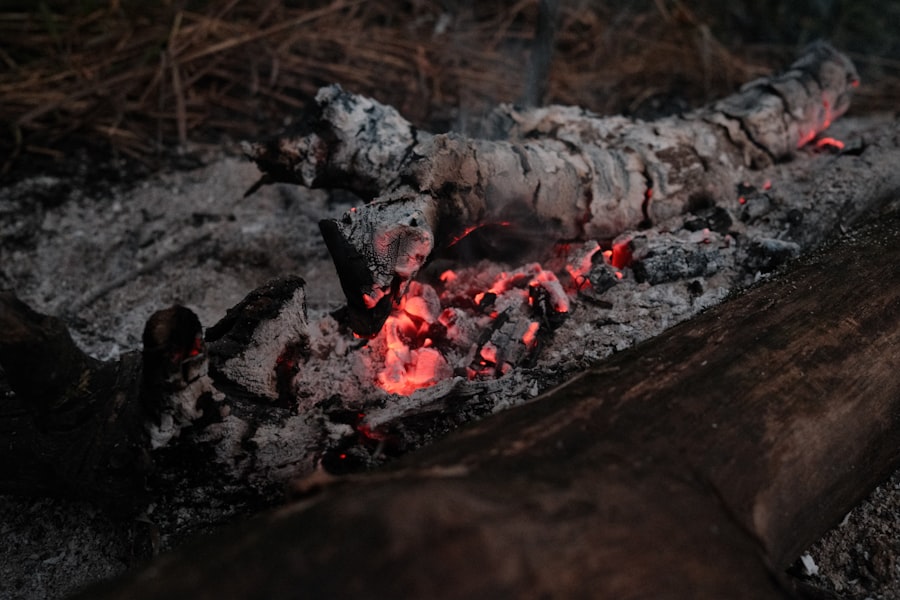
The process of radiocarbon dating charcoal from smelting sites is a meticulous multi-stage operation, requiring precision and specialized knowledge. It is a journey that begins with careful excavation and culminates in the interpretation of highly sophisticated scientific data.
Excavation and Contextualization: The First Crucial Steps
The success of any radiocarbon dating endeavor hinges on the initial excavation. Archaeologists must carefully document the context in which the charcoal is found. This involves noting its spatial relationship to other archaeological features, such as furnaces, slag heaps, hearths, or any artifactual assemblages that can provide chronological anchors. A charcoal sample recovered from within the operational layers of a furnace, for instance, is far more informative than one found in a disturbed context. Understanding the stratigraphic layers – the geological “pages” of the site – is paramount. Each layer tells a story, and the charcoal belongs to a specific narrative.
Sample Selection and Preparation: The Art of Choosing and Cleaning
Once potential samples are identified, careful selection is crucial. Larger, well-preserved charcoal fragments are generally preferred. The archaeologist must also consider the potential for contamination. Modern organic matter, such as rootlets from plants, or even residues from handling, can skew the results. In the laboratory, these selected samples undergo rigorous cleaning. This often involves physically removing any extraneous material and then chemical treatment to eliminate surface contaminants. It’s akin to polishing a jewel to reveal its true brilliance, removing the grime of ages to expose the pristine material within.
The Accelerator Mass Spectrometry (AMS) Revolution
While traditional radiocarbon dating methods involved measuring the radioactivity of a sample (decay counting), the advent of Accelerator Mass Spectrometry (AMS) has revolutionized the field. AMS directly counts the number of carbon-14 atoms in a sample by accelerating them through a particle accelerator and then separating and counting them. This technique is far more sensitive than older methods, allowing for the dating of much smaller samples and providing more precise results. AMS can date samples as small as a few milligrams, which is particularly advantageous when dealing with precious or scarce archaeological material. This technological leap allows us to peer into the past with a much finer lens.
Calibration and Interpretation: Bridging the Gap to Human History
The date obtained from radiocarbon dating is a “radiocarbon age,” expressed in years before present (BP), with “present” conventionally defined as AD 1950. However, the atmospheric concentration of carbon-14 has not been constant throughout history due to variations in solar activity and geomagnetic field strength. Therefore, these raw radiocarbon ages must be calibrated against established calibration curves derived from independently dated materials, such as tree rings (dendrochronology) and ice cores. This calibration process converts the radiocarbon age into a calendar date or range of dates, providing a more accurate historical timeline. The uncalibrated date is like a raw musical note; the calibrated date is the rendered melody, placed in its proper temporal composition.
Significance in Understanding Ancient Smelting
The application of charcoal dating to ancient smelting sites offers profound insights into the development and spread of metallurgy, a transformative technology that reshaped human societies. By precisely dating the charcoal associated with these operations, archaeologists can construct a more robust chronology for when and where specific metalworking practices emerged and flourished. This allows for a nuanced understanding of technological diffusion, economic interactions, and cultural developments.
Mapping the Dawn of Metallurgy: Early Adoption and Innovation
Radiocarbon dating provides critical benchmarks for understanding the earliest evidence of smelting. For example, dating charcoal from sites in the Near East has helped establish timelines for the emergence of copper smelting, pushing back the documented origins of this crucial technology. Similarly, in regions like Southeast Asia, charcoal dates have illuminated the independent development or slow adoption of iron smelting techniques. Without these precise temporal markers, the narrative of metallurgical innovation would remain hazy and speculative. We can trace the very ignition points of humanity’s metallic age.
Tracking the Diffusion of Technology: Networks of Knowledge
As smelting technologies spread, charcoal dating becomes a powerful tool for tracking the movement of knowledge and people. By comparing the dates of smelting sites in different regions, researchers can infer the direction and speed of technological diffusion. Did iron smelting spread rapidly across Eurasia with migrating populations, or was it a slower process of independent invention and gradual adoption? Charcoal analyses, providing concrete temporal anchors, help answer these complex questions. It allows us to plot the ancient highways of technological understanding.
Economic and Social Implications: Trade, Specialization, and Settlement
The dating of smelting sites also sheds light on the economic and social organization of ancient societies. Early smelting operations, often small-scale and localized, suggest self-sufficiency. As dates reveal more concentrated and widespread smelting activities, it implies the development of trade networks for both raw materials (ores) and finished metal products. Furthermore, the intensity and scale of smelting revealed by dating can indicate periods of increased demand, specialization of labor, and the growth of settlements around resource-rich areas. The unearthed charcoal can reveal the bustling marketplaces of antiquity.
Charcoal dating has proven to be an invaluable tool for archaeologists studying ancient smelting sites, as it allows for the precise dating of organic materials associated with metal production. This technique not only helps in understanding the timeline of technological advancements but also sheds light on the environmental conditions of the era. For instance, the ancient Persian qanat system, which was intricately linked to water management and agricultural practices, provides context for the resources available to these smelting operations. To explore more about this fascinating aspect of ancient engineering, you can read about it in this article on the ancient Persian qanat system.
Challenges and Future Directions
| Site Name | Location | Sample ID | Charcoal Type | Radiocarbon Date (BP) | Calibrated Date Range (cal BC) | Smelting Activity Period | Notes |
|---|---|---|---|---|---|---|---|
| Iron Hill | England | IH-01 | Oak | 3200 ± 40 | 1600 – 1400 BC | Late Bronze Age | High charcoal concentration near furnace remains |
| Blacksmith’s Hollow | Germany | BH-07 | Birch | 2750 ± 35 | 1100 – 900 BC | Early Iron Age | Charcoal found in slag layers |
| Red Valley | Turkey | RV-03 | Juniper | 4500 ± 50 | 3350 – 3100 BC | Chalcolithic Period | Evidence of copper smelting |
| Stoneforge Site | France | SF-12 | Hazel | 2900 ± 45 | 1300 – 1100 BC | Late Bronze Age | Multiple smelting furnaces identified |
| Mountain Ridge | Spain | MR-05 | Pine | 3600 ± 60 | 2100 – 1800 BC | Early Bronze Age | Charcoal associated with slag heaps |
Despite its immense value, charcoal dating is not without its challenges, and ongoing research continues to refine its application and expand its potential.
Contamination and Context: Enduring Obstacles
As previously mentioned, contamination remains a significant challenge. Modern carbon can infiltrate ancient samples through rootlets, soil humic acids, or even improper handling. Meticulous excavation and laboratory cleaning protocols are essential, but even then, subtle contamination can sometimes lead to anomalous dates. Furthermore, ensuring that the dated charcoal is unequivocally in situ and directly related to the smelting activity is paramount. If the charcoal is from a later hearth built on top of a smelting site, its date will not reflect the original industrial period. The ghost of modern presence can haunt the ancient past.
Reservoir Effects and Marine Contexts: Complicating Factors
In certain environments, such as areas with significant groundwater or where organisms consume dissolved inorganic carbon from ancient carbon reservoirs, the principle of radiocarbon dating can be complicated by “reservoir effects.” This can lead to samples appearing older than they actually are. Similarly, dating materials from marine environments presents unique challenges due to the complex carbon exchange within ocean systems. These are known as the “phantom reefs” of dating, where seemingly straightforward measurements can carry hidden complexities.
Expanding the Horizon: New Materials and Advanced Techniques
Future research aims to expand the range of materials that can be reliably dated and to refine the accuracy of existing techniques. Investigating the potential of other archaeological materials, such as biochar (charcoal produced specifically for soil amendment) or even residues within pottery used for smelting, could provide complementary dating evidence. Furthermore, ongoing improvements in AMS technology promise even greater sensitivity and precision. The relentless march of scientific inquiry promises to refine our understanding of the past, chipping away at the remaining uncertainties.
Interdisciplinary Collaboration: A Synergistic Approach
Ultimately, the most powerful insights often emerge from interdisciplinary collaboration. Archaeologists, chemists, physicists, and geologists must work together to interpret the data, understand the limitations of the techniques, and construct the most comprehensive and accurate narratives of ancient metallurgical practices. This synergy of expertise is like assembling a complex ancient mechanism; each component is vital for its proper functioning. By unlocking the past through the precise science of charcoal dating, we gain a deeper appreciation for the ingenuity of our ancestors and the profound impact of their technological innovations on the trajectory of human civilization.
FAQs
What is charcoal dating in the context of ancient smelting sites?
Charcoal dating refers to the process of using radiocarbon dating techniques on charcoal samples found at ancient smelting sites. This method helps determine the age of the charcoal, which in turn provides an estimate of when the smelting activities took place.
Why is charcoal commonly found at ancient smelting sites?
Charcoal was used as a fuel and reducing agent in ancient smelting processes. Because it is carbon-based and can be preserved in archaeological contexts, charcoal remains are often found at smelting sites, making them valuable for dating purposes.
How does radiocarbon dating work on charcoal samples?
Radiocarbon dating measures the decay of carbon-14 isotopes in organic materials like charcoal. Since carbon-14 decays at a known rate, scientists can calculate the time elapsed since the charcoal was formed, providing an approximate date for the smelting activity.
What are the limitations of charcoal dating at smelting sites?
Limitations include potential contamination of samples, the “old wood” problem where the charcoal may come from older wood reused in smelting, and the fact that charcoal dates the burning event, which may not precisely correspond to the smelting activity itself.
How does charcoal dating contribute to understanding ancient metallurgy?
By providing chronological data, charcoal dating helps archaeologists establish timelines for metallurgical development, trade, and technological advances. It also aids in correlating smelting activities with cultural and environmental changes in ancient societies.