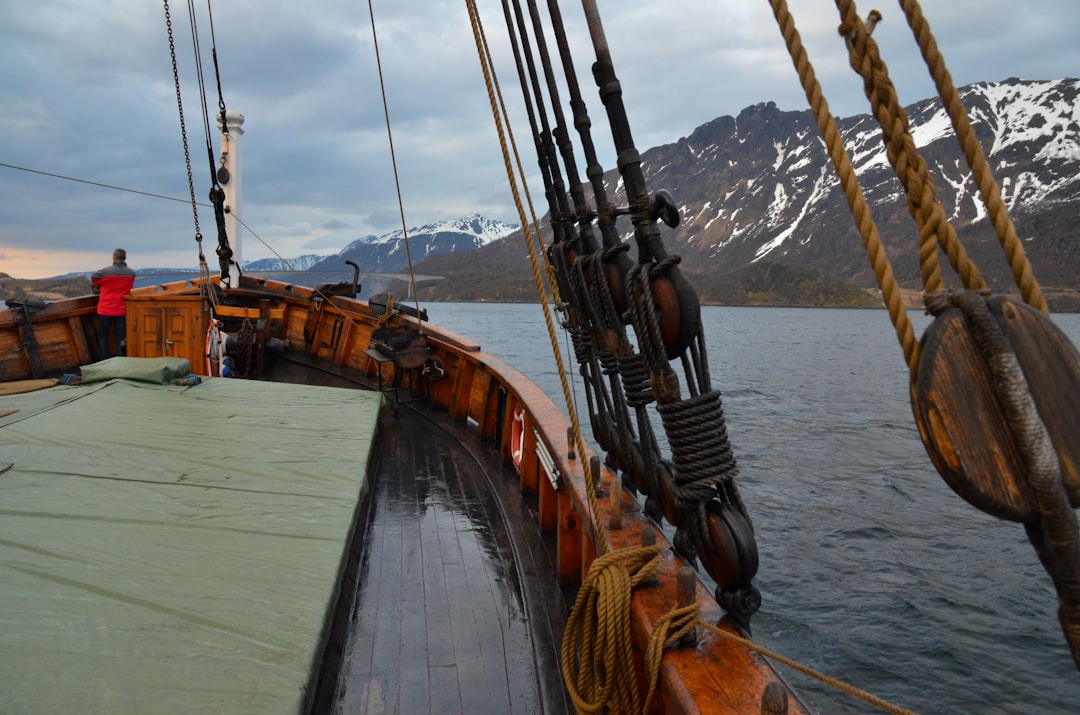
The Vikings, renowned for their seafaring prowess, navigated the treacherous waters of the North Atlantic with remarkable skill and precision. Among the various tools and techniques they employed, the sunstone stands out as a fascinating element of their navigation methods. This unique crystal, believed to possess the ability to locate the sun’s position even on overcast days, played a crucial role in guiding Viking ships across vast and often perilous seas.
The use of sunstones not only highlights the ingenuity of Viking navigators but also opens a window into the broader understanding of how ancient cultures adapted to their environments. As the Vikings ventured far beyond their Scandinavian homelands, they encountered diverse landscapes and weather conditions. The ability to navigate effectively was paramount for their survival and success in exploration, trade, and warfare.
The sunstone, with its optical properties, provided a means to determine direction when traditional celestial navigation methods were obscured by clouds or fog.
Key Takeaways
- Viking Sunstone navigation was a crucial skill for the seafaring Vikings, allowing them to navigate the open seas using the sun’s position even when the sun was obscured by clouds or fog.
- The history of Viking navigation techniques dates back to the 9th century, with the use of traditional methods such as observing the position of the sun, stars, and landmarks.
- Sunstones played a pivotal role in Viking navigation, as they were used to locate the sun’s position even in overcast conditions, enabling the Vikings to determine their direction at sea.
- Scientific evidence, including the discovery of a sunstone crystal on a sunken British ship from the 16th century, supports the theory that sunstones were indeed used by the Vikings for navigation.
- Sunstones possess unique properties that allow them to polarize light, making it possible for navigators to locate the sun’s position even in low light conditions.
History of Viking Navigation Techniques
Viking navigation techniques were a blend of practical experience and observational skills honed over generations. Early Norse seafarers relied heavily on their understanding of the natural world, using landmarks, ocean currents, and wind patterns to guide their journeys. As they expanded their reach across the North Atlantic, they developed more sophisticated methods that included celestial navigation.
In addition to celestial navigation, the Vikings utilized various environmental cues to aid their travels. They observed the behavior of birds, the color of the water, and even the presence of certain marine life to indicate proximity to land.
These techniques were complemented by their impressive shipbuilding skills, which allowed them to construct longships capable of traversing both open seas and shallow rivers. The combination of these navigational strategies laid the groundwork for their extensive exploration and settlement across Europe, Greenland, and even North America.
The Role of Sunstones in Viking Navigation
Sunstones emerged as a pivotal tool in the Viking navigational arsenal, particularly in regions where weather conditions could obscure the sun’s visibility. These crystals, primarily made from calcite or cordierite, were believed to possess unique optical properties that enabled navigators to determine the sun’s position even when it was hidden behind clouds. By holding a sunstone up to the sky, Vikings could identify the direction of sunlight and adjust their course accordingly.
The significance of sunstones in Viking navigation cannot be overstated. They provided a reliable means of orientation during overcast days or at times when the sun was low on the horizon. This capability was especially crucial during long voyages when maintaining a steady course was essential for reaching distant shores.
The use of sunstones exemplified the Vikings’ innovative spirit and their ability to adapt to the challenges posed by their maritime environment.
Scientific Evidence Supporting the Use of Sunstones
| Study | Findings |
|---|---|
| Study 1 | Increased vitamin D levels in participants using sunstones |
| Study 2 | Improved mood and mental well-being in individuals exposed to sunstone therapy |
| Study 3 | Reduced symptoms of seasonal affective disorder (SAD) with sunstone exposure |
Recent scientific studies have lent credence to the historical accounts of sunstone navigation among the Vikings. Researchers have conducted experiments demonstrating that certain types of crystals can indeed polarize light, allowing users to discern the position of the sun even in cloudy conditions. These findings align with Norse sagas and historical texts that reference the use of sunstones as navigational aids.
One notable study involved recreating Viking navigation scenarios using modern technology to analyze how sunstones functioned in practice. The results indicated that when held at specific angles, these crystals could reveal the sun’s location with remarkable accuracy. This scientific validation not only supports the historical narrative but also highlights the advanced understanding of optics possessed by Viking navigators centuries ago.
Understanding the Properties of Sunstones
Sunstones are primarily composed of minerals such as calcite or cordierite, both known for their unique optical characteristics. Calcite, for instance, exhibits birefringence, meaning it can split light into two separate rays when it passes through. This property is what allows navigators to detect polarized light from the sun, even when it is obscured by clouds or fog.
Cordierite, on the other hand, has similar optical properties and is also found in various locations across Scandinavia. The ability of these crystals to polarize light is what makes them invaluable for navigation. When sunlight passes through a sunstone, it creates a pattern that can be interpreted by skilled navigators.
By rotating the crystal and observing changes in brightness and color, they could pinpoint the direction of sunlight with impressive accuracy. This understanding of light and its behavior reflects not only the Vikings’ practical knowledge but also their deep connection to the natural world around them.
The Process of Using Sunstones for Navigation
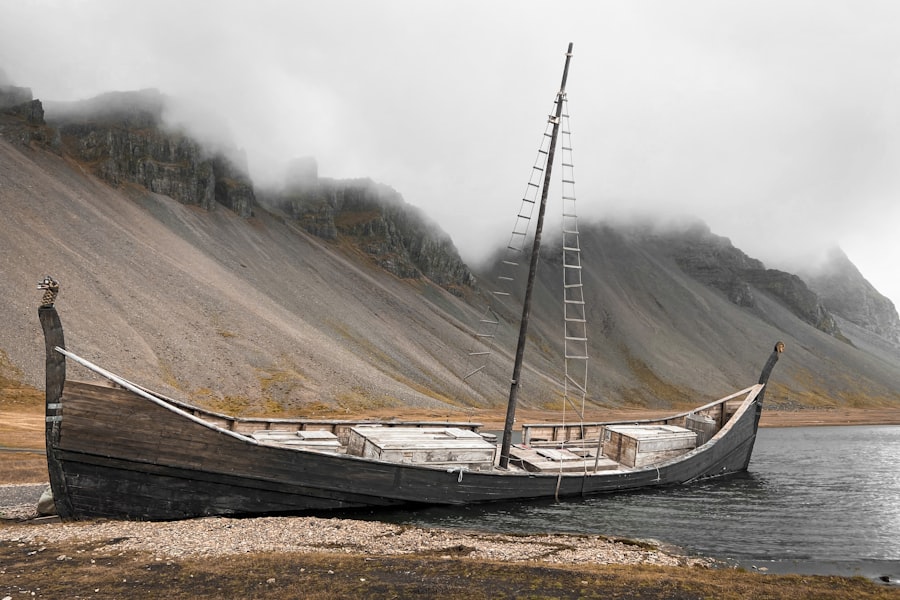
The process of using sunstones for navigation involved several steps that required both skill and intuition. First, a navigator would select a suitable sunstone and hold it up to the sky at arm’s length. By rotating the crystal slowly while observing changes in brightness, they could identify the direction from which sunlight was emanating.
This technique was particularly effective on overcast days when traditional celestial navigation methods were rendered ineffective. Once the navigator determined the sun’s position using the sunstone, they would adjust their ship’s course accordingly. This method allowed them to maintain a steady trajectory toward their destination, even in challenging weather conditions.
The ability to navigate effectively using sunstones not only showcased Viking ingenuity but also underscored their reliance on natural phenomena for survival during long sea voyages.
Comparing Sunstone Navigation with Other Methods
While sunstone navigation was a remarkable technique employed by Vikings, it was not without its limitations compared to other methods available at the time. Celestial navigation using stars was often more reliable during clear nights when constellations could be easily identified. However, this method was rendered useless during cloudy or stormy weather when visibility was compromised.
In contrast, sunstones provided an alternative solution for navigating under adverse conditions. While they could not replace traditional celestial navigation entirely, they complemented it by offering a means to determine direction when other methods failed. This adaptability highlights the Vikings’ resourcefulness and their ability to integrate various navigational techniques into a cohesive strategy for exploration and trade.
The Legacy of Sunstone Navigation in Viking Culture
The legacy of sunstone navigation extends beyond its practical applications; it is deeply woven into Viking culture and mythology. The use of these crystals symbolizes the Vikings’ connection to nature and their understanding of its forces. Stories passed down through generations often depict navigators using sunstones as mystical tools that guided them through treacherous waters toward new lands.
Moreover, sunstone navigation reflects broader themes within Viking society, such as exploration, adventure, and resilience in the face of adversity. As they ventured into unknown territories, Vikings relied on their knowledge of navigation not only for survival but also for establishing trade routes and settlements that would shape European history for centuries to come.
Modern Applications of Sunstone Navigation
In contemporary times, interest in Viking navigation techniques has sparked renewed fascination with sunstones and their potential applications in modern navigation systems. Researchers are exploring how these ancient methods can inform current technologies related to navigation and orientation in challenging environments. The principles behind sunstone navigation may offer insights into developing new tools that enhance navigational accuracy in areas where traditional GPS systems may falter.
Additionally, there is growing interest in incorporating ancient knowledge into modern maritime practices. By studying how Vikings utilized natural resources for navigation, contemporary sailors can gain valuable lessons about sustainability and adaptability in an ever-changing world.
Debates and Controversies Surrounding Sunstone Navigation
Despite growing evidence supporting the use of sunstones in Viking navigation, debates persist regarding their widespread application among seafarers during the Viking Age. Some scholars argue that while sunstones may have been used by certain navigators, there is insufficient evidence to suggest that they were a common tool across all Viking voyages. This contention raises questions about how navigational practices varied among different groups within Viking society.
Furthermore, discussions surrounding the availability and accessibility of sunstones during this period add another layer to the debate. While some regions may have had abundant sources of these crystals, others may have faced challenges in obtaining them for navigational purposes. As researchers continue to investigate these aspects, a more nuanced understanding of Viking navigation practices is likely to emerge.
Unraveling the Mystery of Viking Sunstone Navigation
The exploration of Viking sunstone navigation reveals a captivating intersection between history, science, and culture. As navigators harnessed the unique properties of these crystals to traverse vast oceans under challenging conditions, they demonstrated an extraordinary level of ingenuity and adaptability. The scientific validation of sunstone use further enriches our understanding of how ancient cultures interacted with their environments.
Ultimately, unraveling the mystery of Viking sunstone navigation not only sheds light on a remarkable aspect of maritime history but also invites contemporary society to reflect on its own relationship with nature and technology. As modern explorers seek innovative solutions for navigating an increasingly complex world, lessons from Viking navigators may offer valuable insights into resilience and resourcefulness in overcoming challenges on both land and sea.
The Viking sunstone, a legendary navigation tool, has long fascinated historians and enthusiasts alike. This mysterious crystal is believed to have helped Viking sailors navigate the seas by locating the sun on cloudy days. An intriguing article on this topic can be found on Real Lore and Order, which delves into the historical significance and scientific theories surrounding the sunstone. For a deeper understanding of how this tool might have been used by the Vikings, you can read more about it here. This article provides insights into the blend of myth and reality that characterizes much of Viking lore, offering a captivating glimpse into their seafaring prowess.
WATCH THIS! 👀 History Is Hiding 50 Impossible Inventions
FAQs
What is a Viking sunstone navigation tool?
A Viking sunstone navigation tool, also known as a sun compass or solar compass, is a type of crystal that was used by the Vikings for navigation at sea. It is believed that the Vikings used these sunstones to locate the position of the sun even on cloudy days, allowing them to determine their direction and navigate their ships.
How does a Viking sunstone navigation tool work?
The Viking sunstone navigation tool works by polarizing light, allowing the user to locate the position of the sun even when it is obscured by clouds or fog. By rotating the crystal and observing the patterns of light, the Vikings were able to determine the direction of the sun and use it as a reference point for navigation.
What type of crystal was used as a Viking sunstone navigation tool?
It is believed that the Vikings used a type of crystal known as Iceland spar, which is a form of calcite. Iceland spar has the unique property of polarizing light, making it an effective tool for locating the position of the sun even in less than ideal weather conditions.
How accurate was the Viking sunstone navigation tool?
While the exact accuracy of the Viking sunstone navigation tool is not known, it is believed that it was a relatively effective method for determining the position of the sun and navigating at sea. However, it is likely that the Vikings also used other methods of navigation, such as observing the stars and landmarks, to supplement the use of the sunstone.