
Rare Earth Elements (REEs) are a group of 17 chemically similar elements that play a crucial role in modern technology and industry. These elements, which include lanthanides such as cerium, neodymium, and europium, along with scandium and yttrium, are not actually rare in terms of their abundance in the Earth’s crust. However, their extraction and processing are complex and often environmentally challenging.
The unique properties of REEs make them indispensable in various applications, from electronics to renewable energy technologies. As the demand for advanced materials continues to grow, understanding the significance of these elements becomes increasingly important. The term “rare earth” can be somewhat misleading, as many of these elements are relatively abundant.
However, they are rarely found in economically exploitable concentrations, which contributes to their classification as “rare.” The increasing reliance on technology that incorporates REEs has sparked interest in their mining, processing, and recycling. As nations strive for technological advancement and energy independence, the strategic importance of these elements has come to the forefront of global discussions.
Key Takeaways
- Rare Earth Elements (REEs) are a group of 17 chemical elements that are essential for modern technology and have unique properties.
- REEs have a long history dating back to the 18th century, with significant developments in the 20th century leading to their widespread use.
- These elements are found in various geological settings around the world, with China currently dominating the global production and distribution of REEs.
- REEs have diverse applications in electronics, renewable energy, defense technologies, and healthcare, making them crucial for modern society.
- The environmental and economic impact of REE mining is a growing concern, leading to efforts in recycling and sustainable practices to mitigate these issues.
History of Rare Earth Elements
The history of rare earth elements dates back to the late 18th century when they were first discovered. The first of these elements, cerium, was identified in 1803 by Swedish chemist Jöns Jacob Berzelius and his student Wilhelm Hisinger. This marked the beginning of a long journey into the understanding and utilization of REEs.
Over the following decades, more elements were isolated and characterized, including lanthanum and neodymium. The 19th century saw a growing interest in these elements, particularly in Europe and North America, as scientists began to explore their unique properties. The industrial applications of rare earth elements began to emerge in the mid-20th century, particularly during and after World War
The development of new technologies, such as phosphors for color television screens and catalysts for petroleum refining, drove demand for REEs. By the 1960s and 1970s, countries like the United States and Japan had established themselves as leaders in rare earth production. However, this dominance was challenged in the 1980s when China entered the market with significant reserves and lower production costs, ultimately leading to its current status as the world’s largest producer of REEs.

Occurrence and Distribution of Rare Earth Elements
| Element | Occurrence (ppm) | Distribution |
|---|---|---|
| Scandium | 22 | China, Russia, Kazakhstan |
| Yttrium | 33 | China, USA, Australia |
| Lanthanum | 39 | China, USA, Australia |
| Cerium | 66 | China, USA, Australia |
| Praseodymium | 9 | China, USA, Australia |
Rare earth elements are found in various geological formations, primarily in igneous rocks and lateritic soils. They are often associated with minerals such as bastnäsite, monazite, and xenotime. These minerals contain varying concentrations of REEs, which can be extracted through mining processes.
While REEs are distributed globally, certain regions are particularly rich in these elements. For instance, China holds a significant portion of the world’s rare earth reserves, accounting for approximately 37% of global production as of recent estimates. Other countries with notable rare earth deposits include Australia, the United States, Brazil, and India.
The distribution of REEs is not uniform; some regions have high concentrations while others have very little. This uneven distribution poses challenges for countries seeking to secure a stable supply of these critical materials. As global demand continues to rise, the exploration for new deposits has intensified, leading to increased investment in mining operations around the world.
Properties and Uses of Rare Earth Elements
Rare earth elements possess unique physical and chemical properties that make them highly valuable across various industries.
These characteristics enable their use in a wide range of applications, from high-performance magnets used in electric vehicles and wind turbines to phosphors in LED lighting and displays.
Additionally, REEs are essential components in batteries, glass manufacturing, and even medical imaging technologies. The versatility of rare earth elements is evident in their applications within cutting-edge technologies. For example, neodymium is a key ingredient in powerful permanent magnets that drive electric motors in hybrid and electric vehicles.
Similarly, europium is used in phosphors that produce vibrant colors in television screens and computer monitors. As technology continues to evolve, the demand for REEs is expected to grow even further, highlighting their importance in driving innovation across multiple sectors.
Importance of Rare Earth Elements in Modern Technology
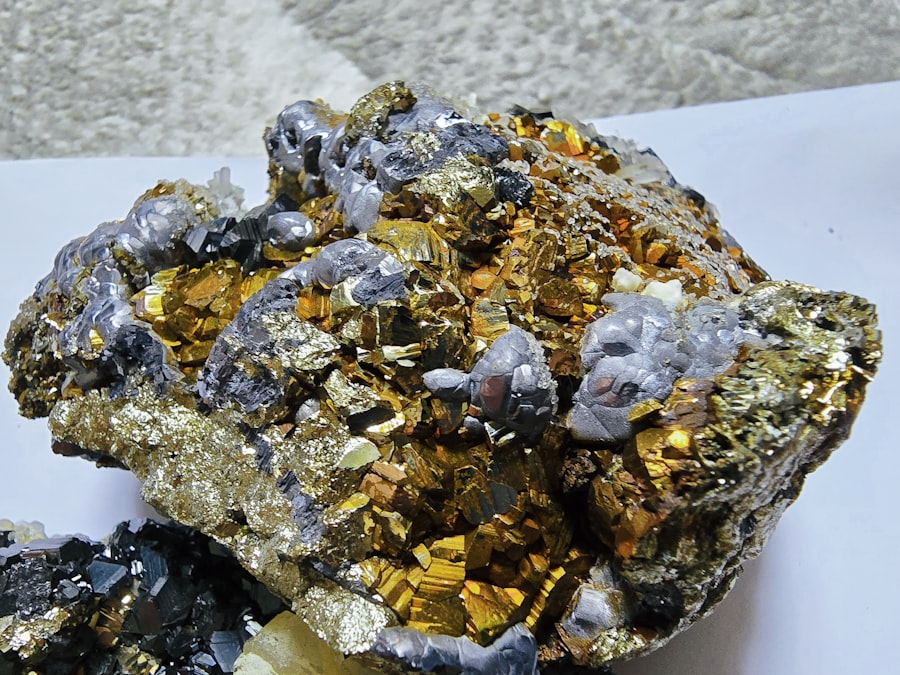
In today’s technology-driven world, rare earth elements have become indispensable. They are critical for the production of high-tech devices such as smartphones, tablets, and laptops. The miniaturization of electronic components relies heavily on the unique properties of REEs to enhance performance while reducing size.
Furthermore, as society shifts towards renewable energy sources, the role of rare earth elements becomes even more pronounced. Wind turbines and electric vehicles are two prime examples where REEs play a pivotal role. The magnets used in wind turbine generators require neodymium and dysprosium for efficiency and durability.
Similarly, electric vehicles depend on rare earth-based batteries for optimal performance and energy storage. As nations strive to meet climate goals and reduce carbon emissions, the demand for technologies that utilize rare earth elements is expected to surge.
Environmental and Economic Impact of Rare Earth Element Mining
The mining and processing of rare earth elements have significant environmental implications. The extraction process often involves open-pit mining or underground mining techniques that can lead to habitat destruction and soil erosion. Additionally, the refining process generates toxic waste materials that can contaminate water sources if not managed properly.
The environmental footprint of rare earth mining has raised concerns among environmentalists and local communities alike. Economically, however, rare earth element mining can provide substantial benefits to countries with rich deposits. It creates jobs and stimulates local economies through investment in infrastructure and services.
Balancing economic benefits with environmental protection remains a critical challenge for policymakers worldwide.
Challenges and Controversies Surrounding Rare Earth Element Extraction
The extraction of rare earth elements is fraught with challenges that extend beyond environmental concerns. Geopolitical tensions often arise due to the concentration of REE resources in specific regions, particularly China’s dominance in production. This has led to fears among other nations about supply chain vulnerabilities and reliance on a single country for critical materials.
As a result, countries are increasingly seeking to diversify their sources of rare earths through domestic production or partnerships with other nations. Moreover, the social implications of mining activities cannot be overlooked. Communities near mining sites often face displacement or health risks due to pollution from mining operations.
Protests against mining practices have emerged globally as local populations demand greater accountability from companies involved in REE extraction. Addressing these controversies requires a comprehensive approach that considers both economic interests and social responsibility.
Innovations in Rare Earth Element Recycling and Sustainable Practices
As awareness grows regarding the environmental impact of rare earth element mining, innovations in recycling and sustainable practices have gained traction. Researchers are exploring methods to recover REEs from electronic waste (e-waste), which contains valuable materials that can be repurposed rather than discarded. This approach not only reduces the need for new mining operations but also addresses the growing problem of e-waste disposal.
Additionally, advancements in sustainable mining practices aim to minimize environmental damage associated with extraction processes. Companies are increasingly adopting technologies that reduce water usage and limit waste generation during mining operations. By implementing more responsible practices, the industry can work towards a more sustainable future while meeting the rising demand for rare earth elements.
Future Prospects and Research in Rare Earth Elements
The future prospects for rare earth elements appear promising as research continues to uncover new applications and extraction methods. Scientists are investigating alternative sources of REEs beyond traditional mining sites, including seabed mining and bioleaching techniques that utilize microorganisms to extract metals from ores. These innovative approaches could potentially reduce environmental impacts while expanding access to these critical materials.
Furthermore, ongoing research into the properties of rare earth elements may lead to new technological breakthroughs across various fields. As industries evolve and new technologies emerge, the demand for REEs is likely to increase significantly. This presents an opportunity for countries to invest in research initiatives aimed at enhancing their capabilities in REE production and recycling.
Global Trade and Geopolitical Significance of Rare Earth Elements
The global trade dynamics surrounding rare earth elements are complex and heavily influenced by geopolitical factors. Countries that possess significant reserves or production capabilities hold strategic advantages in international relations. The competition for access to these resources has led to tensions between nations as they vie for control over supply chains.
China’s dominance in the rare earth market has prompted other countries to seek alternatives or develop their own resources to reduce dependency on Chinese exports. This shift has implications not only for trade but also for national security as countries recognize the importance of securing access to critical materials essential for technological advancement.
The Future of Rare Earth Elements and Their Impact on Society
In conclusion, rare earth elements play an integral role in shaping modern society through their applications in technology and industry. As demand continues to rise alongside advancements in renewable energy and electronics, understanding the complexities surrounding REE extraction becomes increasingly vital. Balancing economic benefits with environmental sustainability will be crucial as nations navigate the challenges posed by resource scarcity and geopolitical tensions.
The future of rare earth elements hinges on innovation—both in terms of extraction methods and recycling practices—as well as international cooperation to ensure a stable supply chain that meets global needs responsibly. As society moves forward into an era defined by technological progress and environmental consciousness, rare earth elements will undoubtedly remain at the forefront of discussions regarding sustainable development and resource management.
Rare earth elements are critical components in many modern technologies, from smartphones to electric vehicles, due to their unique magnetic, luminescent, and electrochemical properties. Understanding their significance and the geopolitical dynamics surrounding their supply is crucial for both industry and policy-making. For a deeper dive into the complexities and implications of rare earth elements, you can explore a related article on this topic by visiting Real Lore and Order. This resource provides valuable insights into the global landscape of rare earth elements and their impact on various sectors.
WATCH THIS! They Can Shut Down Your World Overnight. This Is The Choke Point Controlling Everything!
FAQs
What are rare earth elements?
Rare earth elements are a group of 17 chemical elements in the periodic table, including scandium, yttrium, and the 15 lanthanides. They are essential for the production of various high-tech products, including electronics, magnets, and renewable energy technologies.
Why are rare earth elements important?
Rare earth elements are crucial for the manufacturing of many modern technologies, including smartphones, electric vehicles, wind turbines, and defense systems. They possess unique magnetic, luminescent, and catalytic properties that make them indispensable for these applications.
Where are rare earth elements found?
Rare earth elements are found in various minerals and ores, with the largest deposits located in China, Australia, the United States, and several other countries. They are typically extracted through mining and processing methods, which can be environmentally challenging.
Are rare earth elements really rare?
Despite their name, rare earth elements are not actually rare in terms of abundance in the Earth’s crust. However, they are often dispersed and mixed with other elements, making their extraction and processing more challenging and costly.
What are the environmental concerns associated with rare earth element mining?
Rare earth element mining and processing can have significant environmental impacts, including habitat destruction, water and air pollution, and the generation of large amounts of waste. Efforts are being made to develop more sustainable and environmentally friendly extraction methods.
What is the geopolitical significance of rare earth elements?
Due to their critical role in modern technologies, rare earth elements have significant geopolitical implications. China currently dominates the global rare earth element market, leading to concerns about supply chain security and potential trade disputes. Efforts are being made to diversify rare earth element sources and develop alternative technologies.