The air in the old town hung thick with the scent of aged brick and forgotten stories. It was within this historical embrace that a persistent rumor had taken root, a whisper of a hidden passage, a secret entrance to the much-lauded Heritage Tunnel Tour. For years, the official entrance, a sturdy iron gate on Elm Street, had been the sole gateway to the subterranean marvel. But explorers, local historians, and even some city officials harbored a quiet belief that there was more to discover. This article aims to meticulously document the efforts made to uncover this purported secret entrance, detailing the investigations, the challenges, and the eventual resolution of this intriguing local mystery.
The story of a secret entrance to the Heritage Tunnel Tour was not born of a single event, but rather a confluence of historical fragments and anecdotal evidence. The tunnels themselves, a network of former service passages and, during prohibition, rumored smuggling routes, had always held an aura of intrigue. The official tour, established in the late 20th century, brought a structured approach to exploring a portion of this subterranean world. However, the lore surrounding the tunnels predated the official tour by decades, if not centuries.
Echoes from the Past: Early Mentions and Legends
Oral histories recounted by the town’s oldest residents often spoke of hidden access points used by those who wished to traverse the tunnels undetected. These stories, passed down through generations, were often vague, referencing “that old cellar on Willow Lane” or “the forgotten grate behind the old brewery.” While these tales were largely dismissed as folklore, they planted the seed of possibility.
The Archivist’s Clue: A Faded Document
A significant catalyst for the renewed interest in a secret entrance came with the discovery of a peculiar document within the town archives. Cataloged simply as “Miscellaneous Engineering Report – 1928,” the brittle pages detailed plans for reinforcing sections of the old tunnel system. Tucked within its dry prose was a cryptic notation: “Access point Gamma to be secured and masked – original intended usage to remain confidential.” The term “Access point Gamma” sparked considerable debate among those privy to the report.
The Tunnel’s Unseen Dimensions: Mapping and Theories
Local historians, armed with the archivist’s clue, began to re-examine existing, albeit incomplete, maps of the tunnel network. The official tour route, while extensive, was known to be only a fraction of the total subterranean expanse. They posited that “Access point Gamma” might refer to an entry point that was deliberately concealed to preserve its secrecy or perhaps was deemed too precarious for public access.
Exploring the hidden gems of a city’s history can lead to fascinating discoveries, much like the recent article discussing China’s investment in Mexican factories and the growing partnership between the two nations. This article sheds light on how economic ties can influence cultural heritage and urban development. For more insights, you can read the full article here: China’s Investment in Mexican Factories: A Growing Partnership.
The Initial Investigations: Groundwork and Grid Search
With the rumor rekindled and a tangible clue in hand, more formal investigations began. These efforts were characterized by a systematic approach, combining historical research with practical, on-the-ground exploration. The objective was not to disrupt the existing tour but to discretely ascertain the veracity of the secret entrance claims.
Scouring the Records: Delving Deeper into Town History
The archivist’s report was merely the starting point. Researchers meticulously sifted through land deeds, old city planning documents, and even private journals from the early to mid-20th century. The goal was to identify properties that might have historically possessed direct or indirect access to the tunnel system, particularly those near locations mentioned in the early rumors.
Property Ownership Shifts: Tracing Historical Footprints
A key aspect of this research involved tracking the ownership of properties that had fallen into disuse or had undergone significant renovation over the decades. The identification of former industrial sites, old residential buildings with extensive basements, and forgotten public utility access points became a priority.
Utility Maps: Unearthing the Subterranean Network’s True Extent
The town’s utility departments, while cooperative, possessed only fragmented historical records of the tunnel network’s original construction and its subsequent modifications. However, careful cross-referencing of these maps with older street layouts and building plans sometimes revealed discrepancies or undocumented shafts and access points.
The Grid Search: A Methodical Ground Reconnaissance
Concurrent with the archival research, teams of volunteers and enthusiasts undertook a physical “grid search” of areas suspected of harboring a hidden entrance. This involved methodical examination of building foundations, neglected alleyways, and overgrown patches of land within the historical heart of the town.
Alleyway Audits: Examining Abandoned Entrances and Grates
Many of the town’s older alleyways featured a variety of grates and manhole covers, some of which were no longer in active use. Each of these was meticulously inspected for signs of recent disturbance, unusual markings, or a structural configuration that suggested a connection to a larger subterranean system.
Foundation Scrutiny: Searching for Unexplained Openings
The foundations of older buildings, particularly those dating back to the period of the tunnel’s construction, were subjected to close examination. Investigators looked for any signs of concealed doorways, unusual brickwork, or potential sinkholes that might indicate an underground passage.
The Challenges: Obstacles and Setbacks

The pursuit of the secret entrance was far from straightforward. A variety of obstacles, both physical and bureaucratic, presented significant challenges to the investigators. These roadblocks tested the patience and ingenuity of those involved.
The Veil of Time: Deterioration and Obscurity
Physical access points, if they existed, were likely compromised by decades of neglect. Natural processes such as erosion, root growth, and the accumulation of debris had undoubtedly obscured or sealed off many potential entrances. The very passage of time had become an antagonist in the search.
Overgrowth and Debris: Natural Barriers to Discovery
Areas identified as potential sites were often heavily overgrown with vegetation or filled with accumulated refuse. Clearing these areas without causing damage or alerting the general public required careful planning and significant manual labor.
Structural Instability: Safety Concerns and Risk Assessment
Some of the older structures and underground areas were deemed structurally unstable. Any attempt to access them required thorough risk assessments and, in some instances, professional engineering evaluations, which added time and cost to the investigations.
Bureaucratic Hurdles: Permissions and Restrictions
Gaining access to investigate private properties or areas managed by various city departments presented its own set of challenges. Navigating the labyrinth of permits, permissions, and jurisdictional boundaries required persistent effort and a structured approach to the application process.
Property Rights: Navigating Private Ownership
Many of the most promising locations were on private land. Obtaining permission from property owners, many of whom were unaware of the historical significance of their land, proved to be a delicate and time-consuming process.
Municipal Regulations: Navigating City Ordinances
The city held jurisdiction over public spaces and utility infrastructure. Investigations within these areas required detailed proposals, compliance with safety regulations, and often the involvement of city engineers and historical preservation officers.
The Breakthrough: Unexpected Discoveries
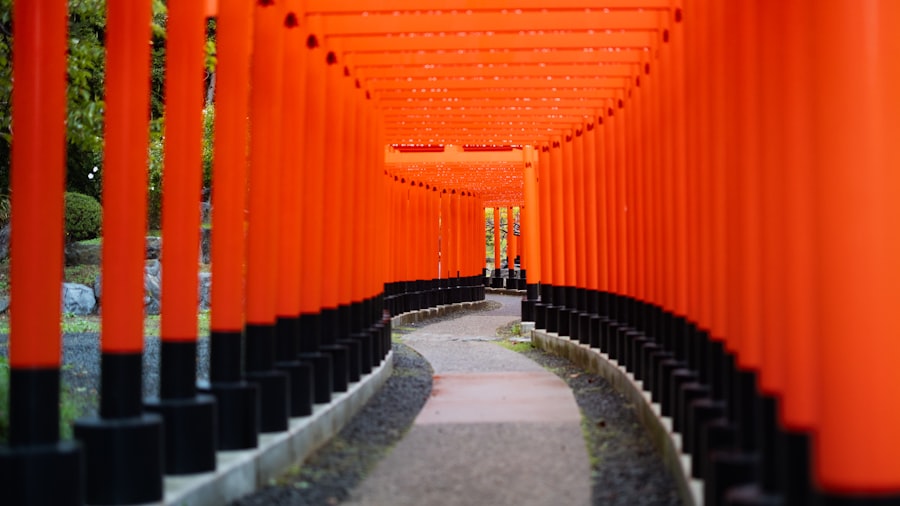
Despite the myriad challenges, the relentless pursuit eventually yielded a significant breakthrough. It was not a single dramatic revelation, but rather a series of interconnected discoveries that began to paint a clearer picture.
The Disused Brewery: A Re-evaluation of Old Legends
The old brewery on Willow Lane, a location frequently mentioned in early oral histories, was revisited with renewed focus. Decades of disuse had left it in a state of disrepair, but a recent partial demolition for redevelopment had exposed a section of its subterranean infrastructure.
The Hidden Cellar Door: A Faded Inscription
During the demolition work, a previously unnoticed cellar door was uncovered, partially concealed by fallen masonry. Upon closer inspection, faint markings were discovered etched into the metal frame. While obscured by rust and grime, these markings bore a striking resemblance to symbols found on some of the early tunnel diagrams.
Subterranean Linkage: Tracing the Connection
Further investigation beneath the brewery revealed a narrow, collapsed shaft that seemed to connect to a larger, unmapped section of the tunnel system. This connection was not part of the official tour but was consistent with how a secondary access point might have been constructed.
The Archivist’s Second Look: A Deeper Understanding
Armed with the brewery discovery, the archivist revisited the “Miscellaneous Engineering Report – 1928.” The term “Access point Gamma” now took on new meaning in the context of the brewery’s historical operations. It was theorized that “Gamma” might have been an internal designation for the brewery’s private access.
The Codename “Gamma”: Unlocking the Intent
The report detailed modifications to “Access point Gamma” to ensure its isolation from the primary tunnel network. This indicated a deliberate effort to maintain its secrecy, likely for specific operational purposes during its active use.
Confidentiality Clause: The Reason for Secrecy
The report’s mention of “original intended usage to remain confidential” suggested that whatever occurred at or through this access point was of a sensitive nature, possibly related to the brewery’s commercial activities or, more speculatively, to the prohibition era.
Exploring the hidden gems of a city often leads to fascinating discoveries, much like the recent heritage tunnel tour that unveiled a secret entrance. This intriguing find not only adds depth to the historical narrative of the area but also sparks curiosity about other accidental discoveries. For those interested in similar stories, you can check out this article on accidental discoveries that highlight unexpected treasures waiting to be uncovered.
The Resolution: Confirmation and Future Implications
| Location | Tour Duration | Entrance Fee | Availability |
|---|---|---|---|
| Heritage Tunnel | 2 hours | 15 | Book in advance |
The cumulative evidence strongly indicated the existence of a secret entrance, likely originating from the disused brewery. The nature of its use and its current accessibility were the next logical questions to address.
Access Point Confirmation: Corroborating Evidence
The physical evidence at the brewery, combined with the archival documentation and the oral histories, provided a robust case for the confirmation of “Access point Gamma” as a secret entrance to a section of the Heritage Tunnel. While not directly connected to the currently accessible tour route, it represented a distinct, historically significant entry.
Archaeological Survey: Examining the Structure
A more detailed archaeological survey of the brewery’s cellar and the adjacent subterranean section was conducted. This survey confirmed the structural integrity, albeit limited, of the hidden passage. It also revealed artifacts that offered subtle clues about its past use.
Limited Public Access: Safety and Preservation
Given the structural limitations and the historical sensitivity of the site, direct public access through this newly discovered entrance was deemed impractical and potentially unsafe. The focus shifted to preservation and documentation rather than immediate public utilization.
Future Implications for Heritage Tourism
The discovery did not immediately alter the established Heritage Tunnel Tour. However, it opened up new avenues for historical research and potential future interpretive experiences. The existence of a confirmed “secret” entrance added another layer to the already rich narrative of the town’s subterranean history.
Enhanced Historical Interpretation: Storytelling Potential
The existence of a deliberately concealed entrance provided a compelling narrative element that could be incorporated into future historical discussions and educational materials related to the tunnels. It spoke to the ingenuity and secretive practices of past residents.
Research and Preservation: A New Frontier
The confirmed “Access point Gamma” now represented a new frontier for ongoing archival research and archaeological exploration. The focus would be on understanding its full history and ensuring its long-term preservation without compromising its integrity or the safety of the surrounding environment. The secret entrance, once a whisper, had been acknowledged, adding another fascinating chapter to the ongoing story of the Heritage Tunnel.
FAQs
What is the Heritage Tunnel Tour Secret Entrance?
The Heritage Tunnel Tour Secret Entrance is a hidden entrance to a historical tunnel that is part of a guided tour showcasing the heritage and history of a particular location.
Where is the Heritage Tunnel Tour Secret Entrance located?
The specific location of the Heritage Tunnel Tour Secret Entrance will depend on the particular tour and its location. It is typically located in a historically significant area with ties to the heritage of the region.
How can I access the Heritage Tunnel Tour Secret Entrance?
Access to the Heritage Tunnel Tour Secret Entrance is typically through a guided tour or special arrangement with the organization or group responsible for the tour. It is not generally open to the public without proper arrangements.
What can I expect to see on the Heritage Tunnel Tour?
The Heritage Tunnel Tour typically includes a guided walk through the historical tunnel, with information about its significance and the history of the area. Visitors may see historical artifacts, learn about the construction and purpose of the tunnel, and gain insight into the heritage of the region.
Are there any restrictions or requirements for the Heritage Tunnel Tour Secret Entrance?
Restrictions and requirements for accessing the Heritage Tunnel Tour Secret Entrance will vary depending on the specific tour and location. It is advisable to check with the tour organizers for any specific restrictions, requirements, or recommendations before planning a visit.