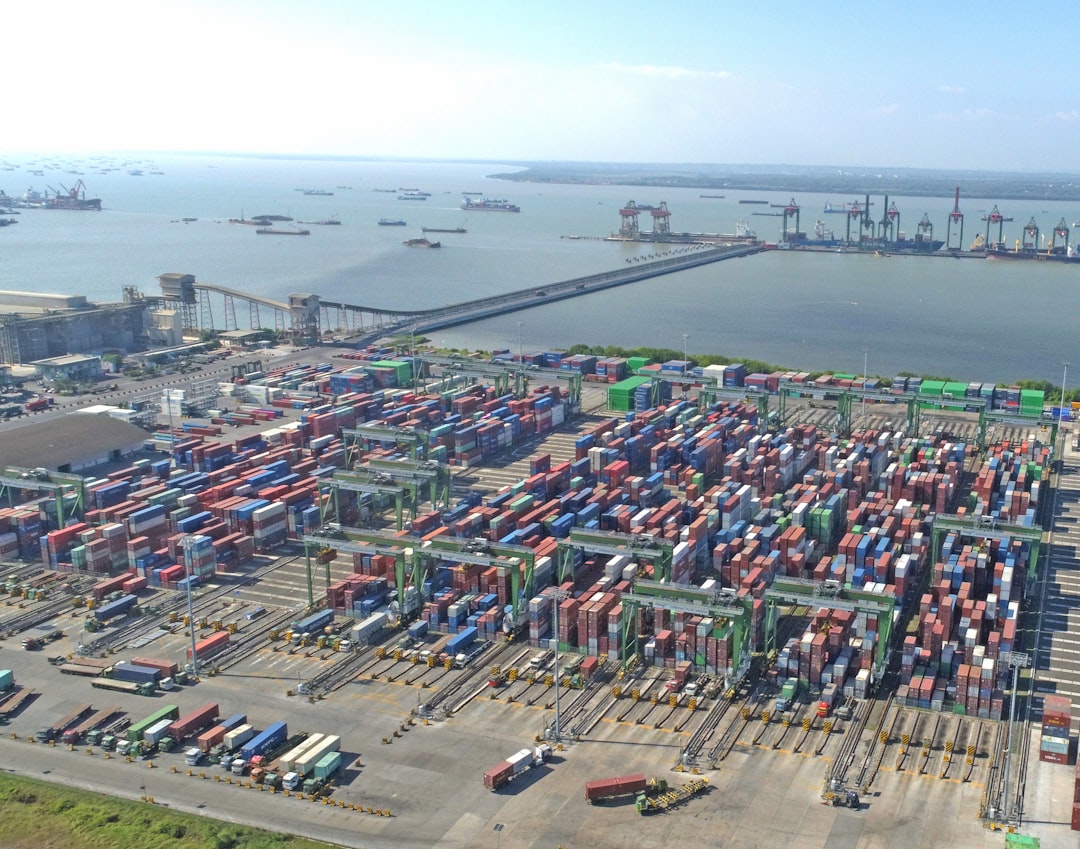
The year 2025 marks a discernible pivot in global shipping patterns, with a pronounced southward gravitational pull influencing established trade routes and fostering the emergence of novel transit corridors. This shift is not an abrupt revolution but rather a culmination of multifaceted pressures, ranging from geopolitical realignments and evolving economic landscapes to the persistent impacts of climate change and technological advancements. For decades, maritime trade has largely revolved around established arteries, predominantly connecting Asia to Europe and North America. However, the coming year signifies a period where these traditional flows are being re-evaluated, and potentially rerouted, in response to a complex interplay of factors.
The Shifting Sands of Geopolitics and Trade Alliances
The geopolitical landscape has been a significant catalyst for the recalibration of global trade. Nations are increasingly prioritizing supply chain resilience and are diversifying their trade partners to mitigate risks associated with single-source dependencies or political instability. This has led to a greater emphasis on regionalization and the development of intercontinental trade links that bypass traditional choke points or politically sensitive territories.
Diversification of Supply Chains and Risk Mitigation
The COVID-19 pandemic exposed vulnerabilities in highly concentrated global supply chains. Companies and governments alike have recognized the critical need to diversify their sourcing and manufacturing locations. This diversification naturally leads to the exploration of new shipping routes that better serve these newly established or strengthened regional hubs. For instance, increased manufacturing in Southeast Asia or Latin America necessitates optimized shipping lanes to serve diverse end markets, impacting the flow of both raw materials and finished goods. The focus is shifting from simply the cheapest route to the most reliable and secure, which in turn influences the viability of different maritime pathways.
Emerging Economic Powerhouses and their Connectivity Demands
The rise of new economic powerhouses in regions previously considered peripheral to global trade is a driving force behind this southward shift. Countries in Africa, South America, and parts of the Middle East are experiencing sustained economic growth, increasing their demand for both imports and exports. This burgeoning economic activity necessitates more direct and efficient shipping connections. Instead of goods being routed through established European or North American hubs, there is a growing impetus to create direct links between these developing economies and their key trading partners, often implying southward or cross-hemispheric routes.
The Influence of Bilateral and Multilateral Trade Agreements
The renegotiation and formation of new bilateral and multilateral trade agreements are actively shaping shipping patterns. Agreements that foster closer economic ties between nations in the Southern Hemisphere, or those that incentivize trade with previously less-connected regions, will inevitably encourage the development of corresponding shipping infrastructure and routes. These agreements can reduce tariffs and non-tariff barriers, making previously uneconomical routes more attractive and facilitating the establishment of new, dedicated shipping services.
In 2025, global shipping trends shifted significantly southward, largely influenced by emerging economic strategies and geopolitical dynamics. A related article discusses China’s ambitious lunar resource extraction strategy, which has implications for global trade routes and shipping logistics. As nations look to capitalize on new resources and technologies, the movement of shipping lanes is expected to adapt accordingly. For more insights into how these developments are reshaping the shipping industry, you can read the article here: China’s Lunar Resource Extraction Strategy.
Climate Change and the Redrawing of Maritime Maps
The undeniable reality of climate change is having a profound and often counterintuitive impact on global shipping. Melting ice caps, changing weather patterns, and rising sea levels are not just environmental concerns but are actively reshaping the feasibility and attractiveness of different maritime routes.
The Arctic’s Evolving Role and its Implications
For years, the potential of Arctic shipping routes, such as the Northern Sea Route and the Northwest Passage, has been discussed as a means to shorten transit times between Asia and Europe. While still subject to significant operational challenges and environmental concerns, the continued melting of Arctic ice is making these routes more navigable for longer periods. However, the “southward shift” in global shipping does not necessarily negate the Arctic’s importance. Instead, it suggests a diversification where routes to the north become a complementary option, potentially influencing the volume of traffic on traditional Suez Canal routes and thus indirectly impacting global south oriented traffic. The development of Arctic routes also requires significant investment in infrastructure and specialized vessels, a factor that may temper immediate widespread adoption.
Shifting Weather Patterns and Inclement Conditions
The increasing frequency and intensity of extreme weather events globally are impacting established shipping routes. Regions historically known for predictable weather may experience more storms, leading to delays and increased operational costs. This can make alternative routes, even if slightly longer, more appealing if they offer greater predictability and reduced risk of disruption. The potential for more turbulent seas in some traditional transit zones could push some shipping operations towards routes that are perceived as more stable, which may lie further south or in less exposed oceanic regions.
Sea Level Rise and Port Infrastructure Adaptations
Rising sea levels pose a direct threat to port infrastructure, particularly in low-lying coastal areas. This necessitates significant investment in adapting existing ports and potentially developing new port facilities in more elevated or protected locations. Such adaptations can influence the feasibility of certain routes and the types of vessels that can efficiently call at specific ports. If major ports in traditional northern trade zones face extensive and costly adaptation measures, the relative attractiveness of ports in the south, which may require less immediate intervention, could increase, further supporting a southward shift.
Technological Advancements and the Future of Maritime Logistics
Technological innovation is a constant in the shipping industry, but its impact in 2025 is poised to accelerate the trends towards diversification and efficiency, including the facilitation of new routes.
Automation and Autonomous Vessels
The advent of autonomous vessels promises to revolutionize shipping by reducing operational costs and potentially opening up routes that were previously too hazardous or expensive to operate. As autonomous technology matures, it could enable shipping in more challenging conditions or along less-traveled maritime paths, including those that are more prevalent in the Southern Hemisphere. The ability for these vessels to operate with greater precision and potentially for longer durations without human intervention could make the development of new, less-established routes more economically viable.
Big Data Analytics and Route Optimization
The sophisticated application of big data analytics is enabling shipping companies to optimize routes with unprecedented accuracy. By analyzing vast amounts of real-time data on weather, currents, vessel performance, and market demand, companies can identify the most efficient and cost-effective routes. This analytical capability allows for the dynamic adaptation of routes to changing conditions and the exploration of new, less conventional pathways that might offer advantages in specific scenarios. The insights gained from such analytics can highlight the benefits of shifting towards southern corridors for particular cargo types or trade pairings.
Digitalization of Port Operations and Intermodal Connectivity
The digitalization of port operations is streamlining cargo handling and significantly reducing turnaround times. This enhanced efficiency at ports directly impacts the attractiveness of the routes serving them. Improved intermodal connectivity, the seamless transfer of cargo between different modes of transportation (e.g., ship to rail or truck), is also crucial. As ports in the South see increased investment in digitalization and intermodal infrastructure, they become more viable nodes in new global trade networks, facilitating the flow of goods along emerging southward-oriented routes.
Emerging Trade Corridors and the Reconnaissance of New Routes
The confluence of geopolitical, environmental, and technological factors is leading to the active exploration and, in some cases, the establishment of entirely new trade corridors, with a distinct southward orientation.
The Southern Maritime Silk Road and its Expansion
Inspired by the historical Silk Road, the concept of a “Maritime Silk Road” has been evolving, with China actively investing in port infrastructure and trade agreements across the Indian Ocean and beyond. In 2025, this initiative is expected to see further expansion, with a greater focus on connecting South Asia, Southeast Asia, Africa, and even South America through enhanced maritime links. This expansion directly contributes to the southward gravitational pull, as it creates direct and more efficient pathways bypassing traditional European transhipment points. The development of this corridor is not solely about economic exchange but also about enhancing geopolitical influence and strategic positioning.
Africa’s Growing Significance as a Trade Hub
Africa is poised to become an increasingly significant player in global trade, driven by its expanding population, growing middle class, and abundant natural resources. The development of new port infrastructure, coupled with the establishment of robust regional trade agreements like the African Continental Free Trade Area (AfCFTA), is creating opportunities for new shipping routes that connect African nations with each other and with global markets. These routes will predominantly flow southwards or east-west across the southern hemisphere, establishing Africa as a more central hub rather than a peripheral trading partner.
The South Atlantic and its Potential
The South Atlantic region, historically less prominent than the North Atlantic, is witnessing renewed interest as a potential trade corridor. As economies in South America and Southern Africa strengthen and seek greater direct connectivity, routes across the South Atlantic are becoming more viable. This could involve increased direct shipping services between Brazil, Argentina, and countries like South Africa and Nigeria, thereby diverting cargo from more traditional, circuitous routes. This region represents a significant untapped potential for more direct and efficient trade flows.
In 2025, global shipping trends shifted significantly as companies sought more efficient routes and cost-effective solutions, leading to a notable movement southward. This change was influenced by various factors, including advancements in navigation technology and the increasing importance of sustainability in shipping practices. For a deeper understanding of how ancient navigation techniques, such as those used by the Minoans, have inspired modern shipping strategies, you can explore this insightful article on Minoan celestial navigation. The lessons learned from history continue to shape the future of global trade.
Challenges and Opportunities for Shipping in the Southern Hemisphere
While the southward shift in global shipping presents a compelling narrative of evolving trade, it is not without its challenges. Navigating these complexities will be crucial for capitalizing on the emerging opportunities.
Infrastructure Development and Investment Needs
A significant hurdle for the widespread adoption of new southern trade routes is the need for substantial investment in port infrastructure, including dredging, expanding berth capacity, and improving intermodal connections. In many emerging economies in the Southern Hemisphere, existing port facilities may not be equipped to handle the larger vessels or the increased volume of cargo that these new routes would entail. Overcoming these infrastructure deficits and attracting the necessary capital will be a key determinant of success.
Regulatory Harmonization and Maritime Security
Establishing efficient and secure new trade routes requires a commitment to regulatory harmonization across different nations. Consistent customs procedures, maritime safety regulations, and port state control regimes are essential for smooth and predictable trade flows. Furthermore, ensuring maritime security, including combating piracy and other illicit activities, will be paramount for building confidence and encouraging investment in these developing corridors, particularly as they venture into less-patrolled waters.
Environmental Sustainability and Green Shipping Initiatives
As new routes are established, there is an imperative to incorporate environmental sustainability from the outset. This includes promoting the adoption of greener shipping technologies, such as low-emission fuels and more fuel-efficient vessels. The development of new port infrastructure should also prioritize environmental impact assessments and the implementation of sustainable practices. The momentum towards decarbonization in the shipping industry means that any new routes must be designed with long-term environmental considerations in mind, potentially favoring routes that offer access to renewable energy sources for refueling.
The Future Outlook: A More Polycentric Trade Landscape
In conclusion, 2025 signals a significant recalibration of global shipping, characterized by a discernible southward shift. This evolution is driven by a complex interplay of geopolitical realignments, the growing economic influence of nations in the Southern Hemisphere, the undeniable impacts of climate change, and the transformative power of technological advancements. While challenges related to infrastructure development, regulatory harmonization, and environmental sustainability remain, the emergence of new trade corridors and the increasing importance of regions previously considered peripheral promise to usher in a more polycentric and dynamic global trade landscape. The long-established arteries of global commerce are being supplemented, and in some cases, supplanted, by a network of interconnected routes that reflect the shifting centers of economic and geopolitical gravity. The coming years will undoubtedly witness a continuous adaptation and refinement of these emerging southern trade routes as the global maritime industry navigates this new era of connectivity.
FAQs
1. Why did global shipping move south in 2025?
Global shipping moved south in 2025 due to the increasing demand for faster and more efficient shipping routes. The southern routes offer shorter distances and less congestion compared to traditional northern routes.
2. What are the benefits of global shipping moving south?
The benefits of global shipping moving south include shorter transit times, reduced fuel consumption, lower emissions, and decreased risk of ice-related incidents. These factors contribute to cost savings and environmental sustainability.
3. How has global shipping infrastructure adapted to the shift south?
Global shipping infrastructure has adapted to the shift south by investing in new ports, expanding existing facilities, and improving navigation technologies. This allows for smoother and more efficient operations along the southern shipping routes.
4. What impact has the shift had on global trade and supply chains?
The shift south has positively impacted global trade and supply chains by reducing transit times, lowering transportation costs, and improving overall reliability. This has led to increased trade volumes and improved connectivity between different regions.
5. What are the potential challenges associated with global shipping moving south?
Potential challenges associated with global shipping moving south include geopolitical tensions in certain regions, environmental concerns related to increased shipping activity, and the need for continued investment in infrastructure and navigational safety measures.