
The concept of states’ rights has long been a cornerstone of the narrative surrounding the American Civil War. Many proponents of this idea argue that the conflict was primarily about the rights of individual states to govern themselves without federal interference. This perspective often downplays the central issue of slavery, suggesting that Southern states were merely defending their autonomy against an overreaching federal government.
However, this interpretation oversimplifies a complex historical reality and obscures the fundamental motivations behind the secession of Southern states. In truth, while states’ rights were indeed a significant aspect of the political landscape in the 19th century, they were inextricably linked to the institution of slavery. Southern leaders frequently invoked states’ rights to justify their desire to maintain and expand slavery, viewing it as essential to their economic and social systems.
The secession documents of several Southern states explicitly cite the preservation of slavery as a primary reason for their departure from the Union. Thus, the myth of states’ rights serves as a convenient narrative that allows some to sidestep the uncomfortable truth about the role of slavery in the Civil War.
Key Takeaways
- The Myth of States’ Rights
- The Civil War was primarily about slavery, not states’ rights
- Economic factors played a significant role in the conflict
- Political divisions exacerbated the war and its impact
- African Americans played a crucial role in the war, despite misrepresentation
- Confederate leaders have been misrepresented in history
- Union leadership has also been distorted in historical accounts
- Women made significant contributions to the war effort, often forgotten
- The Emancipation Proclamation is often misunderstood
- Reconstruction had failures that continue to impact American society
- The legacy of the Civil War continues to shape American society
The Truth About Slavery as the Cause of the Civil War
Slavery was not merely a peripheral issue in the lead-up to the Civil War; it was the central cause that ignited tensions between the North and South. The moral, economic, and political ramifications of slavery created an insurmountable divide that ultimately led to armed conflict. Abolitionist movements in the North gained momentum, challenging the very foundation of Southern society, which relied heavily on enslaved labor for its agricultural economy.
As Northern states began to adopt more progressive stances on slavery, Southern leaders felt increasingly threatened, leading them to view any federal action against slavery as an existential threat. The Dred Scott decision in 1857 further exacerbated these tensions by ruling that African Americans could not be considered citizens and that Congress had no authority to regulate slavery in the territories. This ruling galvanized anti-slavery sentiment in the North and solidified Southern fears of losing their way of life.
The election of Abraham Lincoln in 1860, who was perceived as a threat to slavery’s expansion, prompted several Southern states to secede from the Union. Thus, it becomes clear that slavery was not just one issue among many; it was the defining issue that shaped the course of American history during this tumultuous period.
The Role of Economic Factors in the Conflict
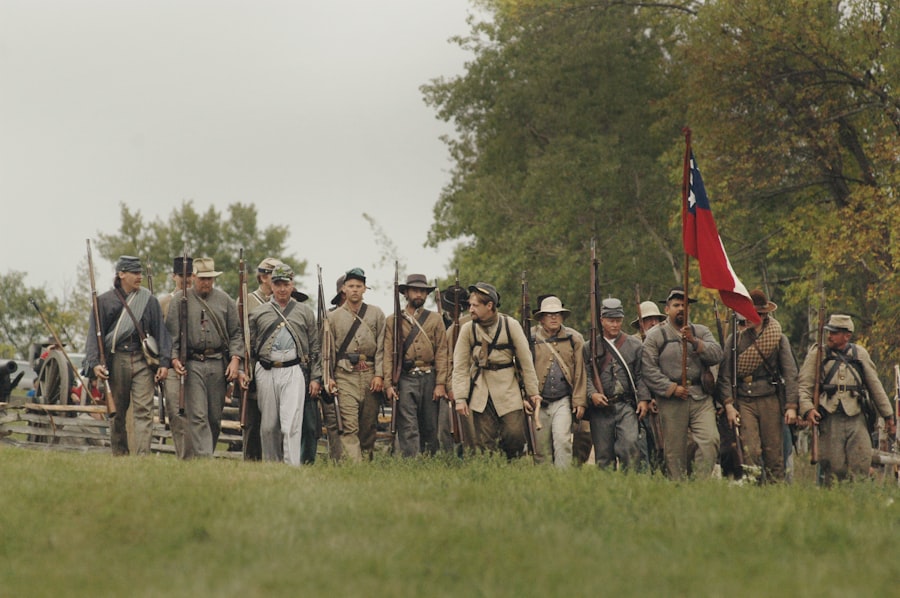
Economic factors played a crucial role in exacerbating the divisions between the North and South leading up to the Civil War. The Northern economy was rapidly industrializing, characterized by factories and urban centers that thrived on wage labor. In contrast, the Southern economy remained predominantly agrarian, relying heavily on slave labor for its cotton production.
This economic disparity created fundamentally different societal structures and interests, leading to conflicting priorities in national policy. The South’s dependence on cotton exports made it resistant to any changes that threatened its agricultural economy. Tariffs imposed by the federal government were often viewed as detrimental to Southern interests, further fueling resentment toward Northern dominance in Congress.
The South’s insistence on maintaining its economic model based on slavery ultimately contributed to its decision to secede and fight for its way of life.
The Impact of Political Divisions on the War
| Political Division | Impact on the War |
|---|---|
| Internal Strife | Weakened the country’s ability to unite against the enemy |
| Partisan Politics | Delayed decision-making and hindered effective military strategies |
| Foreign Alliances | Caused conflicting interests and complicated diplomatic efforts |
| Government Instability | Undermined public confidence and disrupted governance |
Political divisions in America during the 1850s were marked by deep-seated animosities that would eventually culminate in civil war. The emergence of new political parties, such as the Republican Party, which opposed the expansion of slavery into new territories, created a volatile environment where compromise became increasingly difficult. The fracturing of traditional party lines led to heightened tensions and a sense of urgency among both Northern and Southern politicians.
As political leaders struggled to navigate these divisions, events such as John Brown’s raid on Harpers Ferry and violent confrontations in “Bleeding Kansas” illustrated how deeply polarized American society had become. These incidents not only heightened fears on both sides but also solidified their respective identities—Northerners rallied around anti-slavery sentiments while Southerners united in defense of their way of life. The inability to find common ground ultimately paved the way for armed conflict, as political solutions gave way to military ones.
The Reality of African American Involvement in the War
The narrative surrounding African American involvement in the Civil War is often overshadowed by dominant historical accounts that focus primarily on white soldiers and leaders. However, African Americans played a vital role in both the Union and Confederate armies, contributing significantly to the war effort. Initially relegated to support roles, many African Americans eventually took up arms, motivated by a desire for freedom and equality.
Approximately 180,000 African American men served in the Union Army, fighting bravely in numerous battles and proving their valor on the battlefield. Their participation not only challenged prevailing notions of racial inferiority but also underscored their commitment to securing their own freedom and that of their families. In contrast, while some enslaved individuals fought for the Confederacy, many did so under duress or with hopes of gaining freedom through military service.
The complexity of African American involvement highlights their agency and resilience during a time when their humanity was often denied.
The Misrepresentation of Confederate Leaders

The portrayal of Confederate leaders has often been romanticized in popular culture and historical narratives, leading to a skewed understanding of their motivations and actions during the Civil War. Figures such as Jefferson Davis and Robert E. Lee are frequently depicted as noble defenders of Southern honor and states’ rights.
However, this representation overlooks their explicit commitment to preserving slavery as an institution and their roles in perpetuating systemic racism. Davis, as President of the Confederacy, was unwavering in his support for slavery and sought to establish a nation built on its continuation. Lee’s legacy is similarly complicated; while he is often celebrated for his military prowess, his decision to fight for a cause rooted in slavery raises ethical questions about his leadership.
By romanticizing these figures without acknowledging their ties to slavery, society risks perpetuating myths that obscure the true nature of their actions and beliefs.
The Distortion of Union Leadership
Just as Confederate leaders have been misrepresented, so too have Union leaders faced distortion in historical narratives. Abraham Lincoln is often portrayed solely as a liberator who single-handedly ended slavery; however, this oversimplification neglects the complexities of his presidency and his initial reluctance to make abolition a primary goal of the war.
Moreover, other Union leaders have been overlooked or mischaracterized in favor of a singular focus on Lincoln’s legacy. Figures such as Frederick Douglass and Ulysses S. Grant played crucial roles in advocating for emancipation and leading troops respectively but are often relegated to secondary status in popular accounts.
A more nuanced understanding of Union leadership reveals a diverse array of motivations and strategies that contributed to both military success and social change during this pivotal period.
The Forgotten Contributions of Women in the Civil War
Women played an indispensable role during the Civil War, yet their contributions are frequently marginalized or overlooked in historical narratives. As men left for battle, women stepped into various roles—serving as nurses, spies, and even soldiers disguised as men. Organizations such as the United States Sanitary Commission were founded by women who sought to improve medical care for soldiers and provide essential supplies.
In addition to their contributions on the battlefield and at home, women also engaged in activism and advocacy for social change during this period. Figures like Clara Barton emerged as prominent leaders in nursing and humanitarian efforts, while others worked tirelessly for abolitionist causes or suffrage movements. Recognizing these contributions is essential for understanding the full scope of societal change that occurred during and after the war.
The Misconceptions about the Emancipation Proclamation
The Emancipation Proclamation is often heralded as a landmark moment in American history; however, misconceptions about its scope and impact persist. Issued by Abraham Lincoln on January 1, 1863, it declared freedom for enslaved individuals in Confederate-held territories but did not apply to border states loyal to the Union or areas already under Union control. This limited scope has led some to mistakenly view it as an immediate end to slavery rather than a strategic wartime measure aimed at weakening the Confederacy.
Furthermore, while it marked a significant shift in Union policy toward emancipation, it did not immediately free all enslaved individuals nor did it guarantee equal rights for African Americans post-war. The Proclamation served more as a symbolic gesture that redefined the war’s purpose rather than an outright abolition of slavery across the nation. Understanding these nuances is crucial for grasping its historical significance within the broader context of civil rights advancements.
The Truth about Reconstruction and its Failures
Reconstruction is often viewed through a lens of failure due to its inability to fully integrate formerly enslaved individuals into American society or protect their rights effectively. Following the Civil War, efforts were made to rebuild the South and establish new social orders; however, these initiatives faced fierce resistance from white Southerners who sought to maintain white supremacy through Jim Crow laws and other discriminatory practices. The withdrawal of federal troops from Southern states marked a turning point that allowed systemic racism to reassert itself with renewed vigor.
While Reconstruction initially brought about significant legislative changes aimed at securing civil rights for African Americans—such as the 13th, 14th, and 15th Amendments—these gains were often undermined by violence and intimidation from groups like the Ku Klux Klan. The failure to achieve lasting change during Reconstruction has had enduring consequences that continue to shape race relations in America today.
The Legacy of the Civil War and its Continued Impact on American Society
The legacy of the Civil War is deeply woven into the fabric of American society, influencing contemporary discussions around race, equality, and justice. The war fundamentally altered notions of citizenship and civil rights; however, many issues remain unresolved even today. The struggle for racial equality continues as systemic racism persists within various institutions across America.
Moreover, debates surrounding monuments commemorating Confederate leaders reflect ongoing tensions regarding how history is remembered and interpreted. As society grapples with its past, understanding the complexities surrounding the Civil War becomes essential for fostering meaningful dialogue about race relations and social justice moving forward. The lessons learned from this tumultuous period serve as reminders of both progress made and challenges yet to be addressed in pursuit of a more equitable society for all Americans.
In exploring the complex narratives surrounding the American Civil War, it’s crucial to address the historical inaccuracies that have persisted over time. A related article that delves into these misconceptions can be found on Real Lore and Order, which provides insightful analysis and context. This article examines the myths and falsehoods that have shaped public perception of the Civil War, offering a clearer understanding of the events and their implications. For a deeper dive into these historical lies, you can read more on their website.
WATCH THIS! 50 Historical Lies You Believe Because of Movies
FAQs
What are some common historical lies about the American Civil War?
Some common historical lies about the American Civil War include the belief that the war was not primarily about slavery, that the Confederacy was fighting for states’ rights rather than the preservation of slavery, and that the war was fought over economic or cultural differences rather than the institution of slavery.
Was the American Civil War primarily about slavery?
Yes, the primary cause of the American Civil War was the issue of slavery. The Southern states seceded from the Union in order to preserve the institution of slavery, which they believed was essential to their economic and social systems.
Did the Confederacy fight for states’ rights rather than the preservation of slavery?
While the Confederacy did advocate for states’ rights, the primary right they were fighting to preserve was the right to own slaves. The Confederate states seceded from the Union in response to the perceived threat to the institution of slavery, and their secession documents explicitly mention the preservation of slavery as a key motivation.
Were economic or cultural differences the main cause of the American Civil War?
While there were certainly economic and cultural differences between the Northern and Southern states, the primary cause of the American Civil War was the institution of slavery. The economic and cultural differences were often rooted in the differing attitudes towards slavery, with the Southern economy heavily reliant on slave labor.