
The Salem Witch Trials, a series of hearings and prosecutions that took place in 1692 in colonial Massachusetts, stand as one of the most notorious episodes in American history. This dark chapter was marked by a fervent belief in witchcraft, leading to the execution of twenty individuals and the imprisonment of many others. The trials were fueled by a combination of superstition, fear, and social tensions, creating an environment ripe for hysteria.
The events in Salem Village, now known as Danvers, have since become emblematic of the dangers of extremism and the consequences of a society gripped by paranoia. The trials began in a context where Puritan beliefs dominated the cultural landscape. The Puritans viewed the world through a lens of moral absolutism, where any deviation from their strict religious codes was seen as a threat to the community.
This rigid worldview contributed to an atmosphere where accusations could spiral out of control, leading to tragic outcomes. The Salem Witch Trials serve as a cautionary tale about the perils of unchecked fear and the consequences of allowing superstition to override reason.
Key Takeaways
- The Salem Witch Trials were a series of hearings and prosecutions of people accused of witchcraft in colonial Massachusetts between February 1692 and May 1693.
- The accusations and hysteria surrounding the trials were fueled by fear, superstition, and social tensions within the community.
- Religion played a significant role in the trials, as Puritan beliefs and the fear of the devil led to the persecution of those accused of witchcraft.
- The infamous witch tests, such as the dunking test and the touch test, were used to determine guilt or innocence, often leading to false confessions.
- Many individuals falsely confessed to witchcraft in order to avoid harsher punishment, contributing to the tragic impact on the community and the lasting stigma of the trials.
The Accusations and Hysteria
The initial spark for the Salem Witch Trials ignited when a group of young girls in Salem Village began exhibiting strange behaviors, including fits and convulsions. These symptoms were quickly attributed to witchcraft, leading to a frenzy of accusations against various townsfolk. The first three women accused—Tituba, Sarah Good, and Rebecca Nurse—were seen as outsiders or misfits within the community, making them easy targets for suspicion.
As the hysteria spread, more individuals were implicated, often based on flimsy evidence or personal grievances. The rapid escalation of accusations created a climate of fear that permeated Salem and its surrounding areas. Neighbors turned against one another, and long-standing rivalries were reignited as people sought to protect themselves by pointing fingers at others.
The trials became a spectacle, with public hearings drawing large crowds eager to witness the proceedings. This collective hysteria not only led to wrongful convictions but also shattered the social fabric of the community, leaving deep scars that would take generations to heal.
The Role of Religion in the Trials
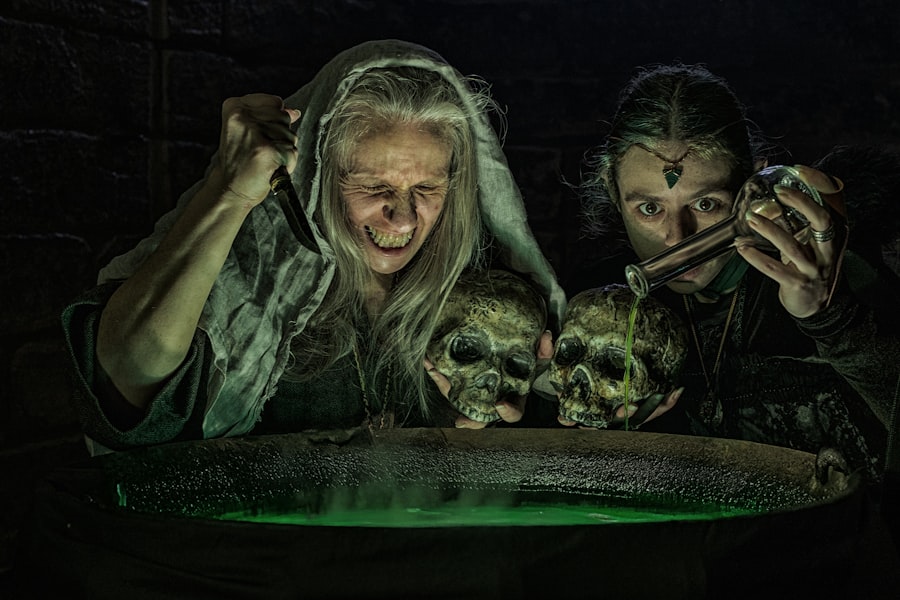
Religion played a pivotal role in shaping the events of the Salem Witch Trials. The Puritan faith emphasized a strict moral code and a belief in the supernatural, which included a fear of the devil and his influence on human affairs. This theological framework provided fertile ground for the witch hunt, as any deviation from religious norms could be interpreted as evidence of witchcraft.
The Puritans believed that they were engaged in a cosmic battle between good and evil, and this belief intensified during the trials. Clerical figures, such as Reverend Samuel Parris, further fueled the hysteria by preaching about the dangers of witchcraft from the pulpit. His sermons often emphasized the need for vigilance against evil forces, reinforcing the idea that witches were among them.
The intertwining of religion and law during this period meant that accusations were often treated as both spiritual and legal matters, complicating the pursuit of justice. The trials became not just a legal issue but a moral crusade, with dire consequences for those accused.
The Infamous Witch Tests
| Witch Tests | Metrics |
|---|---|
| Number of accused witches | Thousands |
| Number of executions | Hundreds |
| Duration of the witch trials | Several years |
| Locations of witch trials | Europe and North America |
As accusations mounted, authorities sought methods to determine who was guilty of witchcraft. Among these were infamous tests that have since become synonymous with the trials. One such test was the “witch’s touch,” where an accused witch would be asked to touch a victim experiencing fits; if the victim’s symptoms ceased upon contact, it was taken as proof of witchcraft.
Another notorious method was the “swimming test,” where suspected witches were bound and thrown into water; if they floated, they were deemed guilty, while sinking was seen as an indication of innocence—though it often led to drowning. These tests reflected a profound misunderstanding of human behavior and psychology. They were rooted in superstition rather than empirical evidence, leading to tragic outcomes for many innocent individuals.
The reliance on such dubious methods highlighted the desperation of authorities to find tangible proof in an atmosphere rife with fear and uncertainty.
The False Confessions
In an environment where fear reigned supreme, many accused individuals resorted to false confessions as a means of survival. Faced with the prospect of execution or imprisonment, some chose to admit guilt in exchange for leniency or even freedom. These confessions often included elaborate tales of consorting with the devil or participating in witchcraft rituals, which only served to perpetuate the hysteria surrounding the trials.
The pressure to conform to societal expectations and avoid punishment led many to betray their own beliefs and integrity. The phenomenon of false confessions during the Salem Witch Trials underscores the psychological toll that such extreme circumstances can exert on individuals. It reveals how fear can distort reality and compel people to act against their own interests.
These confessions not only contributed to the wrongful convictions but also fueled further accusations, creating a vicious cycle that ensnared more victims in its grasp.
The Impact on the Community

The Salem Witch Trials left an indelible mark on the community, fracturing relationships and instilling a deep sense of mistrust among neighbors. Families were torn apart as accusations led to public shame and ostracism. The trials created an atmosphere where no one felt safe; even those who had previously enjoyed good standing could find themselves accused at any moment.
This pervasive fear stifled open communication and fostered an environment where suspicion thrived. In addition to social ramifications, the trials had lasting economic consequences for Salem Village. With many prominent citizens imprisoned or executed, local businesses suffered, and the community’s cohesion deteriorated.
The aftermath saw a decline in population as families fled or chose to distance themselves from the taint of witchcraft accusations.
The Role of Politics and Power
The Salem Witch Trials were not merely a product of religious fervor; they were also deeply intertwined with political dynamics and power struggles within colonial Massachusetts. Local leaders sought to assert their authority during a time of uncertainty, using the trials as a means to consolidate power and eliminate rivals. Accusations often reflected underlying political tensions rather than genuine concerns about witchcraft, revealing how personal ambitions could exploit societal fears.
The trials also highlighted the fragility of justice when influenced by power dynamics. Those in positions of authority often acted with impunity, prioritizing their interests over fairness or due process. The intertwining of politics and witchcraft accusations created an environment where justice was secondary to maintaining control, leading to tragic outcomes for many innocent individuals caught in the crossfire.
The Aftermath of the Trials
As public sentiment began to shift following the trials, many began to question the validity of the proceedings and the motivations behind them. By 1693, Governor William Phips dissolved the special court established for the trials due to mounting criticism and skepticism regarding its fairness. In subsequent years, many judges and officials involved expressed regret over their roles in perpetuating such injustice.
The trials ultimately led to a reevaluation of legal practices in Massachusetts and beyond. The aftermath also saw efforts to restore dignity to those wrongfully accused or executed during this dark period. In 1697, Massachusetts declared a day of fasting and soul-searching for those affected by the trials, acknowledging the grave injustices that had occurred.
Over time, some victims were exonerated posthumously, while descendants sought reparations for their ancestors’ suffering. This process of reckoning served as an important step toward healing for both individuals and communities scarred by this tragic chapter in history.
Lessons Learned from the Salem Witch Trials
The Salem Witch Trials offer profound lessons about human behavior, societal dynamics, and the importance of due process in legal systems. They serve as a stark reminder of how fear can lead to irrational decision-making and how easily communities can descend into chaos when reason is abandoned in favor of hysteria. The trials underscore the necessity for critical thinking and skepticism when confronted with sensational claims or accusations.
Moreover, they highlight the dangers inherent in allowing personal grievances or power struggles to influence justice. The events in Salem illustrate how quickly societal norms can erode under pressure, emphasizing the need for vigilance in protecting individual rights and ensuring fair treatment for all members of society. These lessons remain relevant today as societies grapple with issues related to justice, discrimination, and moral panic.
Modern-Day Parallels to the Witch Trials
The echoes of the Salem Witch Trials can be observed in various contemporary situations where fear and suspicion lead to scapegoating or persecution. Instances of mass hysteria—whether related to political movements, social issues, or public health crises—demonstrate how quickly societies can revert to irrational behavior when faced with uncertainty or perceived threats. Modern-day examples include moral panics surrounding issues like immigration or drug use, where individuals are often demonized without substantial evidence.
Additionally, social media has amplified these dynamics by enabling rapid dissemination of information (and misinformation), creating echo chambers that can exacerbate fears and lead to mob mentality. Just as in Salem, individuals may find themselves targeted based on unfounded accusations or societal pressures rather than objective truth. Recognizing these parallels serves as a crucial reminder that vigilance is necessary to prevent history from repeating itself.
Remembering the Victims of the Salem Witch Trials
In reflecting on the Salem Witch Trials, it is essential to honor and remember those who suffered unjustly during this tumultuous period. The victims—twenty individuals executed and countless others imprisoned—were not merely statistics but real people with lives, families, and dreams cut short by fear-driven hysteria. Their stories remind us of the human cost associated with intolerance and injustice.
Efforts have been made over time to commemorate these victims through memorials and educational initiatives aimed at preserving their memory while fostering discussions about justice and human rights. By remembering those who lost their lives during this dark chapter in history, society can strive toward greater understanding and compassion while ensuring that such injustices are never repeated again.
The Salem Witch Trials have long been a subject of fascination and misinformation, with many historical lies and myths surrounding the events of 1692. One common misconception is that the trials were solely driven by religious fanaticism, when in fact, a complex web of social, economic, and personal factors also played significant roles. For those interested in exploring the truths and myths of the Salem Witch Trials further, a related article can be found on Real Lore and Order’s website. This article delves into the intricate details and lesser-known aspects of the trials, providing a more nuanced understanding of this dark chapter in history. You can read more about it by visiting this link.
WATCH THIS! 50 Historical Lies You Believe Because of Movies
FAQs
What were the Salem witch trials?
The Salem witch trials were a series of hearings and prosecutions of people accused of witchcraft in colonial Massachusetts between February 1692 and May 1693.
What were some of the historical lies about the Salem witch trials?
Some historical lies about the Salem witch trials include the belief that the accused were burned at the stake (they were actually hanged), that the trials targeted only women (men were also accused and executed), and that the accused were practicing actual witchcraft (they were victims of mass hysteria and false accusations).
Were the accused in the Salem witch trials actually practicing witchcraft?
No, the accused in the Salem witch trials were not actually practicing witchcraft. The trials were the result of mass hysteria, fear, and false accusations within the community.
How many people were executed during the Salem witch trials?
During the Salem witch trials, 20 people were executed (19 by hanging and 1 by pressing) and several others died in jail.
What were some of the long-term effects of the Salem witch trials?
The Salem witch trials had long-term effects on the community, including the loss of trust in the legal system, the stigmatization of the accused and their families, and a lasting impact on the reputation of the town of Salem.