The Renaissance, spanning roughly from the 14th to the 17th century, is often heralded as a pivotal era in European history marked by a resurgence of interest in classical antiquity. This period witnessed a remarkable flourishing of art, literature, science, and philosophy, as thinkers and creators sought to rediscover the knowledge and aesthetics of ancient Greece and Rome. The term “Renaissance,” meaning “rebirth,” aptly encapsulates the spirit of this age, characterized by a profound transformation in cultural and intellectual pursuits.
Artists like Leonardo da Vinci and Michelangelo pushed the boundaries of creativity, while writers such as Petrarch and Erasmus explored humanism, emphasizing the potential of individual achievement and reason. Innovation during the Renaissance was not limited to the arts; it also permeated various fields of study.
This technological advancement played a crucial role in fostering an environment ripe for intellectual exchange and debate. The Renaissance was a time when curiosity flourished, leading to significant advancements in science, mathematics, and exploration. Figures like Copernicus and Galileo challenged long-held beliefs about the cosmos, laying the groundwork for modern scientific inquiry.
Thus, the Renaissance can be seen as a period of both rediscovery and innovation, where the past informed the present, and new ideas began to take root.
Key Takeaways
- The Renaissance was a time of rediscovery and innovation, marked by a revival of interest in classical art, literature, and learning.
- The myth of the Renaissance as a period of universal progress overlooks the social inequality and oppression that existed during this time.
- The dark side of the Renaissance included social inequality and oppression, as well as the exploitation of marginalized groups.
- Women played a significant role in the Renaissance, challenging traditional narratives and contributing to cultural and intellectual developments.
- The Renaissance had a global perspective, examining cultural exchange and colonialism, which shaped its impact on the world.
The Myth of the Renaissance as a Period of Universal Progress
While the Renaissance is often romanticized as a time of universal progress and enlightenment, this narrative oversimplifies the complexities of the era. The notion that all segments of society benefited equally from the advancements of this period is misleading. In reality, the benefits of Renaissance innovations were often confined to a privileged elite, leaving vast swathes of the population untouched by its transformative power.
The wealthy merchant class and nobility reaped the rewards of artistic patronage and educational opportunities, while peasants and lower classes continued to grapple with poverty and hardship. Moreover, the idea that the Renaissance marked a linear progression toward modernity overlooks significant social and political upheavals that accompanied this cultural revival. The period was rife with conflict, including wars, religious strife, and social unrest.
The Protestant Reformation, which emerged during this time, challenged the authority of the Catholic Church and led to profound societal divisions. Thus, while the Renaissance undoubtedly produced remarkable achievements, it is essential to recognize that these advancements were not universally experienced or celebrated. The myth of universal progress obscures the realities of inequality and conflict that characterized this transformative era.
The Dark Side of the Renaissance: Social Inequality and Oppression
Beneath the surface of artistic brilliance and intellectual fervor lay a darker reality marked by social inequality and oppression. The Renaissance was not merely a time of enlightenment; it was also an era where systemic injustices persisted. The wealth generated by trade and commerce often came at the expense of marginalized groups, including peasants, laborers, and women.
The burgeoning economy favored those who could access education and resources, leaving many behind in a cycle of poverty. Additionally, the Renaissance witnessed the rise of oppressive regimes that stifled dissent and maintained control over their populations. The Inquisition, for instance, sought to root out heresy and enforce religious conformity through fear and violence.
This climate of repression extended beyond religion; political dissent was often met with harsh penalties. The flourishing of art and literature during this time did not equate to freedom of expression for all; rather, it was often contingent upon patronage from powerful elites who dictated what could be created or published. Thus, while the Renaissance is celebrated for its cultural achievements, it is crucial to acknowledge the social inequalities and oppressive structures that underpinned this vibrant period.
The Role of Women in the Renaissance: Challenging Traditional Narratives
| Aspect | Metrics |
|---|---|
| Education | Increased access to education for women |
| Art and Literature | Rise of female artists and writers |
| Political Participation | Emergence of influential female figures |
| Workforce | Expansion of women’s roles in various professions |
| Social Status | Shift in societal perceptions of women’s capabilities |
The narrative surrounding women’s roles during the Renaissance has often been overshadowed by male-centric accounts of history. However, women played significant yet frequently unrecognized roles in shaping this era’s cultural landscape. While many women were relegated to traditional domestic roles, others defied societal expectations by engaging in artistic pursuits, intellectual endeavors, and even political activism.
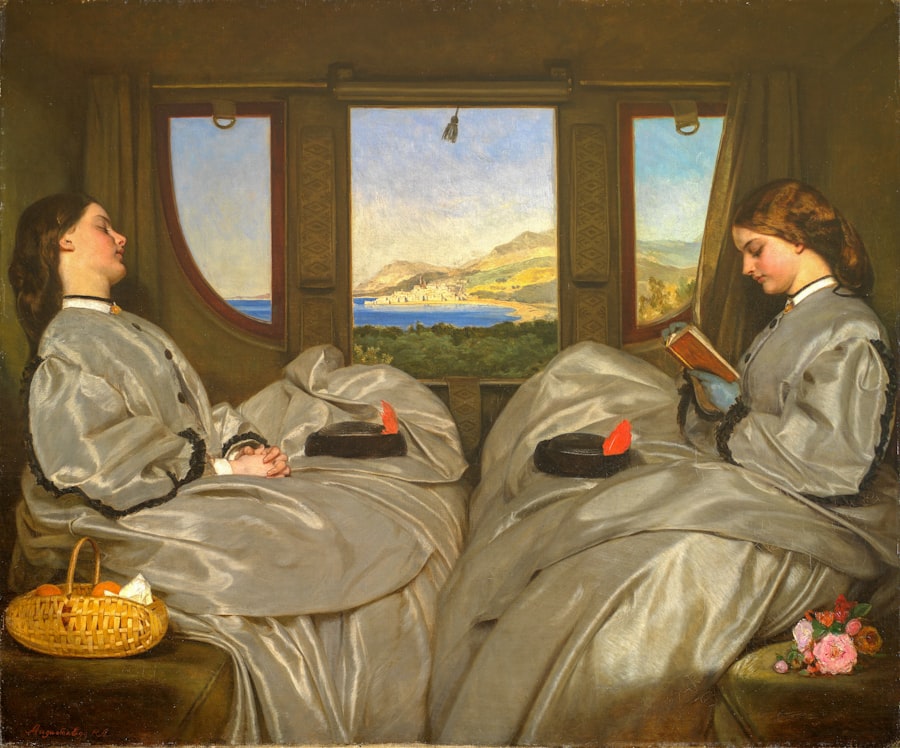
Figures such as Sofonisba Anguissola emerged as accomplished painters whose works garnered recognition in a male-dominated art world. Moreover, women contributed to the intellectual discourse of the time through salons and literary circles. These gatherings provided spaces for women to share ideas, challenge prevailing norms, and assert their voices in a society that often sought to silence them.
Despite facing significant barriers to education and professional opportunities, many women found ways to navigate these constraints and leave their mark on history. By examining women’s contributions during the Renaissance, one can challenge traditional narratives that portray this period as exclusively male-driven and recognize the diverse experiences that shaped its cultural fabric.
The Renaissance and the Global Perspective: Examining Cultural Exchange and Colonialism
The Renaissance was not an isolated phenomenon confined to Europe; it was part of a broader global context characterized by cultural exchange and colonial expansion. As European powers sought new trade routes and territories during this period, they encountered diverse cultures across Africa, Asia, and the Americas. This interaction led to a complex interplay of ideas, art forms, and technologies that transcended geographical boundaries.
However, this cultural exchange was often accompanied by colonialism and exploitation. European powers imposed their values and systems on indigenous populations, leading to significant cultural erasure and violence. The Age of Exploration brought about encounters that were not merely exchanges but often resulted in domination and subjugation.
The wealth extracted from colonized lands fueled European economies but came at an immense human cost. Thus, while the Renaissance is celebrated for its contributions to art and science, it is essential to critically examine how these advancements were intertwined with colonial practices that shaped global dynamics.
The Renaissance and Science: Debunking the Myth of a Scientific Revolution
The Renaissance is frequently portrayed as a precursor to a scientific revolution that fundamentally transformed humanity’s understanding of the natural world. However, this characterization oversimplifies the complexities of scientific development during this period. While figures like Galileo Galilei made significant contributions to astronomy and physics, it is essential to recognize that scientific inquiry did not emerge in a vacuum; it was built upon centuries of knowledge from various cultures.
Moreover, many scientific advancements during the Renaissance were met with resistance from established authorities, particularly religious institutions that upheld traditional beliefs. The tension between emerging scientific ideas and dogmatic adherence to religious doctrine often stifled progress rather than fostering an environment conducive to exploration. Thus, while there were notable advancements in scientific thought during this time, it is crucial to avoid framing the Renaissance as a definitive turning point toward modern science without acknowledging its complexities.
The Renaissance and Religion: Questioning the Idea of a Secular Age
The idea that the Renaissance marked a shift toward secularism is a common misconception that overlooks the profound influence of religion during this period. While humanist thinkers emphasized reason and individualism, religion remained deeply intertwined with daily life and governance. The Catholic Church continued to wield significant power over political affairs, shaping societal norms and values.
The Protestant Reformation further complicated this narrative by challenging established religious authority but did not eliminate religion’s role in society. Instead, it led to new sects and interpretations that continued to shape cultural landscapes across Europe. The Renaissance was characterized by a dynamic interplay between religious belief and emerging secular thought rather than a clear demarcation between faith and reason.
Thus, questioning the notion of a secular age during this time reveals a more nuanced understanding of how religion influenced various aspects of life.
The Renaissance and Art: Uncovering the Reality of Patronage and Power
Art during the Renaissance is often celebrated for its beauty and innovation; however, it is essential to examine the underlying structures of patronage that shaped artistic production. Wealthy patrons—often members of the nobility or affluent merchant class—funded artists in exchange for works that reflected their status and power. This relationship between artist and patron created a dynamic where artistic expression was frequently constrained by commercial interests.
Moreover, many renowned masterpieces were commissioned works rather than expressions of pure creativity. Artists navigated complex social hierarchies as they sought to please their patrons while also striving for personal recognition. This interplay between power dynamics and artistic expression complicates the narrative surrounding Renaissance art as solely an expression of individual genius or creativity.
By uncovering these realities, one can gain a deeper appreciation for how art functioned within broader societal structures during this transformative period.
The Renaissance and Literature: Exploring the Role of Censorship and Control
Literature during the Renaissance flourished alongside advancements in printing technology; however, it was also subject to censorship and control by powerful authorities. Writers faced significant risks when challenging prevailing norms or critiquing established institutions. The Inquisition’s efforts to suppress dissenting voices created an environment where self-censorship became common among authors seeking to protect themselves from persecution.
Despite these challenges, many writers found ways to navigate censorship through allegory or satire, allowing them to comment on societal issues without directly confronting authority. Works like Machiavelli’s “The Prince” exemplify how literature served as both a reflection of political realities and a means of subversion. Thus, while literature thrived during this period, it existed within a complex landscape shaped by censorship that influenced both content and form.
The Renaissance and Education: Rethinking the Idea of a Humanist Curriculum
The educational reforms associated with humanism during the Renaissance are often lauded for promoting critical thinking and classical learning; however, these reforms were not universally accessible or equitable. Humanist curricula emphasized rhetoric, grammar, poetry, history, and moral philosophy but primarily catered to elite male students who could afford such education. As a result, many individuals—particularly women and lower-class citizens—were excluded from these educational opportunities.
Furthermore, while humanism championed individual potential through education, it also reinforced existing social hierarchies by prioritizing certain forms of knowledge over others. The focus on classical texts often marginalized indigenous knowledge systems or alternative ways of knowing that existed outside European frameworks. Rethinking education during this period requires acknowledging both its transformative potential for some while recognizing its limitations in perpetuating inequality.
The Legacy of the Renaissance: Reevaluating Its Impact on Modern Society
The legacy of the Renaissance continues to resonate in contemporary society; however, it is essential to reevaluate its impact critically. While this period laid foundational principles for modern art, science, literature, and education, it also perpetuated systems of inequality that persist today. Understanding how these historical dynamics shaped current societal structures allows for a more nuanced appreciation of progress.
Moreover, recognizing both achievements and shortcomings encourages ongoing dialogue about how societies can learn from history rather than romanticizing past eras without acknowledging their complexities. As modern individuals navigate issues related to inequality, cultural exchange, censorship, education access, and artistic expression—echoes from the Renaissance remain relevant reminders that progress is often accompanied by challenges requiring continuous reflection and action. In conclusion, while celebrating the achievements of the Renaissance is important for understanding its contributions to modernity, it is equally vital to engage with its complexities—acknowledging both triumphs and tribulations that shaped this transformative era in human history.
The Renaissance is often romanticized as a period of unparalleled cultural rebirth and intellectual advancement, but this narrative overlooks the complexities and contradictions of the era. Many historical accounts have perpetuated myths about the Renaissance, such as the notion that it marked a complete break from the so-called “Dark Ages.” In reality, the Renaissance was a time of both continuity and change, with many medieval ideas persisting alongside new innovations. For a deeper exploration of the myths surrounding this pivotal period, you can read a related article on historical lies about the Renaissance on Real Lore and Order. This article delves into the misconceptions and provides a more nuanced understanding of the era.
WATCH THIS! 50 Historical Lies You Believe Because of Movies
FAQs
What are some common historical lies about the Renaissance?
Some common historical lies about the Renaissance include the idea that it was a time of universal progress and enlightenment, that it was a purely European phenomenon, and that it was a period of great artistic and intellectual freedom for all.
Was the Renaissance a time of universal progress and enlightenment?
While the Renaissance was a time of great cultural and intellectual flourishing in Europe, it was not a period of universal progress and enlightenment. Many people, particularly those outside of the elite classes, did not experience the same level of advancement and prosperity.
Was the Renaissance a purely European phenomenon?
The Renaissance was not a purely European phenomenon. It was influenced by cultural and intellectual exchanges with the Islamic world, as well as with other non-European civilizations. The exchange of ideas and knowledge during this time was not limited to Europe.
Was the Renaissance a period of great artistic and intellectual freedom for all?
While the Renaissance did see a great flourishing of artistic and intellectual expression, this freedom was not enjoyed by all. Women, for example, were often excluded from participating in the same way as men, and there were strict social and religious boundaries that limited the freedom of expression for many individuals.