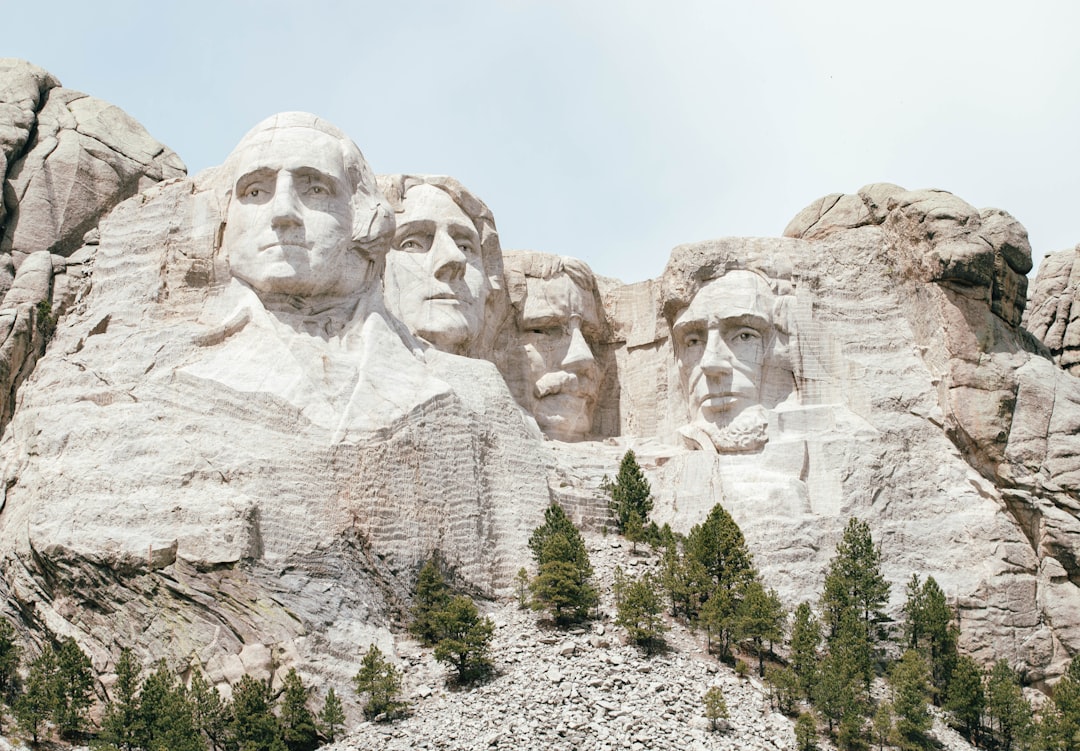
The Founding Fathers of the United States are often celebrated for their roles in establishing a nation built on principles of liberty and equality. However, a closer examination reveals a complex relationship with slavery that complicates their legacy. Many of these prominent figures, including George Washington, Thomas Jefferson, and James Madison, were slave owners themselves.
Their personal investments in the institution of slavery often contradicted the very ideals they espoused in the Declaration of Independence, which proclaimed that “all men are created equal.” This paradox raises critical questions about the moral integrity of these leaders and the foundational values of the nation they helped to create. Moreover, the compromises made during the drafting of the Constitution further illustrate the entanglement of slavery with the nation’s founding. The Three-Fifths Compromise, for instance, allowed states to count three-fifths of their enslaved population for purposes of representation in Congress.
This arrangement not only perpetuated the institution of slavery but also highlighted the political maneuvering that prioritized power over principles. As historians delve deeper into this aspect of American history, it becomes increasingly clear that the legacy of the Founding Fathers is inextricably linked to the institution of slavery, prompting a reevaluation of their contributions to American democracy.
Key Takeaways
- The Founding Fathers were deeply involved in the institution of slavery, owning slaves and benefiting from the labor of enslaved people.
- The idea of unity among the Founding Fathers is a myth, as they had differing opinions and conflicting interests, leading to divisions and disagreements.
- The Founding Fathers had complex and often troubled relations with Native Americans, marked by displacement, violence, and broken treaties.
- Women played a significant but often overlooked role in the Founding Fathers’ era, contributing to the political and intellectual life of the time.
- Many misconceptions surround the Founding Fathers and the Constitution, including the idea that they intended to create a purely democratic system.
The Myth of Unity Among the Founding Fathers
While the Founding Fathers are often portrayed as a cohesive group united by a common vision for America, this narrative oversimplifies the reality of their relationships and ideologies. In truth, there were significant divisions among these leaders regarding key issues such as governance, economic policy, and foreign relations. Figures like Alexander Hamilton and Thomas Jefferson had fundamentally different views on the role of the federal government, with Hamilton advocating for a strong central authority and Jefferson championing states’ rights.
These ideological rifts not only shaped their personal interactions but also laid the groundwork for future political divisions in the United States. The contentious debates that took place during the Constitutional Convention further underscore this lack of unity. Delegates clashed over various issues, including representation, taxation, and the balance of power between state and federal governments.
The resulting compromises were often fraught with tension and disagreement, revealing that the Founding Fathers were not a monolithic group but rather a collection of individuals with diverse perspectives and interests. This complexity challenges the myth of unity and highlights the dynamic nature of American political thought during its formative years.
The Founding Fathers and Native American Relations
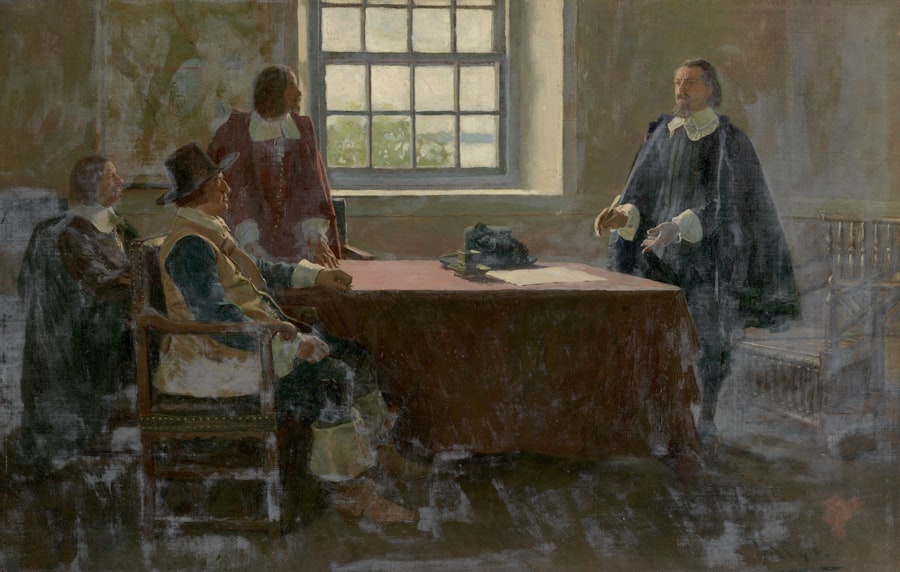
The relationship between the Founding Fathers and Native American tribes is another area that warrants critical examination. While some Founding Fathers expressed a degree of respect for Native cultures, many others viewed Indigenous peoples primarily as obstacles to westward expansion and economic development. The policies enacted during this period often reflected a paternalistic attitude toward Native Americans, with leaders like George Washington advocating for assimilation while simultaneously endorsing land seizures.
This duality illustrates a troubling aspect of American history that is frequently overlooked in discussions about the nation’s founding. Furthermore, treaties made with Native American tribes were often broken or ignored by the U.S. government, leading to significant loss of land and autonomy for Indigenous peoples.
The rhetoric of liberty and justice espoused by the Founding Fathers stands in stark contrast to the realities faced by Native Americans during this era. As historians continue to explore this complex relationship, it becomes evident that the legacy of the Founding Fathers is intertwined with a history of displacement and injustice that has lasting implications for Native communities today.
The Role of Women in the Founding Fathers’ Era
| Founding Father | View on Women’s Role | Women’s Rights Activism |
|---|---|---|
| George Washington | Traditional gender roles | Supported women’s education |
| Thomas Jefferson | Believed in women’s domestic role | Advocated for women’s property rights |
| John Adams | Advocated for women’s education | Supported women’s suffrage |
| Benjamin Franklin | Encouraged women’s intellectual pursuits | Supported women’s rights to property |
The role of women during the era of the Founding Fathers is often marginalized in historical narratives, yet their contributions were significant and multifaceted. While women did not have formal political power or rights equivalent to men, they played crucial roles in shaping public opinion and supporting revolutionary efforts. Figures like Abigail Adams famously urged her husband John Adams to “remember the ladies” when drafting new laws, highlighting women’s desire for greater recognition and rights within the emerging nation.
This call for inclusion reflects a broader sentiment among women who sought to assert their voices in a male-dominated society. Additionally, women participated actively in boycotts and other forms of resistance against British rule, demonstrating their commitment to the revolutionary cause. They organized fundraising efforts, produced goods to replace British imports, and even took on roles as spies or messengers.
Despite their significant contributions, women were largely excluded from formal political processes following independence, as societal norms relegated them to domestic spheres. This exclusion underscores a critical tension within the founding ideals of liberty and equality—one that would take generations to address as women continued to advocate for their rights in subsequent movements.
The Founding Fathers and the Constitution: Separating Fact from Fiction
The Constitution is often hailed as a groundbreaking document that enshrined democratic principles and established a framework for governance. However, separating fact from fiction regarding its creation reveals a more nuanced story. The drafting process was marked by intense debates and compromises among delegates with differing visions for the new nation.
While some sought to create a robust federal government capable of addressing national issues, others feared that such power would lead to tyranny. This tension resulted in a document that reflected both aspirations for democracy and concessions to maintain unity among disparate factions. Moreover, the Constitution’s original text included provisions that protected slavery, such as the aforementioned Three-Fifths Compromise and clauses that allowed for the continuation of the slave trade until 1808.
These elements highlight how economic interests influenced constitutional design, raising questions about whether it truly represented a commitment to universal rights or merely served to placate powerful Southern states. As scholars continue to analyze this foundational document, it becomes clear that understanding its complexities is essential for grasping the broader narrative of American democracy.
The Founding Fathers and Religious Freedom: Debunking Misconceptions
The notion that the Founding Fathers uniformly championed religious freedom is often oversimplified. While many leaders advocated for separation between church and state—most notably Thomas Jefferson with his concept of a “wall of separation”—the reality was more complicated. The early republic was characterized by a diverse array of religious beliefs, yet certain denominations held more influence than others.
For instance, Protestant Christianity was predominant in early American society, leading to an environment where non-Protestant groups sometimes faced discrimination or exclusion. Additionally, while the First Amendment guarantees freedom of religion, it did not eliminate all forms of religious influence in government or public life. Many states maintained established churches well into the 19th century, reflecting ongoing tensions between religious liberty and societal norms.
As historians examine this aspect of American history, it becomes evident that while religious freedom was an important principle for some Founding Fathers, it was not universally applied or embraced across all communities.
The Founding Fathers and Political Parties: The Truth Behind the Division
The emergence of political parties in the early years of American governance is often portrayed as a deviation from the Founding Fathers’ original vision for a unified nation. However, this perspective overlooks how deeply ingrained political factions were in early American politics. The ideological divide between Federalists, led by figures like Alexander Hamilton, and Democratic-Republicans, championed by Thomas Jefferson, reflected fundamental disagreements about governance, economic policy, and foreign relations.
These divisions were not merely incidental; they were rooted in differing interpretations of liberty and authority. As political parties began to take shape, they became vehicles for expressing competing visions for America’s future. Federalists favored a strong central government and close ties with Britain, while Democratic-Republicans advocated for agrarian interests and stronger state sovereignty.
This polarization laid the groundwork for an enduring two-party system that continues to shape American politics today. Understanding this historical context reveals that political division was not an aberration but rather an integral part of the nation’s development.
The Founding Fathers and Economic Policy: Exposing the Real Agenda
Economic policy during the founding era was heavily influenced by competing interests among the Founding Fathers. Alexander Hamilton’s vision for a strong federal government included establishing a national bank and implementing tariffs to protect burgeoning American industries. His approach aimed to stabilize the economy and promote growth but also favored urban commercial interests over agrarian ones represented by Thomas Jefferson’s faction.
This divergence highlights how economic agendas were intertwined with broader political philosophies. Moreover, debates over economic policy often reflected deeper societal divisions regarding class and power dynamics. Hamilton’s policies were seen as favoring wealthy elites at the expense of farmers and laborers, leading to significant pushback from those who felt marginalized by his vision.
As historians analyze these economic debates, it becomes clear that they were not merely technical discussions but rather reflections of competing ideologies about who should wield power in shaping America’s economic future.
The Founding Fathers and Foreign Policy: Uncovering the Reality
The foreign policy decisions made by the Founding Fathers were shaped by both pragmatic considerations and ideological beliefs about America’s role in the world. Early leaders grappled with navigating relationships with European powers while asserting American sovereignty following independence. George Washington’s Farewell Address famously cautioned against entangling alliances, reflecting a desire for neutrality amid global conflicts.
However, this stance was complicated by ongoing tensions with Britain and France, which influenced domestic politics. Additionally, foreign policy decisions often revealed underlying motivations related to expansionism and economic interests. The Louisiana Purchase under Thomas Jefferson exemplified how foreign relations could facilitate territorial growth while simultaneously raising questions about governance and Indigenous rights.
As scholars explore these complexities, it becomes evident that foreign policy was not merely reactive but rather an active arena where competing visions for America’s future played out on an international stage.
The Founding Fathers and the Myth of Exceptionalism
The idea of American exceptionalism—the belief that America holds a unique place in history due to its democratic principles—has roots in narratives surrounding the Founding Fathers. However, this notion can obscure critical historical realities that challenge its validity.
The exclusionary practices surrounding slavery, Indigenous displacement, and women’s rights reveal that America’s founding was not without significant contradictions. Furthermore, exceptionalism can lead to an oversimplified understanding of America’s role in global history. By framing America as inherently virtuous or destined for greatness, this narrative risks ignoring instances where U.S.
actions have contradicted its professed values—such as interventions in foreign conflicts or support for authoritarian regimes during the Cold War era. Reevaluating this myth requires acknowledging both achievements and failures within America’s historical narrative.
Reevaluating the Legacy of the Founding Fathers
As contemporary society grapples with issues related to race, gender, and justice, reevaluating the legacy of the Founding Fathers becomes increasingly important. Their contributions laid foundational principles for democracy; however, these ideals must be viewed through a critical lens that acknowledges their limitations and contradictions. By examining their relationships with slavery, Indigenous peoples, women’s rights, economic policies, and foreign relations, it becomes clear that their legacies are complex rather than monolithic.
This reevaluation invites a broader conversation about how history is remembered and taught in schools today. It challenges educators to present a more nuanced view that includes diverse perspectives while recognizing both achievements and shortcomings within America’s founding narrative. Ultimately, understanding the multifaceted legacies of the Founding Fathers can foster deeper discussions about democracy’s evolution and inspire future generations to strive toward a more inclusive vision for America’s future.
In exploring the myths and misconceptions surrounding the founding fathers, it’s essential to delve into the narratives that have shaped public perception over the years. A related article that provides insight into these historical inaccuracies can be found on Real Lore and Order. This piece examines the various legends and fabrications that have been perpetuated about these pivotal figures in American history. For a deeper understanding of these historical lies, you can read more about it on their website by visiting this article.
WATCH THIS! 50 Historical Lies You Believe Because of Movies
FAQs
What are some common historical lies about the founding fathers?
Some common historical lies about the founding fathers include the idea that they were all wealthy, that they all supported slavery, and that they were all in agreement on every issue.
Were all the founding fathers wealthy?
Not all of the founding fathers were wealthy. While some, like George Washington and Thomas Jefferson, were indeed wealthy plantation owners, others, such as John Adams and Thomas Paine, were not as financially well-off.
Did all the founding fathers support slavery?
While some of the founding fathers did own slaves, not all of them supported the institution of slavery. In fact, many of them expressed conflicting views on the issue, and some, like John Adams and Alexander Hamilton, were vocal opponents of slavery.
Did the founding fathers always agree on every issue?
No, the founding fathers did not always agree on every issue. They had differing opinions on matters such as the role of the federal government, the economy, and foreign policy. Their debates and disagreements are well-documented in historical records.
Why are these historical lies about the founding fathers perpetuated?
These historical lies are often perpetuated due to a lack of comprehensive education on the founding fathers and the early history of the United States. Additionally, some of these myths may serve certain political or ideological agendas.