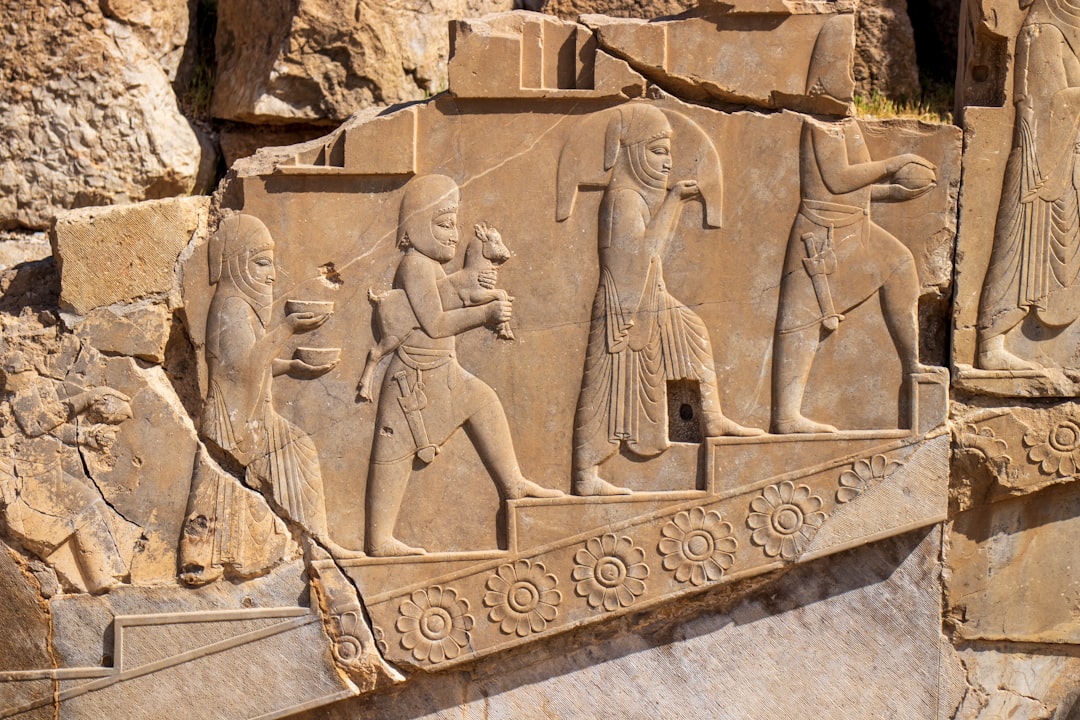
The monumental constructions of ancient civilizations—pyramids that pierce the sky, intricate temple complexes that whisper tales of forgotten deities, and aqueducts that defy the passage of millennia—stand as enduring testaments to human ingenuity and labor. While scholarly attention has long focused on the engineering prowess, societal organization, and economic drivers behind these colossal undertakings, a more recent and burgeoning field of research is delving into a subtler, yet potentially revolutionary, aspect: the hereditary traits of the individuals who conceived and executed these feats. Uncovering the genetic fingerprints of ancient builders could unlock profound insights into their physical capabilities, predispositions, and even their cognitive leanings, offering a new lens through which to understand the very essence of these past societies.
The Dawn of Paleogenetic Investigation
The advent of paleogenetics, the study of ancient DNA, has revolutionized our ability to reconstruct the biological past. For decades, only fragmented and degraded genetic material could be extracted, offering limited information. However, advancements in DNA sequencing technologies, particularly next-generation sequencing (NGS), have dramatically increased the sensitivity and accuracy of ancient DNA analysis. This has moved the field beyond simply identifying species and population movements to enabling the examination of specific genetic variants that influence phenotypic traits. While the challenges of contamination and degradation remain significant, the potential to analyze the genomes of individuals directly linked to ancient construction projects—whether rulers, master craftspeople, or laborers—is now within reach.
The Challenges of Ancient DNA Recovery
Extracting viable DNA from ancient skeletal remains, particularly those subjected to environmental stressors like heat, humidity, and microbial activity, is a formidable task. Bones, teeth, and even hair follicles can harbor genetic material, but the process of isolation and purification is complex and requires meticulous sterile techniques to avoid modern contamination. The DNA itself is often fragmented into short pieces, and chemical modifications that occur to DNA over time can make it difficult to accurately sequence. Furthermore, the context of discovery is crucial; skeletal remains found in association with construction sites, workshops, or burial sites of suspected architects or artisans are prime candidates for paleogenetic study.
Identifying Target Populations and Individuals
The initial stages of such research involve identifying ancient sites where human remains are found in direct association with major construction activities. This could range from the quarries where stone was extracted to the settlements inhabited by the workforce, or even the burial grounds of those who held positions of authority and technical expertise. For instance, skeletal remains found within or near the construction ramparts of a pyramid, or in the vicinity of ancient workshops where tools were found, offer a higher probability of genetic links to the building endeavors. Identifying specific individuals who might have played key roles, such as overseers or master masons, would require detailed archaeological context and, ideally, evidence of specialized tools or grave goods.
The study of hereditary traits among ancient builders offers fascinating insights into how their skills and techniques were passed down through generations. This topic is particularly relevant when considering the implications of such traits in modern contexts, such as the construction of a lunar base. For a deeper understanding of how ancient engineering principles can inform contemporary space architecture, you can explore the article on lunar base defense strategies and systems at this link.
Unraveling Physical Prowess and Labor Demands
The sheer scale and complexity of ancient constructions necessitate considerable physical exertion. Understanding the genetic predispositions of the builders towards strength, endurance, and resilience can illuminate the biological foundation of their capacity for such demanding labor. This involves examining genes known to influence muscle development, bone density, metabolic efficiency, and even susceptibility to injury and disease.
Genes Associated with Musculoskeletal Development
Research into genes such as ACTN3, often dubbed the “speed gene,” which influences fast-twitch muscle fiber development, could be particularly informative. Individuals with certain variants of ACTN3 are predisposed to explosive power and speed, traits that might have been advantageous in tasks requiring rapid movement or heavy lifting. Similarly, genes related to bone ossification and density, such as those involved in collagen synthesis and vitamin D metabolism, could provide insights into the skeletal resilience required to withstand the stresses of manual labor and potential injuries. Examining these genes in ancient builders could reveal whether genetic factors played a role in their ability to perform strenuous tasks over extended periods.
Metabolic Efficiency and Nutritional Adaptations
The energy demands of constructing monumental structures were immense. Genetic variants that influence metabolic efficiency, such as those affecting glucose metabolism and fat storage, could have played a role in optimizing energy utilization. Understanding these adaptations could shed light on how ancient populations sustained themselves during periods of intense labor and potentially resource scarcity. For example, individuals with genetic predispositions for efficient calorie absorption or utilization might have been better equipped to handle the nutritional challenges associated with large-scale construction projects.
Resistance to Environmental Stressors and Diseases
Construction sites are often exposed to harsh environmental conditions, including extreme temperatures, dust, and potential pathogens. Genetic variants that confer resistance to common diseases and environmental stressors, such as those affecting the immune system or respiratory function, could have been advantageous for ancient laborers. Identifying such variants could reveal a biological basis for their ability to work in challenging environments and potentially explain variations in health outcomes among different groups of builders.
Cognitive and Behavioral Antecedents
Beyond physical attributes, the conception and execution of complex building projects also demand cognitive abilities such as planning, spatial reasoning, problem-solving, and a capacity for sustained focus. While directly linking genetic variants to such abstract traits is more challenging, certain genes are known to influence cognitive functions and behavioral patterns that could be relevant.
Genes Influencing Spatial Navigation and Planning
The ability to design and construct intricate structures requires sophisticated spatial reasoning and planning. While the genetic basis for these complex cognitive functions is multifactorial, research into genes associated with neurodevelopment and the formation of neural pathways involved in spatial processing could offer preliminary insights. Certain genes involved in brain development, neuronal plasticity, and the regulation of neurotransmitters might have influenced the cognitive aptitudes of individuals who excelled in architectural design and project management.
Genetic Predispositions for Sociability and Cooperation
Large-scale construction projects invariably involve a high degree of social organization and cooperation. While cultural factors are paramount, certain genetic predispositions that influence social behaviors, such as empathy, altruism, and the capacity for group cohesion, might have played a subtle role in facilitating team coordination. Genes that modulate the production or function of hormones like oxytocin, often associated with social bonding and trust, are examples of candidates for investigation, though their direct link to ancient builder behavior would be highly speculative.
Influence on Risk-Taking and Innovation
The architects of ancient wonders were undoubtedly innovators who took calculated risks in pushing the boundaries of what was technically feasible. While it is difficult to pinpoint specific genes that directly correlate with “innovative spirit,” some research explores genetic links to personality traits such as openness to experience and a propensity for novelty-seeking. Investigating the genetic profiles of individuals associated with groundbreaking construction projects could, in the distant future, offer clues—albeit very oblique—about inherent inclinations towards exploration and the adoption of new ideas.
Implications for Social Stratification and Specialization
The genetic profiles of ancient builders could also offer insights into social stratification and the division of labor within ancient societies. If distinct genetic markers or predispositions are found to be concentrated within certain groups associated with elite structures, such as rulers or master architects, it could suggest a long-standing legacy of inherited roles or specialized aptitudes.
Distinguishing Elite Designers from Laborers
By analyzing the DNA of individuals interred in elite burial sites near significant constructions versus those found in mass graves or less elaborate burials associated with the labor force, researchers might identify genetic differences. If specific genetic variants linked to desirable traits for leadership or technical expertise are more prevalent in the elite group, it could hint at a hereditary component in their societal roles. Conversely, if the labor force exhibits genetic markers indicative of specific physical adaptations to strenuous work, it further clarifies the biological underpinnings of their roles.
The Role of Heritable Skills and Education
While genetics provides a biological blueprint, the transmission of skills and knowledge across generations is equally crucial. In ancient societies, the inheritance of trades and specialized knowledge was common. Paleogenetic analysis, when combined with detailed archaeological evidence of craft specialization (e.g., particular toolkits, remnants of materials processed in specific ways), could begin to untangle the interplay between inherited predispositions and learned expertise. Did individuals inherit not only a genetic potential for a trade but also the opportunity and societal encouragement to develop it?
Understanding Population Movements and Migrant Labor
The construction of colossal ancient monuments often required mobilizing vast labor forces, sometimes drawing from distant populations. Paleogenetic analysis of skeletal remains found at these sites can reveal the geographic origins of the builders, their ethnic affiliations, and even signs of admixture. This could shed light on migration patterns, trade networks, and the cultural exchanges that facilitated the monumental undertakings. For instance, identifying genetic markers associated with populations from regions known for specific artisanal skills could corroborate existing archaeological hypotheses about labor recruitment.
Recent studies have suggested that the hereditary traits of ancient builders may have played a significant role in the construction of monumental structures, influencing not only their architectural techniques but also their societal organization. This fascinating topic is explored in greater detail in a related article that discusses the implications of these traits on modern engineering practices. For those interested in the intersection of history and technology, you can read more about it in this insightful piece on the new space race and the geopolitical struggle for lunar resources here.
Ethical Considerations and Future Directions
As the field of paleogenetics continues to advance, it is imperative to approach the study of ancient builders’ hereditary traits with rigorous ethical considerations. The potential for misinterpretation, sensationalism, and the perpetuation of deterministic views of human capabilities must be carefully mitigated.
Avoiding Genetic Determinism
It is crucial to emphasize that genetic predispositions are not destiny. Environmental factors, cultural practices, education, and individual choices play a significant role in shaping human capabilities and behaviors. Paleogenetic findings should be interpreted within a comprehensive historical and archaeological context, avoiding simplistic claims of genetic determinism. For example, attributing the success of a pyramid’s construction solely to the “strong genes” of the builders would be a gross oversimplification.
Respect for Ancestral Remains
The respectful handling and analysis of ancient human remains are paramount. Research should be conducted with a deep appreciation for the individuals whose genetic material is being studied and in consultation with descendant communities, where applicable. The pursuit of scientific knowledge must always be balanced with the ethical imperative to honor the past and the individuals who lived it.
Future Research Avenues
The future of uncovering ancient builders’ hereditary traits lies in the integration of increasingly sophisticated paleogenetic techniques with advanced archaeological methods. The development of genome-wide association studies (GWAS) on ancient populations, allowing for the examination of numerous genetic variants simultaneously, holds immense promise. Furthermore, the application of epigenetic analysis, which studies heritable changes in gene expression without altering the underlying DNA sequence, could provide insights into how environmental factors influenced gene activity in ancient builders. As technology advances and our understanding of the human genome deepens, the genetic echoes of those who shaped our ancient world will continue to emerge, offering a more nuanced and profoundly human perspective on their enduring legacies.
FAQs
What are hereditary traits of ancient builders?
Ancient builders were known for passing down specific skills and knowledge related to construction and architecture from one generation to the next. These hereditary traits included expertise in stonemasonry, engineering, and design principles.
How were hereditary traits of ancient builders passed down?
Hereditary traits of ancient builders were typically passed down through family lines, with knowledge and skills being taught and learned within the family unit. This often involved apprenticeship and hands-on training from a young age.
What were some common hereditary traits among ancient builders?
Common hereditary traits among ancient builders included a deep understanding of materials such as stone, wood, and clay, as well as knowledge of construction techniques, structural integrity, and architectural design principles. These traits were often honed and refined over multiple generations.
Did hereditary traits of ancient builders contribute to the construction of famous historical structures?
Yes, hereditary traits of ancient builders played a significant role in the construction of famous historical structures such as the pyramids of Egypt, the Great Wall of China, and the temples of ancient Greece. The expertise and knowledge passed down through generations contributed to the successful completion of these monumental projects.
Are there modern examples of hereditary traits in the construction industry?
Yes, there are modern examples of hereditary traits in the construction industry, with certain families and communities maintaining specialized skills and knowledge in areas such as traditional timber framing, stone carving, and other artisanal building techniques. These hereditary traits continue to be valued and passed down in contemporary construction practices.