Medieval History: Investigations into Forgeries and Fakes
The study of medieval history, like any historical discipline, is built upon a foundation of primary sources. These documents, artifacts, and texts offer direct glimpses into the past, providing invaluable evidence for understanding the societies, politics, beliefs, and daily lives of those who lived centuries ago. However, this reliance on primary material necessitates a constant process of critical evaluation. Over the centuries, and even during the medieval period itself, deliberate fabrications, unintentional errors, and later misinterpretations have infiltrated the historical record. Uncovering these forgeries and fakes is not merely an academic exercise; it is crucial for constructing an accurate and nuanced understanding of the medieval world. This pursuit involves a multidisciplinary approach, drawing on paleography, codicology, art history, textual criticism, and scientific analysis to discern genuine evidence from manufactured deception. The process is often arduous, requiring meticulous attention to detail and a willingness to question long-held assumptions.
The creation of forgeries in the medieval period was not a fringe activity; it stemmed from a variety of compelling motivations, driven by individuals, institutions, and even the prevailing ideological currents of the time. Understanding these underlying reasons is key to appreciating the context in which these fabrications emerged and the challenges they posed to later historians.
Political and Territorial Claims
One of the most potent drivers for medieval forgery was the desire to solidify or advance political and territorial claims. Rulers and claimants to power often sought to legitimize their ascension or their control over specific lands.
Establishing Dynastic Legitimacy
The legitimacy of a ruling dynasty was a constant concern. Forgers could create documents, such as royal charters or genealogies, that falsely linked a ruling family to revered ancient lineages or divine approval. These fabricated pedigrees could bolster a monarch’s right to rule in the eyes of the populace and the nobility, especially when succession was contested or the dynasty was new.
Supporting Land Ownership Disputes
Disputes over land ownership were perennial sources of conflict in the medieval era. Monasteries, feudal lords, and even royal administrations engaged in elaborate efforts to prove their rights to specific territories. Forged charters, land grants, and charters of confirmation could be created to demonstrate historical possession and thereby invalidate rival claims. These documents often mimicked the style and language of authentic charters from earlier periods, making them difficult to spot without rigorous scrutiny.
Strengthening Ecclesiastical Authority
The Catholic Church, a dominant force in medieval European society, was also a significant producer and beneficiary of forgeries. These fabrications often served to enhance the wealth, power, and prestige of monastic orders and bishoprics.
Fabricating Papal Decrees and Grants
Forgeries of papal decrees (decretals) and grants of land or privileges were common. These documents, often attributed to influential popes of the past, could be used to grant immunities, assert jurisdiction over certain areas, or secure donations of land and wealth. The “Donation of Constantine,” a notorious 8th-century forgery, falsely claimed to grant the Western Roman Empire to the Pope, underpinning papal temporal power for centuries.
Bolstering Relic Cults
The veneration of relics was a cornerstone of medieval religious practice. Monasteries and churches often sought to acquire or establish the authenticity of relics to attract pilgrims and their associated donations. Forged inventories of relics, purported eyewitness accounts of miracles associated with them, or documents claiming the relics were gifts from saints or biblical figures were fabricated. The more impressive the provenance, the greater the spiritual and financial benefits.
Economic and Social Advantages
Beyond the realms of politics and religion, economic and social gains also fueled the creation of fraudulent documents and objects. These could range from securing financial benefits to manipulating social standing.
Financial Gain and Resource Acquisition
The promise of financial benefits was a powerful incentive. Forged wills, donation charters, and bills of exchange could be created to legitimize unwarranted claims to property or funds. Monasteries, in particular, benefited from land donations, and fabrications were sometimes employed to expand their holdings or to secure favorable terms in economic transactions.
Manipulating Social Standing and Legal Cases
In a society where lineage and established rights were paramount, forging documents could be a means to elevate social standing or to win legal disputes. Fabricated charters of nobility, marriage contracts, or evidence of past service could be presented in courts to bolster claims of inherited status or to secure advantageous marriages.
In the fascinating realm of medieval history, the topic of forgeries and fakes has garnered significant attention, particularly in relation to how these deceptive artifacts can alter our understanding of the past. A related article that delves into the intriguing concept of lost ancient technology and its implications on historical narratives can be found at this link. This piece explores the mysteries surrounding ancient innovations and the potential for misinterpretation that can arise from the discovery of fraudulent relics.
The Methods of Detection: Paleography and Codicology
The study of medieval documents relies heavily on the disciplines of paleography and codicology, which provide the foundational tools for assessing the authenticity and physical characteristics of these primary sources. Without a deep understanding of these areas, distinguishing between genuine and fabricated material becomes significantly more challenging.
Paleography: The Science of Ancient Handwriting
Paleography, the study of ancient handwriting, is indispensable for identifying medieval forgeries. This field examines the evolution of script styles, letter forms, and abbreviations over time and across different regions.
Analyzing Script Characteristics
Forgers often attempted to imitate the handwriting of a particular period. However, even skilled forgers could inadvertently introduce anachronisms in their script. Paleographers meticulously analyze the ductus (the manner in which strokes are formed), the slant, the size, and the overall shape of letters. A script element that is characteristic of the 12th century might be out of place in a document purportedly from the 10th century. Subtle inconsistencies in letter formation, such as the shape of an “a” or a “g,” can betray the hand of a later scribe working with an unfamiliar script.
Identifying Anachronistic Letter Forms and Ligatures
Medieval scripts evolved gradually, with certain letter forms and ligatures (joined letters) falling into or out of use. A medieval forger aiming to replicate an older document might not be fully aware of these nuances. The presence of a letter form that only emerged in the 14th century, for example, within a document supposedly from the 11th century, is a strong indicator of forgery. Conversely, the omission of a ligatture common in the target period also raises suspicion.
Examining Ink and Parchment
The materials used in document creation are also vital clues. Paleographers consider the type of ink employed, its chemical composition, and its aging properties. Similarly, the quality and source of parchment (animal skin) can provide dating information. Forgers might use modern inks or parchment that does not match the expected materials for the purported age of the document. While scientific analysis can often confirm this, the paleographer’s trained eye can also detect irregularities in the fabric of the parchment or the sheen of the ink.
Codicology: The Study of Books as Physical Objects
Codicology, the study of books as physical objects, complements paleography by examining the construction, materials, and organizational structure of manuscripts. This discipline offers insights into the context of a document’s creation and can reveal inconsistencies that point to fabrication.
Analyzing Construction and Binding Techniques
The way a book or document is constructed can be a strong indicator of its age. Medieval binding techniques, the types of sewing used, and the materials for covers changed over time. A manuscript bound using methods that were not developed until centuries after its purported creation is almost certainly a forgery. The presence of machine-sewn bindings or modern glues within a supposed medieval artifact immediately raises red flags.
Examining Materials: Parchment, Paper, and Vellum
The transition from parchment to paper, and the differing qualities and regional origins of both, are key codicological markers. Early European paper was often made from rags, and its texture and watermarks can be dated. If a document purportedly from the 11th century contains paper with watermarks characteristic of the 15th century, it is a clear indication of forgery. The type of parchment, such as sheep, goat, or calfskin, and its preparation methods also vary and can offer dating clues.
Investigating Layout and Collation
The layout of text on a page, the ruling (preparation of lines before writing), and the collation (the order and sewing of the quires or folded sheets) of a manuscript are all subject to historical conventions. A document that deviates significantly from the standard layout or collation patterns of its purported period may be suspect. For example, the absence of pricking marks (small holes made to guide ruling) where they are expected, or a collation pattern inconsistent with medieval bookbinding practices, can signal deception.
Textual Criticism and Historical Context
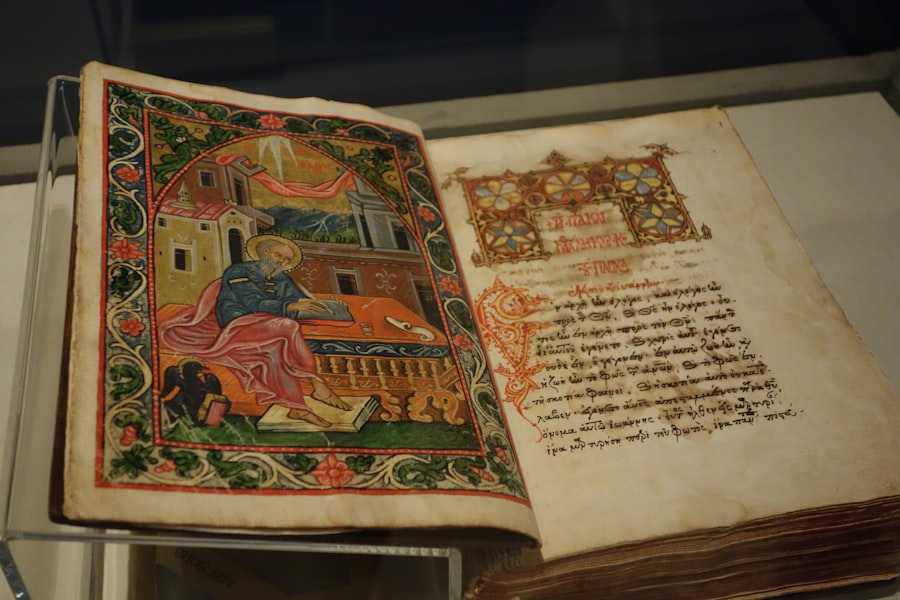
Beyond the physical characteristics of a document, textual criticism and a thorough understanding of the historical context are crucial for identifying forgeries. These methods focus on the content, language, and internal consistency of the material.
Linguistic Analysis and Anachronisms
The language used in a document offers a powerful window into its authenticity. Medieval languages evolved, and linguistic analysis can reveal inconsistencies that betray a later origin.
Vocabulary and Grammar
The vocabulary and grammatical structures of medieval languages varied from region to region and period to period. A document purportedly written in Old English, for instance, might contain modern French loanwords or grammatical constructions that only emerged centuries later. Similarly, a Latin text might employ vernacular linguistic features or sentence structures not present in the intended historical period. Experts in medieval philology can identify these anachronisms with precision.
Stylistic Conventions and Idioms
Each historical period possessed its own stylistic conventions and common idioms. Forgers, even those with a strong command of medieval literature, might struggle to perfectly replicate the subtle nuances of language and rhetorical devices of a particular era. The use of phrases or turns of expression that became popular only after the purported date of the document is a telltale sign.
Historical Plausibility and Internal Consistency
Forgeries often falter when subjected to critical examination of their historical plausibility and internal consistency.
Evaluating Historical Accuracy
A forged document might contain factual errors concerning historical events, people, or places. It might incorrectly describe the political landscape, misattribute actions to historical figures, or mention events that had not yet occurred. A thorough knowledge of the period is essential for spotting these historical blunders. For example, a charter purportedly granted by a king might list witnesses who were already deceased at the time of its supposed issuance, or it could refer to administrative structures that did not exist then.
Examining the Narrative and Claims
The narrative presented within a document must be coherent and plausible within its historical context. If a forged chronicle claims a miraculous event that contradicts known historical accounts or scientific understanding of the time, it will be viewed with suspicion. Similarly, if a legal document makes claims that are inconsistent with the established legal framework of the period, its authenticity will be questioned.
Cross-Referencing with Other Sources
A critical step in authenticating a document is to cross-reference its claims with other independent historical sources. If a purportedly ancient charter grants a specific piece of land to a monastery, but no other contemporary or near-contemporary records mention this grant or the land’s ownership by the monastery, it raises concerns. A consistent pattern of corroboration across multiple sources strengthens a document’s claim to authenticity, while a lack of corroboration or outright contradiction is a significant warning sign.
Scientific Analysis and Its Role
In recent decades, scientific analysis has emerged as a powerful ally in the fight against medieval forgery. Techniques that were once the exclusive domain of scientific laboratories are now routinely applied to historical documents, providing objective evidence that can corroborate or refute textual and paleographic analyses.
Radiocarbon Dating
Radiocarbon dating (also known as carbon-14 dating) is a scientific method used to determine the age of organic materials, including parchment and paper.
Dating Parchment and Paper
By measuring the decay of carbon-14 isotopes present in the material, scientists can estimate how long ago the organism from which the parchment was made died, or when the paper was manufactured from plant matter. This method can effectively date the base material of a document. If a document claimed to be from the 10th century is found to be made from materials dating to the 15th century, it is irrefutable evidence of forgery.
Limitations of Radiocarbon Dating
While powerful, radiocarbon dating has its limitations. It provides a date range, not a precise year, and the accuracy can be affected by various environmental factors. Furthermore, it dates the material, not necessarily the ink or the act of writing. A forger could theoretically use ancient parchment to write a fraudulent text, and radiocarbon dating would reveal the age of the parchment, not the writing itself.
Ink Analysis and Pigment Identification
The chemical composition of inks used in medieval documents can yield valuable information about their age and origin.
Identifying Anachronistic Components
Medieval inks were typically made from natural materials like oak galls, iron salts, and carbon. Modern inks, however, often contain synthetic pigments and binders that were unavailable in the medieval period. Spectroscopic analysis can identify the presence of these anachronistic components, clearly indicating a forgery. For example, the presence of titanium dioxide, a common pigment in modern inks, would be highly suspicious in a medieval document.
Determining the Origin of Pigments
Even within the context of medieval materials, the origin of certain pigments could be traced. Forbush analysis or X-ray fluorescence can identify the elemental composition of pigments, potentially linking them to specific geographical sources or trade routes, which can then be compared to the purported origin and date of the document.
Underdrawing and Palimpsest Analysis
Advanced imaging techniques can reveal hidden layers beneath the visible text or imaging of manuscripts.
Revealing Previous Layers of Writing
Techniques like infrared reflectography can penetrate the ink of a document to reveal underdrawings or faint traces of previous writing. This is particularly useful in the analysis of palimpsests, where older texts were scraped away to make room for new ones. If a seemingly original document shows evidence of later writing being erased from beneath, it suggests a more complex history, and potentially a more recent creation attempting to appear ancient.
Detecting Modern Alterations
These imaging techniques can also reveal modern alterations, additions, or erasures that might not be visible to the naked eye. A forger might attempt to subtly alter a genuine document to support a false claim, and these techniques can expose such tampering. The detection of meticulous laser erasure marks or the ghost of a digitally inserted passage would be conclusive evidence.
In the fascinating realm of medieval history, the topic of forgeries and fakes has garnered significant attention, revealing how easily the past can be manipulated. A recent article delves into the complexities of this issue, highlighting various notorious forgeries that have misled historians and collectors alike. For those interested in exploring the broader implications of authenticity and deception in historical narratives, you can read more about it in this insightful piece on government-controlled assets. This connection between historical artifacts and modern governance underscores the ongoing relevance of understanding the authenticity of our historical records.
The Impact of Forgeries on Historical Understanding
| Forgery/Fake | Description | Impact |
|---|---|---|
| The Donation of Constantine | A forged Roman imperial decree by which the emperor Constantine the Great supposedly transferred authority over Rome and the western part of the Roman Empire to the Pope. | It bolstered the papacy’s territorial and secular power for centuries. |
| The Shroud of Turin | A linen cloth bearing the image of a man who appears to have suffered physical trauma in a manner consistent with crucifixion. | It has been a subject of intense debate within the scientific and religious communities. |
| The Donation of Sutri | A forged imperial decree by which the emperor Constantine the Great supposedly granted the Pope authority over the city of Rome and the Papal States. | It contributed to the papacy’s claims of temporal power. |
The pervasive presence of forgeries and fakes has had a significant and often problematic impact on the historical understanding of the medieval period. For centuries, scholars, often lacking the sophisticated tools of detection available today, accepted many fabrications as genuine, shaping narratives and influencing interpretations.
Shaping Historiographical Narratives
The acceptance of forged documents has profoundly shaped historical narratives. For example, the “Donation of Constantine,” a 4th-century document forged in the 8th century, was instrumental in justifying papal claims to temporal power in Western Europe for centuries. Its eventual debunking by Lorenzo Valla in the 15th century was a landmark moment in textual criticism, but the spurious narrative it propagated had already deeply influenced the trajectory of European political and religious history.
Influencing Political and Legal Developments
Forged charters and legal documents have directly influenced political boundaries, succession disputes, and legal judgments throughout the medieval period and beyond. The supposed ancient rights or land grants detailed in these fabrications were often used as evidence in disputes, leading to the establishment of legitimate claims based on fraudulent premises. This meant that entire legal traditions and political configurations could, in part, be built upon foundations of deception.
Perpetuating Misconceptions About Medieval Life
Beyond grand political narratives, forgeries have also contributed to misconceptions about various aspects of medieval life. Fabricated saints’ lives, miraculous accounts, or even purportedly authentic letters could create idealized or distorted views of religious devotion, social customs, and technological capabilities. These misrepresentations could obscure the more complex and nuanced realities of medieval existence.
The Ongoing Challenge for Historians
The work of uncovering medieval forgeries is an ongoing process. New discoveries are made, and previously accepted documents are re-examined with modern analytical tools. This constant re-evaluation is a testament to the dynamic nature of historical inquiry. Historians must remain vigilant, employing a critical and multidisciplinary approach to ensure that their understanding of the medieval past is built upon the most reliable evidence available. The task of sifting through centuries of material, discerning truth from fabrication, is a testament to the rigorous and ever-evolving nature of historical scholarship, ensuring that our picture of the medieval world becomes increasingly accurate, if not always perfectly complete. The ongoing challenge lies in the fact that forgers have always been a step ahead, often adapting their methods as detection techniques advance, making the quest for historical authenticity a continuous endeavor.
FAQs
What are some common examples of forgeries and fakes in medieval history?
Some common examples of forgeries and fakes in medieval history include the Donation of Constantine, the Vinland Map, and the Shroud of Turin.
How were forgeries and fakes in medieval history created?
Forgeries and fakes in medieval history were often created through the fabrication of documents, the alteration of existing artifacts, or the creation of entirely new artifacts designed to deceive.
What were the motivations behind creating forgeries and fakes in medieval history?
The motivations behind creating forgeries and fakes in medieval history varied, but often included financial gain, political manipulation, religious influence, and the desire for prestige or recognition.
How have modern techniques and technologies helped to identify medieval history forgeries and fakes?
Modern techniques and technologies, such as carbon dating, spectroscopy, and advanced imaging, have helped to identify medieval history forgeries and fakes by providing scientific evidence to authenticate or debunk the authenticity of artifacts and documents.
What impact have medieval history forgeries and fakes had on our understanding of the past?
Medieval history forgeries and fakes have had a significant impact on our understanding of the past, leading to the revision of historical narratives, the reassessment of important events and figures, and the development of more rigorous methods for evaluating historical evidence.