The creation of medieval manuscripts was a labor-intensive endeavor, entrusted primarily to scribes within monastic or secular scriptoria. These skilled individuals meticulously copied texts, a process that, despite their dedication, was inherently prone to error. The sheer volume of copying, the limitations of writing materials, and the human element all contributed to the perpetuation of mistakes, leading to a constant, often subtle, battle against clerical errors.
The act of writing in the Middle Ages was far removed from the controlled and well-lit conditions afforded by modern technology. Scribes typically worked in unheated scriptoria, often dimly lit by natural light that varied with the seasons and weather. The physical demands of the task were significant.
Illumination: A Constant Challenge
Natural light was the primary source of illumination for scribes. This meant that work was often dictated by the rising and setting of the sun. Cloudy days or the onset of winter plunged scriptoria into near darkness, forcing scribes to either cease their work or risk misreading and error. Artificial light, such as candles or oil lamps, was available but posed its own set of problems. The flickering nature of flames could distort letters, and the smoke produced could damage manuscripts over time. The inherent limitations of illumination necessitated a slow and deliberate pace, yet even this did not eliminate the possibility of visual misinterpretations.
Writing Materials: Imperfections and Limitations
The materials used for writing also presented challenges. Parchment, typically made from calf, sheep, or goat skin, was the preferred medium. Its preparation was a laborious process, and the quality of the skin could vary significantly. Imperfections such as scars, birthmarks, or thinning in the material could force the scribe to adapt their writing, potentially leading to awkward spacing or alterations that could obscure text or introduce new ambiguities. Ink, usually made from oak galls or soot, could also be inconsistent. The viscosity of the ink could change, leading to blots or feathery lines that made accurate transcription difficult. Feather quills, the common writing instruments, required constant sharpening and could fray, leading to uneven strokes and the potential for skips or runs of ink.
Physical Strain and Fatigue
The physical act of writing for extended periods, often hunched over a desk, contributed to fatigue. Repetitive strain injuries were likely common, and eye strain was a perpetual concern. Fatigue inevitably led to a decline in concentration, increasing the likelihood of lapses in attention and thus, errors. The sheer duration of many copying projects meant that scribes could spend years working on a single manuscript, exacerbating the effects of physical strain.
Clerical errors in medieval manuscripts have long fascinated scholars, as they provide insight into the transcription practices and the challenges faced by scribes of the time. These errors, often arising from misinterpretation or fatigue, can significantly alter the meaning of texts and highlight the human element in the preservation of knowledge. For a deeper exploration of historical documentation and its implications, you might find the article on Piri Reis and ice sheet mass balance particularly intriguing, as it discusses the accuracy and reliability of historical maps and their impact on our understanding of geography. You can read more about it here: Piri Reis and Ice Sheet Mass Balance.
Types of Clerical Errors: A Multifaceted Problem
Clerical errors in medieval manuscripts were not a monolithic entity. They manifested in a variety of forms, each with its own genesis and impact on the text. Understanding these categories is crucial to appreciating the magnitude of the challenge.
Omissions: The Missing Pieces
Omissions were perhaps the most straightforward, yet potentially devastating, type of error. A scribe might simply skip a word, a phrase, or even an entire line of text. This could occur through distraction, a momentary lapse in attention, or a miscounting of lines, especially when copying directly from a exemplar. Certain scribes might develop habitual omissions of frequently occurring words or phrases. The cumulative effect of multiple omissions within a text could significantly alter or obscure its meaning.
Homoioteleuton and Homoioptoton
Specific types of omissions, such as homoioteleuton (repetition of similar endings) and homoioptoton (repetition of similar beginnings), were particularly insidious. A scribe, seeing two phrases with identical or near-identical endings or beginnings, might erroneously copy only the first instance and skip the intervening text. This could lead to the wholesale deletion of substantial portions of material without the scribe necessarily realizing the error.
Additions: Unintended Inclusions
Conversely, scribes could also introduce additions. These errors often stemmed from memory lapses, where a scribe might inadvertently insert a word or phrase from memory that was not present in the exemplar, or they might repeat a word or phrase. In some instances, marginalia or annotations from previous copies might be mistakenly incorporated into the main text. This could lead to the conflation of commentary with original wording, creating textual confusion.
Substitutions: The Wrong Word
Substitutions involved the replacement of one word with another. This could occur for a variety of reasons: misreading a letter or word in the exemplar (e.g., confusing ‘m’ for ‘n’, or ‘a’ for ‘o’), or substituting a synonym or a similar-sounding word. While some substitutions might have little impact on the overall meaning, others could subtly, or drastically, change the intended message. This was particularly problematic in texts where precise terminology was crucial, such as theological or legal documents.
Transpositions: Letters and Words Out of Order
Transpositions involved the accidental swapping of letters within a word or words within a sentence. This could result in nonsensical words or altered grammatical structures. While often visually obvious to a careful reader, the fatigue and hurried nature of copying could lead to these errors being overlooked.
Errors of Interpretation: Misunderstanding the Source
Perhaps the most complex category of errors involved misinterpretations of the exemplar. This could arise from ambiguous handwriting in the original text, the use of abbreviations that the scribe did not fully understand, or a lack of familiarity with the subject matter. A scribe might transcribe a word or phrase in a way that made sense to them, but which was not the intended meaning of the original author. This highlights the intellectual demands placed upon scribes, who were not merely mechanical transcribers but also, to a degree, interpreters.
The Role of the Exemplar: A Flawed Foundation
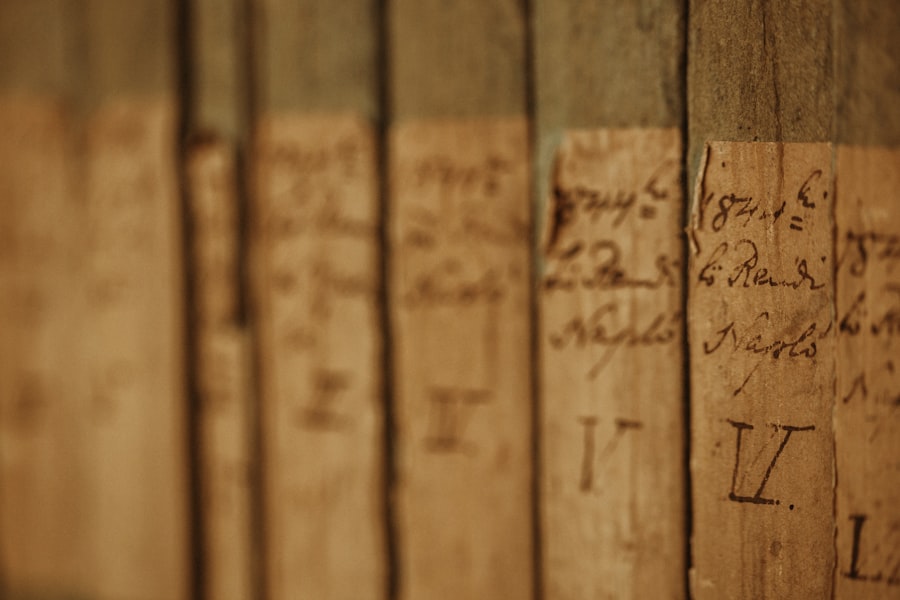
The quality of the text being copied, known as the exemplar, played a critical role in the perpetuation of errors. No manuscript was perfect, and the exemplar itself was often a product of previous copying, carrying its own baggage of clerical mistakes.
Inherited Errors: The Ripple Effect
When a scribe copied from an already error-filled exemplar, they were, by definition, destined to reproduce those errors. This created a ripple effect, where mistakes multiplied and became embedded in successive generations of manuscripts. A single error, introduced early in the copying lineage of a text, could become a characteristic feature of that text for centuries. The study of textual variants (differences between manuscripts) often involves tracing these lineages to identify the earliest forms of errors.
Ambiguity in the Source Text
The exemplar might contain inherent ambiguities, such as poorly written or faded script, or the use of idiosyncratic abbreviations. A scribe facing such challenges had to make educated guesses within the constraints of their knowledge and the available time. These guesses, while understandable, could lead to interpretations that deviated from the original author’s intent.
The Problem of Multiple Exemplars
In some cases, scribes might consult multiple exemplars to create a more accurate copy. However, this practice could also introduce new complexities. Discrepancies between different exemplars would force the scribe to make choices about which version to follow, potentially introducing their own biases or errors in judgment in the process of reconciliation. Deciding which of two conflicting readings to prioritize was a judgment call, and not always an easily justifiable one.
Correction and Revision: Attempts to Rectify the Flaws
Despite the inherent difficulties, medieval scribes and their contemporaries were not entirely passive in the face of clerical errors. Various methods of correction and revision were employed, though their effectiveness varied.
Interlinear and Marginal Corrections
The most common form of correction involved adding missing letters or words above the line (interlinear) or in the margins. Scribes would often use a different colored ink or a lighter hand to indicate that a correction had been made. These corrections might be made by the original scribe themselves, or by a later reader or corrector. Marginal corrections often served the purpose of providing alternate readings or clarifications.
Deletion and Rewriting
When a word or phrase was deemed erroneous, it could be struck through or scraped off the parchment, and the correct version rewritten. Scraping, while effective in removing ink, could damage the parchment, leaving it thin and uneven, which could itself lead to future transcription problems. The efficiency of deletion and rewriting was dependent on the scribe’s skill and the quality of the parchment.
The Role of the Corrector
In some larger scriptoria, a designated “corrector” existed. This individual would collate the newly copied manuscript against the exemplar, identifying and marking errors. The corrector acted as a secondary layer of quality control, aiming to ensure a higher degree of accuracy before the manuscript was considered complete. The effectiveness of a corrector depended on their own skill, diligence, and textual understanding.
Later Revisions and Recensions
Over time, manuscripts could be revised and re-edited. These later recensions aimed to address accumulated errors or to update the text in some fashion. This process involved comparing multiple existing copies, identifying divergences, and attempting to reconstruct a more authoritative version. The development of different textual traditions, or recensions, is a testament to these ongoing efforts to refine and purify texts.
Clerical errors in medieval manuscripts have long fascinated scholars, as these mistakes can reveal much about the practices and challenges of scribes during that era. For instance, an intriguing discussion on the accuracy of historical documents can be found in an article that examines the Piri Reis map and its implications for our understanding of cartography. This article highlights how even minor errors in such significant works can lead to broader debates about historical accuracy and interpretation. To explore this topic further, you can read the article here.
The Long-Term Impact: Textual Drift and Scholarly Inquiry
| Manuscript | Number of Clerical Errors | Type of Errors |
|---|---|---|
| Book of Kells | 87 | Misspellings, omissions, and transpositions |
| Lindisfarne Gospels | 62 | Incorrect word order, repetition, and insertion of wrong words |
| Canterbury Tales | 105 | Spelling mistakes, omitted words, and incorrect punctuation |
The persistent presence of clerical errors had profound and lasting consequences for the transmission of knowledge and the development of scholarship throughout the Middle Ages and beyond.
Textual Drift and Divergence
The cumulative effect of clerical errors led to significant textual drift. Over generations of copying, the original text of many works became increasingly obscured. Different versions of the same text could diverge so widely that they appeared to be distinct works. This made it challenging for scholars to determine the author’s original intent and to establish a definitive version of a text.
The Foundation for Textual Criticism
Paradoxically, the very presence of these errors laid the groundwork for the discipline of textual criticism. As scholars in later periods (particularly the Renaissance and Enlightenment) encountered these textual variations, they began to develop systematic methods for analyzing and comparing manuscripts, aiming to reconstruct the most authentic versions of classical and medieval texts. The study of clerical errors became central to understanding the history of texts.
Challenges for Understanding and Interpretation
For medieval readers, clerical errors could pose significant obstacles to understanding. Misreadings, omissions, and substitutions could lead to misinterpretations of complex philosophical or theological arguments. Identifying and resolving these errors often required considerable knowledge and effort on the part of the reader, further limiting the accessibility of texts to a wider audience. The cumulative effect of numerous small errors could transform a clear argument into a convoluted one.
The battle against clerical errors in medieval manuscripts was an ongoing, unglamorous, and often invisible struggle. It was fought by dedicated scribes in challenging conditions, with imperfect tools, against the inherent fallibility of the human hand and eye. While these errors were a constant challenge to the accurate transmission of knowledge, they also inadvertently paved the way for later scholarly endeavors, highlighting the enduring complexity of preserving and understanding the written word. The survival of these texts, despite their imperfections, is a testament to the enduring dedication to learning and the inherent value placed on the written word throughout the medieval period.
FAQs
What are clerical errors in medieval manuscripts?
Clerical errors in medieval manuscripts refer to mistakes made by scribes or copyists during the transcription of texts. These errors can include misspellings, omissions, additions, and other inaccuracies.
What are some common types of clerical errors found in medieval manuscripts?
Common types of clerical errors found in medieval manuscripts include misspellings, homophonic errors (confusing similar sounding words), transpositions of letters or words, and errors in word division and punctuation.
How did clerical errors in medieval manuscripts occur?
Clerical errors in medieval manuscripts occurred due to a variety of factors, including the limitations of the scribes’ literacy and language skills, the use of abbreviations and symbols, the condition of the source material, and the scribes’ working conditions.
What impact did clerical errors have on the accuracy of medieval manuscripts?
Clerical errors could significantly impact the accuracy of medieval manuscripts, leading to potential misunderstandings of the original text, confusion for readers, and challenges for modern scholars in interpreting and translating the content.
How do scholars and researchers address clerical errors in medieval manuscripts?
Scholars and researchers address clerical errors in medieval manuscripts through careful examination, comparison with other sources, and the use of textual criticism techniques to identify and correct errors. Additionally, advancements in digital imaging and analysis have provided new tools for studying and correcting clerical errors in medieval manuscripts.