The archaeological record, a vast and intricate tapestry woven from the detritus of past human activity, offers a profound, albeit often fragmented, glimpse into how ancient peoples lived, interacted, and shaped their environments. While the tangible remnants – stone tools, pottery shards, architectural foundations, skeletal remains – speak volumes about diet, technology, social organization, and even ritual practices, a significant portion of their lived experience remains elusive. This silent majority encompasses the nuances of daily interaction, the ephemeral expressions of emotion, the subtle performative aspects of social life, and the overarching physicality of human presence that eludes direct excavation. Uncovering this “physical silence” in the archaeological record necessitates a methodological shift, moving beyond purely material analysis to embrace interpretive frameworks that can infer the presence and significance of embodied experience.
Archaeology is inherently a discipline of preservation and interpretation. The archaeological record is not a perfect mirror of the past; it is a biased sample, skewed by differential preservation rates and the destructive forces of time, environmental processes, and later human activity. The most durable materials, such as stone, bone, and fired clay, are most likely to survive, leaving behind a landscape dominated by hardened evidence. Conversely, perishable organic materials – textiles, leather, wood in many contexts, and even the organic components of the human body that are not fully mineralized – often decay, leaving no direct trace.
The Ghost of the Organic
The absence of organic materials can create significant gaps in our understanding of daily life. The clothes people wore, the food they prepared and consumed (beyond preserved residue analysis), the furniture they used, the musical instruments they played, and the structures they inhabited (when built primarily of organic materials) are frequently absent. This absence is not a passive void but an active challenge to reconstruction. Estimating the impact of textiles on fashion, craftsmanship, and trade, for instance, relies heavily on indirect evidence like spindle whorls, needles, and loom weights, or on depictions in art, rather than the textiles themselves.
The Ephemeral Nature of Performance
Human interaction is inherently performative. Gestures, postures, vocalizations, and the physical spacing between individuals are all crucial elements of communication and social dynamics. These intangible aspects leave minimal, if any, direct archaeological trace. While the arrangement of seating in a meeting house or the layout of a public space might suggest social gatherings, the specific ways in which people occupied these spaces, the physical distances maintained, and the embodied dialogue that transpired remain largely hidden.
The Silence of Sound and Scent
The auditory and olfactory dimensions of past human environments are also largely inaccessible through conventional archaeological methods. The sounds of daily life – marketplace chatter, children’s laughter, the clang of hammers, the calls of animals – and the smells of cooking fires, human bodies, and sanitation are absent from the excavated record. While we might infer the presence of activities that generate sound and scent, the qualitative experience of these sensory inputs is lost. The impact of these sensory experiences on human behavior, social bonding, and spatial perception is therefore difficult to ascertain.
The concept of physical silence in the archaeological record is an intriguing topic that sheds light on the absence of certain artifacts or cultural markers, suggesting shifts in human activity and environmental conditions over time. A related article that explores the broader implications of environmental changes is available at The Climate Emergency: A Call to Action. This piece discusses how climate change impacts not only contemporary society but also our understanding of past civilizations, emphasizing the importance of recognizing these silent gaps in the archaeological narrative.
Reconstructing Embodied Presence Through Proxies and Inference
Despite the inherent limitations, archaeologists are continually developing and refining methodologies to approach the physical silence. This involves looking beyond the direct evidence of artifacts and structures to consider a wider range of proxies and employing inferential reasoning based on comparative ethnography, experimental archaeology, and increasingly sophisticated analytical techniques. The goal is not to perfectly recreate the past but to build more robust and nuanced understandings of how humans physically experienced and interacted with their worlds.
Spatial Analysis: More Than Just Placement
The spatial organization of past settlements and activity areas offers a rich source of information about embodied practices. The proximity of dwellings to resources, the layout of public spaces, the distribution of activity areas within households, and the arrangement of features like hearths and storage pits all speak to how people moved through, utilized, and perceived their environments.
Household Dynamics and Personal Space
The internal arrangement of domestic structures can reveal much about family dynamics, gender roles, and the negotiation of personal space. The size of rooms, the number and placement of sleeping areas, and the proximity of work areas to living spaces can all be analyzed to infer patterns of cohabitation and individual experience. For example, the presence of distinct activity zones within a house – a cooking area, a sleeping area, a crafting area – suggests organized routines and the spatial partitioning of tasks. The size and elaboration of an individual’s sleeping space, if discernible, might also hint at status or relative privacy.
Public Spaces and Social Interaction
The design of public spaces, such as plazas, courtyards, and gathering halls, offers insights into community interaction and social norms. The presence of benches, platforms, or other fixed seating suggests communal activities and the deliberate facilitation of group gatherings. The size and capacity of these spaces can provide clues about the scale of social events and the potential for direct, physical interaction among large numbers of people. The layout of these areas might also indicate whether proximity was encouraged or discouraged, reflecting social hierarchies or norms of personal comportment.
Movement Patterns and the Experience of Landscape
Analyzing the distribution of archaeological features, pathways, and routes of travel can shed light on how ancient peoples navigated their landscapes and how they experienced distance and movement. Understanding the effort involved in traversing certain terrains, the importance of established routes, and the visibility of landmarks can help reconstruct the physical engagement with the environment. This can extend to inferring the rhythms of daily life, such as the routes taken to collect water or firewood, or the paths leading to agricultural fields.
Artifact Use-Wear and Function: The Imprint of the Hand
The physical traces left on artifacts by their use provide a crucial link to the embodied actions of their creators and users. Microscopic analysis of use-wear patterns on tools, weapons, and even pottery can reveal the specific movements and pressures applied during their utilization. This can help reconstruct the gestures, the force, and the duration of activities, offering a tangible imprint of human physicality.
Tool Mark Analysis: Tracing the Dynamics of Crafting
Detailed examination of microscopic striations, polish, and fractures on the edges of stone tools, for instance, can reveal the direction of movement, the angle of impact, and the type of material being worked. This allows archaeologists to infer the techniques of woodworking, hide processing, or food preparation, and potentially the force and precision involved. The consistency of these patterns across multiple tools can also suggest standardization of techniques and the transfer of skills.
The Narrative of the Pot: From Clay to Consumption
The wear patterns on pottery, from the base of a cooking pot to the rim of a drinking vessel, can speak to how these items were handled, cleaned, and used. Scuff marks on the bottom might indicate repeated placement on a hearth, while abrasions on the rim could suggest repeated contact with lips or stirring implements. Over time, these subtle traces build a narrative of the object’s active life, its integration into daily routines, and the physical contact it maintained with human bodies.
Bioarchaeology and the Body as a Record
Bioarchaeology, the study of human and animal remains from archaeological sites, offers direct evidence of the physicality of past lives, though often in a fragmented state. Skeletal analysis can reveal signs of stress, disease, trauma, and patterns of physical activity, providing a biological record of an individual’s life experience.
Skeletal Markers of Activity and Adaptation
The shape and density of bones, particularly in areas of muscle attachment, can indicate habitual physical activities. For example, robust muscle markings on the femur or humerus might suggest strenuous labor or extensive use of the arms for carrying or manipulating objects. Degenerative joint disease, or osteoarthritis, can point to repetitive movements or heavy lifting that placed significant stress on joints over a lifetime.
Trauma and the Violence of Life
The presence of healed or unhealed fractures, perimortem injuries (injuries sustained around the time of death), and evidence of violence on skeletal remains provides direct testimony to the physical dangers and conflicts faced by past populations. The nature and location of these injuries can reveal much about the types of weapons used, the circumstances of conflict, and the vulnerability of individuals within a society. The presence of trepanation, for example, indicates deliberate intervention into the skull, suggesting medical or ritual practices.
Demography and the Rhythms of Life and Death
The age and sex profiles of skeletal assemblages offer insights into mortality rates, life expectancy, and the demographic structure of past populations. This, in turn, informs our understanding of the burdens and stresses of life, including the impact of childbirth, disease, and environmental conditions on survival. The relatively high mortality rates in infants and children, for instance, highlight the fragility of early life in many past societies.
Experimental Archaeology: Re-Enacting the Physical Past
Experimental archaeology plays a pivotal role in bridging the gap between material remains and the embodied physicality they represent. By meticulously recreating ancient technologies, tools, and activities, researchers can gain a tangible understanding of the physical effort, movements, and sensory experiences involved. This allows for direct testing of hypotheses about how things were made, used, and interacted with.
Crafting the Past: The Feel of Materials
Recreating ancient crafts, such as pottery production, stone tool knapping, or textile weaving, allows researchers to experience firsthand the physical demands of these processes. This includes understanding the tactile properties of raw materials, the muscular effort required, the precision of movements, and the sensory feedback generated by the manipulation of tools and materials. For example, experimental flintknapping can reveal the subtle adjustments in hand pressure and percussive force needed to achieve specific flaking patterns.
Tool Use in Practice: The Mechanics of Action
Using recreated ancient tools in a practical context allows for the investigation of their functional efficiency and the physical movements required for their operation. This can range from testing the cutting efficacy of replicated stone axes on wood to examining the biomechanics of using a bow drill for fire starting. Such experiments can reveal the learned skills, the anthropometry of tool design, and the potential for fatigue and strain associated with prolonged use.
Domestic Life Reimagined: The Simulation of Daily Routines
Experimental reconstructions of ancient domestic environments and routines can offer insights into the physicality of daily living. This might involve replicating ancient cooking methods, sleeping arrangements, or even the logistics of water and fuel collection. By living within these reconstructed environments for periods of time, researchers can gain an experiential understanding of the physical challenges, the spatial constraints, and the embodied rhythms of past domestic life.
The Archaeology of Performance and Ritual: Inferring the Intangible
While the direct evidence of performance and ritual is fleeting, their material consequences and spatial organization can offer crucial clues. The analysis of ceremonial spaces, the arrangement of offerings, and the stylistic conventions of art can be interpreted to infer the embodied actions and sensory experiences associated with these events.
Sacred Spaces and the Embodiment of the Divine
The physical layout and features of ceremonial sites, such as temples, altars, and offering pits, are designed to facilitate particular forms of engagement with the sacred. The placement of architectural elements, the dimensions of spaces, and the orientation towards celestial bodies can all influence how individuals physically interact with these areas, suggesting gestures of reverence, communal participation, or individual contemplation. The presence of plastered floors, painted murals, and the careful arrangement of artifacts within these spaces further hint at deliberate sensory experiences.
Offerings and the Materiality of Devotion
The types, quantities, and arrangement of offerings in graves, temples, or other ritual contexts can provide insights into the symbolic meanings and the physical actions associated with devotion. The effort involved in collecting, preparing, and depositing these items, as well as their perceived value, can speak to the intensity of belief and the embodied expressions of piety. The placement of offerings, such as food in burials, directly relates to beliefs about sustenance in the afterlife and the physical needs of the deceased.
Iconography and the Gestural Language of Art
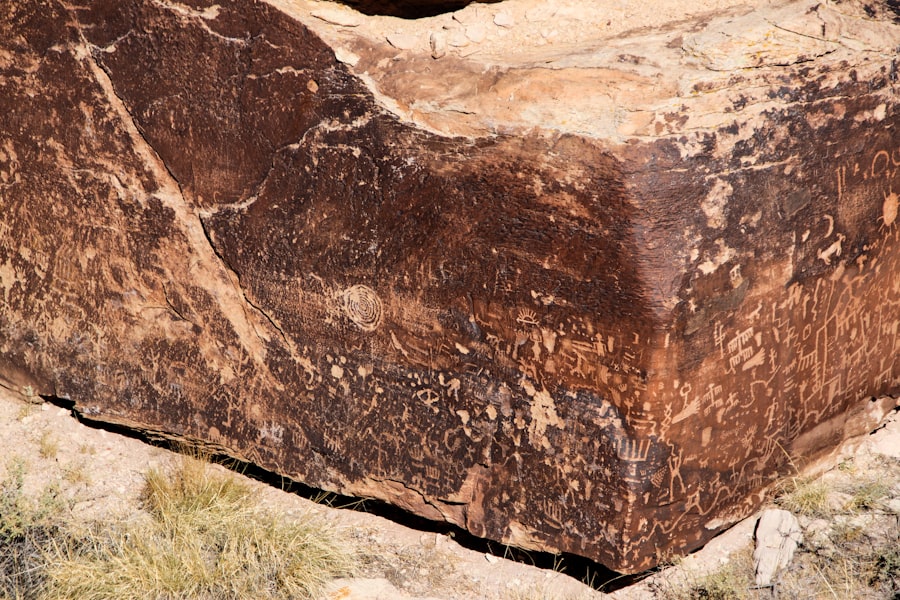
The depiction of human figures, their postures, gestures, and interactions in ancient art, provides a visual lexicon of embodied communication. While often stylized, these representations can offer clues about social customs, ritual performances, and expressions of emotion. The way figures are depicted embracing, bowing, pointing, or engaging in energetic dances can be interpreted as visual echoes of past physical interactions and performative traditions.
In exploring the concept of physical silence in the archaeological record, it is intriguing to consider how the absence of sound can reveal much about past societies. For instance, the study of silent spaces in ancient structures can provide insights into social dynamics and cultural practices. A related article that delves into the nuances of archaeological interpretation can be found here, where the complexities of labor and value in historical contexts are examined, shedding light on how silence may play a role in understanding human behavior and societal organization.
Future Directions: Digital Tools and a More Embodied Past
| Site | Time Period | Physical Silence Evidence |
|---|---|---|
| Göbekli Tepe | 10th millennium BCE | Lack of domestic structures or evidence of permanent settlement |
| Pompeii | 1st century CE | Preserved human remains in positions indicating sudden and violent death |
| Chaco Canyon | 9th-13th century CE | Abandoned and deteriorating great houses and kivas |
The growing integration of digital technologies into archaeological practice holds significant promise for further uncovering the physical silence. Advanced imaging techniques, 3D modeling, and virtual reality environments offer new avenues for analyzing and visualizing spatial data, reconstructing lost structures, and even simulating human movement within these digitally recreated pasts.
3D Modeling and Spatial Empathy
The creation of detailed 3D models of archaeological sites and artifacts allows for a more immersive and intuitive understanding of their physical dimensions and spatial relationships. Researchers can virtually navigate these spaces, assess sightlines, and even test hypotheses about human scale and movement. This digital reconstruction can foster a greater sense of “spatial empathy,” allowing for an understanding of how ancient peoples might have physically experienced their built environments.
Virtual Reality and Experiential Reconstruction
Virtual reality (VR) technology offers the potential for even more profound experiential reconstructions. By creating immersive VR environments based on archaeological evidence, researchers and the public can gain a simulated, embodied understanding of past lifeways. This could involve experiencing the scale of ancient monuments, navigating the streets of a reconstructed city, or even participating in simulated historical events, all within a controlled digital space.
Biomolecular and Biomechanical Analysis: The Chemical and Mechanical Footprint
Emerging biomolecular and biomechanical analytical techniques offer new avenues for inferring past physicality. Analyzing endogenous amino acids in skeletal remains can provide insights into the metabolic stresses and physical activity levels of individuals. Biomechanical modeling, applied to skeletal data and artifact design, can further refine our understanding of the forces and movements involved in past human activities, quantifying the physical demands placed on ancient bodies.
The excavation of the physical silence in the archaeological record is an ongoing endeavor. It requires a multidisciplinary approach, a willingness to move beyond the purely material, and a deep engagement with interpretive frameworks that acknowledge the embodied nature of human existence. By embracing innovative methodologies and fostering a critical understanding of the inherent limitations of the archaeological evidence, archaeology can continue to illuminate not just what ancient peoples made, but how they physically lived, moved, and experienced their worlds.
FAQs
What is physical silence in the archaeological record?
Physical silence in the archaeological record refers to the absence of material evidence or artifacts at a particular site or within a specific time period. This absence can provide valuable information about past human activities and behaviors.
How is physical silence identified in the archaeological record?
Physical silence can be identified through careful excavation, analysis of soil layers, and comparison with other archaeological sites or time periods. It may also be inferred from the absence of expected artifacts or features in a given context.
What can physical silence tell us about past human societies?
Physical silence can provide insights into changes in human behavior, cultural practices, and environmental conditions. It can also indicate periods of abandonment, conflict, or cultural transition within a society.
What are some examples of physical silence in the archaeological record?
Examples of physical silence include the absence of pottery or tools in certain layers of a site, the lack of evidence for specific activities in a particular area, or the sudden disappearance of a settlement from the archaeological record.
How do archaeologists interpret physical silence in the archaeological record?
Archaeologists interpret physical silence by considering the broader context of the site, conducting comparative analysis with other sites, and integrating data from various scientific disciplines such as geology, anthropology, and environmental science. This multidisciplinary approach helps to construct a more comprehensive understanding of the past.