
The Solar Calendar Drift: Understanding the Mechanics
The human endeavor to track time is as old as civilization itself. Among the various methods developed, the solar calendar stands as a cornerstone, attempting to synchronize human affairs with the Earth’s orbital journey around the sun. This seemingly straightforward relationship, however, is subject to a subtle yet persistent inaccuracy known as solar calendar drift. Understanding the mechanics behind this drift is crucial for maintaining the temporal alignment that underpins agriculture, religious observances, and scientific measurement. The drift, while small on a daily or yearly basis, accumulates over centuries, necessitating periodic corrections to keep our calendars aligned with the astronomical reality.
The solar calendar, at its core, relies on the Earth’s revolution around the sun. This celestial motion dictates the year, marked by the progression of seasons and the apparent movement of the sun across the sky. However, the length of this orbital period is not a perfectly round number of days, and the Earth’s rotation on its axis also does not divide neatly into the orbital period. This fundamental mismatch is the source of the calendar’s inherent drift.
The Tropical Year: The True Measure of the Seasons
The concept most relevant to the solar calendar is the tropical year, also known as the solar year. This is the time it takes for the sun to return to the same position in the cycle of seasons, as measured by the vernal equinox. Astronomers define the tropical year not by the Earth’s orbit relative to fixed stars (the sidereal year), but by its cycle of seasons. This is because human activities, particularly agriculture, are tied to these seasonal changes. The tropical year is approximately 365.24219 days long.
The Sidereal Year: A Star-Gazing Perspective
Contrasting the tropical year is the sidereal year. This is the time it takes for the Earth to complete one orbit around the sun relative to the fixed stars. The sidereal year is slightly longer than the tropical year, approximately 365.25636 days. The difference between the two arises due to a phenomenon known as precession of the equinoxes.
Precession of the Equinoxes: The Wobbling Earth
The Earth’s axis of rotation is not perfectly stable but undergoes a slow wobble, similar to a spinning top that is starting to slow down. This wobble, called precession, causes the position of the equinoxes (the points where the sun crosses the celestial equator) and solstices to slowly shift westward along the ecliptic over a period of roughly 26,000 years. This means that the vernal equinox occurs slightly earlier each tropical year relative to the distant stars, making the tropical year shorter than the sidereal year.
The Length of the Day: Another Astronomical Nuance
Compounding the issue of the year’s length is the definition of a “day.” While we often think of a day as exactly 24 hours, the actual length of a solar day, which is the time it takes for the sun to return to its highest point in the sky on consecutive days, varies slightly throughout the year. This variation is due to two factors: the Earth’s changing orbital speed (faster when closer to the sun, slower when farther away) and the tilt of the Earth’s axis.
The Equation of Time: Accounting for Solar Day Variation
The difference between a uniform 24-hour day and the actual solar day is described by the “equation of time.” This equation shows how much the sun appears to be ahead of or behind an imaginary “mean sun” that moves at a constant rate. While this variation is a subtle aspect of celestial mechanics, it contributes to the overall complexity of aligning a human-made calendar with astronomical events.
The mechanics of the solar calendar drift is a fascinating topic that explores how the discrepancies between the solar year and the calendar year can affect various aspects of timekeeping and agricultural practices. For a deeper understanding of how ancient societies adapted to these changes and the broader implications on their economies, you can refer to a related article that provides a historical analysis of ancient economies and their relationship with timekeeping. This article can be found at The Fall of Ancient Economies: A Historical Analysis.
The Unavoidable Fractional Day: The Core of Calendar Discrepancy
The fundamental issue that drives calendar drift is the fact that the tropical year is not an integer number of days. The tropical year is approximately 365.24219 days. This fractional part, approximately 0.24219 days, is the origin of the drift. If a calendar were simply 365 days long, it would progressively fall behind the seasons by nearly a quarter of a day each year.
The Simplistic 365-Day Calendar: Early Inaccuracies
Early attempts at creating solar calendars often used a fixed 365-day year. This approach, while simple to implement, quickly led to significant discrepancies. After just one year, the calendar would be almost a quarter of a day ahead of the actual solar year. After four years, it would be a full day out of sync. This means that seasonal events, such as the summer solstice, would occur earlier and earlier according to the calendar over time.
The Leap Year: A Necessary Correction
To address this problem, the concept of the leap year was introduced. A leap year adds an extra day, typically February 29th, to the calendar approximately every four years. This addition aims to compensate for the accumulated fractional part of the year. The intention is to bring the calendar back into alignment with the seasons.
The Julian Calendar: A Landmark Attempt
The Julian calendar, introduced by Julius Caesar in 45 BCE, was a significant step forward. It established a system of 365 days with a leap year every four years, resulting in an average year length of 365.25 days. This was a remarkably accurate approximation for its time and corrected the drift that had accumulated in earlier Roman calendars. It brought the calendar year much closer to the actual tropical year.
The Limitations of the Julian Leap Year: Persistent, Though Reduced, Drift
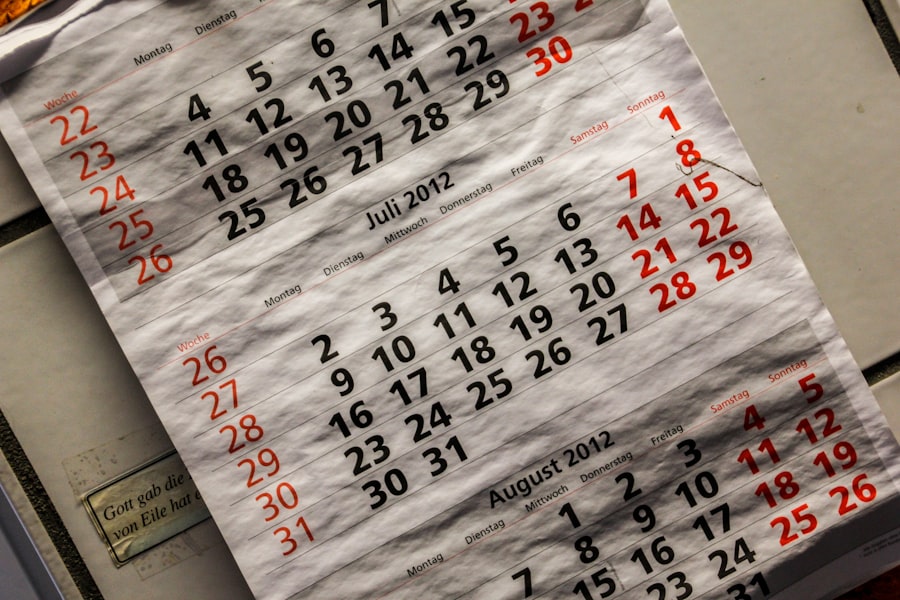
While the Julian calendar’s leap year rule was a vast improvement, it was not perfectly accurate. The average year length of 365.25 days is still slightly longer than the actual tropical year of 365.24219 days. The difference, though small, is still significant over long periods. The Julian calendar overestimates the length of the year by approximately 0.00781 days per year.
The Accumulation of Error: A Gradual Shift
This seemingly minor overestimation, when accumulated over centuries, leads to a noticeable drift. For every 128 years that pass, the Julian calendar gains approximately one full day relative to the seasons. Ancient Roman or medieval festivals tied to specific dates would gradually begin to occur at different times of the year relative to the solstices and equinoxes. This accumulating error eventually became problematic for religious and civil purposes.
The Gregorian Calendar: A Refined Adjustment
Recognizing the persistent drift of the Julian calendar, Pope Gregory XIII introduced a new calendar in 1582: the Gregorian calendar. This calendar maintained the basic structure of the Julian leap year system but introduced a more nuanced rule to achieve greater accuracy. The Gregorian calendar is the basis of the civil calendar used in most of the world today.
The Gregorian Leap Year Rule: Eliminating the Overestimation
The Gregorian calendar refines the leap year rule. A year is a leap year if it is divisible by 4, except for years that are divisible by 100 but not by 400. Therefore, 1700, 1800, and 1900 were not leap years because they were divisible by 100 but not by 400. However, 1600 and 2000 were leap years because they were divisible by 400. This rule significantly reduces the error introduced by the leap year system.
The Gregorian Calendar’s Accuracy: A Narrower Margin of Error
The Gregorian calendar’s average year length is approximately 365.2425 days. This is remarkably close to the tropical year of 365.24219 days, with an error of only about 0.00031 days per year. This minuscule discrepancy means that the Gregorian calendar will not drift by a full day for approximately 3,300 years. This level of accuracy is sufficient for most practical purposes and for astronomical observations over human lifespans.
The Impact of Drift: More Than Just a Theoretical Annoyance

The solar calendar drift, while subtle, has tangible consequences. Its impact is most keenly felt in areas where precise alignment with astronomical cycles is essential. This includes agriculture, religious practices, and scientific research. Ignoring this drift could lead to significant disruptions over time.
Agricultural Synchronization: The Foundation of Societies
Throughout history, agriculture has been intrinsically linked to the solar calendar. The timing of planting, harvesting, and other agricultural activities depends on the predictable progression of seasons. A drifting calendar would mean that farmers would eventually be planting and harvesting at the wrong times relative to the natural cycles, leading to crop failures and societal instability. The need to maintain accurate seasonal timings has been a primary driver for calendar reform.
Religious Observances: Tied to Celestial Events
Many religious festivals and observances are tied to specific points in the solar year, such as the solstices and equinoxes. For example, Easter, a major Christian holiday, is calculated based on the vernal equinox. A drifting calendar would cause these observances to shift their timing relative to the astronomical events they are meant to commemorate, potentially undermining their symbolic and practical significance.
Scientific Precision: The Demands of Modern Research
In modern science, precise measurement of time and astronomical phenomena is paramount. Astronomical observations, space missions, and even everyday technologies like GPS rely on highly accurate timekeeping. While atomic clocks provide an exceptionally precise measure of time, the calendar system serves as the framework within which these precise measurements are contextualized. Continued drift in our calendar system would introduce inaccuracies into large-scale scientific endeavors.
The mechanics of the solar calendar drift is a fascinating topic that explores how the Earth’s orbit affects our timekeeping systems. For a deeper understanding of how such phenomena can influence societal structures, you might find it interesting to read an article on the rise of failed government states, which discusses the implications of timekeeping and governance. You can access it here: the rise of failed government states. This connection highlights the importance of accurate time measurement in maintaining order and stability within societies.
Maintaining Temporal Harmony: The Ongoing Challenge of Calendar Accuracy
| Aspect | Description |
|---|---|
| Solar Calendar Drift | The gradual shift in the alignment of the solar calendar with the actual solar year due to the difference in the length of the calendar year and the tropical year. |
| Mechanics | It occurs because the solar year (365.2425 days) is not an exact multiple of the calendar year (365 days), causing a discrepancy over time. |
| Impact | Can lead to seasonal misalignment, affecting agricultural practices, religious observances, and other time-dependent activities. |
| Correction | Leap years and other calendar adjustments are used to mitigate the drift and keep the calendar aligned with the solar year. |
The history of calendar development is a testament to humanity’s persistent effort to reconcile the complexities of celestial mechanics with the need for practical timekeeping. The solar calendar drift highlights the inherent challenges in this endeavor. While the Gregorian calendar represents a significant achievement in calendar accuracy, the underlying astronomical realities mean that the potential for drift always exists.
The Role of Leap Seconds: Addressing Short-Term Fluctuations
Beyond the long-term drift addressed by leap years, there are also shorter-term fluctuations in the Earth’s rotation rate. These are influenced by factors such as tidal forces and atmospheric and oceanic currents. To account for these, a system of “leap seconds” has been implemented. Leap seconds are occasional adjustments added to Coordinated Universal Time (UTC) to keep it closely synchronized with astronomical time (UT1). These adjustments are rare and usually occur on June 30th or December 31st.
The Future of Calendars: Adaptation and Evolution
As our understanding of celestial mechanics deepens and our technological capabilities advance, the way we conceive of and implement calendars may continue to evolve. While the Gregorian calendar is likely to remain in widespread use for the foreseeable future, discussions about further refinements or alternative systems occasionally arise. The pursuit of temporal harmony, of aligning our human measurement of time with the grander rhythms of the cosmos, is an ongoing and intellectually stimulating challenge. The understanding of the solar calendar drift is fundamental to this pursuit, reminding us that even the most seemingly stable systems are subject to the subtle, persistent forces of the universe.
FAQs
What is the solar calendar drift?
The solar calendar drift refers to the gradual shift of the solar calendar in relation to the actual solar year. This drift occurs because the solar year is not exactly 365 days long, leading to a discrepancy between the calendar year and the astronomical year.
What causes the solar calendar drift?
The solar calendar drift is primarily caused by the fact that the Earth’s orbit around the sun is not precisely 365 days. It actually takes approximately 365.25 days for the Earth to complete one orbit around the sun, leading to the need for occasional adjustments in the calendar to account for this discrepancy.
How is the solar calendar drift addressed?
The solar calendar drift is addressed through the use of leap years, where an extra day is added to the calendar every four years to account for the extra quarter day in the solar year. This adjustment helps to keep the calendar year aligned with the astronomical year and minimize the drift over time.
What are the implications of the solar calendar drift?
The implications of the solar calendar drift include potential discrepancies in the timing of seasonal events, such as the equinoxes and solstices, if the calendar is not adjusted to account for the drift. This can impact agricultural practices, religious observances, and other cultural traditions tied to the changing seasons.
How does the solar calendar drift differ from the lunar calendar?
The solar calendar is based on the Earth’s orbit around the sun, while the lunar calendar is based on the phases of the moon. The solar calendar drift is primarily related to the length of the solar year, whereas the lunar calendar drift is related to the difference between the lunar and solar cycles.