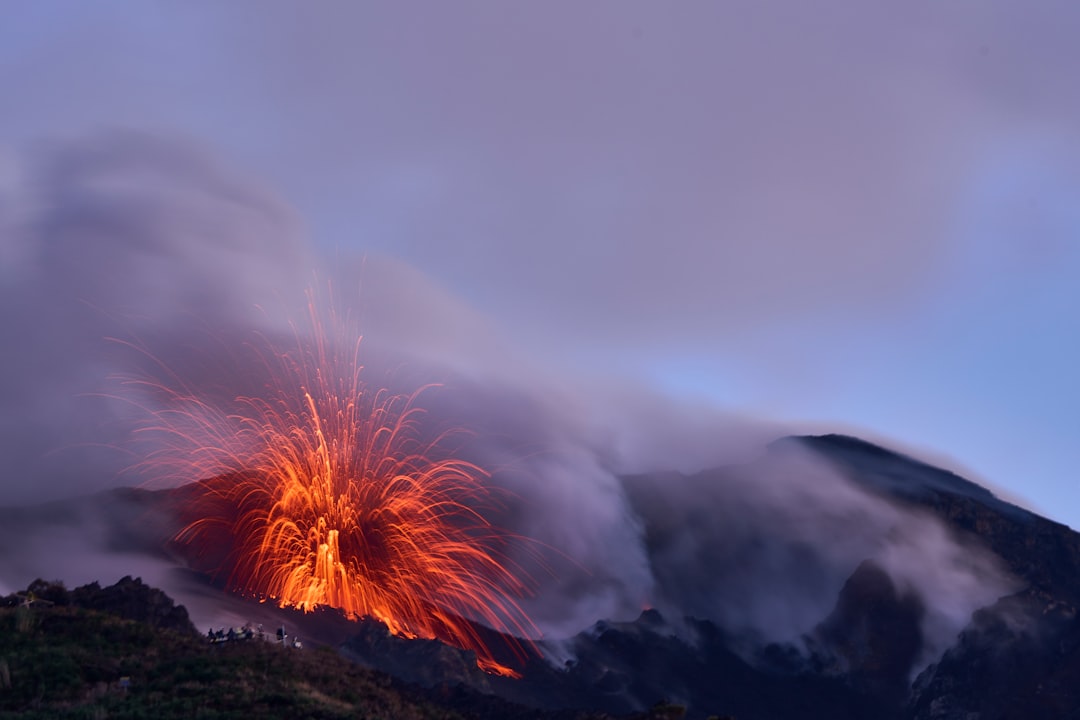
The year 536 AD marked the beginning of a period of profound environmental and societal upheaval, a time when massive volcanic eruptions, likely originating in Iceland, sent a shroud of ash and aerosols into the upper atmosphere, fundamentally altering the global climate for years to come. The consequences of this cataclysmic event rippled across continents, impacting agriculture, economies, and the very fabric of human civilization for generations. Uncovering the full extent of this global impact requires a multidisciplinary approach, drawing on evidence from archaeology, history, paleoclimatology, and scientific analysis of ice cores and geological records.
The initial trigger for the tumultuous events of 536 AD was a series of colossal volcanic eruptions. While pinpointing the exact location with absolute certainty remains a subject of ongoing research, the prevailing scientific consensus points towards a major eruption in Iceland. The magnitude of these eruptions was such that they injected vast quantities of sulfur dioxide and other volcanic aerosols high into the stratosphere.
The Science of Stratospheric Aerosols
Sulfur dioxide, when released into the stratosphere, undergoes chemical reactions to form sulfate aerosols. These microscopic particles are highly reflective, meaning they bounce sunlight back into space before it can reach the Earth’s surface. This phenomenon, known as radiative forcing, leads to a significant cooling of the planet. The stratospheric residence time of these aerosols is extended due to the lack of weather systems in this upper layer of the atmosphere, allowing them to persist for years, perpetuating the cooling effect.
Evidence from Ice Cores
Ice cores, particularly those extracted from Greenland and Antarctica, serve as invaluable archives of past atmospheric conditions. The distinctive layers of ice preserve a record of volcanic activity in the form of increased sulfate concentrations. The remarkably high sulfate spike detected in ice cores dating to 536 AD provides compelling evidence for a major volcanic event occurring around that time. This spike signifies a massive injection of sulfur into the atmosphere, consistent with a large-scale eruption. Further analysis of the isotopic composition of the sulfur can help scientists to narrow down the geographic origin of the eruption.
The Veil of Darkness: Shortwave Radiation Reduction
The stratospheric veil of aerosols had a direct and dramatic impact on the amount of solar radiation reaching the Earth’s surface. This reduction in shortwave radiation, particularly visible light, was perceived by populations across the Northern Hemisphere as a dimming of the sun. Historical accounts from various cultures describe unusual phenomena such as a “loss of the sun’s power,” a “waning of the light,” and persistently gloomy skies, even during summer months. This atmospheric dimming was not merely a visual disturbance; it was a precursor to widespread agricultural failure.
The study of volcanic eruptions and their impact on climate and society has revealed significant events throughout history, including the eruption around 536 AD, which is often linked to global cooling and widespread famine. For a deeper understanding of how such environmental changes can influence geopolitical landscapes, you may find the article “Navigating Contested Territories: A Complex Geopolitical Landscape” insightful. It explores the intricate relationships between environmental factors and political dynamics, shedding light on how historical events, like volcanic eruptions, can shape human history. You can read the article here: Navigating Contested Territories: A Complex Geopolitical Landscape.
A World Thrown into Shadow: Global Climate Deterioration
The immediate aftermath of the eruptions was a rapid and severe cooling of the global climate. This cooling was not uniform, but its effects were felt across vast geographical regions, leading to widespread disruption. The prolonged period of reduced solar radiation and lower temperatures fundamentally altered weather patterns and agricultural productivity.
The Summer of Darkness and the Years of Cold
The year 536 AD itself is often referred to as the “start of the worst year ever.” This was due to the unprecedented dimming of the sun and the accompanying sharp decline in temperatures. Accounts from Europe, for instance, describe snow falling in August and a general lack of warmth. This unusual weather persisted, with historical records indicating that the cooling trend continued for at least a decade, and some scholarship suggests the effects may have lingered for up to 150 years. This extended period of colder temperatures, often termed a “volcanic winter” or a prolonged ‘Little Ice Age’, had devastating consequences for societies reliant on agriculture.
Altered Precipitation Patterns
Beyond just temperature drops, the atmospheric changes induced by the volcanic aerosols also significantly disrupted precipitation patterns. Some regions experienced prolonged droughts, while others were subjected to unusual flooding. These shifts in rainfall were often erratic and unpredictable, further exacerbating the challenges faced by agricultural communities struggling to adapt to the altered climate. The delicate balance required for successful crop cultivation was severely compromised.
Impact on the Roman World and Beyond
The late Roman Empire, already facing internal strife and economic challenges, was particularly vulnerable to these climatic shifts. The reduced agricultural yields led to widespread famine, impacting the already strained resources of the empire. This environmental stress likely contributed to the existing social and political instability, potentially accelerating the decline of the Western Roman Empire. Similar challenges were faced by other civilizations across Europe, Asia, and Africa.
The Breadbasket’s Lament: Agricultural Collapse and Famine
The most direct and devastating consequence of the prolonged dimming and cooling was the collapse of agricultural systems. Crops, reliant on sunlight and stable temperatures, failed to mature. This led to widespread food shortages and, consequently, severe famine across numerous civilizations. The ability of societies to sustain themselves was fundamentally challenged.
Crop Failures and Malnourishment
The reduced sunlight directly inhibited photosynthesis, the process by which plants convert light energy into chemical energy for growth. Even resilient crops struggled to produce viable yields. In many areas, harvests were significantly reduced or entirely failed for successive seasons. This led to widespread malnourishment and starvation, weakening populations and making them more susceptible to disease. Staple crops like grains were particularly affected.
The Irish Annals and Early Medieval Europe
Historical records from early medieval Europe, such as the Irish Annals, provide poignant descriptions of the famine and hardship. These annuls speak of “three years of failing of the wheat,” and “famine everywhere.” The accounts reflect a society grappling with the unprecedented environmental crisis and its toll on human life. The lack of food resources impacted all segments of society, from the peasantry to the ruling elites.
Global Reach of the Food Crisis
The impact was not confined to Europe. Evidence from other regions suggests similar agricultural distress and food shortages. In China, for instance, historical records indicate widespread famine and significant population decline during this period, which scholars attribute, at least in part, to climate anomalies linked to the 536 AD eruptions. The interconnectedness of global trade routes, though less extensive than today, meant that such a widespread agricultural crisis would invariably have reverberations far beyond the immediate affected areas.
The Scourge Returns: The Justinianic Plague and its Amplification
The weakened and malnourished state of populations across the globe created fertile ground for the spread of disease. While the volcanic eruptions did not directly cause pandemics, they created conditions that likely amplified the impact of existing pathogens. The most notable example is the Justinianic Plague, a devastating pandemic that swept through the Byzantine Empire and beyond, coinciding with the aftermath of the 536 AD eruptions.
A Climate-Disease Nexus
The precise relationship between the volcanic events and the spread of the Justinianic Plague is a complex area of study. However, it is theorized that the weakened immune systems of populations suffering from malnutrition and hardship made them more vulnerable to infection. Furthermore, changes in weather patterns and potential societal disruptions could have facilitated the movement of disease vectors.
The Byzantine Empire’s Crisis
The Justinianic Plague, which began in 541 AD, is estimated to have killed tens of millions of people, decimating populations in the Byzantine Empire and its territories. The empire, already struggling with the economic and social consequences of the climatic downturn, was dealt a severe blow. The plague depopulated cities, crippled the economy, and had profound consequences for the military and administrative capabilities of the empire.
Unpacking the Link: Ongoing Research
The exact correlation between the volcanic events and the plague remains a subject of active scientific and historical investigation. While the eruptions did not cause the plague bacteria directly, the environmental stress they imposed on human populations undeniably exacerbated existing vulnerabilities. Research continues to explore the potential climatic triggers that may have influenced the emergence and spread of the pathogen across continents.
The year 536 AD is often marked by significant climatic anomalies believed to be linked to volcanic eruptions, which had profound effects on global weather patterns and agricultural productivity. This period is frequently discussed in relation to its impact on societies, including the rise and fall of various states. For a deeper understanding of how such environmental changes influenced governance and societal structures, you can explore a related article that delves into the dynamics of failed government states during this tumultuous time. To read more about this fascinating topic, visit this article.
Societal Repercussions: Resilience, Adaptation, and Transformation
| Volcanic Eruptions 536 AD Global Markers | |
|---|---|
| Year | 536 AD |
| Global Impact | Severe cooling of the Earth’s climate |
| Markers | Tree ring analysis, ice core samples, historical records |
| Effects | Widespread crop failures, famine, and social unrest |
The prolonged period of environmental stress and hardship forced societies to adapt and, in some cases, fundamentally transform. The ability to cope with widespread famine, disease, and economic upheaval tested the resilience of human civilizations. This era saw shifts in political structures, migration patterns, and the development of new strategies for survival.
Migration and Population Shifts
The inability of certain agricultural regions to sustain populations led to significant migration. People moved in search of more favorable conditions, seeking regions where food was still available or where they could establish new settlements. These population shifts could lead to increased competition for resources in new areas and could also facilitate the spread of diseases. The demographic landscape of various regions was altered.
Shifts in Political Power and Social Structures
The inability of established political systems to adequately respond to the crisis could lead to their weakening or collapse. In the absence of effective governance and resource distribution, social structures could become more fragmented. Conversely, some communities or leaders who managed to adapt and provide for their populations might see their influence grow. The long-term consequences for the development of states and societies were significant.
The Enduring Legacy of a Volcanic Winter
The eruptions of 536 AD serve as a stark reminder of the profound impact that natural events can have on human civilization. The year 536 AD and its subsequent years represent a critical turning point in history, demonstrating the interconnectedness of climate, environment, and human society. The study of this period offers valuable insights into the fragility of our ecological systems and the importance of understanding and mitigating the impacts of climate change, both natural and anthropogenic. The data gleaned from ice cores, historical records, and archaeological sites continue to enrich our understanding of this pivotal moment, reminding us of humanity’s capacity for both vulnerability and resilience in the face of environmental adversity. The legacy of this “volcanic winter” is not just a tale of destruction, but also a testament to the enduring human spirit and the adaptive capabilities of civilizations when confronted with unprecedented challenges.
FAQs
What were the global markers of the volcanic eruptions in 536 AD?
The volcanic eruptions in 536 AD left behind global markers such as a significant decrease in temperature, widespread darkness due to ash and aerosols in the atmosphere, and reports of “dry fog” in the Mediterranean region.
How did the volcanic eruptions in 536 AD impact the global climate?
The volcanic eruptions in 536 AD had a significant impact on the global climate, leading to a period of cooling known as the “Late Antique Little Ice Age.” This resulted in crop failures, famine, and societal upheaval in various regions around the world.
What were the potential sources of the volcanic eruptions in 536 AD?
The potential sources of the volcanic eruptions in 536 AD are believed to be a series of large volcanic eruptions, possibly from multiple volcanoes, which injected massive amounts of ash and aerosols into the atmosphere, leading to the observed global climate impacts.
How were the volcanic eruptions in 536 AD identified and studied by scientists?
Scientists have identified and studied the volcanic eruptions in 536 AD through various methods, including analyzing ice core samples, tree ring data, and historical records from different regions around the world. These sources provide valuable information about the environmental and societal impacts of the eruptions.
What lessons can be learned from the volcanic eruptions in 536 AD?
The volcanic eruptions in 536 AD serve as a reminder of the potential global impacts of large-scale volcanic events, highlighting the importance of understanding and monitoring volcanic activity for both environmental and societal resilience. Additionally, studying past eruptions can provide insights into potential future volcanic hazards and their potential impacts.