
As we delve into the intriguing concept of simulation theory, we find ourselves grappling with the possibility that our perceived reality may not be as authentic as we once believed. This theory posits that what we experience as the real world could actually be a sophisticated simulation, akin to a highly advanced video game or virtual environment. The implications of such a notion are profound, challenging our understanding of existence, consciousness, and the very fabric of reality itself.
As we explore this idea, we must consider the philosophical, scientific, and ethical dimensions that accompany it. The allure of simulation theory lies in its ability to provoke thought and inspire curiosity about the nature of our existence.
As we embark on this exploration, we will examine the historical context, theoretical underpinnings, and various perspectives that contribute to the ongoing debate surrounding simulation theory.
Key Takeaways
- Simulation theory proposes that our reality is a computer-generated simulation.
- The concept of simulation theory has historical roots in ancient philosophy and has gained traction in modern times.
- Theoretical evidence, such as the limitations of human perception and the potential for advanced technology, supports the simulation hypothesis.
- Living in a simulated reality raises philosophical questions about free will, morality, and the nature of existence.
- Scientific experiments and technological advancements suggest that our reality may be simulated, such as quantum phenomena and virtual reality technology.
Historical background of the simulation theory
The roots of simulation theory can be traced back to ancient philosophical inquiries about the nature of reality. Philosophers such as Plato, with his Allegory of the Cave, suggested that what we perceive may be mere shadows of a more profound truth. This allegorical framework laid the groundwork for later thinkers to ponder the distinction between appearance and reality.
Fast forward to the 20th century, and we encounter figures like René Descartes, who famously questioned the reliability of our senses and proposed the idea of an evil demon deceiving us into believing in a false reality. In more contemporary discussions, simulation theory gained traction with the advent of digital technology and virtual reality. In 2003, philosopher Nick Bostrom published a seminal paper titled “Are You Living in a Computer Simulation?” which argued that if advanced civilizations could create highly realistic simulations, it is statistically probable that we are living in one.
This paper sparked widespread interest and debate, prompting both scientists and philosophers to engage with the implications of living in a simulated universe. As we reflect on this historical trajectory, we recognize how our understanding of reality has evolved alongside technological advancements.
Theoretical evidence supporting the simulation hypothesis
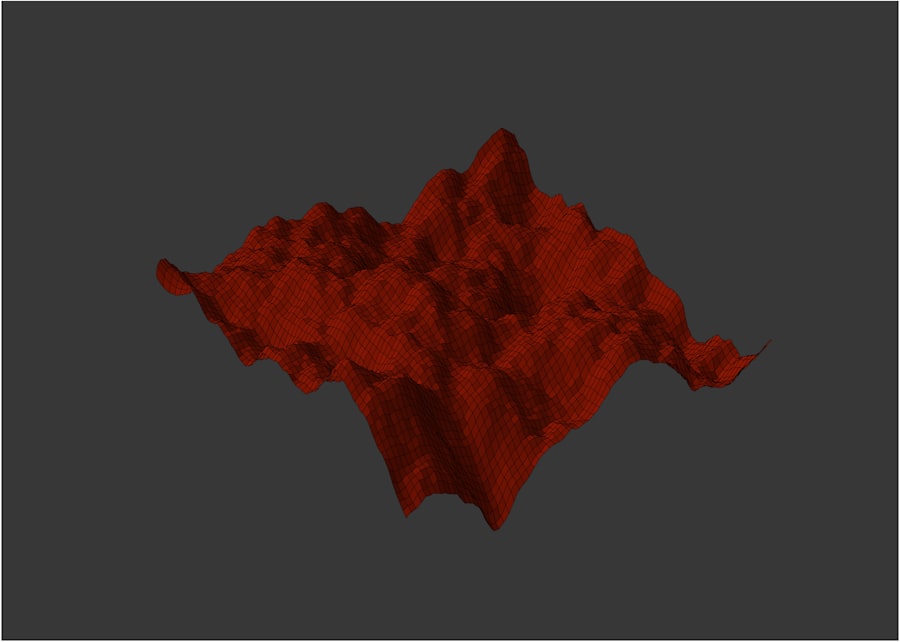
The theoretical framework supporting simulation theory is multifaceted, drawing from various disciplines such as physics, computer science, and philosophy. One compelling argument is based on the rapid advancement of technology. As we develop increasingly sophisticated simulations in gaming and virtual environments, it becomes conceivable that future civilizations could create simulations indistinguishable from reality.
If this is true, then it follows that we might be living in one of those simulations. Moreover, proponents of simulation theory often reference concepts from quantum mechanics that challenge our traditional understanding of reality. For instance, phenomena such as wave-particle duality and quantum entanglement suggest that particles behave differently when observed, leading some to speculate that our reality may be influenced by an observer’s consciousness.
This aligns with the idea that a simulated reality could be designed to respond dynamically to its inhabitants. As we explore these theoretical underpinnings, we begin to see how they intertwine with our understanding of existence and consciousness.
Philosophical implications of living in a simulated reality
| Philosophical Implications | Simulated Reality |
|---|---|
| Existentialism | Raise questions about the nature of existence and reality |
| Morality | Raise questions about the nature of right and wrong in a simulated world |
| Free Will | Raise questions about the extent of free will in a predetermined simulated reality |
| Identity | Raise questions about the nature of self and identity in a simulated world |
| Knowledge | Raise questions about the nature of knowledge and truth in a simulated reality |
The philosophical implications of living in a simulated reality are vast and complex. If we accept that our existence is a simulation, it raises fundamental questions about identity and consciousness. Are we merely avatars within a digital construct, or do we possess genuine agency and self-awareness?
This inquiry challenges our notions of free will and determinism, as it suggests that our choices may be predetermined by the parameters set by the creators of the simulation. Furthermore, if our reality is indeed simulated, it prompts us to reconsider the nature of truth and knowledge. What does it mean to know something if our experiences are orchestrated by an external force?
This leads us to question the validity of our beliefs and perceptions. The implications extend beyond individual consciousness; they touch upon societal constructs, ethics, and morality. If we are living in a simulation, how do we define right and wrong?
These philosophical dilemmas compel us to engage in deeper reflections about our existence and purpose.
Scientific experiments and studies that suggest we may be living in a simulation
In recent years, scientific inquiries have emerged that lend credence to the idea that we might be living in a simulation. One notable example is the work conducted by physicists who have explored the fundamental nature of reality through experiments involving cosmic rays and particle physics. Some researchers have suggested that certain anomalies observed in these experiments could indicate underlying computational limits akin to those found in digital simulations.
Additionally, advancements in artificial intelligence and machine learning have led scientists to consider whether our understanding of consciousness can be replicated or simulated. As AI systems become increasingly sophisticated, they challenge our perceptions of what it means to be sentient. If machines can exhibit behaviors indistinguishable from human consciousness, it raises questions about the nature of our own existence within a potentially simulated framework.
These scientific explorations invite us to reconsider the boundaries between reality and simulation.
The technological advancements that may point to a simulated reality

As technology continues to evolve at an unprecedented pace, we find ourselves surrounded by innovations that blur the lines between reality and simulation. Virtual reality (VR) and augmented reality (AR) technologies have made significant strides in creating immersive experiences that can mimic real-world environments. These advancements raise intriguing questions about the potential for future simulations to become indistinguishable from actual reality.
Moreover, developments in quantum computing hold promise for creating simulations with unparalleled complexity and realism. As researchers push the boundaries of computational power, it becomes increasingly plausible that future civilizations could construct simulations so advanced that they would challenge our understanding of existence itself. The rapid progression of technology serves as both a catalyst for exploration and a reminder of how close we may be to realizing a simulated reality.
An exploration of glitches and anomalies that could be indicative of a simulated world
In our quest to understand the nature of reality, we cannot overlook the peculiar glitches and anomalies that occasionally disrupt our experiences. From déjà vu moments to inexplicable coincidences, these occurrences prompt us to question whether they are mere quirks of human perception or potential indicators of a simulated environment. Some theorists argue that glitches may represent errors or limitations within the programming of our reality.
For instance, instances where physical laws seem to bend or where events unfold in unexpected ways could be interpreted as signs of a simulated world struggling to maintain coherence. These anomalies challenge our understanding of causality and raise intriguing questions about the underlying structure of existence. As we explore these phenomena, we find ourselves contemplating whether they are mere coincidences or glimpses into a deeper truth about our simulated reality.
The ethical and moral implications of living in a simulated reality
The ethical considerations surrounding simulation theory are profound and multifaceted. If we accept that our existence is a simulation created by an external entity, it raises questions about responsibility and accountability.
This inquiry challenges traditional ethical frameworks and compels us to reconsider how we define right and wrong within a potentially artificial context. Moreover, if our actions are influenced by external programming or design choices made by creators, it raises concerns about free will and autonomy. How do we navigate moral dilemmas if our choices are predetermined?
These ethical quandaries compel us to engage in deeper reflections about our values and responsibilities as inhabitants of a potentially simulated universe.
Religious and spiritual perspectives on the idea of a simulated universe
The concept of a simulated universe intersects intriguingly with various religious and spiritual perspectives. Many religious traditions grapple with questions about creation, existence, and the nature of divinity. For some believers, the idea that our reality could be a simulation resonates with notions of a higher power orchestrating existence.
This perspective invites contemplation about the relationship between creator and creation. Conversely, some spiritual philosophies emphasize the importance of direct experience and personal awakening as pathways to understanding reality. In this context, whether or not our universe is simulated may become less significant than individual journeys toward enlightenment or self-realization.
As we explore these diverse perspectives, we recognize how they enrich our understanding of existence while challenging us to confront fundamental questions about purpose and meaning.
The search for concrete evidence of a simulated reality
Despite the compelling arguments surrounding simulation theory, the quest for concrete evidence remains elusive. While theoretical frameworks and scientific inquiries provide intriguing insights, definitive proof has yet to materialize. Researchers continue to explore avenues for testing hypotheses related to simulation theory through experiments in physics and computer science.
As technology advances further, new methodologies may emerge that allow us to probe deeper into the nature of reality itself. The search for evidence is not merely an academic pursuit; it reflects humanity’s enduring desire to understand its place in the cosmos. Whether through scientific exploration or philosophical inquiry, this quest invites us to confront profound questions about existence while acknowledging the limitations inherent in our current understanding.
The ongoing debate and implications of the simulation hypothesis
As we conclude our exploration of simulation theory, it becomes evident that this concept transcends mere speculation; it invites us into an ongoing dialogue about existence itself. The implications are vast—challenging our perceptions of reality, consciousness, ethics, and spirituality. While definitive evidence remains elusive, the discussions surrounding simulation theory continue to inspire curiosity and provoke thought across disciplines.
In navigating this complex landscape, we find ourselves grappling with fundamental questions about identity, agency, and purpose within a potentially simulated universe. Whether or not we ultimately accept simulation theory as truth may matter less than the insights gained through contemplation and inquiry. As we engage with these ideas, we embrace an opportunity for deeper understanding—both of ourselves and the intricate tapestry of existence that surrounds us.
In recent years, the idea that we might be living in a simulation has gained traction, fueled by advancements in technology and philosophical debates. One compelling argument is the rapid development of virtual reality and artificial intelligence, which suggests that creating a simulated universe might not be far-fetched. An article that delves into this topic can be found on Real Lore and Order, where the author explores various theories and evidence supporting the simulation hypothesis. For a deeper understanding, you can read the full article by visiting this link. This piece provides intriguing insights into the possibility that our reality might be an elaborate digital construct.
WATCH THIS! Your Childhood Memories Are Completely Wrong
FAQs
What is the simulation hypothesis?
The simulation hypothesis proposes that our reality, including the universe and all its contents, is actually a computer simulation created by a more advanced civilization.
What evidence supports the simulation hypothesis?
Some proponents of the simulation hypothesis point to certain phenomena in quantum physics, such as the behavior of particles at the subatomic level, as potential evidence of a simulated reality. Additionally, advancements in technology and virtual reality simulations have led some to believe that it is plausible for a more advanced civilization to create a simulation of our reality.
Can the simulation hypothesis be proven?
As of now, there is no definitive proof that we are living in a simulation. The simulation hypothesis remains a philosophical and theoretical concept, and there is ongoing debate and speculation about its validity.
What are some criticisms of the simulation hypothesis?
Critics of the simulation hypothesis argue that it is based on speculative and untestable assumptions. They also point out that the existence of a simulated reality raises philosophical and ethical questions that are difficult to address.
How does the simulation hypothesis relate to religion and philosophy?
The simulation hypothesis has sparked discussions about the nature of reality, the existence of a higher power or creator, and the implications for human consciousness and free will. It has also led to comparisons with religious and philosophical concepts, such as the idea of a “supreme being” or the concept of an illusionary world in various belief systems.