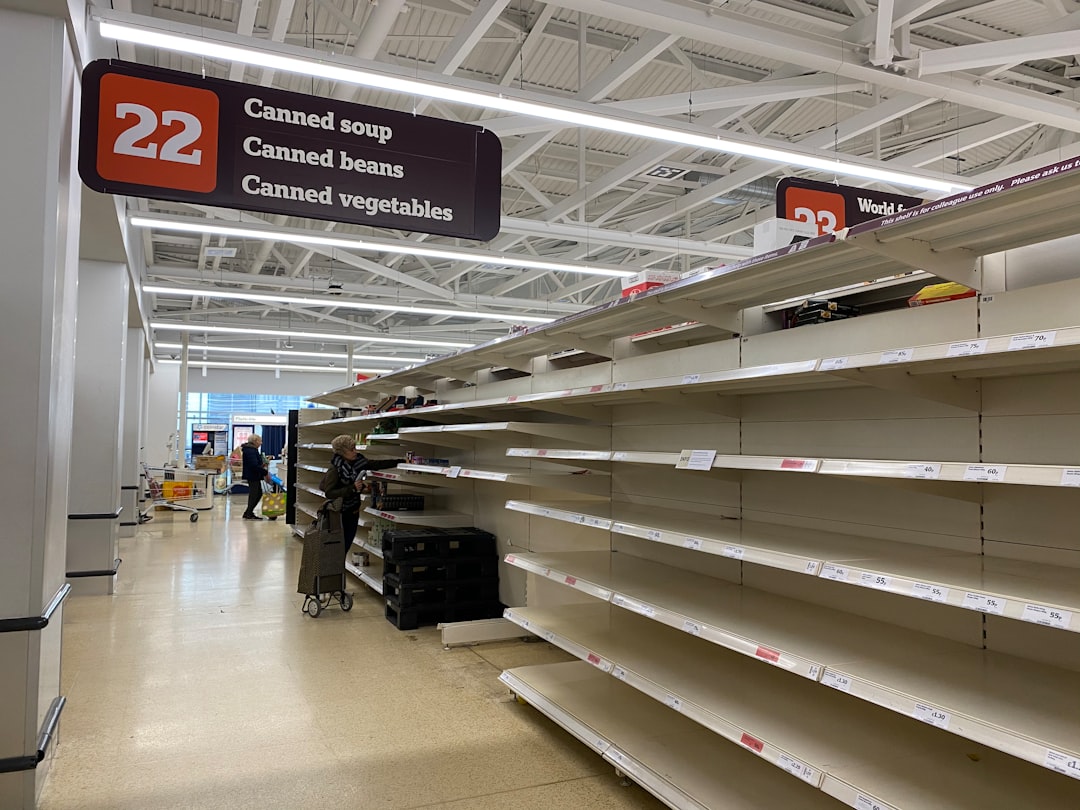
The Listicle Content Architect (LCA) understands the deep-seated human emotions that drive behavior, especially when confronted with scarcity. Empty shelves are not just an inconvenience; they are potent triggers for primal instincts. This in-depth listicle explores the multifaceted psychology behind the panic buying phenomenon, dissecting the reasons why a dwindling supply on store shelves can send consumers into a frenzy of stocking up.
- The Amplifying Effect of Visual Scarcity: Seeing is Believing (and Fearing)
The visual cue of empty shelves acts as an immediate and powerful trigger, bypassing rational thought and tapping directly into our emotional responses. It’s a visceral confirmation of a potential problem, far more impactful than a news report or an abstract statistic.
- ### Confirmation Bias in Action: The Visual Reinforcement of Fear
When individuals see empty shelves, it serves as concrete evidence that their fears or anxieties about scarcity are justified. This visual confirmation reinforces pre-existing worries, even if those worries are not entirely rational or widespread. It creates a feedback loop where the observation of scarcity leads to increased perception of scarcity.
- #### The “Rabbit Hole” of Social Media and News: Echoes of Emptiness
In the digital age, the visual of empty shelves is quickly disseminated across social media platforms and news outlets. This creates a pervasive narrative of impending shortage. Even if an individual hasn’t personally experienced a shortage, seeing it repeatedly online or on television can normalize and amplify the perception of widespread depletion. This constant exposure, even of the same visual, creates a strong impression of urgency.
- #### The Personalization of the Threat: “It’s Happening Here, Now“
While a national shortage might feel abstract, seeing the local grocery store shelves bare is a direct and personal confrontation with the problem. It transforms a distant possibility into an immediate reality, making the threat feel more pressing and requiring an immediate response. This personalization bypasses the analytical part of the brain and triggers a more instinctual “fight or flight” reaction.
- ### The Gestalt Principle of “The Whole is Less Than the Sum of its Parts”: The Loss of Innumerable Options
Empty shelves represent not just the absence of a few items, but the loss of an entire panorama of choices. The mind perceives the overall emptiness rather than the individual items missing. This overwhelming sense of deprivation, where a vast array of products is replaced by gaping spaces, is far more psychologically unsettling than if only one or two specific items were out of stock.
- #### The Paradox of Choice Ignored: When Too Much (or Too Little) is a Problem
While the “paradox of choice” suggests that too many options can lead to indecision, the opposite is true during scarcity. The sudden and dramatic reduction of choice, to the point of near non-existence, creates a sense of overwhelming unease. The familiar abundance has vanished, leaving a void that feels deeply destabilizing.
- #### The “Last Supper” Mentality: A Sense of Finality and Urgency
Seeing empty shelves can inadvertently create a “last supper” mentality. Consumers begin to perceive the remaining items as the last vestiges of a dwindling supply, akin to a final feast before an impending famine. This fosters a sense of urgency to acquire what’s left before it’s truly gone, driving them to purchase quantities that go beyond immediate needs.
- The Primacy of Survival Instincts: Inherent Drives for Security
At its core, panic buying is deeply rooted in our evolutionary history and the fundamental human drive for survival. When faced with perceived threats to basic needs, these ancient instincts resurface, overriding more reasoned decision-making processes.
- ### Maslow’s Hierarchy of Needs: The Foundation of Security Disrupted
Abraham Maslow’s hierarchy of needs places physiological (food, water, shelter) and safety needs at the very base. Empty shelves directly attack these foundational needs. When the availability of essential goods is uncertain, individuals feel a primal urge to secure these fundamental requirements for themselves and their families, pushing higher-level needs and desires to the background.
- #### The Unconscious Activation of the “Reptilian Brain”: Fight, Flight, or Freeze in the Aisle
The amygdala, often referred to as the “reptilian brain,” is responsible for processing fear and triggering the fight-or-flight response. The sight of empty shelves can activate this ancient part of the brain, leading to impulsive and emotionally driven behavior rather than calculated decision-making. This can manifest as a relentless pursuit of available goods.
- #### The Intergenerational Memory of Scarcity: Echoes of Past Hardships
For many, particularly those who have lived through periods of famine, war, or economic depression, the sight of empty shelves can evoke deeply ingrained memories and anxieties about past scarcity. This intergenerational trauma can be unconsciously triggered, leading to an exaggerated response to perceived shortages, as they subconsciously fear a repeat of historical hardships.
- ### Loss Aversion: The Pain of Not Having is Stronger Than the Joy of Having
The psychological principle of loss aversion states that the pain of losing something is psychologically about twice as powerful as the pleasure of gaining something. In the context of empty shelves, the fear of losing access to essential goods far outweighs any rational assessment of current or future need. The potential loss drives the overwhelming desire to acquire.
- #### The “What If” Scenario: Escalating the Perceived Risk
The “what if” scenarios become amplified when shelves are empty. Consumers begin to imagine extreme situations: “What if the shelves stay empty for weeks?”, “What if I can’t get basic essentials for my children?”. These escalating “what ifs,” fueled by fear and uncertainty, create a sense of impending crisis that justifies extreme measures like panic buying.
- #### The Tangible Nature of “Loss” on an Empty Shelf
Unlike abstract fears, the lack of a product on a shelf is a tangible representation of a potential loss. It’s not just a concept; it’s a physical void that signifies the inability to fulfill a need. This visceral representation of loss makes the fear of missing out even more potent.
- Social Contagion and Herd Behavior: The Power of the Crowd
Humans are inherently social creatures, and our behavior is heavily influenced by those around us. When scarcity is evident, the actions of others can quickly create a feedback loop of panic, leading to widespread herd behavior.
- ### The Norm of Scarcity: When Everyone Else is Doing It
Observing others engaging in panic buying—filling their carts with excessive quantities—establishes a new social norm. If everyone else appears to be worried and stocking up, it’s natural to assume there’s a valid reason for their concern and to adopt similar behaviors to avoid being left behind.
- #### The “Safety in Numbers” Fallacy: Rationalizing the Illogical
There’s a psychological comfort in doing what others are doing, even if it’s not rationally justified. This herd behavior can be rationalized as a form of “safety in numbers.” Individuals may believe that by joining the rush, they are increasing their chances of securing supplies, even though collective over-purchasing exacerbates the very problem they are trying to avoid.
- #### The “Fear of Missing Out” (FOMO) on a Grand Scale
FOMO, usually associated with social trends or experiences, takes on a life-threatening dimension during periods of scarcity. The fear of being the one person without essential items while others are well-stocked becomes a powerful motivator, driving individuals to participate in the frenzied acquisition, regardless of their actual immediate needs.
- ### The Role of Social Proof: Trusting the Collective Wisdom (Even When Flawed)
Social proof suggests that people are more likely to adopt a belief or behavior if they see others doing so. In the context of panic buying, the observed actions of many consumers act as social proof that there is indeed a genuine shortage and that taking immediate action is necessary.
- #### The Influence of Visible Cues: Full Carts, Empty Aisles
Visible cues like overflowing shopping carts and rapidly emptying shelves provide undeniable social proof of depletion. These visual indicators are interpreted by observers as a collective signal of impending scarcity, reinforcing their own anxieties and driving them to join the rush.
- #### The “Echo Chamber” Effect: Amplified Anxiety Through Observation
When individuals witness widespread panic buying, it can create an “echo chamber” of anxiety. Their initial concerns are amplified by the visible distress and urgency of others, further solidifying their belief that a crisis is imminent and justifying their own panicked actions.
- The Cognitive Appraisal of Threat: Interpreting Ambiguity and Uncertainty
Our response to a situation is not solely determined by the objective reality but by our cognitive appraisal—how we interpret the situation. Empty shelves are inherently ambiguous and laden with uncertainty, which makes them ripe for threat appraisal.
- ### Uncertainty and Ambiguity: The Mind’s Need for Resolution
The human mind thrives on predictability and struggles with uncertainty. Empty shelves create a void of information: Why are they empty? How long will they be empty? Will more be restocked soon? This ambiguity is unsettling and prompts the mind to seek explanations, often defaulting to the most negative possibilities.
- #### The “Gaps” in Information: Filling Them with Worst-Case Scenarios
When information is lacking, our minds tend to fill the gaps with worst-case scenarios. The absence of certain products on shelves can be interpreted as a sign of a deep, systemic problem, leading to anxieties about prolonged shortages and severe consequences.
- #### The Quest for Control in a Chaotic Environment
Panic buying can be a misguided attempt to regain a sense of control in a situation that feels chaotic and unpredictable. By actively acquiring resources, individuals feel like they are taking agency and mitigating the potential negative outcomes that uncertainty presents.
- ### Perceived Lack of Control: The Urge to Act When Powerless
When individuals feel a lack of control over a situation, the desire to exert control in any way possible becomes heightened. Empty shelves signify a loss of control over fundamental needs, prompting a strong urge to take some action, even if that action is simply to hoard available goods.
- #### The Illusion of Agency: Stocking Up as an Act of Empowerment
The act of filling a shopping cart, even with excessive amounts, can provide an illusion of agency and empowerment. It’s a tangible way to assert some control over one’s immediate circumstances, even if it doesn’t address the root cause of the scarcity.
- #### The “Prepper” Mentality: Embracing Proactive Self-Sufficiency
For some, the sight of empty shelves triggers a “prepper” mentality, a desire for proactive self-sufficiency. This mindset, often dormant, is activated by the perception of a threat to societal order and essential supplies, leading to an urge to prepare for the worst-case scenario.
- The Influence of Media and Information: Shaping Perceptions of Scarcity
Media plays a crucial role in how we understand and react to events, including the phenomenon of empty shelves. The framing of information, the selection of narratives, and the speed of dissemination can significantly influence public perception and trigger panic buying.
- ### The Amplification Effect of News Coverage: Sensationalism and Urgency
News media, driven by the need to capture audience attention, can often sensationalize shortages. Dramatic visuals of empty shelves, interviews with anxious consumers, and expert opinions predicting dire outcomes can create a sense of urgency and fear that escalates beyond the actual situation on the ground.
- #### The “If it bleeds, it leads” Phenomenon: Focusing on the Negative
The media’s tendency to focus on negative and alarming stories (“if it bleeds, it leads”) can disproportionately highlight the issue of empty shelves. This selective reporting can create an impression that the situation is far worse than it is, compelling consumers to act out of fear.
- #### The Speed of Information Dissemination: Real-time Panic
In the digital age, news and images of empty shelves can spread globally in minutes. This real-time dissemination of information, without time for fact-checking or contextualization, can lead to a rapid and widespread outbreak of panic buying as people react to immediate reports.
- ### The Role of Social Media Amplifiers: Rumors and Misinformation
Social media platforms are fertile ground for the rapid spread of rumors and misinformation, which can exacerbate panic buying. Unverified claims about upcoming shortages, conspiracy theories, or exaggerated accounts of the situation can quickly go viral, fueling anxiety and irrational behavior.
- #### The “Viral” Nature of Fear: Unverified Claims Spreading Like Wildfire
Misinformation and rumors, particularly those related to basic needs, have a powerful “viral” nature. When accompanied by compelling visuals, these unverified claims can spread like wildfire across social networks, creating a cascade of fear and prompting individuals to act without critical evaluation.
- #### The Difficulty of Fact-Checking in a Crisis: Trusting the Narrative
During times of perceived crisis, the ability to critically evaluate information is often compromised. Consumers may be more inclined to trust the narratives circulating on social media, especially if they align with their existing anxieties, making it difficult to counter the spread of misinformation that drives panic buying.
In conclusion, the perceived emptiness of grocery store shelves is a potent psychological trigger, activating a complex interplay of primal instincts, social influences, cognitive biases, and media perceptions. Understanding these underlying psychological mechanisms is crucial for both individuals seeking to manage their own responses and for retailers and authorities aiming to mitigate the disruptive effects of panic buying. By recognizing these drivers, a more rational and measured approach to managing scarcity can be fostered, ultimately leading to a more resilient and stable consumer environment.

The Black Layer That Shouldn’t Exist
FAQs
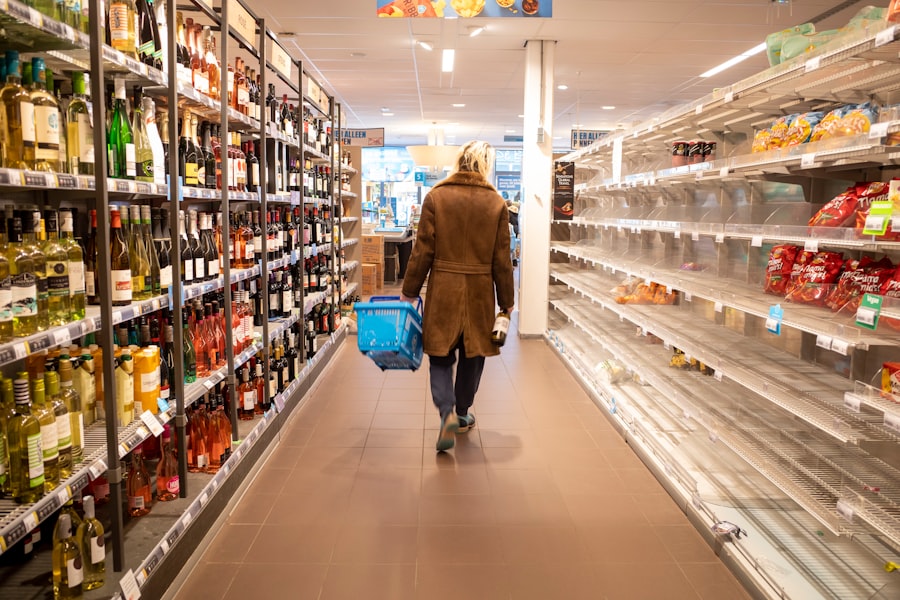
1. What causes empty shelves to create panic buying?
Empty shelves create panic buying because they signal scarcity and potential future shortages, leading consumers to fear they won’t be able to purchase essential items in the future.
2. How does panic buying contribute to empty shelves?
Panic buying contributes to empty shelves as consumers rush to stock up on essential items, leading to increased demand and strain on supply chains, which can result in temporary shortages.
3. What are the consequences of panic buying and empty shelves?
The consequences of panic buying and empty shelves include hoarding, price gouging, and inequitable access to essential goods, as well as disruptions to the supply chain and increased stress on retailers and suppliers.
4. How can retailers and suppliers address empty shelves and panic buying?
Retailers and suppliers can address empty shelves and panic buying by implementing purchase limits, increasing communication about stock availability, and working to stabilize supply chains to meet increased demand.
5. What can consumers do to avoid contributing to panic buying and empty shelves?
Consumers can avoid contributing to panic buying and empty shelves by purchasing only what they need, staying informed about stock availability, and being mindful of the impact of their purchasing behavior on others in the community.