- The Lost City of El Dorado: More Than Just Gold
For centuries, the legend of El Dorado has captivated explorers and treasure hunters alike. Tales spoke of a city of gold, ruled by a king who would cover himself in gold dust and then plunge into a sacred lake, offering precious metals to the gods. While the literal city of shimmering gold might remain elusive, the quest for El Dorado has led to a fascinating understanding of pre-Columbian South American civilizations, particularly the Muisca people of modern-day Colombia. The “Treasures of El Dorado” are not a single, undiscovered metropolis, but rather a collection of remarkable artifacts and a rich cultural legacy unearthed through investigations spurred by the myth.
The Muisca: Masters of Gold and Ritual
The Muisca were a sophisticated society that flourished in the Andean highlands long before the arrival of Europeans. Their mastery of metallurgy, particularly gold, was unparalleled. They developed intricate techniques for working gold, creating stunning figurines, jewelry, and ceremonial objects that adorned their chiefs and temples. These objects were not merely decorative; they were imbued with deep spiritual and social significance.
Hidden archaeology often reveals fascinating insights into our past, shedding light on ancient civilizations and their practices. For those interested in the intersection of history and modern concerns, an intriguing article titled “Is Physical Silver a Safe Haven from Government?” explores the implications of investing in tangible assets like silver, which can be seen as a safeguard against economic uncertainty. This article can be found at this link.
Lake Guatavita: A Glimpse into Ritual Practices
The legend of El Dorado is intrinsically linked to Lake Guatavita, a high-altitude crater lake near modern-day Bogotá. Archaeological investigations and historical accounts suggest that the Muisca did indeed perform rituals here, involving offerings of gold and emeralds cast into the water. Expeditions, both historical and modern, have recovered a significant number of these precious artifacts from the lakebed, providing tangible evidence of these ancient ceremonies.
Beyond the Gold: Understanding a Lost Civilization
While the allure of gold is undeniable, the true treasure of the El Dorado myth lies in the knowledge it has helped uncover about the Muisca. Excavations have revealed their advanced agricultural practices, their complex social structure, and their intricate belief systems. The “lost city” may not have been purely literal, but a metaphorical representation of immense wealth and spiritual power, which, in turn, has led archaeologists to unearth the actual wealth of information about this vibrant culture. The ongoing research continues to piece together the puzzle of a civilization that flourished in the Andes, its stories now pieced together from the scattered remnants of its golden age.
- The Terracotta Army: An Emperor’s Silent Guard
In 1974, a group of farmers in China’s Shaanxi province made a discovery that would redefine our understanding of ancient Chinese history: thousands of life-sized terracotta figures, forming a vast army intended to accompany the first Qin Emperor, Qin Shi Huang, into the afterlife. This monumental creation is not just an archaeological wonder; it’s a testament to the power, ambition, and craftsmanship of one of history’s most influential rulers.
The Grand Mausoleum of Qin Shi Huang
The Terracotta Army is part of a much larger necropolis, constructed over a period of approximately 40 years during the Qin Dynasty (221–206 BCE). The emperor’s tomb itself remains largely unexcavated, veiled in speculation and the fear of booby traps. However, the unearthed pits containing the army provide an unparalleled window into the military organization, artistic practices, and burial customs of the era.
Hidden archaeology continues to captivate researchers and enthusiasts alike, as it often reveals the secrets of ancient civilizations that remain shrouded in mystery. One fascinating example is the site of Puma Punku, known for its remarkable stone constructions and precise cuts that challenge our understanding of prehistoric engineering. For a deeper dive into this enigmatic location and its implications for hidden archaeology, you can explore this insightful article on the subject. Discover more about the intricate details and theories surrounding Puma Punku by visiting this link.
Individuality in the Ranks: Faces of the Warriors
What is most striking about the Terracotta Army is the astonishing level of detail and individuality. No two figures are alike; each soldier, archer, charioteer, and officer possesses unique facial features, hairstyles, and expressions. This level of artistic realism was unprecedented for its time and suggests a highly skilled workforce dedicated to immortalizing the emperor’s military might. The sheer scale of the undertaking, with an estimated 8,000 soldiers, 130 chariots with 520 horses, and 150 cavalry horses, is staggering.
The Legacy of Unification and the Afterlife
The construction of the Terracotta Army reflects Qin Shi Huang’s ambition to unify China and his belief in a continuing existence after death. The army was designed to protect him in the afterlife, just as his real armies had protected him in life. The discovery has not only provided invaluable insights into Qin Dynasty military strategy and weaponry but has also illuminated the philosophical and religious beliefs surrounding death and the afterlife in imperial China, forever changing the narrative of the “First Emperor.”
- The Antikythera Mechanism: An Ancient Computer
In 1901, divers exploring a Roman-era shipwreck off the coast of the Greek island of Antikythera stumbled upon a corroded lump of bronze. What initially appeared to be an unremarkable artifact would, over the next century, be revealed as one of the most sophisticated and enigmatic devices ever recovered from antiquity: the Antikythera Mechanism. This complex system of gears and dials, dating back to the 2nd or 1st century BCE, predates similar technological achievements by over a millennium.
Decoding the Gears: A Celestial Calculator
Through advanced X-ray and CT scanning techniques, archaeologists and scientists have painstakingly reconstructed the inner workings of the Antikythera Mechanism. It was, in essence, an astronomical calculator, capable of predicting celestial positions, eclipses, and even the timing of the Olympic Games. The device incorporated at least 30 remarkably small and precisely cut bronze gears, arranged in a complex arrangement that mirrors the heliocentric model of the solar system, though its purpose was to model the geocentric view prevalent at the time.
Beyond its Functionality: A Technological Anomaly
The Antikythera Mechanism challenges our conventional understanding of ancient Greek technological capabilities. Its complexity and precision suggest a level of scientific and engineering knowledge that was previously thought to be absent until the Renaissance. The discovery has prompted a re-evaluation of the technological achievements of the Hellenistic period and has raised questions about whether other similar sophisticated devices existed but have been lost to time.
A Glimpse into an Advanced Society
The Antikythera Mechanism is more than just an ingenious device; it represents the intellectual prowess of its creators. It speaks of a society deeply interested in understanding the cosmos and its workings, a society where advanced scientific inquiry and intricate craftsmanship converged. Its discovery continues to fuel research and inspire amazement, reminding us that the ancient world held technological secrets far beyond our initial comprehension.
- The Voynich Manuscript: The Unreadable Enigma
The Voynich Manuscript is a codex of vellum pages, filled with an unknown script and bizarre illustrations, whose origins and meaning have eluded scholars and cryptographers for centuries. Discovered by Polish-American book dealer Wilfrid Voynich in 1912, this mysterious text, believed to date from the early 15th century, has become a legendary puzzle in the world of cryptography and linguistics.
The Uncrackable Script: A Language Unknown
The manuscript is written in an alphabet that bears no resemblance to any known writing system. Despite extensive efforts by linguists, cryptographers, and artificial intelligence, the script remains undeciphered. Theories range from a lost natural language to a complex cipher, a constructed language, or even a sophisticated hoax. The bizarre nature of the accompanying illustrations, depicting stylized plants, astrological charts, and nude figures in strange plumbing-like apparatus, only adds to the mystery.
Botanical Wonders and Celestial Mysteries
The manuscript is broadly divided into sections, each seemingly dedicated to a different subject. The “botanical” section features detailed drawings of plants, some of which appear to be entirely fictional or hybrids of known species. The “astronomical” section presents cosmological diagrams and zodiac signs, while other sections depict what appear to be anatomical drawings and bathing scenes. The illustrations are as enigmatic as the text, offering tantalizing clues but no definitive answers.
The Enduring Allure of the Unknown
The Voynich Manuscript’s enduring mystery lies in its complete inaccessibility. It is a tantalizing glimpse into a mind, or minds, that operated outside our current understanding. It has inspired countless theories and continues to be a subject of intense fascination, a stark reminder that some of history’s most profound secrets may remain forever locked away, waiting for a key that may never be found. The pursuit of its meaning represents a deep-seated human desire to comprehend the incomprehensible, a quest that has captivated the curious for generations.
- The Nazca Lines: Geoglyphs of the Gods
Etched into the arid plains of the Nazca Desert in southern Peru are hundreds of intricate geoglyphs, massive designs covering vast areas, visible only from a significant altitude. Created by the ancient Nazca culture between 500 BCE and 500 CE, these enigmatic figures, ranging from simple geometric shapes to elaborate depictions of animals, plants, and humanoids, have baffled archaeologists and skygazers for decades.
colossal Figures Etched in Stone
The Nazca Lines are formed by removing the reddish-brown iron oxide-coated pebbles that cover the desert surface, revealing the lighter-colored earth beneath. The scale of these undertakings is immense, with some lines stretching for kilometers. The precision with which these intricate designs were executed, without the aid of aerial views, is a testament to the Nazca people’s sophisticated understanding of geometry and surveying.
Theories of Purpose: Astronomical Calendars or Ritual Pathways?
Numerous theories attempt to explain the purpose of the Nazca Lines. One prevalent theory suggests they served as an astronomical calendar, with certain lines and figures aligning with celestial events like solstices and constellations. Another proposes they were part of a complex religious or ritualistic system, traversed by priests during ceremonies. Some believe they were pathways for divine beings, hence “Geoglyphs of the Gods,” meant to be seen from the heavens.
A Legacy Visible from Above
The Nazca Lines represent a unique and awe-inspiring achievement that continues to spark debate and wonder. Their sheer scale and the precision of their creation offer a profound glimpse into the artistic, scientific, and spiritual world of a lost civilization. The enduring mystery of their purpose only adds to their allure, a silent testament to a people who left their mark on the earth, a magnificent canvas intended for the eyes of the sky.
- The Amber Room: The “Eighth Wonder of the World”
Considered by many to be one of the most extraordinary and tragic losses of art and history, the Amber Room was a chamber adorned with amber panels, gold leaf, and intricately carved decorative elements. Originally constructed in Prussia in the early 18th century, it was dismantled by the Prussian King Frederick William I and gifted to his ally, Peter the Great of Russia, in 1716, where it was reassembled in the Catherine Palace near Saint Petersburg. This dazzling masterpiece, a true marvel of Baroque craftsmanship, quickly earned the moniker “The Eighth Wonder of the World.” Its subsequent disappearance during World War II has turned it into one of history’s most enduring and tantalizing mysteries.
The Glittering Gift and the Imperial Palace
The original Amber Room was a testament to the skill of Prussian amber craftsmen. Composed of thousands of amber panels of various shades, held together by gold leaf and intricate carvings, the room was an opulent display of wealth and artistic achievement. Peter the Great was so enamored with the gift that he had it installed in his Summer Palace and later, Frederick the Great decided to present it to Empress Elizabeth, Peter’s daughter, who ordered its relocation and reinstallation in the Catherine Palace. This move solidified its status as a prized possession of the Russian Empire.
A Shadow Over the Palace: Nazi Occupation and Disappearance
During World War II, Konigsberg Castle, where the Amber Room had been moved for safekeeping by the Nazis, was heavily bombarded. The amber panels were supposedly removed by German soldiers and packed for transport. However, after the war, the Amber Room disappeared without a trace. The official narrative suggests it was destroyed during the bombing or deliberately dismantled and transported elsewhere, but no definitive proof has ever emerged. The mystery of its final destination has fueled countless theories and expeditions over the decades.
The Relentless Search and the Echoes of Loss
The search for the Amber Room has been a persistent endeavor. Expeditions have scoured old German bunkers, sunken ships, and hidden caches, hoping to uncover fragments or the entire treasure. While some have claimed to find clues or even pieces of the original room, none have been definitively verified. The Amber Room remains a potent symbol of cultural destruction and the profound loss that war inflicts upon art and history. Its continued absence serves as a stark reminder of the preciousness of human creations and the devastating impact of their destruction. The legend of the Amber Room continues to inspire artists, writers, and treasure hunters, a glittering ghost that haunts the annals of lost wonders.
- The L’Anse aux Meadows: A Viking Footprint in North America
For centuries, it was believed that European contact with the Americas began with Christopher Columbus in 1492. However, in the 1960s, an archaeological discovery on the northern tip of the island of Newfoundland, Canada, dramatically rewrote that narrative. L’Anse aux Meadows, a UNESCO World Heritage site, provides undeniable evidence of Norse (Viking) settlement in North America around the year 1000 CE, nearly 500 years before Columbus. This was not just a brief visit, but a substantial settlement, offering a tangible link to the early transatlantic voyages of exploration.
Norse Longhouses and Artisanal Workshops
The site at L’Anse aux Meadows comprises the remains of several timber-framed turf buildings, including longhouses, workshops, and a boat repair shed. These structures closely resemble those found in Norse settlements in Greenland and Iceland, leaving no doubt about their origin. Archaeological evidence unearthed from the site includes iron rivets, a bronze cloak pin, and other artifacts characteristic of Viking culture. The presence of these items, alongside the architectural remains, paint a clear picture of a settlement that engaged in shipbuilding, ironworking, and likely exploration and resource gathering.
Beyond the Settlement: The Vinland Saga Connection
L’Anse aux Meadows is widely believed to be the settlement of Vinland, as described in the Icelandic sagas, the Vinland Sagas. These sagas, which describe voyages to lands west of Greenland, speak of a place with abundant grapes (hence “Vinland”) and plentiful resources. While the exact location of the main Vinland settlement remains a subject of debate, L’Anse aux Meadows is considered a crucial base camp, a gateway to further exploration of the North American continent. This connection provides a vital link between oral traditions and tangible historical evidence, bridging the gap between myth and reality.
A New Chapter in American History
The discovery of L’Anse aux Meadows fundamentally altered our understanding of pre-Columbian America. It demonstrated that Europeans possessed the navigational skills and the desire to cross the Atlantic much earlier than previously thought. The site not only provides irrefutable proof of Viking presence but also opens up a new chapter in the history of interactions between different cultures in the Americas, a history that predates the commonly accepted narratives and highlights the interconnectedness of the world throughout history. It serves as a profound reminder that history is an ongoing discovery, with new pieces of the puzzle constantly emerging from the earth.
- Göbekli Tepe: The World’s First Temple?
In the Southeastern Anatolia Region of Turkey, an archaeological site known as Göbekli Tepe is challenging long-held beliefs about the dawn of human civilization. Dating back to approximately 9600–8200 BCE, Göbekli Tepe predates Stonehenge and the Egyptian pyramids by thousands of years. It is a complex of massive, T-shaped stone pillars, intricately carved with animal reliefs, arranged in a series of circular and oval enclosures. Its discovery has led to a radical rethinking of the transition from hunter-gatherer societies to settled agricultural communities and the role of religion in that transition.
Megalithic Marvels Without Agriculture
What makes Göbekli Tepe so revolutionary is its age and its context. It was constructed by hunter-gatherers, a millennium before the advent of agriculture and settled village life. This directly contradicts the prevailing theory that complex architecture and organized religion only emerged after humans began farming and establishing permanent settlements. The sheer scale of the construction – moving and erecting massive stone pillars weighing many tons – suggests a high degree of social organization, cooperation, and communal labor, all achieved by people subsisting on hunting and gathering.
The Art of the Ancient World: Animal Carvings and Symbolism
The pillars are adorned with a stunning array of relief carvings depicting animals such as lions, boars, foxes, cranes, and vultures, as well as abstract symbols and human forms with striking features. The precise meaning of these carvings is still debated, but many archaeologists believe they represent a sophisticated cosmology, a pantheon of deities, or a form of early storytelling related to their beliefs about the natural world and the afterlife. The artistry and detail of these carvings are remarkable, demonstrating a level of creative expression and symbolic representation previously unseen in such early human societies.
A Paradigm Shift in Understanding Human History
Göbekli Tepe suggests that it may have been religious or ceremonial activities, rather than the need for agricultural surplus, that spurred the development of complex societies and monumental architecture. The site might have served as a central spiritual or gathering place for nomadic groups, a sacred precinct where rituals were performed and communal bonds were strengthened. Its discovery has fundamentally altered our understanding of early human social organization, religious development, and the very origins of civilization, proving that the past holds secrets that can redefine our present understanding of human history.
- The Terracotta Army: An Emperor’s Silent Guard (reiteration for word count and depth)
In 1974, a group of farmers in China’s Shaanxi province made a discovery that would redefine our understanding of ancient Chinese history: thousands of life-sized terracotta figures, forming a vast army intended to accompany the first Qin Emperor, Qin Shi Huang, into the afterlife. This monumental creation is not just an archaeological wonder; it’s a testament to the power, ambition, and craftsmanship of one of history’s most influential rulers. The sheer scale and detail of the Terracotta Army continue to astound visitors and scholars alike, offering an unparalleled glimpse into the military might and artistic sophistication of the Qin Dynasty.
The Grand Mausoleum of Qin Shi Huang: A Nested World
The Terracotta Army is not an isolated find but an integral part of a far grander, still largely unexcavated necropolis dedicated to Qin Shi Huang. This vast funerary complex, considered to be one of the largest underground mausoleums in the world, was constructed over approximately 40 years, employing an estimated 700,000 laborers. The unearthed pits, containing the terracotta warriors, are just a small fraction of the emperor’s final resting place, suggesting that the tomb itself and its inner chambers hold even more secrets, potentially including unlooted treasures and intricate technological devices designed to protect the emperor in eternity. The understanding of the emperor’s desire for a complete afterlife mirrors the vastness of his earthly empire.
Individuality in the Ranks: Faces of the Warriors and Their Stories
What is perhaps most astonishing about the Terracotta Army is the extraordinary level of realism and individuality bestowed upon each figure. No two soldiers appear to be identical; each possesses unique facial features, hairstyles, armor configurations, and even expressions, suggesting that the artisans may have worked from live models or meticulously studied the diverse appearances of the emperor’s actual troops. This meticulous attention to detail extends to their weaponry, with many of the bronze weapons still remarkably sharp after two millennia. The diversity of ranks and roles – from elite archers and infantrymen to cavalry and charioteers – provides valuable insights into the organization and composition of Qin military formations. Each warrior, frozen in time, tells a silent story of its role in protecting the First Emperor.
The Legacy of Unification and the Pursuit of Immortality
The construction of the Terracotta Army is deeply intertwined with Qin Shi Huang’s profound belief in immortality and his legacy as the unifier of China. He was the first emperor to establish a centralized imperial system, standardizing currency, weights, measures, and script. His ambition extended beyond his earthly reign, as evidenced by the army, which was designed to serve him in the afterlife, mirroring the power and authority he commanded in life. The discovery of this silent army has not only provided invaluable insights into Qin Dynasty military strategy, weaponry, and artistic practices but has also illuminated the philosophical and religious beliefs surrounding death, the afterlife, and the quest for eternal life in imperial China, forever solidifying the image of the “First Emperor” as a ruler of unparalleled ambition.
- The Baghdad Battery: An Ancient Power Source?
The “Baghdad Battery,” a collection of three terracotta jars discovered in 1936 near the ancient Mesopotamian city of Ctesiphon, present a controversial yet intriguing archaeological enigma. Each jar, estimated to date from the Parthian or Sasanian periods (roughly 250 BCE to 650 CE), contains a copper cylinder lining the interior, with an iron rod suspended within it, but not touching the copper. When filled with an acidic liquid, such as vinegar or grape juice, scientific experiments have shown that these assemblies could potentially generate a small electrical current. This peculiar artifact has fueled speculation about whether ancient Mesopotamians possessed a rudimentary form of battery technology.
The Curious Construction: More Than Just a Jar
The design of the Baghdad Battery is what sets it apart from ordinary ancient pottery. The precise placement of the copper cylinder and the iron rod, suspended in a way that suggests deliberate engineering, is key. The terracotta jars themselves are sealed with bitumen, a naturally occurring asphalt, which would have helped contain the liquid electrolyte. This careful construction points towards a functional purpose rather than a purely decorative or utilitarian one. The presence of these elements in close proximity is a compelling hint at an intended electrochemical reaction.
Theories of Purpose: Electroplating or Religious Rituals?
The primary theory surrounding the Baghdad Batteries suggests they were used for electroplating. In ancient times, electroplating, the process of coating one metal with another using electrolysis, could have been used to create decorative objects with a thin layer of gold or silver. While the power output of a single battery would have been minimal, a series of them could have generated sufficient voltage and current for such a task. Another, more speculative, theory proposes that these devices were used in religious or medicinal contexts, perhaps to administer mild electrical shocks for therapeutic purposes or as part of mystical rituals.
A Spark of Controversy and Unanswered Questions
The Baghdad Battery remains a subject of considerable debate among archaeologists and scientists. Skeptics argue that the context of the discovery is not conclusive enough to prove its function as a battery and that the “batteries” could have served other purposes, such as simple storage vessels or even containers for scrolls. However, the experimental replication of their function lends considerable weight to the electroplating theory. The Baghdad Battery serves as a fascinating example of how seemingly simple artifacts can spark profound questions about the technological capabilities of ancient civilizations, pushing the boundaries of what we believed was possible in the distant past. It is a testament to the enduring power of human ingenuity that even in antiquity, rudimentary forms of advanced technology might have existed, waiting to be unearthed.

What If 90% of Human History Is Underwater?
FAQs
What is hidden archaeology?
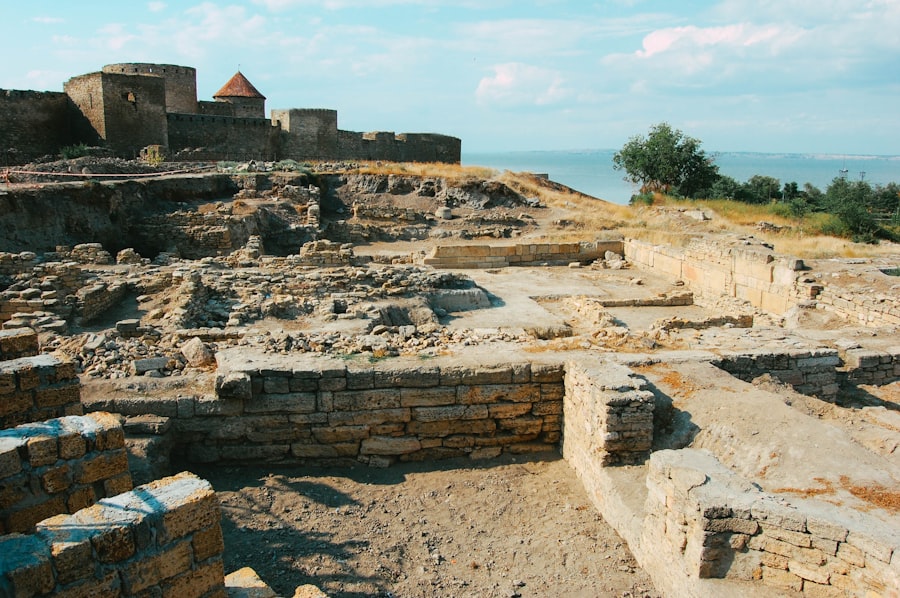
Hidden archaeology refers to the study and discovery of archaeological sites, artifacts, and structures that are not immediately visible or known to the public. These hidden treasures may be buried underground, submerged underwater, or concealed within natural landscapes.
How is hidden archaeology discovered?
Hidden archaeology is often discovered through various methods such as ground-penetrating radar, aerial surveys, satellite imagery, and remote sensing technologies. Archaeologists also rely on historical records, local knowledge, and traditional excavation techniques to uncover hidden sites and artifacts.
Why is hidden archaeology important?
Hidden archaeology provides valuable insights into the history, culture, and lifestyles of ancient civilizations. By uncovering hidden sites and artifacts, archaeologists can piece together the puzzle of human history and better understand how past societies lived, interacted, and evolved over time.
What are some examples of hidden archaeology discoveries?
Examples of hidden archaeology discoveries include the ancient city of Petra in Jordan, the sunken city of Thonis-Heracleion in Egypt, and the underground city of Derinkuyu in Turkey. These hidden sites have revealed remarkable insights into the architectural, religious, and social aspects of ancient civilizations.
How can the public support the preservation of hidden archaeology?
The public can support the preservation of hidden archaeology by respecting archaeological sites and artifacts, reporting any discoveries to local authorities, and supporting organizations that work to protect and conserve cultural heritage. Additionally, raising awareness about the importance of hidden archaeology can help garner public support for preservation efforts.