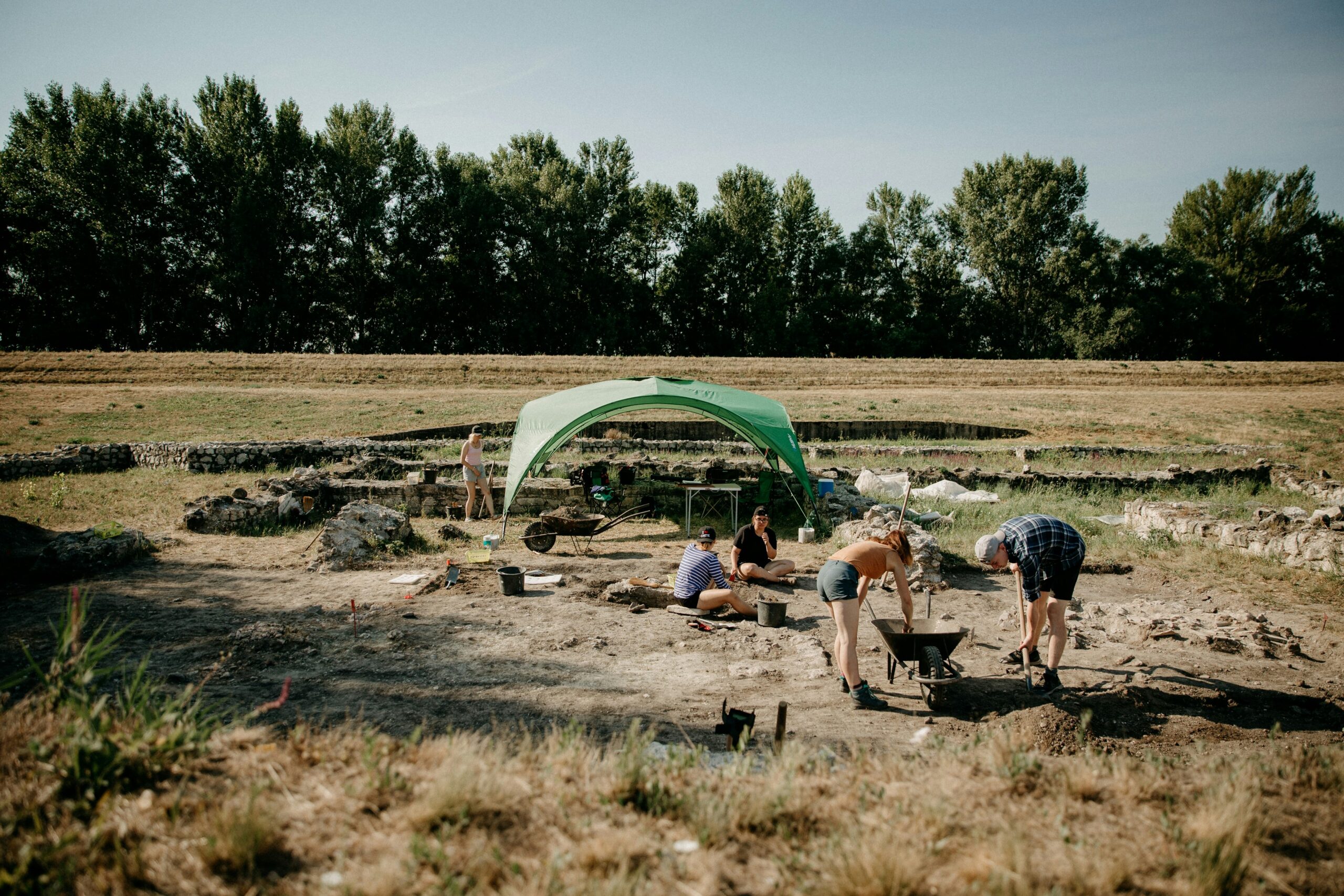
The flickering light of the projection booth cast long shadows across the hushed auditorium. On screen, a drone soared over an ochre desert, revealing the faint but unmistakable outlines of a forgotten city. This was the opening shot of “Uncovering the Past: Historical Archaeology Documentary,” a groundbreaking film that promises to redefine our understanding of ancient civilizations. The documentary, the culmination of years of painstaking research, fieldwork, and innovative storytelling, takes viewers on a breathtaking journey through time, unearthing not just artifacts, but the very human experiences that shaped our world.
The creation of “Uncovering the Past” was not a spontaneous event, but a meticulously planned undertaking driven by a burning curiosity to bridge the gap between academic research and public engagement. The documentary’s executive producer, Dr. Anya Sharma, a renowned historical archaeologist with a passion for accessible science communication, recognized a persistent disconnect.
The Scholarly Divide
For too long, the intricate narratives woven by historical archaeologists have remained largely confined to academic journals and specialized conferences. While these platforms are essential for rigorous scholarly discourse, they often fail to capture the imagination of a broader audience. Dr. Sharma observed, “We have these incredible stories waiting to be told – stories of human ingenuity, resilience, and even folly. Yet, the language and format of academic publishing often create an invisible barrier, preventing these narratives from reaching the people they rightfully belong to.” This realization sparked the initial concept for a documentary that would translate complex archaeological findings into compelling, visually rich storytelling.
Cultivating Collaboration
The journey from abstract idea to tangible film required a multidisciplinary approach. Dr. Sharma assembled a team of leading historical archaeologists, each an expert in their respective regions and periods. This included Professor Kenji Tanaka, specializing in Iron Age East Asia; Dr. Lena Petrova, focused on Roman provincial life; and Dr. Samuel Adebayo, whose work illuminates the complexities of medieval African kingdoms. Their collective knowledge formed the bedrock of the documentary’s content, ensuring its scientific accuracy and depth.
The Art of Visual Narrative
Alongside the academic luminaries, a team of experienced filmmakers, led by director Clara Dubois, was brought on board. Dubois, known for her evocative documentaries on natural history and cultural heritage, understood the power of visual storytelling to evoke emotion and foster connection. “Archaeology is inherently visual,” she explained. “It’s about piecing together fragments, about seeing what’s hidden beneath the surface. That’s a deeply cinematic process, and our goal was to translate that process into a captivating visual language.” This meant going beyond static shots of artifacts, incorporating immersive reconstructions, CGI animations, and dynamic fieldwork footage.
Historical archaeology often uncovers the stories of past civilizations and their interactions with the environment, much like the recent advancements in space exploration that aim to understand extraterrestrial resources. For instance, an intriguing article discusses NASA’s plans to control water ice on the Moon, which could have significant implications for future lunar colonization and resource management. This exploration of how humanity interacts with natural resources, both on Earth and beyond, resonates with the themes found in historical archaeology. To learn more about this fascinating topic, you can read the article here: NASA to Control Moon’s Water Ice.
Journeying Through Time: The Documentary’s Scope
“Uncovering the Past” is not a single narrative but a tapestry woven from multiple threads, each representing a distinct historical period and geographical location. The documentary deliberately avoids a chronological approach, instead opting for thematic explorations that highlight recurring human concerns and aspirations across different eras. This allows for a more dynamic and interconnected understanding of history, demonstrating how the past continues to inform the present.
Echoes of Empire: Roman Britain
One of the film’s most compelling segments delves into the daily lives of those living on the fringes of the mighty Roman Empire, focusing on Roman Britain. Through the excavation of a Romano-British villa, viewers witness the meticulous work of archaeologists as they unearth the remnants of a wealthy

How an Entire Civilization Collapsed
FAQs
What is historical archaeology documentary?
Historical archaeology documentary is a film or video production that explores the historical and cultural aspects of a particular archaeological site or artifact. It typically involves the use of archaeological evidence, historical records, and expert analysis to tell the story of a specific time period or event.
What are the key elements of a historical archaeology documentary?
Key elements of a historical archaeology documentary include the use of archaeological excavations, artifact analysis, historical context, expert interviews, and visual reconstructions. These elements are combined to create a narrative that brings the past to life and helps viewers understand the significance of the archaeological findings.
How are historical archaeology documentaries different from other types of documentaries?
Historical archaeology documentaries differ from other types of documentaries in that they focus specifically on the archaeological investigation of historical sites and artifacts. They often involve a combination of scientific research, historical interpretation, and storytelling to convey the significance of the past.
What are some examples of famous historical archaeology documentaries?
Some examples of famous historical archaeology documentaries include “The Lost City of Petra,” “Secrets of the Dead: The Lost Gardens of Babylon,” and “Time Team: The Big Roman Dig.” These documentaries explore ancient civilizations, lost cities, and historical mysteries through the lens of archaeological investigation.
How can historical archaeology documentaries contribute to our understanding of history?
Historical archaeology documentaries can contribute to our understanding of history by providing a visual and narrative exploration of the past. They offer insights into the daily lives, cultural practices, and technological advancements of ancient societies, and help to contextualize historical events within their archaeological context.