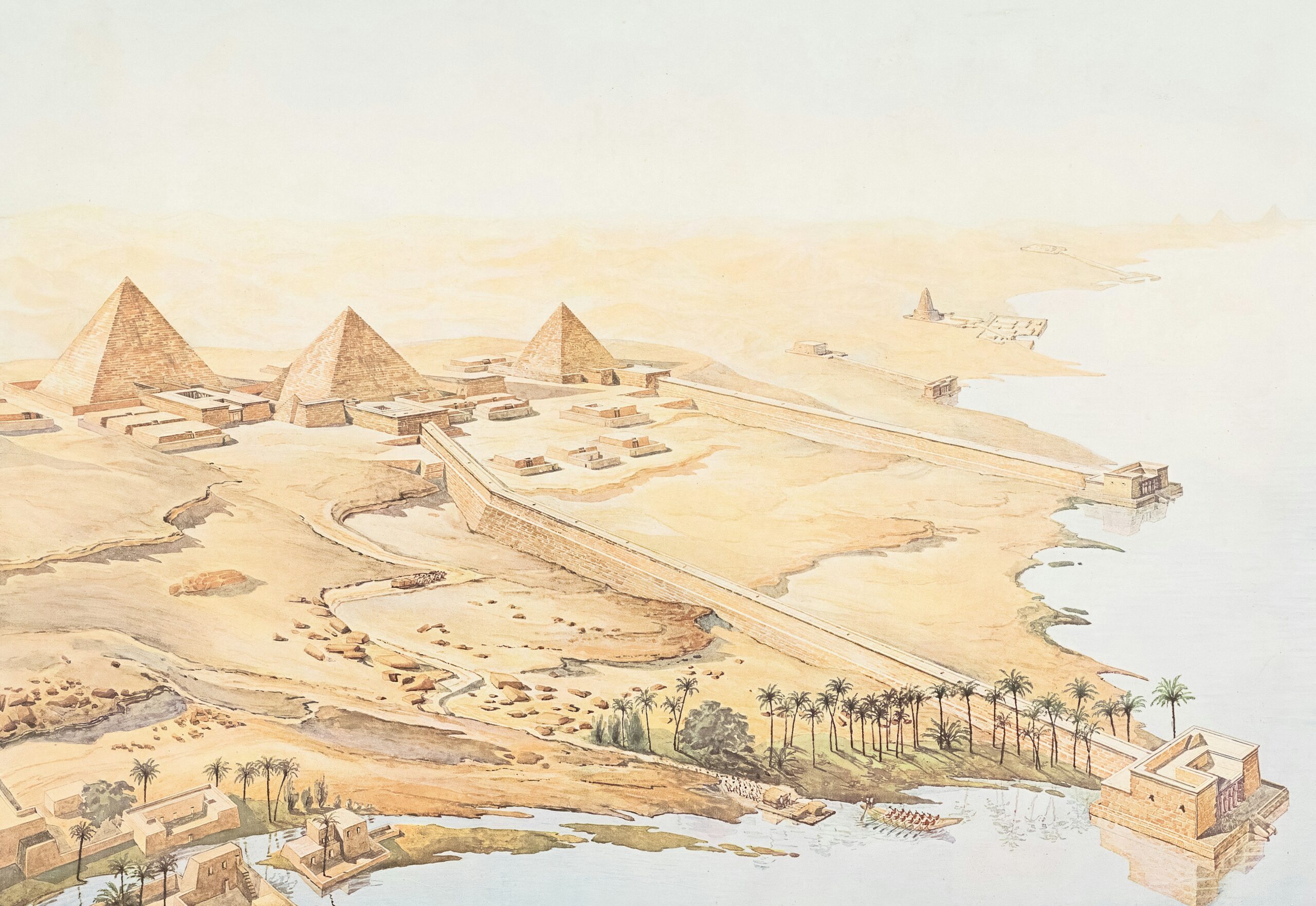
The dust of ages often obscures the vibrant tapestry of human civilization, yet beneath the silent sands lie the echoes of once-mighty empires, narratives of ascendance followed by an inevitable, often cataclysmic, decline. The fall of these colossi – from the sun-drenched grandeur of Rome to the intricate administrative marvel of the Han Dynasty – are not mere historical footnotes, but profound lessons in the fragility of power, the complexity of societal dynamics, and the inexorable forces that shape human history. This exploration delves into the multifaceted reasons behind the collapse of ancient empires, dissecting the internal rot and external pressures that led to their undoing.
No empire, however seemingly invincible, is immune to the corrosive effects of internal weaknesses. These vulnerabilities often fester for generations, silently undermining the foundations of imperial power until a tipping point is reached. The growth and subsequent contraction of an empire were rarely the result of a single, catastrophic event, but rather a cascade of interconnected failures stemming from within.
Political Corruption and Administrative Overreach
One of the most pervasive internal ailments that plagued ancient empires was rampant political corruption. As power consolidated, so too did opportunities for avarice and self-enrichment. Offices that should have been dedicated to public service became commodities to be bought and sold, leading to a decline in competence and an increase in sycophancy.
The Erosion of Meritocracy
When advancement within the state apparatus was based on loyalty and bribes rather than skill and dedication, the quality of governance invariably suffered. Crucial decisions regarding taxation, military deployment, and infrastructure maintenance were made by individuals more concerned with their personal gain than the welfare of the empire. This led to a decline in efficiency and an increase in burdensome regulations that stifled economic activity and public morale.
The Bureaucratic Blob
The sheer scale of many ancient empires necessitated vast bureaucratic structures. While intended to facilitate administration, these organizations often became bloated, inefficient, and resistant to change. Decision-making became a labyrinthine process, with policies often becoming diluted or completely distorted by the time they filtered down through the layers of bureaucracy. This paralysis prevented timely responses to emerging threats and crises.
Economic Stagnation and Inequality
The economic engine of an empire, while often the bedrock of its strength, could also become a source of profound weakness. When the benefits of imperial prosperity were not equitably distributed, or when the economic system itself became unsustainable, resentment and instability were sure to follow.
The Burden of Taxation
To fund their vast militaries, opulent courts, and extensive public works, empires levied heavy taxes on their populations. While often necessary, these taxes could become an unbearable burden, particularly for the peasantry and the burgeoning middle class. When taxation became perceived as unjust or exploitative, it fueled resistance and dissent, weakening the social contract between the rulers and the ruled.
The Concentration of Wealth
In many ancient empires, wealth and land became increasingly concentrated in the hands of a small elite, while the majority of the population struggled to subsist. This extreme inequality bred social unrest, as those with little to lose had little reason to defend the existing order. The vast gap between the opulent few and the impoverished many created a fertile ground for rebellion and internal conflict.
Dependence on Slave Labor and Diminishing Returns
Some empires, particularly those with large agricultural bases, became heavily reliant on slave labor. While initially providing a cheap and abundant workforce, this system discouraged innovation and investment in new technologies. As the empire expanded, so did the demand for labor, and when supply couldn’t keep pace, or when the cost of maintaining slaves became too high, economic productivity suffered. Furthermore, prolonged reliance on specific agricultural techniques could lead to soil degradation and diminishing returns, impacting food security.
Social Fragmentation and Loss of Identity
The cohesive bonds that hold a society together can fray over time, especially in vast and diverse empires. When shared values and a sense of common purpose erode, the empire loses its internal strength and becomes more susceptible to external pressures.
Regionalism and Separatist Tendencies
As empires grew, so did regional identities. Local loyalties could often supersede imperial allegiance, particularly during times of central weakness. Governors and powerful provincial leaders might begin to act with increasing autonomy, viewing their regions as distinct entities rather than integral parts of a larger whole. This could lead to civil wars and eventual fragmentation.
Loss of Civic Virtue and Moral Decay
A decline in civic virtue – the willingness of citizens to prioritize the common good over personal gain – was a common precursor to imperial collapse. When citizens became apathetic, self-serving, or disillusioned with their government, the collective will to defend and maintain the empire weakened. This moral decay could manifest in various ways, from widespread bribery and corruption to a general disregard for the law.
Cultural Assimilation Gone Wrong
While cultural assimilation could sometimes integrate conquered peoples into the imperial fabric, it could also lead to resentment and the suppression of local traditions. If the dominant culture was perceived as oppressive or alien, it could foster a sense of dispossession and a desire to reclaim lost cultural heritage, fueling resistance movements.
The collapse of ancient empires has long fascinated historians and archaeologists, as it often reveals the complex interplay of environmental, social, and political factors that contribute to societal decline. A related article discusses the discovery of ancient maps that suggest the existence of an ice-free Antarctica, which could provide insights into ancient civilizations and their geographical knowledge. For more information, you can read the article here: Discovery of Ancient Maps Reveals Ice-Free Antarctica.
The External Fraying: Pressures from Beyond the Borders
While internal weaknesses often create the conditions for collapse, it is frequently external forces that deliver the final, decisive blows. The vastness of empires meant they were always exposed to the “barbarian at the gates” – both literal and figurative.
Invasions and Migrations of Peoples
The perennial threat to any ancient empire was the sustained pressure from hostile neighbors, be they nomadic tribes, rival kingdoms, or large-scale migrations of peoples seeking new lands.
The “Barbarian” Threat: A Persistent Shadow
From the Persians challenging Greece to the Germanic tribes testing the Roman frontier, “barbarian” peoples were a constant source of anxiety. These groups, often more adaptable and less encumbered by bureaucratic inertia, could exploit imperial weaknesses with devastating effect. Their motives varied, from conquest and plunder to seeking refuge from their own internal crises.
The Domino Effect of Migrations
Large-scale population movements, often triggered by environmental factors, internal strife, or pressure from other migrating groups, could overwhelm imperial defenses. These migrations were not always overtly hostile but could lead to conflict over resources and territory. The Goths, for instance, initially sought refuge within the Roman Empire but their mistreatment led to open rebellion and a significant weakening of Roman authority.
Competition and Warfare with Rival Powers
No empire existed in a vacuum. The geopolitical landscape was often a complex web of alliances, rivalries, and wars for dominance. The exhaustion of resources in perpetual conflict could cripple even the most powerful empires.
The Cost of Perpetual Warfare
Maintaining vast armies and engaging in frequent wars placed an enormous strain on imperial treasuries and manpower. Even when victorious, empires often emerged from these conflicts weakened and depleted. The Punic Wars, while ultimately won by Rome, were a brutal and costly undertaking that significantly shaped Roman society and military.
Shifting Alliances and Strategic Blunders
The ability of an empire to forge and maintain effective alliances was crucial for its survival. A miscalculation in diplomacy or a failure to adapt to changing geopolitical realities could leave an empire isolated and vulnerable. The shifting allegiances of various city-states and kingdoms during the Peloponnesian War offer a stark example of this dynamic.
Climate Change and Environmental Degradation
While often overlooked in traditional narratives of imperial collapse, environmental factors played a significant, if sometimes indirect, role. Climate shifts and unsustainable resource management could undermine the very foundations of an empire’s prosperity.
Drought and Famine
Changes in rainfall patterns, leading to prolonged droughts, could devastate agricultural yields. This resulted in widespread famine, economic disruption, and social unrest. The collapse of the Mayan civilization, while complex, is widely believed to have been exacerbated by severe droughts.
Resource Depletion and Soil Degradation
The relentless demand for resources in large, growing empires could lead to unsustainable exploitation of natural resources. Deforestation, overgrazing, and intensive agriculture could lead to soil erosion and desertification, reducing arable land and impacting food production. The Hellenistic kingdoms, for example, heavily exploited their natural resources, contributing to long-term environmental damage.
The Slow Unraveling: The Interplay of Factors

It is crucial to understand that the fall of an empire was rarely a singular event. Instead, it was a complex process, a slow unraveling where internal weaknesses and external pressures interacted and amplified each other.
The Vicious Cycle of Decline
Once an empire entered a downward spiral, a vicious cycle often took hold. Weakened infrastructure led to decreased trade, which in turn reduced tax revenue, further hindering the government’s ability to maintain infrastructure and the military. This created a feedback loop of decline that became increasingly difficult to break.
Military Overstretch and the “Barbarization” of the Army
As the traditional sources of manpower dwindled due to population decline or economic hardship, empires often resorted to recruiting soldiers from the very “barbarian” groups they fought. While this could temporarily bolster numbers, it also diluted the loyalty and cohesion of the army, and in some cases, led to the army itself becoming a force that challenged imperial authority. The Roman army’s increasing reliance on Germanic recruits is a prime example.
The Tyranny of Short-Term Solutions
When faced with complex, long-term problems, leaders often resorted to short-term fixes that only exacerbated the underlying issues. For example, devaluing the currency to pay for immediate expenses might provide temporary relief but would ultimately lead to hyperinflation and economic instability in the long run.
The Loss of Legitimacy and Public Trust
Ultimately, empires rely on the consent of the governed, or at least their grudging acceptance of authority. When this legitimacy erodes, the empire loses its moral right to rule, and its eventual demise becomes almost inevitable.
The Perception of Injustice
When the populace perceives the government as corrupt, oppressive, or uncaring, their loyalty wanes. The feeling that the system is rigged against them, that their sacrifices are unappreciated, fuels apathy and dissent.
The Rise of Alternative Power Structures
As the central authority weakens, local leaders, warlords, or even religious movements may begin to fill the power vacuum. These emerging entities can offer stability and order to segments of the population, further eroding the imperial government’s authority.
Case Studies in Collapse: Lessons from History

Examining specific empires provides concrete examples of these theoretical frameworks in action. The fall of each empire offers unique insights into the universal patterns of imperial decline.
The Roman Empire: A Slow Forging of Fate
The Western Roman Empire’s fall in 476 CE is perhaps the most iconic example of imperial collapse. It was a slow, agonizing process, not a sudden cataclysm.
The Internal Rot: From Republic to Autocracy
The transition from Republic to Empire, while bringing stability for a time, also concentrated power and fostered corruption. The vastness of the empire made governance increasingly difficult, and reliance on a professional but often disloyal military became a vulnerability.
External Pressures: The Germanic Migrations
The relentless pressure of Germanic tribes, driven by their own migrations and the lure of Roman wealth, proved to be an insurmountable challenge for an overstretched and internally weakened empire. The sack of Rome by the Visigoths in 410 CE and the subsequent deposition of the last Western Roman Emperor by Odoacer marked the symbolic end.
The Han Dynasty: The Mandate of Heaven Fades
The Han Dynasty, a Golden Age of Chinese history, also succumbed to a combination of internal strife and external pressures.
Corruption and Eunuch Power
The later Han emperors were often weak and manipulated by powerful eunuchs and aristocratic families. This led to rampant corruption, bureaucratic infighting, and a decline in effective governance.
Peasant Uprisings and Yellow Turban Rebellion
The heavy burden of taxation, coupled with natural disasters, fueled widespread peasant discontent, culminating in the massive Yellow Turban Rebellion. This rebellion, while ultimately suppressed, severely weakened the dynasty and paved the way for warlordism.
The Rise of Warlords and Fragmentation
The inability of the central government to maintain order led to the rise of powerful regional warlords who carved out their own territories, effectively ending the Han Dynasty and ushering in the Three Kingdoms period.
The Maya Civilization: Ecological Hubris
The collapse of the Classic Maya civilization offers a compelling example of how environmental mismanagement can lead to societal collapse.
Environmental Degradation and Drought
Intensive agriculture, deforestation, and unsustainable resource management are believed to have led to severe ecological degradation. This, combined with prolonged periods of drought, crippled their agricultural base.
Overpopulation and Social Unrest
A growing population placed immense pressure on dwindling resources. As the environment failed to support the populace, social unrest and conflict likely ensued, leading to the abandonment of major cities and a decline in centralized authority.
The collapse of ancient empires has long fascinated historians, as it reveals the complex interplay of social, economic, and environmental factors that can lead to the downfall of even the most powerful civilizations. A related article discusses the implications of asset freezing powers in modern governance, drawing parallels to how ancient leaders managed resources and wealth to maintain control. For a deeper understanding of the mechanisms behind power dynamics, you can read more in this insightful piece on asset freezing powers.
The Enduring Legacy: Lessons for the Future
| Empire | Year of Collapse | Main Causes |
|---|---|---|
| Roman Empire | 476 AD | Political instability, economic decline, invasions by barbarian tribes |
| Han Dynasty | 220 AD | Corruption, internal rebellions, external invasions |
| Maya Civilization | 900 AD | Environmental degradation, warfare, social unrest |
| Ottoman Empire | 1922 AD | Internal strife, external pressure, economic decline |
The fall of ancient empires is not merely an academic exercise in cataloging past failures. These historical collapses offer profound and enduring lessons that resonate through the ages, providing critical insights for understanding the present and navigating the future.
The Perils of Unchecked Power and Corruption
The constant theme across various imperial collapses is the corrupting influence of unchecked power. The concentration of wealth and authority in the hands of a few, coupled with the erosion of accountability, inevitably leads to societal decay and the alienation of the populace. This underscores the importance of robust institutions, checks and balances, and the rule of law in any functioning society.
The Criticality of Sustainable Practices
The environmental catastrophes that befell civilizations like the Maya serve as stark warnings about the consequences of unsustainable resource management. The continued reliance on practices that deplete natural resources and damage ecosystems poses a significant threat to long-term societal stability and prosperity.
The Importance of Social Cohesion and Equity
The fragmentation and social unrest that plagued many empires highlight the vital role of social cohesion and equitable distribution of resources. When large segments of the population feel disenfranchised, ignored, or exploited, the foundation of societal stability is compromised. Fostering a sense of shared purpose and ensuring that the benefits of progress are broadly shared are paramount.
Adapting to Change: The Sign of Resilience
Perhaps the most crucial lesson is the necessity of adaptability. Empires that failed to innovate, to reform, or to respond effectively to changing internal and external circumstances were ultimately doomed. The ability to recognize threats, to embrace new ideas, and to adjust policies and structures in response to evolving realities is the hallmark of resilience, not just for empires, but for all societies. The echo of fallen empires reminds us that even the mightiest structures are subject to the relentless forces of change, and that true strength lies not in an unyielding façade, but in the capacity to adapt, to learn, and to evolve.

How an Entire Civilization Collapsed
FAQs
1. What are some examples of ancient empires that have collapsed?
Some examples of ancient empires that have collapsed include the Roman Empire, the Byzantine Empire, the Mayan Empire, the Han Dynasty in China, and the Akkadian Empire in Mesopotamia.
2. What are some common reasons for the collapse of ancient empires?
Common reasons for the collapse of ancient empires include internal strife and civil wars, external invasions, economic instability, environmental factors such as drought or famine, and the overextension of resources and territories.
3. How did the collapse of ancient empires impact the world?
The collapse of ancient empires often led to power vacuums, political instability, and the rise of new empires or civilizations. It also resulted in the loss of cultural and technological advancements, as well as the disruption of trade routes and economic systems.
4. What lessons can be learned from the collapse of ancient empires?
The collapse of ancient empires teaches us the importance of maintaining internal stability, managing resources wisely, and adapting to changing environmental and geopolitical conditions. It also highlights the need for effective governance and diplomacy to prevent conflicts and external threats.
5. Are there any modern parallels to the collapse of ancient empires?
Some historians and scholars draw parallels between the collapse of ancient empires and modern geopolitical events, such as the fall of the Soviet Union, the decline of colonial empires, and the potential challenges facing global superpowers in the 21st century.