For centuries, the prevailing narrative of human history has largely painted ancient civilizations as rudimentary, their technological achievements hobbled by a lack of sophisticated tools and scientific understanding. Yet, a growing body of archaeological and scientific evidence is steadily dismantling this misconception, revealing a tapestry of unparalleled engineering prowess that predates modern innovation by millennia. The unearthed remnants of ancient structures, intricate machinery, and sophisticated hydrological systems whisper of a lost era where ingenuity flourished, and monumental feats were achieved with a precision that continues to baffle and inspire. This article delves into some of the most compelling examples of advanced ancient engineering, exploring the methods, materials, and enduring mysteries that challenge our conventional understanding of the past.
The Colossal Stones: Mastering Gravity and Scale
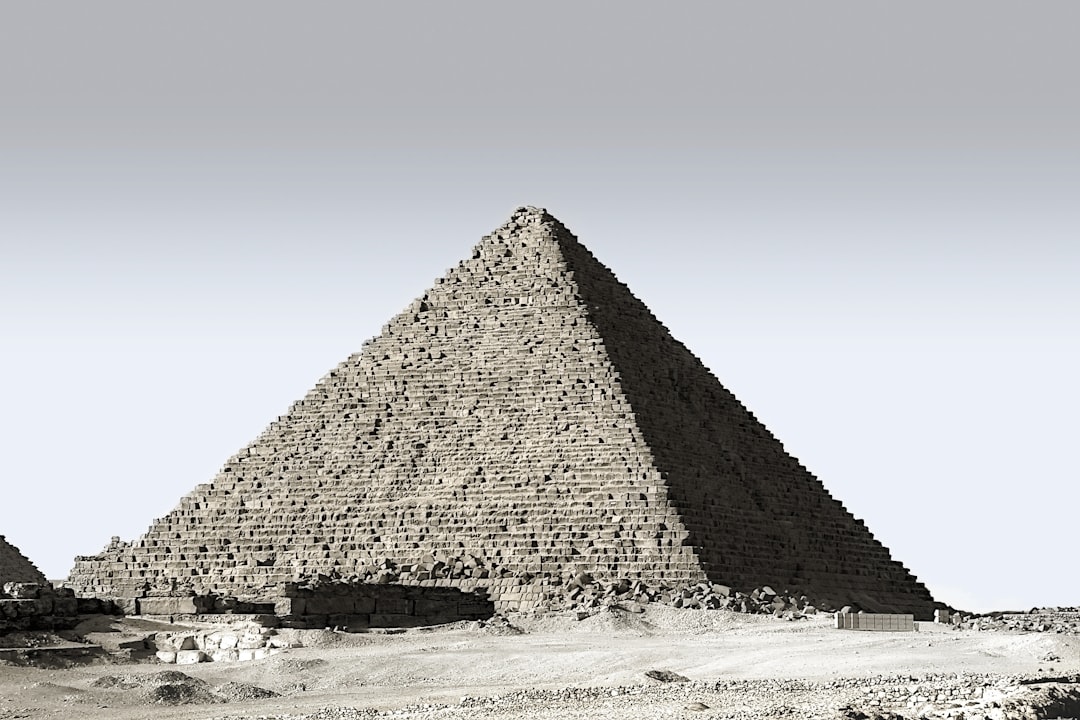
Perhaps the most visually arresting evidence of advanced ancient engineering lies in the sheer scale and precision of the monumental stone structures left behind by various civilizations. From the pyramids of Egypt to the megalithic sites of Europe and the Americas, these edifices stand as silent testaments to an astonishing mastery of logistics, material science, and sheer physical exertion, all achieved without the benefit of modern machinery. The question is not if they were capable, but how they achieved such feats.
Quarrying and Transportation: The Foundation of Giants
The extraction of massive stone blocks, some weighing hundreds, even thousands, of tons, from distant quarries is a fundamental puzzle. While accounts and surviving tools offer glimpses into primitive quarrying techniques, the efficiency and precision with which these colossal blocks were extracted and prepared for transport are remarkable.
Ancient Quarrying Techniques: Beyond Simple Chiseling
While early theories focused on brute force and simple tools like copper chisels and stone hammers, more detailed examinations reveal a nuanced understanding of rock properties. Evidence suggests the use of a variety of techniques, including:
- Erosion and Thermal Shock: Applying water to heated rock, causing it to crack and expand, a technique still utilized in some traditional stoneworking.
- Wooden Wedges: Driving wet wooden wedges into pre-cut fissures. As the wood absorbed water and expanded, it exerted immense pressure, splitting the stone.
- Controlled Fracturing: Understanding the natural joints and weaknesses within the rock to guide the fracture lines.
The Enigma of Transport: Moving Mountains
The transportation of these massive stones across sometimes vast distances, over varied terrain, and to their final resting places remains one of the most debated aspects of ancient engineering. The lack of clear evidence for wheeled transport of such immense loads in many regions has led to a multitude of theories.
- Ramps and Levers: The ubiquitous presence of ramps, both simple and complex, in construction sites offers a plausible method for moving stones vertically. Sophisticated lever systems, utilizing leverage principles that are fundamental to physics, could have been employed to manipulate and maneuver heavy objects.
- Waterways and Flooding: In areas with access to rivers or canals, it’s conceivable that barges or rafts were used to float massive blocks. Some researchers propose the use of controlled flooding or temporary water channels to aid in the movement of heavy materials.
- Sledges and Lubrication: Evidence from ancient Egypt, for instance, depicts large statues being moved on sledges. The presence of water or mud in front of these sledges suggests an understanding of friction reduction, a critical element in minimizing the force required for movement.
- Human Power and Organization: It is undeniable that immense human labor was involved. However, the ability to orchestrate and manage such vast workforces, coordinating their efforts with precision and efficiency, speaks to a highly developed social and organizational structure, itself a form of advanced engineering.
Precision Cutting and Fitting: The Seamless Joints
Beyond the sheer scale, the precision with which these ancient builders cut and fitted colossal stone blocks is astounding. Many megalithic structures feature joints so tight that a knife blade cannot be inserted between them, a testament to an unparalleled level of craftsmanship and measurement.
Millimeter Accuracy Across Tonnages: A Craft Beyond Measure
- Sophisticated Measurement Tools: While no explicit blueprints or advanced measurement instruments have been definitively found, the resulting construction suggests the use of highly accurate, albeit rudimentary, measurement tools. This could have involved string lines, plumb bobs, and geometric principles to ensure precise angles and alignments.
- Abrasive Cutting: For finer shaping and fitting, the use of harder stones as tools and abrasives like sand likely played a significant role. The precise shaping of curved surfaces and intricate interlocking designs suggests a deep understanding of how to use these materials to achieve the desired form.
- Trial and Error or Deep Knowledge?: Whether this precision was achieved through meticulous trial and error over generations, or through a sophisticated and perhaps lost understanding of geometry and mechanics, remains a subject of inquiry. The consistent accuracy across numerous sites points towards a deep, codified knowledge rather than haphazard experimentation.
Recent discoveries have shed light on the possibility of advanced ancient engineering, particularly in relation to human migration patterns. An intriguing article explores the evidence supporting the idea that prehistoric humans may have ventured into Antarctica, showcasing remarkable engineering feats that could have facilitated such journeys. For more insights on this fascinating topic, you can read the article here: Prehistoric Human Migration to Antarctica.
The Water Wizards: Hydrology and Irrigation on a Grand Scale
Ancient civilizations often faced the daunting challenge of securing and managing water resources, particularly in arid or unpredictable climates. Their solutions, however, often transcended basic irrigation and reveal a profound understanding of hydrology, fluid dynamics, and sustainable water management that would be impressive even by today’s standards.
Aqueducts and Underground Channels: Delivering Life’s Elixir
The construction of elaborate aqueduct systems and vast underground channels to transport water over long distances, often across challenging terrain, stands as a marvel of ancient hydraulic engineering.
Roman Aqueducts: More Than Just Arches
Though often associated with Roman engineering, the concept and execution of aqueducts predate them significantly. The Romans, however, perfected the system, building a network that supplied cities with fresh water for centuries.
- Gravity-Fed Systems: The fundamental principle behind most ancient aqueducts was gravity. Engineers meticulously calculated gradients to ensure a continuous flow of water from its source to its destination, often maintaining a surprisingly consistent drop over miles.
- Precision Gradients: The engineering required to maintain such precise gradients over varied topography, accounting for changes in elevation and preventing silting or stagnation, is a testament to advanced surveying and mathematical understanding.
- Materials Science and Durability: The use of concrete, brick, and stone, often combined with impermeable linings, created durable structures that have withstood the test of time. The Roman concrete, in particular, has proven remarkably resilient, outperforming many modern concretes in certain environmental conditions.
- Underground Conduits: The construction of extensive underground channels, including tunnels and siphons, demonstrates an advanced understanding of creating closed systems to prevent contamination and evaporation, while also navigating obstacles.
The Lost Networks of the Indus Valley and Mesopotamia: An Earlier Mastery
Long before the Romans, civilizations like the Indus Valley (Harappan) and those in Mesopotamia developed sophisticated water management systems.
- The Indus Valley’s Urban Planning: Cities like Mohenjo-Daro and Harappa featured highly advanced sanitation and water supply systems with individual homes connected to central wells and drainage networks. Their urban planning incorporated intricate systems of brick-lined sewers and public baths.
- Mesopotamian Irrigation Systems: The Mesopotamians developed extensive canal networks to irrigate their agricultural lands, transforming arid regions into fertile plains. Their understanding of water flow and diversion was crucial to their civilization’s survival and prosperity.
Reservoir Systems and Underground Cisterns: Sustaining Life Through Drought
The ability to store and conserve water, especially in regions prone to drought, was a critical aspect of ancient survival. Many civilizations developed ingenious reservoir and cistern systems.
Ancient Reservoirs: Engineering for Aridity
- Gebel Aulia Dam (Sudan): While its exact age is debated, remnants suggest a large-scale attempt to control Nile flooding and store water for irrigation.
- Cisterns of Constantinople: The vast underground cisterns built by the Byzantine Empire, designed to hold immense quantities of water for the city during sieges, are engineering marvels in their own right. They showcase sophisticated waterproofing techniques and architectural planning.
- Terraced Reservoirs in Yemen: The ancient kingdoms of Yemen constructed elaborate terraced agricultural systems with integrated reservoirs to capture and store precious rainfall, demonstrating a deep understanding of landscape engineering.
The Qanat Systems of Persia: Subterranean Ingenuity
Perhaps one of the most astounding hydrological achievements is the qanat system, originating in ancient Persia. These are gently sloping underground channels that tap into groundwater aquifers and bring water to the surface over long distances, defying gravity and evaporation.
- The Art of Gradient Control: The construction of qanats requires an extremely precise understanding of the natural gradient of the land and the water table. Vertical access shafts are dug at regular intervals, allowing for the removal of excavated earth and providing ventilation, while the main tunnel is excavated with a gradient barely perceptible to the naked eye.
- Minimizing Evaporation and Contamination: By transporting water underground, qanats effectively eliminate evaporation and prevent surface contamination, ensuring a clean and consistent water supply.
- Longevity and Resilience: Many qanat systems have been in continuous operation for over a thousand years, a testament to their robust design and the skilled craftsmanship involved in their construction and maintenance.
Astronomical Alignment and Architectural Precision: Celestial Architects
The alignment of ancient structures with celestial bodies is a phenomenon that has captivated researchers for decades. This precision is not merely decorative; it suggests a sophisticated understanding of astronomy, mathematics, and the cyclical nature of the cosmos.
Megalithic Alignments: Charting the Heavens
Many prehistoric sites, from Stonehenge to the temples of Malta, exhibit deliberate alignments with solstices, equinoxes, and other significant astronomical events.
Stonehenge: A Calendar in Stone
The most famous example, Stonehenge, is a complex astronomical observatory. Its stones are aligned with the sunrise on the summer solstice and the sunset on the winter solstice, and other alignments have been proposed with lunar and stellar cycles.
- Sophisticated Observation: While the exact methods are unknown, it’s clear that ancient builders possessed a profound understanding of celestial movements, requiring meticulous observation over long periods.
- The Saros Cycle: Some theories suggest an understanding of the Saros cycle, a period of approximately 18 years, 11 days, and 8 hours after which the Sun, Moon, and Earth return to the same relative positions, allowing for predictable eclipses.
Other Celestial Navigators: From Göbekli Tepe to Andean Observatories
- Göbekli Tepe (Turkey): This ancient site, far older than Stonehenge, features T-shaped pillars with carvings that may also hold astronomical significance, possibly relating to constellations or celestial events.
- Machu Picchu and Sacsayhuamán (Peru): Incan sites demonstrate remarkable alignment with the sun. The Intihuatana stone at Machu Picchu, for example, is believed to have been used to “tie the sun” and track its movement. Sacsayhuamán’s massive zigzag walls also exhibit alignments that may be astronomically significant.
Mathematical Principles in Design: Geometry in Stone
The precise geometric proportions and layout of many ancient structures suggest a sophisticated grasp of geometry and mathematics, applied with an artistry that continues to inspire awe.
The Golden Ratio and Sacred Geometry: Harmony in Design
- The Golden Ratio (Phi): Evidence suggests that the Golden Ratio, approximately 1.618, a proportion found frequently in nature and considered aesthetically pleasing, may have been intentionally incorporated into the design of some ancient temples and pyramids.
- Sacred Geometry: Concepts of sacred geometry, the belief that geometric forms possess symbolic and spiritual meaning, likely underpinned the design of these structures, bridging the spiritual and the practical.
- Architectural Layouts: The meticulous planning of temple complexes, often incorporating precise angles, symmetrical layouts, and Fibonacci sequences, points to a deep understanding of mathematical relationships and their application in harmonious design.
Lost Materials and Advanced Metallurgy: Forging the Unforgeable
The sophisticated use of materials, particularly in metallurgy, challenges the notion of ancient technological limitations. The ability to work with metals, create alloys, and craft tools and artifacts with remarkable precision speaks to a knowledge base that is only now being fully appreciated.
The “Mithril” of Antiquity: Unidentified Alloys and Techniques
Numerous artifacts and structural elements made from materials and with techniques that have proven difficult to replicate with ancient methods exist across different cultures.
The Iron Pillar of Delhi: A Rust-Resistant Marvel
The Iron Pillar of Delhi, standing for over 1,600 years, is remarkably resistant to corrosion. Its composition, a high-purity iron with a high percentage of phosphorus, creates a passive layer that protects it. The exact smelting and forging techniques used to achieve this level of purity and resistance remain a subject of scientific investigation.
- Phosphorus Content: The high phosphorus content is believed to have been intentionally incorporated, a feat that would have required a sophisticated understanding of ore selection and smelting temperatures.
- Modern Imitation Challenges: Replicating the same level of corrosion resistance with traditional methods has proven difficult, leading to speculation about lost metallurgical knowledge.
The Antikythera Mechanism: A Mechanical Masterpiece
Discovered in a Roman-era shipwreck, the Antikythera Mechanism is an astronomical calculator dating back to the 2nd century BCE. This complex device, composed of at least 30 intricate bronze gears, showcases a level of mechanical engineering far beyond what was previously thought possible for that era.
- Predicting Celestial Events: The mechanism could accurately predict lunar phases, eclipses, and the positions of the planets, demonstrating an advanced understanding of celestial mechanics.
- Babbage’s Precursor: Some have compared its complexity to that of Charles Babbage’s 19th-century analytical engines, highlighting its anachronistic nature. The intricate gearing and Differential gears suggest a sophisticated understanding of gear ratios and mechanical computation.
Advanced Stone Working and Composite Materials: Beyond Simple Rock
Beyond metallurgy, ancient civilizations also demonstrated remarkable skills in working with stone and developing composite materials.
The Baalbek Temples: Gigantic Monoliths and Precision Fitting
The Baalbek temples in Lebanon feature some of the largest stone blocks ever quarried and moved by humans, some weighing over 1,000 tons. The precision with which these colossal blocks are fitted together, particularly the “Trilithon” with its three immense stones, is awe-inspiring.
- Quarrying and Transportation of Giants: The sheer scale of these blocks and their transport from quarries several kilometers away is a testament to extraordinary engineering capabilities, possibly involving advanced lever systems and organized labor.
- Interlocking Designs: The precise interlocking of these massive stones, without mortar, suggests a level of surveying and stone-cutting accuracy that is difficult to comprehend.
Ancient Concrete and Mortars: Durable and Resilient Formulations
While often associated with the Romans, the use of sophisticated binding agents and concrete-like materials dates back further.
- Pozzolanic Concrete: Roman concrete, utilizing volcanic ash (pozzolana), created a material that hardened underwater and possessed remarkable durability, allowing for the construction of enduring structures like the Pantheon’s dome and harbor facilities.
- Lime-Based Mortars: Many ancient cultures used highly refined lime-based mortars that, over time, carbonated and hardened to a remarkable degree, creating strong and resilient bonds.
Recent discoveries have sparked interest in the possibility of advanced ancient engineering, suggesting that civilizations long before us may have possessed knowledge and skills that we are only beginning to understand. For those intrigued by the implications of such findings, an insightful article titled “The End of Peaceful Space Exploration: A New Era Begins” delves into the connections between ancient technologies and modern advancements. You can read more about it here. This exploration not only challenges our perceptions of history but also encourages a reevaluation of how we view technological progress across the ages.
The Unanswered Questions: What Secrets Remain?
Despite the mounting evidence, numerous questions persist, fueling continued research and sparking the imagination. The true extent of ancient knowledge and the specific techniques employed often remain elusive, shrouded in the mists of time.
Lost Knowledge and Suppressed Histories: The Gaps in our Understanding
- The Oral Tradition and Knowledge Transfer: A significant portion of ancient knowledge was likely passed down through oral traditions, which are inherently susceptible to loss or alteration over time.
- Theories of External Influence or Lost Civilizations: While often a source of speculation, the sheer magnitude of some ancient achievements has led to theories about lost advanced civilizations or external influences, though concrete evidence for these remains scarce.
The “How” vs. the “What”: Bridging the Gap Between Artifact and Process
- Reconstruction and Simulation: Modern engineers and archaeologists are increasingly using computational modeling and experimental archaeology to try and recreate ancient techniques. These efforts, while providing valuable insights, often highlight the immense skill and deep understanding required.
- The Role of Intuition and Experimentation: It is likely that a combination of deep ingrained knowledge, meticulous observation, and a great deal of patient experimentation, passed down through generations, played a crucial role in the development of these advanced engineering practices.
The Legacy of Ingenuity: Inspiring the Future
The evidence of advanced ancient engineering serves not as a debunking of modern progress, but as a profound testament to the enduring human capacity for innovation. It challenges us to look beyond superficial assumptions and to appreciate the ingenuity and resourcefulness of our ancestors. The stones they moved, the water they channeled, and the structures they raised continue to stand, not just as historical relics, but as enduring monuments to a lost era of engineering brilliance, prompting us to reconsider what was possible in the ancient world and the full spectrum of human ingenuity throughout history. The ongoing deciphering of these ancient marvels promises to continually enrich our understanding of our collective past and inspire future generations of thinkers and builders.

The Greatest Technology Humanity Ever Lost
FAQs

What is advanced ancient engineering?
Advanced ancient engineering refers to the sophisticated and advanced construction and technological achievements of ancient civilizations, such as the pyramids of Egypt, the aqueducts of Rome, and the megalithic structures of South America.
What evidence exists for advanced ancient engineering?
Evidence for advanced ancient engineering includes the construction of massive stone structures with precise measurements and alignments, the use of complex irrigation and water management systems, and the development of advanced metallurgy and tool-making techniques.
How did ancient civilizations achieve advanced engineering feats?
Ancient civilizations achieved advanced engineering feats through a combination of skilled labor, knowledge of mathematics and geometry, innovative building techniques, and the use of natural resources such as stone, wood, and metal.
What role did advanced engineering play in ancient societies?
Advanced engineering played a crucial role in ancient societies by enabling the construction of monumental structures for religious, political, and practical purposes, as well as facilitating the development of trade, agriculture, and urbanization.
What impact does the evidence of advanced ancient engineering have on our understanding of history?
The evidence of advanced ancient engineering challenges traditional views of ancient civilizations as primitive and demonstrates the ingenuity and sophistication of these societies, leading to a reevaluation of our understanding of human history and technological development.