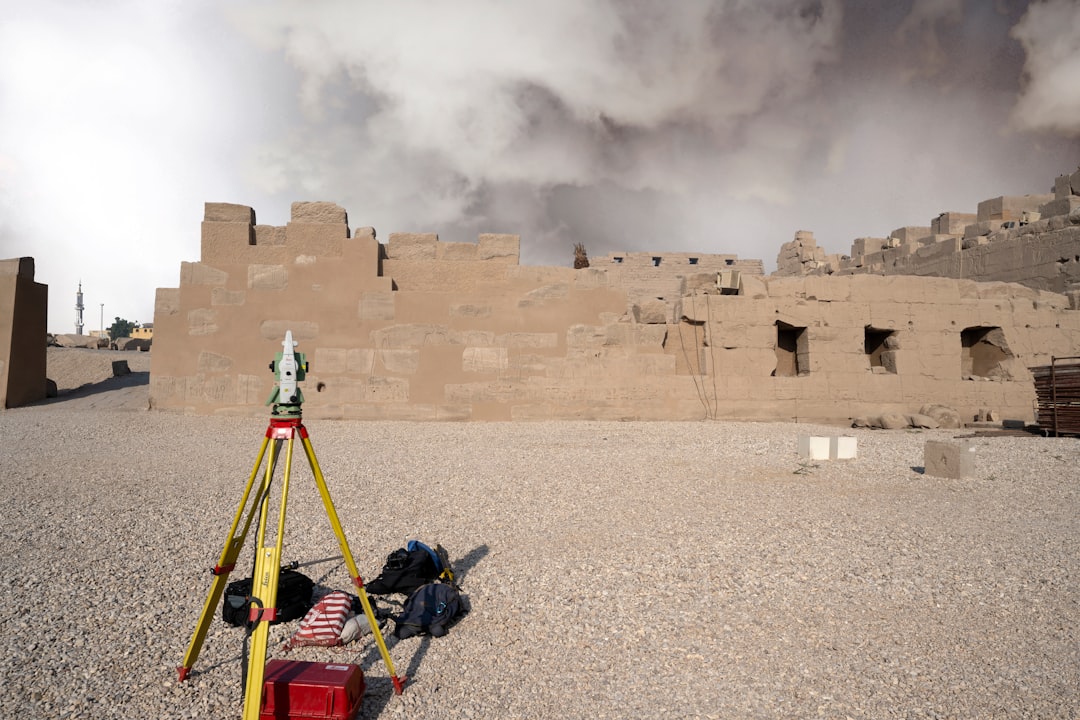
The relentless march of time has a peculiar way of obscuring truth, leaving behind whispers and fragments of what once was. Among these remnants, a fascinating stratum of inexplicably advanced ancient technologies stands as a tantalizing enigma, challenging our conventional understanding of human history. These are not mere artifacts of primitive craftsmanship but rather sophisticated creations that seem to defy the technological capabilities attributed to their respective eras. The questions they raise are profound: how were they made, what was their purpose, and who were the minds that conceived and executed them?
The sheer scale and precision of ancient pyramid construction across the globe—from the iconic Giza plateau in Egypt to the Mesoamerican wonders of Teotihuacan and the lesser-known complexes in Sudan and China—have long fueled speculation. These colossal structures, often aligned with celestial bodies, represent an astronomical and architectural feat that continues to baffle modern engineers. The immense weight of the stones, some weighing hundreds of tons, and the intricate internal passageways suggest a level of planning, organization, and geometrical understanding that belies the perceived limitations of ancient societies.
The Precision of the Great Pyramid: A Mathematical and Celestial Enigma
The Great Pyramid of Giza, in particular, stands as a monument to unparalleled engineering. Its base is almost perfectly level, its sides are aligned with the cardinal directions to within a fraction of a degree, and its internal chambers, such as the King’s and Queen’s chambers, are constructed with remarkable accuracy.
The Quarrying and Transportation of Gigantic Blocks
One of the most perplexing aspects is how ancient Egyptians quarried, transported, and meticulously placed millions of stone blocks, some weighing over 80 tons, with apparent ease. Theories range from the use of ramps and levers to more unconventional ideas involving sound frequencies or even the application of principles not yet rediscovered by modern science. The quarry marks themselves often reveal a sophistication in stone-cutting that is difficult to replicate even with modern tools.
Astronomical Alignments and Mathematical Proportions
The intentional alignment of the pyramids with astronomical phenomena, such as the equinoxes and solstices, suggests a deep understanding of celestial mechanics and calendrical systems. Furthermore, the presence of mathematical constants like Pi and Phi within the pyramid’s dimensions has led some to believe that ancient builders possessed a level of mathematical knowledge far exceeding what is typically acknowledged.
Mesoamerican Pyramids: A Parallel Enigma of Astronomical Sophistication
Across the Atlantic, the Mayan and Aztec civilizations also erected impressive pyramids, notably at Teotihuacan and Chichen Itza. These structures, while stylistically different from their Egyptian counterparts, exhibit a similar dedication to astronomical observation and precise alignment.
The Pyramid of the Sun and Moon: Celestial Calendars in Stone
The Pyramid of the Sun and the Pyramid of the Moon at Teotihuacan are testament to sophisticated urban planning and astronomical knowledge. Their placement and orientation are believed to be integral to a complex calendrical system and religious observances that tracked celestial cycles with remarkable accuracy.
The Astronomical Observatory of El Caracol: A Sophisticated Solar and Venus Tracker
The observatory at Chichen Itza, known as El Caracol, is a prime example of Mesoamerican ingenuity. Its windows and doorways are aligned to track the movements of the sun and Venus, demonstrating a profound understanding of orbital mechanics and a sophisticated system for timekeeping.
Ancient technology continues to baffle historians and archaeologists alike, as evidenced by the intriguing discoveries discussed in the article “Uncovering the Map That Rewrites History.” This piece delves into the enigmatic artifacts and advanced engineering techniques of ancient civilizations that challenge our understanding of their capabilities. The article raises questions about the origins of these technologies and how they were utilized, leaving us to ponder the mysteries of our past. For more insights into this captivating topic, you can read the full article here: Uncovering the Map That Rewrites History.
The Antikythera Mechanism: A Lost Computer of the Ancient World
Discovered in a shipwreck off the coast of the Greek island of Antikythera, the Antikythera Mechanism is a truly astonishing artifact. This intricate device, dating back to the 2nd century BCE, is composed of a complex array of bronze gears, dials, and pointers. Its functionality has been painstakingly reconstructed by researchers, revealing it to be an analog computer capable of predicting astronomical positions, eclipses, and even the timing of the Olympic Games.
The Complexity of Gears and Astronomical Calculations
The sheer number of gears—estimated to be over 30—and their precise interlocking mechanisms are far more advanced than anything else found from that period. The mechanism’s ability to calculate and display the movements of celestial bodies with such accuracy suggests a level of mechanical engineering and astronomical knowledge that was thought to have only emerged centuries later.
The Discovery and Reconstruction Process
The recovery of the Antikythera Mechanism was a painstaking affair, with the fragile bronze fragments requiring meticulous preservation and study. The ongoing efforts to understand its inner workings, aided by advanced imaging techniques, continue to reveal new layers of its sophistication.
The Lost Traditions of Hellenistic Science
The existence of the Antikythera Mechanism raises fundamental questions about Hellenistic science. Where did this knowledge come from? Was it a singular invention, or did it represent a lost tradition of advanced mechanical computation that has been entirely erased from historical records?
The Baghdad Battery: Early Evidence of Electrochemical Power?

The “Baghdad Battery,” dating from the Sasanian period (around 250 BCE to 650 CE), is another artifact that sparks debate. Consisting of a terracotta pot containing a copper cylinder, an iron rod, and a residue of what appears to be wine or vinegar, this object bears a striking resemblance to a galvanic cell—a basic electrochemical battery.
The Science Behind the “Battery”
When filled with an electrolyte, such as an acidic solution, the Baghdad Battery could theoretically produce a small electric current. While its exact purpose remains unknown, speculation ranges from being used for electroplating, religious rituals, or even mild medical treatments.
Potential Applications and Historical Context
If indeed a functional battery, its existence would suggest a rudimentary understanding of electricity and its generation millennia before its widely accepted discovery. The lack of further evidence of such devices, however, leaves its true significance open to interpretation.
The Debate on Functionality and Intent
Archaeologists and scientists remain divided on whether the Baghdad Battery was intentionally designed as a power source or if its perceived electrical properties are coincidental. The lack of associated wiring or clear evidence of use as a battery fuels ongoing debate.
Underwater Cities and Structures: Lost Civilizations or Natural Formations?

Throughout the world’s oceans and large lakes, peculiar underwater formations have been discovered that bear uncanny resemblances to man-made structures: submerged cities, paved roads, and meticulously carved stones. These discoveries often ignite imaginations, suggesting the existence of lost civilizations swallowed by the sea.
The Bimini Road: A Submerged Pavement of Enigma
Off the coast of Bimini in the Bahamas lies a submerged formation of large, rectangular limestone blocks lying in parallel rows. While some geologists propose a natural formation of sedimentary rock, others point to the regularity and apparent construction of these blocks as evidence of artificial origin.
Geological vs. Archaeological Interpretations
The debate centers on whether these blocks are the result of natural geological processes, such as erosion and deposition, or if they were intentionally shaped and placed by ancient human hands. The sheer scale and geometric arrangement often favor the latter interpretation for many observers.
Yonaguni Monument: An Underwater Pyramid off Japan?
The Yonaguni Monument, located off the coast of Japan, is a massive, terraced rock formation submerged in the sea. Its angular formations, flat surfaces, and apparent staircases have led to widespread speculation that it is an artificial structure, possibly a submerged pyramid or temple.
Facing Natural Forces or Human Ingenuity?
Geological explanations suggest that the monument is a naturally formed sedimentary rock formation that has been shaped by wave erosion and tectonic activity. However, the consistent geometric patterns and the presence of what appear to be carved features challenge these purely naturalistic interpretations for many.
Ancient technology often leaves us in awe, as many of its remarkable achievements remain shrouded in mystery. For instance, the construction of monumental structures like the pyramids or Stonehenge raises questions about the methods and tools used by our ancestors. A fascinating exploration of how ancient civilizations might have harnessed resources can be found in a related article discussing the geopolitical race for Antarctic resources. This piece delves into the implications of resource discovery in uncharted territories, drawing parallels to how ancient societies may have navigated their own resource challenges. You can read more about it in this insightful article here.
Precision in Ancient Metallurgy and Stone Carving: Uncanny Skill
| Artifact | Location | Description |
|---|---|---|
| Antikythera Mechanism | Greece | An ancient analog computer used to predict astronomical positions and eclipses. |
| Battery of Baghdad | Iraq | An ancient battery that may have been used for electroplating or medical purposes. |
| Puma Punku Stones | Bolivia | Massive stone blocks with complex and precise cuts that defy explanation by conventional means. |
Beyond monumental architecture, the ancient world also produced objects of exquisite craftsmanship in metallurgy and stone carving that exhibit a level of detail and precision that is difficult to explain with the tools and techniques believed to have been available.
The Baghdad Metal Spheres: Advanced Metallurgy of Unknown Origin
Several small, intricately crafted metal spheres have been found in ancient Mesopotamian sites. These spheres, often made of unidentifiable alloys, exhibit remarkable uniformity and internal complexity, suggesting sophisticated metallurgical processes far beyond what is conventionally understood for the periods they originate from.
The Composition of Unknown Alloys
The exact composition of these metal spheres often defies easy analysis, hinting at lost knowledge of metallurgy. The techniques required to create such uniform and complex hollow spheres would have been exceedingly difficult with the rudimentary tools available.
The Roman Dodecahedra: Functional Tools or Ritual Objects?
These enigmatic 12-sided bronze or stone objects, typically found in Roman-era sites across Europe, feature pentagonal faces with a circular hole in each. Their purpose remains a mystery, with theories ranging from tools for measuring distances, astronomical instruments, candle holders, to purely decorative or ritualistic items. The precise symmetry and the absence of any wear patterns on many of them further deepen the enigma.
The Mystery of Their Utility
The dodecahedra’s consistent geometry and lack of obvious practical application have led many to speculate about their use in specialized crafts, scientific measurement, or even esoteric practices.
The Laser-Cut Perfection of Ancient Stone: A Question of Tools
Throughout history, numerous examples of ancient stonework, such as the intricate carvings in Egypt, Peru, and even China, exhibit a level of precision and detail that seems almost impossible without modern cutting tools, such as lasers. The smooth surfaces, perfect angles, and delicate inlays in some megalithic structures are particularly perplexing.
The Unexplained Smoothness and Precision of Cuts
The uncanny smoothness and sharpness of certain ancient stonework cuts, especially in hard stones like granite and basalt, have led to speculation about the use of advanced, and currently undiscovered, cutting techniques. The presence of perfectly straight edges and acute angles in megalithic construction is a recurring point of contention.
The Indictment of Conventional History
The persistent presence of these unexplained ancient technologies serves as a potent indictment of our current, often rigid, historical narratives. They suggest that human ingenuity and technological capabilities may have followed a path far more winding and complex than we currently acknowledge. Whether these represent:
- Lost Civilizations: Echoes of advanced societies like Atlantis or Mu, whose knowledge and technologies were lost to cataclysm.
- Extraterrestrial Intervention: The possibility that these marvels were gifts or constructions by non-human intelligences, influencing early human development.
- Undiscovered Natural Phenomena: The exploitation of physics or geology not yet fully understood by modern science.
- Unrecognized Human Ingenuity: A testament to brilliant minds within ancient cultures whose innovative spirit and advanced knowledge have been systematically overlooked or dismissed.
The pursuit of understanding these mysteries is not merely an academic exercise; it is a journey into the very foundations of human history and potential. It compels us to question our assumptions, to look beyond textbooks, and to embrace the tantalizing possibility that the past holds secrets far more extraordinary than we dare to imagine. The unexplained ancient technologies are not just relics of stone and metal; they are persistent questions etched into the fabric of time, inviting us to delve deeper into the profound depths of human endeavor and the vast, unexplored territories of our collective past.

The Greatest Technology Humanity Ever Lost
FAQs
What is ancient technology we cannot explain?
Ancient technology we cannot explain refers to artifacts or structures from ancient civilizations that display advanced technological capabilities beyond the understanding of modern science and engineering.
What are some examples of ancient technology we cannot explain?
Examples of ancient technology we cannot explain include the construction of the pyramids in Egypt, the precision of the Inca stonework at sites like Sacsayhuaman, and the Antikythera mechanism, an ancient Greek analog computer.
How do these ancient technologies challenge our understanding of history?
These ancient technologies challenge our understanding of history by suggesting that ancient civilizations may have possessed advanced knowledge and capabilities that have been lost or forgotten over time. This challenges the traditional linear view of technological progress.
What are some theories about how these ancient technologies were created?
Some theories about how these ancient technologies were created include the involvement of extraterrestrial beings, lost advanced civilizations, or the existence of ancient knowledge and techniques that have not been documented in historical records.
What are the implications of studying ancient technology we cannot explain?
Studying ancient technology we cannot explain can lead to a reevaluation of our understanding of history, technology, and the capabilities of ancient civilizations. It also raises questions about the potential for lost knowledge and the limitations of our current understanding of the past.