
For centuries, the Romans have captivated imaginations not just for their empire’s vast reach and sophisticated engineering, but also for the enduring legacy of their constructions. From the Colosseum and Pantheon to aqueducts and vast road networks, these structures have defied the ravages of time, weathering earthquakes, erosion, and the simple passage of millennia. While many ancient marvels have crumbled into dust, Roman concrete remains remarkably intact, a testament to a material science that has only recently begun to be fully understood. The secret, it turns out, lies not in a singular magical ingredient, but in a felicitous combination of readily available materials and a unique chemical reaction that allowed Roman concrete to self-heal and strengthen over time, a stark contrast to the brittle and deteriorating concrete common in modernity.
The Romans were not merely builders; they were pioneers in the application of materials. Before concrete, massive stone blocks and brick were the primary construction materials, limiting the scale and complexity of structures. The development of a robust and versatile concrete democratized construction, allowing for the creation of sweeping arches, vast domes, and complex vaults that would have been impossible with earlier methods. This revolutionary material fueled the expansion and consolidation of the Roman Empire, enabling the construction of public baths, temples, amphitheaters, and essential infrastructure that facilitated trade, communication, and daily life. The sheer ubiquity and longevity of Roman structures speak volumes about the material’s efficacy. Walking through the ruins of Pompeii, or standing beneath the oculus of the Pantheon, one is not just observing history; one is experiencing the tangible durability of Roman innovation. This enduring quality has long puzzled engineers and scientists, prompting meticulous research into its composition and the processes that contribute to its remarkable resilience.
From Humble Beginnings: The Evolution of Roman Concrete
The earliest forms of Roman concrete, or opus caementicium, evolved over time. Initially, it was likely a coarser mix, primarily used as a binding agent for rubble fill in constructing walls and foundations. Early examples can be found in the Republic, but it was during the Imperial period that Roman concrete truly came into its own, becoming the sophisticated material we admire today. The careful selection of aggregates, the precise ratio of ingredients, and the understanding of how the material cured and aged were crucial to its success. This wasn’t an accidental discovery; it was the result of generations of observation, experimentation, and refinement, driven by the practical needs of a growing and ambitious civilization.
The Role of Pozzolans: A Key Ingredient for Durability
The true transformative element that set Roman concrete apart was the incorporation of pozzolans. These are siliceous and aluminous materials that, when finely ground and mixed with lime and water, exhibit cementitious properties. While the Romans were aware of lime’s binding capabilities, the addition of pozzolans dramatically enhanced the concrete’s performance. The most famous and extensively used pozzolan was volcanic ash, sourced from regions with active volcanism, particularly around the Bay of Naples. This ash, rich in reactive silica and alumina, was the secret sauce that bestowed upon Roman concrete its extraordinary durability and resistance to water.
The Pantheon’s Enduring Dome: A Masterpiece of Roman Concrete
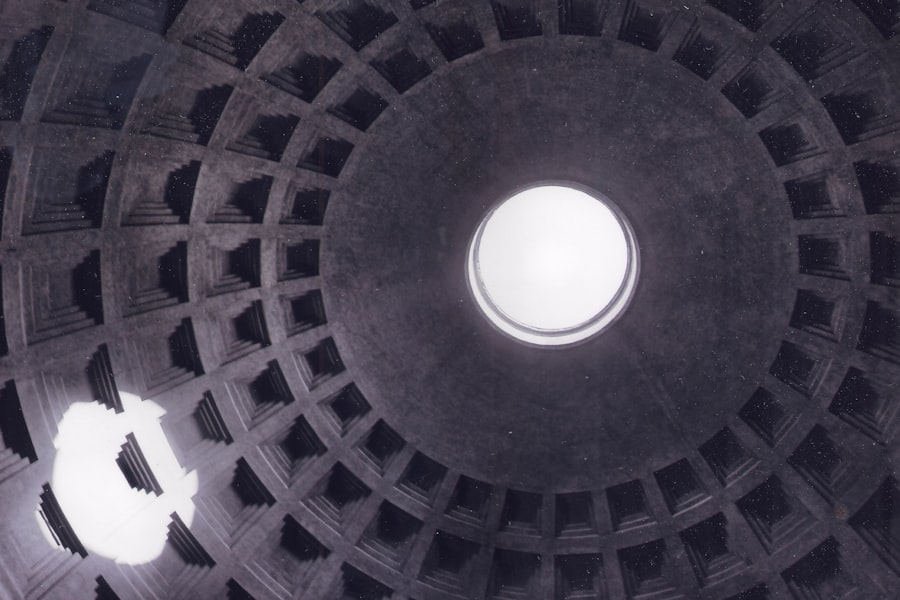
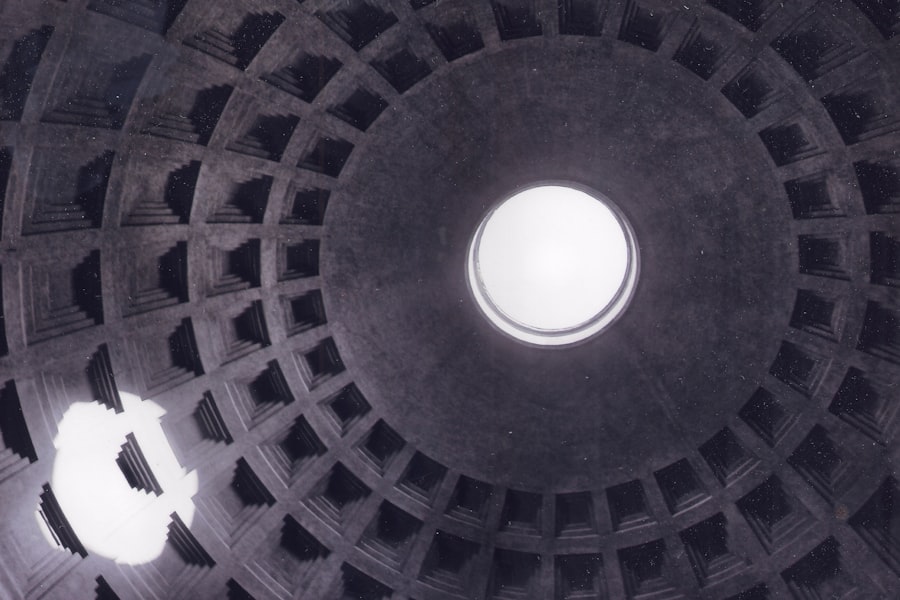
The Pantheon in Rome stands as a monumental testament to the power of Roman concrete. Its massive, unreinforced concrete dome, completed in the early 2nd century AD, remains the largest of its kind in the world for centuries. The sheer scale and structural integrity of this achievement are staggering, especially considering the materials and techniques available at the time. The dome’s design, with its coffered ceiling reducing weight and its gradual tapering towards the oculus at the apex, is a marvel of engineering. However, it is the underlying composition of the concrete, particularly the selection of aggregates and the carefully controlled mixing process, that allowed this iconic structure to withstand seismic activity and remain standing virtually intact for nearly two millennia.
Innovations in Aggregate Selection: Strength from Within
While the pozzolanic additive was crucial, the Romans also exhibited a sophisticated understanding of aggregate selection. They didn’t simply throw any rocks into the mix. For different parts of a structure, they used different aggregates. For elements subjected to immense pressure, like the foundations and lower courses of walls, they would incorporate heavier, denser aggregates like crushed brick or basalt. This provided greater compressive strength. Conversely, for upper levels and lighter elements, they might use lighter aggregates. This nuanced approach to aggregate selection, combined with the reactive pozzolan, allowed them to tailor the concrete’s properties for specific structural demands.
Roman concrete is renowned for its durability, often lasting thousands of years, a feat that modern concrete struggles to achieve. This remarkable longevity is attributed to the unique combination of volcanic ash, lime, and seawater used in its composition, which allows the material to strengthen over time through a process called pozzolanic reaction. For a deeper understanding of ancient technologies and their impact on modern innovations, you can explore the related article on the catastrophic effects of lost innovations, which discusses various ancient techniques, including the secrets behind Roman concrete. You can read more about it here: Apocalyptic Ancient Tech: Catastrophic Effects of Lost Innovations.
Decoding the Chemistry: The Secret Reaction
The longevity of Roman concrete is not simply due to the presence of volcanic ash, but rather the unique chemical reaction it initiates when combined with lime and water. This reaction is fundamentally different from the hydration process in modern Portland cement concrete. While Portland cement concrete gains strength primarily through the hydration of calcium silicates, which can be prone to cracking and degradation over time, Roman concrete’s strength development is a more complex and dynamic process. The volcanic ash, particularly its amorphous silica content, reacts with calcium hydroxide (produced when water slakes lime) to form hydrated calcium silicates and other stable mineral phases, such as tobermorite. These newly formed compounds are highly durable and impart exceptional strength and resistance to chemical attack.
The Role of Lime: More Than Just a Binder
Lime, derived from heating limestone (calcium carbonate), is a fundamental component of Roman concrete. When water is added to lime, it undergoes a process called slaking, producing calcium hydroxide (Ca(OH)₂). This calcium hydroxide then acts as a reactant for the pozzolanic materials. In modern concrete, the primary cementitious material is Portland cement, which produces a significant amount of calcium hydroxide. However, this calcium hydroxide is often considered a weaker component that can be susceptible to attack by sulfates and acids, leading to deterioration. In Roman concrete, the abundant calcium hydroxide generated from the lime was readily consumed by the reactive silica in the volcanic ash, forming stable and insoluble calcium silicate hydrates. This effectively “locks away” the potentially problematic calcium hydroxide, contributing significantly to the material’s resilience.
Pozzolanic Reactivity: The Engine of Durability
The key to Roman concrete’s remarkable durability lies in the pozzolanic reactivity of volcanic ash. Unlike inert aggregates, the silica in volcanic ash is amorphous and highly reactive. When exposed to the alkaline environment created by slaking lime, the silica lattice begins to break down, reacting with calcium ions to form new, stable mineral phases. This reaction continues over extended periods, even after the initial setting of the concrete. Research has revealed that the formation of tobermorite (a calcium silicate hydrate) is particularly important. Tobermorite crystals are long and interlocking, filling pores and cracks within the concrete matrix, which enhances its strength and impermeability.
The Self-Healing Mechanism: A Living Material
Perhaps the most astonishing aspect of Roman concrete is its capacity for self-healing. Scientists have discovered that when modern cracks appear in Roman concrete structures, rainwater can penetrate, dissolving excess lime. This dissolved lime then reacts with the surrounding volcanic ash and other pozzolanic materials, precipitating new calcium carbonate and calcium silicate hydrates within the cracks. These new mineral formations effectively seal the cracks, preventing further ingress of water and aggressive substances, and reinforcing the damaged area. This dynamic process means that Roman concrete doesn’t just endure; it actively repairs itself, a characteristic largely absent in modern concrete formulations.
The “Lime Clasts” Discovery: Evidence of Healing
Recent groundbreaking research has identified “lime clasts” – small, white chunks of lime – embedded within the matrix of Roman concrete. These lime clasts were previously thought to be an indicator of poor mixing or an impurity. However, new studies suggest they are precisely the mechanism by which Roman concrete self-heals. These clasts act as reservoirs of reactive lime. When a crack forms and water enters, it dissolves these clasts, releasing the lime needed to react with the pozzolan and form reinforcing mineral precipitates within the crack. This discovery has revolutionized the understanding of Roman concrete’s longevity, revealing a sophisticated and proactive design that anticipates and mitigates damage.
The durability of Roman concrete has long fascinated researchers and engineers, as it has withstood the test of time for over two millennia. A recent article explores the innovative techniques that could revolutionize modern construction materials, drawing parallels between ancient practices and contemporary needs. For those interested in understanding how ancient methods can inform our future, this insightful piece can be found here: embracing the future. By examining the unique composition and environmental interactions of Roman concrete, we can glean valuable lessons that may enhance the longevity and sustainability of today’s infrastructure.
The Influence of Seawater: An Unexpected Ally
Remarkably, Roman concrete used in maritime structures, such as harbors and piers, has proven to be exceptionally durable, even more so than some land-based constructions. This counterintuitive observation is attributed to the interaction of the concrete with seawater. The magnesium and aluminum in seawater react with the calcium in the Roman concrete, forming new mineral phases that fill pores and consolidate the material, further enhancing its strength and resistance to erosion. This unique synergy between Roman concrete and the marine environment is a testament to its remarkable adaptability and resilience, a property that modern concrete struggles to replicate in such harsh conditions.
Beyond Volcanic Ash: Other Pozzolanic Sources
While volcanic ash from the Bay of Naples was the most prominent pozzolan, the Romans were also adept at utilizing other pozzolanic materials. Brick dust, particularly from finely ground fired clay, also exhibits pozzolanic properties. The Romans frequently incorporated crushed brick into their concrete mixes, especially in areas where volcanic ash was less readily available or as a supplementary binder. The high temperatures involved in firing the clay contribute to the creation of reactive silica and alumina compounds, allowing brick dust to participate in the same beneficial chemical reactions as volcanic ash, albeit often to a lesser degree.
The Missing Piece: Why Modern Concrete Fails
The contrast between the enduring strength of Roman concrete and the relatively shorter lifespan of many modern concrete structures is stark. While modern concrete is incredibly strong and versatile, its reliance on Portland cement and the associated hydration process leaves it vulnerable to various forms of degradation. The rapid setting and hardening of Portland cement concrete come at the cost of long-term resilience. The development of microcracks, susceptibility to sulfate attack, and freeze-thaw cycles are common issues that plague modern concrete, leading to spalling, cracking, and structural weakening over time. Understanding the success of Roman concrete offers valuable insights for the development of more durable and sustainable construction materials for the future.
The Limits of Portland Cement: A Modern Paradox
Portland cement, the dominant binder in modern concrete, is a marvel of industrial chemistry. It allows for rapid construction and predictable performance. However, the inherent chemical processes involved in its hydration are also its Achilles’ heel. The release of calcium hydroxide, the formation of expansive ettringite in sulfate-rich environments, and the penetration of moisture and de-icing salts all contribute to the gradual breakdown of modern concrete. The quest for faster and cheaper construction has, in some ways, led to materials that are less enduring, creating a cycle of repair and replacement that is both economically and environmentally costly.
The Quest for Sustainable and Durable Concrete
The study of Roman concrete is not merely an academic exercise; it is a crucial step in the development of more sustainable and durable construction materials. Researchers are actively exploring ways to replicate the self-healing capabilities and long-term resilience of Roman concrete using modern technologies. This includes investigating alternative binders, developing the use of engineered pozzolans, and incorporating bio-inspired features into concrete formulations. The ultimate goal is to create concrete that can not only withstand the test of time but also actively repair itself, reducing maintenance costs and environmental impact. The ancient Romans, through their empirical wisdom, have provided us with a blueprint for a future of more resilient and enduring architecture.

The Greatest Technology Humanity Ever Lost
FAQs
What is Roman concrete?
Roman concrete, also known as opus caementicium, is a type of concrete used in ancient Rome. It was a key building material in the construction of Roman architecture, including structures such as the Pantheon and the Colosseum.
Why does Roman concrete last so long?
Roman concrete is known for its durability and longevity due to the use of volcanic ash, which creates a chemical reaction that strengthens the concrete over time. This unique composition allows Roman concrete to resist the effects of erosion and chemical decay, resulting in its long-lasting properties.
How long does Roman concrete last compared to modern concrete?
Roman concrete has been found to be more durable than modern concrete, with some structures still standing after more than 2,000 years. In comparison, modern concrete structures typically have a lifespan of around 50-100 years before requiring significant maintenance or replacement.
What are some examples of Roman concrete structures that have stood the test of time?
Some notable examples of Roman concrete structures that have endured for centuries include the Pantheon in Rome, the Colosseum, the aqueducts, and various harbor installations. These structures showcase the remarkable longevity of Roman concrete.
Are there efforts to replicate Roman concrete in modern construction?
There has been growing interest in replicating the composition of Roman concrete for use in modern construction. Researchers and engineers are studying the properties of Roman concrete to develop sustainable and long-lasting building materials that can withstand the test of time.