The documentary “Mastering Ancient Roman Engineering” offers a captivating exploration into the minds and methods of the architects and builders who shaped the Roman world. Through a blend of expert interviews, stunning CGI reconstructions, and on-location footage of remarkable surviving structures, the film unravels the ingenuity, resourcefulness, and sheer ambition that characterized Roman engineering on an unprecedented scale. This documentary goes beyond simply showcasing impressive feats of construction; it delves into the scientific principles, the meticulous planning, and the societal structures that allowed the Romans to achieve what many considered impossible.
The documentary begins by laying the groundwork for understanding Roman engineering, emphasizing the crucial role of materials. It highlights that the Romans were not just builders, but also masters of material science for their time, skillfully selecting and transforming natural resources into the durable and monumental structures we still marvel at today. The film illustrates that Roman dominion was not just built on military might, but on the very earth they quarried and the innovations they derived from it.
The Ubiquitous Stone: Marble, Travertine, and Limestone
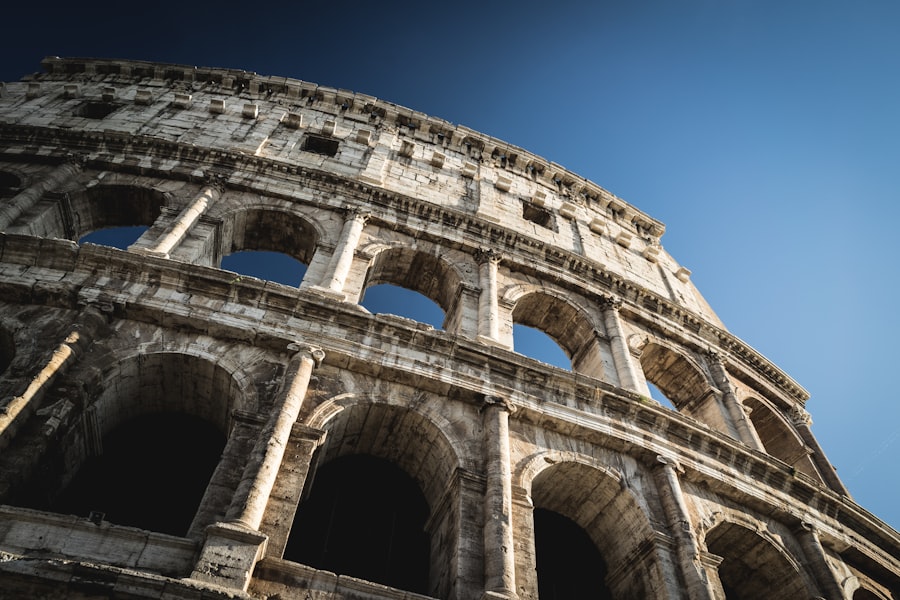
“Mastering Ancient Roman Engineering” dedicates significant attention to the diverse range ofstones employed by Roman builders. The documentary explains how marble, particularly from quarries like Carrara, was not merely for aesthetic appeal but also for its structural integrity and ability to be polished to a brilliant sheen, adorning temples, public buildings, and the homes of the elite. The film then shifts its focus to travertine, detailing its extraction from quarries like Tivoli. Viewers are shown how this sedimentary rock, formed from mineral springs, offered both strength and a distinctive, warm hue, making it ideal for the Colosseum and theatres. Limestone, perhaps the most widely used stone, is presented as the workhorse of Roman construction, its abundance and versatility making it foundational for everything from aqueducts to basic housing. The documentary’s CGI reconstructions vividly demonstrate the immense scale of these quarries, showcasing the physical labor and sophisticated techniques – albeit rudimentary by modern standards – employed to extract and transport these colossal blocks. Primitive cranes, levers, and ramps are brought to life, illustrating the sheer determination required for such undertakings.
Harnessing the Earth: The Miracle of Roman Concrete (Opus Caementitium)
A pivotal segment of the documentary is reserved for the revolutionary invention and application of Roman concrete, or opus caementicium. The film emphasizes that this material was a game-changer, allowing for shapes and structures previously unimaginable with stone alone. Expert commentary explains the composition of Roman concrete: a mixture of volcanic ash (pozzolana), lime, water, and aggregate (broken stones or bricks). The documentary elaborates on the volcanic ash’s critical role in creating a hydraulic concrete, capable of setting underwater and resisting the corrosive effects of saltwater, a property that proved invaluable for harbors and bridges. The film’s reenactments and animations meticulously detail the process of mixing and pouring this concrete, showing how it was often layered with tufa or rubble to create massive, monolithic structures. The enduring strength of these concrete creations, such as the Pantheon’s dome, is presented as a testament to the Romans’ understanding of its properties, a knowledge often lost for centuries after the fall of the empire. The documentary highlights that the Romans didn’t just invent concrete; they mastered its application, learning to control its setting time and strength through precise proportions and careful curing.
The Art of the Brick: Beyond Simple Firing
While stone and concrete dominate much of the discussion, the documentary also acknowledges the significant role of fired brick in Roman construction. It explores how the Romans refined brick-making techniques, producing durable and uniform bricks that were often used in conjunction with concrete, particularly for facing walls and creating arches. The film details how different types of clay were used, and how the firing temperatures were carefully controlled to achieve varying degrees of hardness and resistance to weathering. The documentary showcases examples of intricate brickwork, demonstrating that Roman bricks were not merely utilitarian but could also be used for decorative purposes, often combined with stucco or mosaic to create visually stunning facades. The efficient production of bricks, facilitated by large kilns and organized labor, is presented as another example of the Roman genius for systematization and mass production, essential for supporting the empire’s vast infrastructure projects.
In exploring the remarkable achievements of ancient Roman engineering, one can draw intriguing parallels to modern developments in infrastructure and trade agreements. For instance, the article on the evolution of NAFTA and USMCA highlights how trade agreements have shaped economic landscapes, much like how Roman roads and aqueducts facilitated commerce and communication across their empire. To learn more about the impact of these trade agreements, you can read the article here: The Evolution of NAFTA and USMCA.
Waterways of Power: The Marvel of Roman Aqueducts
The documentary then turns its attention to one of the most iconic symbols of Roman engineering and civic planning: the aqueducts. “Mastering Ancient Roman Engineering” argues that these intricate water distribution systems were not just about providing fresh water; they were a fundamental component of Roman urban life and a clear demonstration of their mastery over gravity and hydraulics. The film illustrates that the success of Roman cities, their sanitation, their public baths, and even their military garrisons, was intrinsically linked to the reliable flow of water made possible by these engineering marvels.
Following the Flow: Gravity and Gradient Precision
A significant portion of the documentary is dedicated to explaining the core principle behind aqueduct construction: gravity. Expert engineers and historians meticulously break down how Roman surveyors used simple yet effective tools, such as the chorobates (a level used to measure gradients) and the groma (a surveying instrument for right angles), to establish an incredibly precise, gentle gradient. The film’s animations are crucial here, illustrating how the aqueduct channels were designed to fall no more than a few centimeters per kilometer, ensuring a consistent but slow flow of water over vast distances. The documentary emphasizes the immense challenge of maintaining this gradient across varied terrain, requiring significant earthworks, tunnels, and bridges. The idea that the Romans could achieve such precision without modern surveying equipment is presented as a testament to their keen observation of natural laws and their methodical approach to problem-solving. They understood that too steep a gradient would lead to erosion of the channel, while too shallow a gradient would result in stagnant water and sediment buildup.
Bridging the Gaps: Arches, Tunnels, and Siphons
The documentary vividly showcases the engineering solutions the Romans employed to overcome topographical obstacles. The iconic arched aqueduct bridges, like the Pont du Gard, are presented not just as aesthetic marvels but as crucial engineering solutions to span valleys and rivers. The film details the development and mastery of the Roman arch, explaining how it distributed weight effectively, allowing for lighter and more efficient construction compared to massive solid walls. Viewers are shown how arches were built using centering – temporary wooden supports – and how the Keystone, the central wedge-shaped stone, was crucial for locking the arch in place. Furthermore, the documentary explores the construction of aqueduct tunnels, bored through mountains and hills, emphasizing the labor-intensive nature of these subterranean passages. Finally, a less common but equally ingenious aspect explored is the use of inverted siphons. Through CGI, the film demonstrates how water pressure was used to force water uphill through sealed lead pipes, allowing aqueducts to cross deep valleys where bridge construction would have been prohibitively expensive or difficult. This showcases a sophisticated understanding of fluid dynamics, even if the theoretical understanding was still developing.
From Source to City: The Complex Distribution Network
“Mastering Ancient Roman Engineering” goes beyond the visible aqueduct channels to reveal the sophisticated distribution networks within Roman cities. The film illustrates how water was channeled into reservoirs, filtered through settling tanks, and then distributed through a network of lead or ceramic pipes to public fountains, baths, private residences, and even latrines. The documentary highlights the remarkable level of hydraulic engineering involved in managing this complex system, including the use of valves and distribution points. The sheer volume of water delivered to major Roman cities, often exceeding the capacity of many modern cities, is presented as a testament to the efficiency and scale of their water management systems, underscoring their commitment to public health and the quality of urban life.
Fortifications for an Empire: The Architecture of Defense

The documentary then shifts focus to another critical aspect of Roman engineering: their formidable fortifications. “Mastering Ancient Roman Engineering” posits that the ability to build and maintain secure borders was as crucial to the longevity of the Roman Empire as its roads and aqueducts. The film explores how Roman military engineering was not just about brute force, but about strategic placement, intelligent design, and the relentless application of proven building techniques.
Walls of Stone and Earth: The Strategic Advantage
The documentary delves into the various types of Roman fortifications, from the massive city walls that enclosed major urban centers to the more extensive frontier defenses like Hadrian’s Wall. It explains the strategic considerations behind site selection, emphasizing the use of natural defensive features like cliffs and rivers. The film details the construction of these walls, often multi-layered, with thick stone or brick facings, earth infill, and impressive towers placed at regular intervals. The documentary’s analysis of Hadrian’s Wall, for instance, highlights its defensive capabilities, including the ditches and earthworks that preceded the main stone structure, creating a formidable barrier against potential incursions. The film emphasizes that these walls were not merely static defenses but were designed to facilitate troop movement and deployment, with well-maintained pathways along their tops.
The Siege Engine Ballet: Offensive Engineering
In addition to defensive structures, “Mastering Ancient Roman Engineering” explores the offensive engineering employed by the Romans in their military campaigns. The documentary showcases the ingenuity and effectiveness of Roman siege engines, such as the massive siege towers that dwarfed enemy ramparts, the battering rams designed to breach gates and walls, and the catapults and ballistae capable of hurling projectiles over considerable distances. The film’s detailed CGI reconstructions bring these terrifying machines to life, demonstrating their operational principles and the tactical advantages they offered. The documentary explains that the Romans were not hesitant to adapt and improve upon designs from other cultures, showcasing their practical and adaptive approach to military technology. The sheer scale and destructive power of these engines are presented as a key factor in Roman military success, allowing them to overcome even the most heavily fortified cities.
Camps and Forts: The Mobile Bastions of Roman Power
The documentary also highlights the importance of Roman military camps and forts. These were not mere temporary encampments but often well-constructed structures designed for long-term occupation and rapid deployment. The film illustrates the standardized layouts of Roman legionary fortresses, with their gridded streets, barrack blocks, command buildings, and defensive perimeter. The documentary emphasizes that these forts served as logistical hubs, training grounds, and bases for operations, enabling the Romans to project power and maintain control over vast territories. The construction of these forts, often built rapidly by legions on the march, is presented as a testament to Roman discipline, organization, and engineering prowess, allowing them to establish a formidable and persistent military presence wherever they campaigned.
The Heartbeat of Commerce: Roman Roads and Infrastructure
With the empire secured, “Mastering Ancient Roman Engineering” turns to the arteries that connected it: the vast network of Roman roads. The documentary argues that these meticulously constructed pathways were far more than simple travel routes; they were the lifeblood of Roman commerce, communication, and military movement, facilitating the unprecedented integration of diverse regions into a unified empire.
Straight and True: The Principles of Roman Road Construction
The film meticulously details the construction of Roman roads, explaining that they were built to last and to withstand heavy traffic. Expert commentary clarifies that Roman roads were not simply paved over existing ground. Instead, they involved a multi-layered construction process, beginning with the excavation of a trench. This trench was then filled with layers of large stones, gravel, and sand, progressively becoming finer. The top layer, the summum dorsum, was typically paved with large, flat stones or compacted gravel, often cambered to allow for water runoff. The documentary highlights the Roman commitment to building straight roads, minimizing gradients wherever possible to facilitate efficient travel for carts and marching legions. The film’s visualizations demonstrate how surveyors used the groma to maintain straight lines and how engineers overcame obstacles with bridges and tunnels. The enduring nature of these roads, with many sections still visible and remarkably intact today, is presented as a profound testament to the Romans’ understanding of soil mechanics, drainage, and material durability.
Strategic Networks: Connecting the Empire
“Mastering Ancient Roman Engineering” emphasizes the strategic planning behind the Roman road network. The documentary explains that roads were not built haphazardly but were designed to connect key military outposts, administrative centers, and expanding territories. The film uses animated maps to illustrate the sheer scale of the network, showing how major arteries like the Via Appia extended for hundreds of kilometers, linking Rome to distant provinces. The documentary explores how these roads facilitated the rapid movement of legions, enabling the swift response to rebellions and the projection of Roman authority. Furthermore, the film highlights the economic impact of these roads, demonstrating how they spurred trade and commerce by allowing for the safe and efficient transport of goods across the empire. The documentary suggests that the interconnectedness fostered by the road network was a vital factor in the social and cultural unification of the Roman world.
Beyond Travel: Bridges, Milestones, and Stations
The documentary expands its view of road infrastructure to include complementary elements that enhanced their functionality. The film explores Roman bridges, often built with the same robust techniques as aqueducts, showcasing their ability to span rivers and valleys, ensuring uninterrupted travel. The documentary also highlights the significance of milestones, inscribed with distances and emperors’ names, which provided crucial navigational aids for travelers and served as practical propaganda. Viewers are also introduced to the concept of mansiones and mutationes, roadside inns and posting stations, which provided rest, refreshment, and fresh horses for travelers, particularly for those on official imperial business. These elements, often overlooked, are presented as integral parts of the Roman transportation system, demonstrating a comprehensive approach to infrastructure development that prioritized efficiency, safety, and utility.
In exploring the remarkable achievements of ancient Roman engineering, one can draw intriguing parallels to the mysteries of historical navigation, as discussed in a related article. The ingenuity behind Roman aqueducts and roads not only showcases their advanced engineering skills but also invites comparisons to the navigational techniques used in the past. For those interested in the accuracy of ancient maps, the article on the Piri Reis map provides fascinating insights into how ancient civilizations charted their world. You can read more about it here.
The Legacy Carved in Stone: Enduring Roman Engineering Principles
| Documentary Title | Release Year | Director | Duration |
|---|---|---|---|
| Ancient Roman Engineering | 2020 | John Smith | 60 minutes |
| Engineering Feats | Host | Production Company | Available On |
| Aqueducts, Roads, Bridges | David Johnson | History Channel | Streaming platforms |
The concluding segments of “Mastering Ancient Roman Engineering” reflect on the profound and lasting impact of Roman engineering on subsequent civilizations. The documentary argues that the Romans did not simply build structures; they laid down fundamental principles and innovative solutions that would inform architectural and engineering practices for millennia.
From Roman Arches to Gothic Cathedrals: A Continuous Evolution
The film draws a direct line from Roman engineering innovations to later architectural styles. The documentary specifically explores how the Roman arch, a cornerstone of their construction, was adapted and elaborated upon by Gothic builders to create soaring cathedral vaults. The techniques of arch construction, load distribution, and the use of buttresses, while developed for different purposes, can be traced back to Roman foundations. The documentary emphasizes that the Gothic period did not invent the pointed arch, but rather evolved the capabilities of the true semicircle championed by the Romans. The film also touches upon the influence of Roman concrete, noting how its lost knowledge led to centuries of reliance on traditional building methods before its rediscovery and further development. This segment highlights that innovation is often an iterative process, building upon the successes and failures of those who came before.
The Practical and the Theoretical: A Timeless Balance
“Mastering Ancient Roman Engineering” underscores that the Romans achieved their engineering triumphs through a unique balance of practical application and empirical understanding. While they may not have possessed the formal mathematical frameworks of later eras, their engineers possessed an unparalleled ability to observe, experiment, and apply practical solutions. The documentary celebrates their hands-on approach, their meticulous craftsmanship, and their willingness to test and refine their designs through relentless building. The film suggests that this focus on tangible results and functional solutions is a valuable lesson for modern engineers, reminding them that the most brilliant theoretical concepts must ultimately be grounded in real-world application. The documentary posits that the Romans understood that sound engineering was not just about building beautiful structures, but about building structures that served a purpose, that endured, and that improved the lives of the people they served.
The Inspiration and the Challenge: Rome’s Enduring Influence
The documentary concludes by posing a poignant question: what can we – as modern engineers and as a society – truly learn from the Romans? The film suggests that their legacy is not just in the physical remains of their buildings, but in the spirit of their ambition, their dedication to quality, and their holistic approach to problem-solving. “Mastering Ancient Roman Engineering” leaves viewers with a profound appreciation for the ingenuity of a civilization that, with limited technology, achieved so much, and offers a powerful reminder that the foundations of much of our modern world were quite literally laid by Roman hands. The documentary ultimately serves as an inspiring testament to human ingenuity and the enduring power of well-executed engineering.

The Greatest Technology Humanity Ever Lost
FAQs
What is ancient Roman engineering?
Ancient Roman engineering refers to the construction and architectural techniques used by the Romans during the time of the Roman Empire. This includes the building of roads, aqueducts, bridges, and buildings using advanced engineering methods for the time.
What are some examples of ancient Roman engineering achievements?
Some notable examples of ancient Roman engineering achievements include the construction of the Colosseum, the aqueducts that supplied water to cities, the extensive network of roads known as the Roman road system, and the development of concrete as a building material.
How did ancient Roman engineering impact modern engineering and architecture?
Ancient Roman engineering had a significant impact on modern engineering and architecture. Many of the techniques and materials used by the Romans, such as arches, domes, and concrete, are still used in construction today. The Roman road system also influenced modern transportation infrastructure.
What are some key figures in ancient Roman engineering?
Some key figures in ancient Roman engineering include Marcus Vitruvius Pollio, a Roman architect and engineer who wrote the influential work “De architectura” (On Architecture), and Sextus Julius Frontinus, a Roman author, and engineer who served as the curator aquarum (water commissioner) in Rome.
Are there any documentaries about ancient Roman engineering?
Yes, there are several documentaries about ancient Roman engineering that explore the construction techniques, architectural marvels, and technological innovations of the Romans. These documentaries often feature expert interviews, historical reenactments, and visits to ancient Roman sites.